
Mountain Sandalwood / ʻIliahi (Santalum paniculatum)
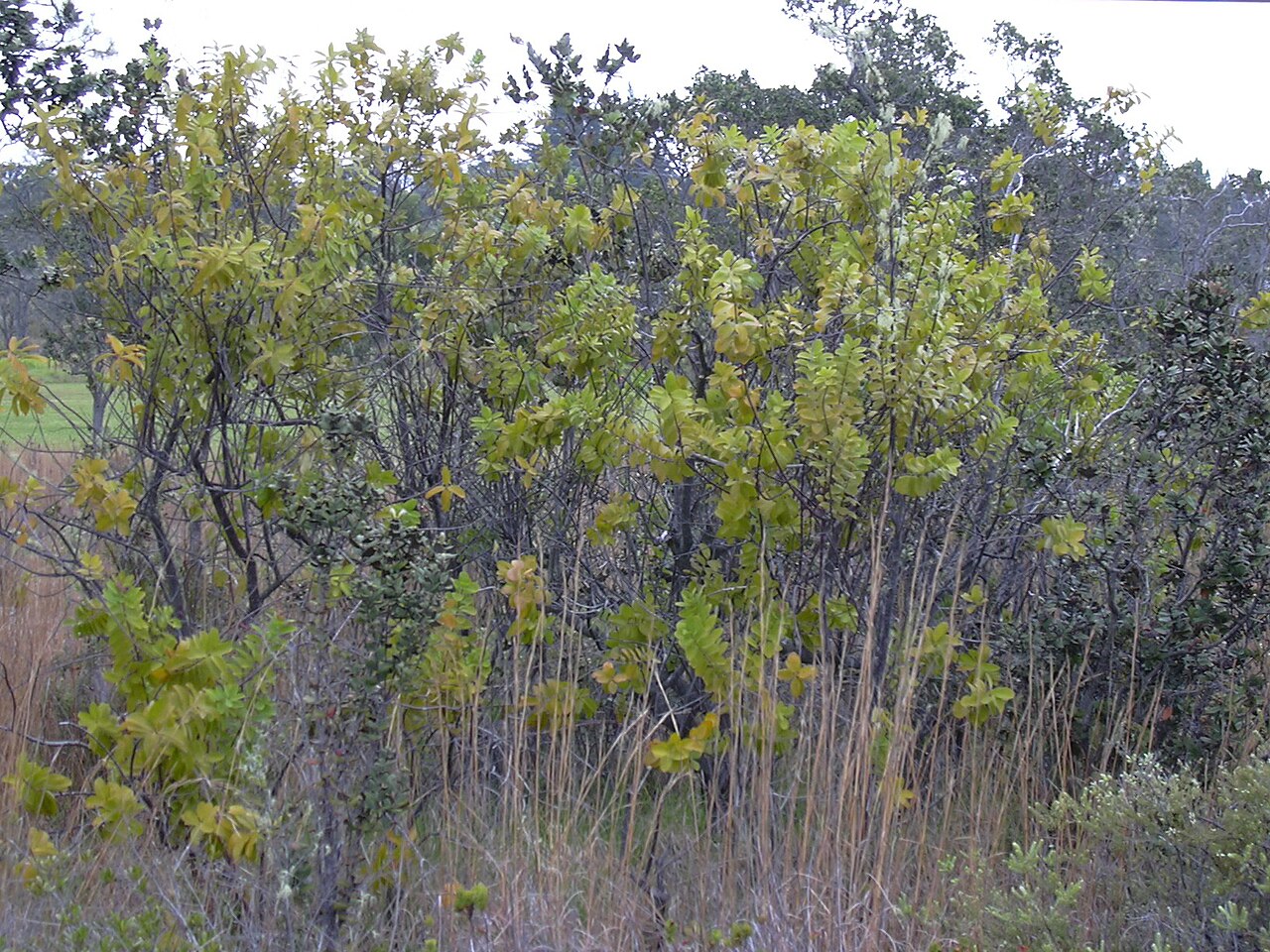
Santalum paniculatum, commonly called Mountain Sandalwood or ʻIliahi, is a small tree in the sandalwood family (Santalaceae) found only on the island of Hawaiʻi. It is a hemiparasitic plant — its roots tap into the roots of neighboring plants for water and some nutrients while still carrying out its own photosynthesis — a lifestyle shared by all the Hawaiian sandalwoods. Several other ʻiliahi species and varieties grow across the islands, but this is the one endemic to the Big Island, where locals and botanists alike still call it by the general Hawaiian name ʻiliahi.
Mountain sandalwood was once prized for its fragrant heartwood, which fueled a brutal export trade to China in the early 1800s that stripped sandalwood forests across Hawaiʻi in only a few decades. Populations have never fully recovered, and the species today survives mostly in scattered dry and mesic forest remnants on Hawaiʻi Island, often growing alongside better-known natives such as Koa (Acacia koa) and ʻŌhiʻa Lehua (Metrosideros polymorpha). It is one of several native species profiled in our overview of canopy trees in Hawaii.
For Hawaiʻi Island gardeners interested in dryland restoration or a culturally significant native tree, mountain sandalwood is a slow-growing but rewarding choice. It is not a quick shade tree, but a long-term planting that rewards patience with fragrant wood, a modest open crown, and a direct connection to one of the islands’ most storied native plants.
Identification
Mountain sandalwood typically grows as a shrub or small tree 10 to 25 feet tall, occasionally taller in favorable sites, with a slender trunk or several leaning stems and an open, somewhat sprawling crown. Like other hemiparasitic sandalwoods, it needs a host plant nearby from the time it is a young seedling; in cultivation, growers typically start it alongside a compatible host grass or shrub so its roots can form the haustoria (root connections) it depends on.
Leaves
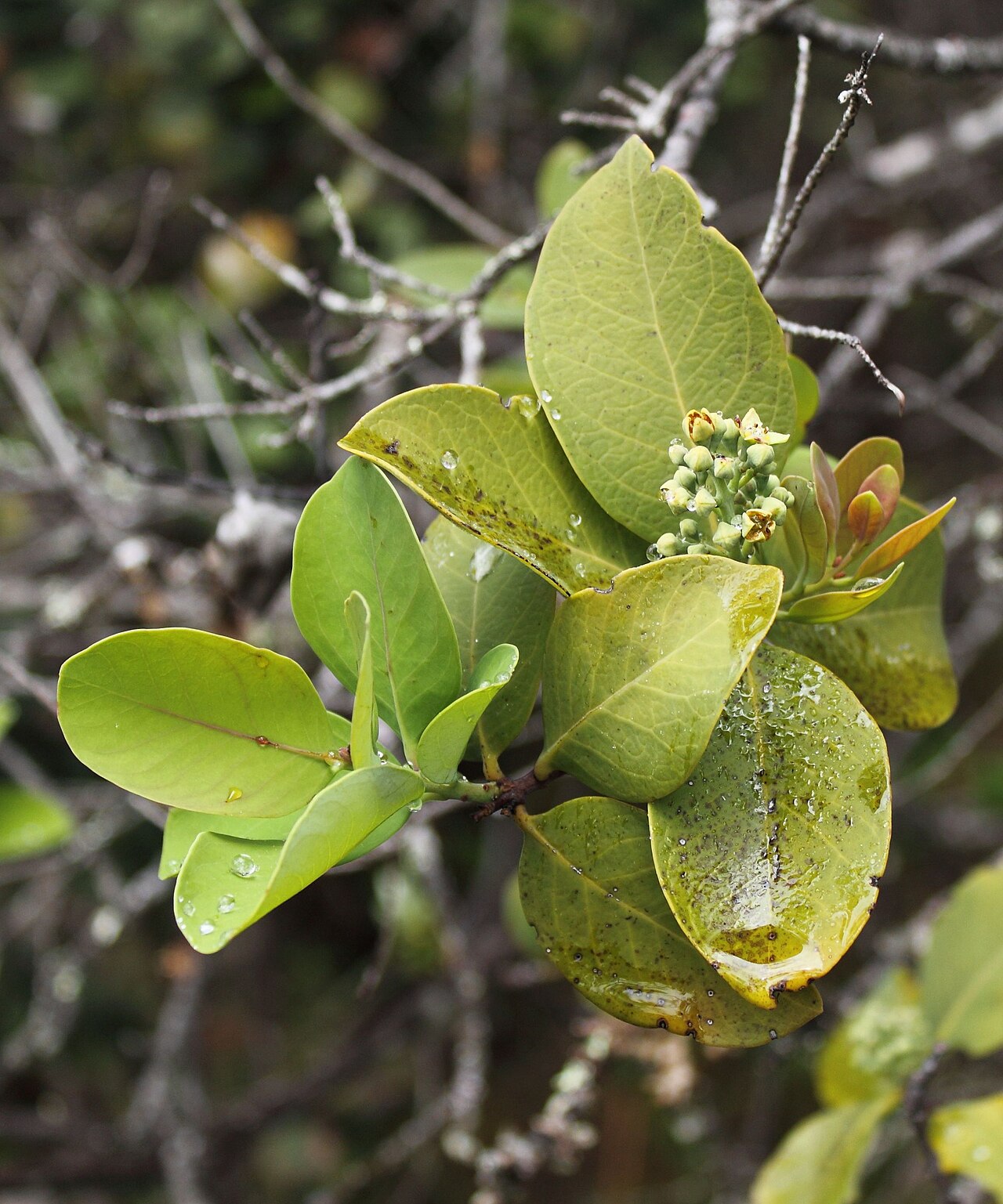
Leaves are opposite, leathery, and oval to elliptic, usually 2 to 4 inches long, with smooth margins and a glossy yellow-green to olive color. New growth often emerges with a reddish or bronze tint before maturing to green. The foliage is relatively sparse compared to many Hawaiian trees, giving the crown an airy, open look.
Flowers
Small, inconspicuous flowers are borne in branched clusters at the leaf axils. They are greenish to yellow-green when they open, aging to a deeper brownish-red, and lack showy petals — pollination is handled mainly by small insects rather than by flashy floral display. Flowering can occur over much of the year in mild Hawaiʻi Island climates.
Fruit & Wood
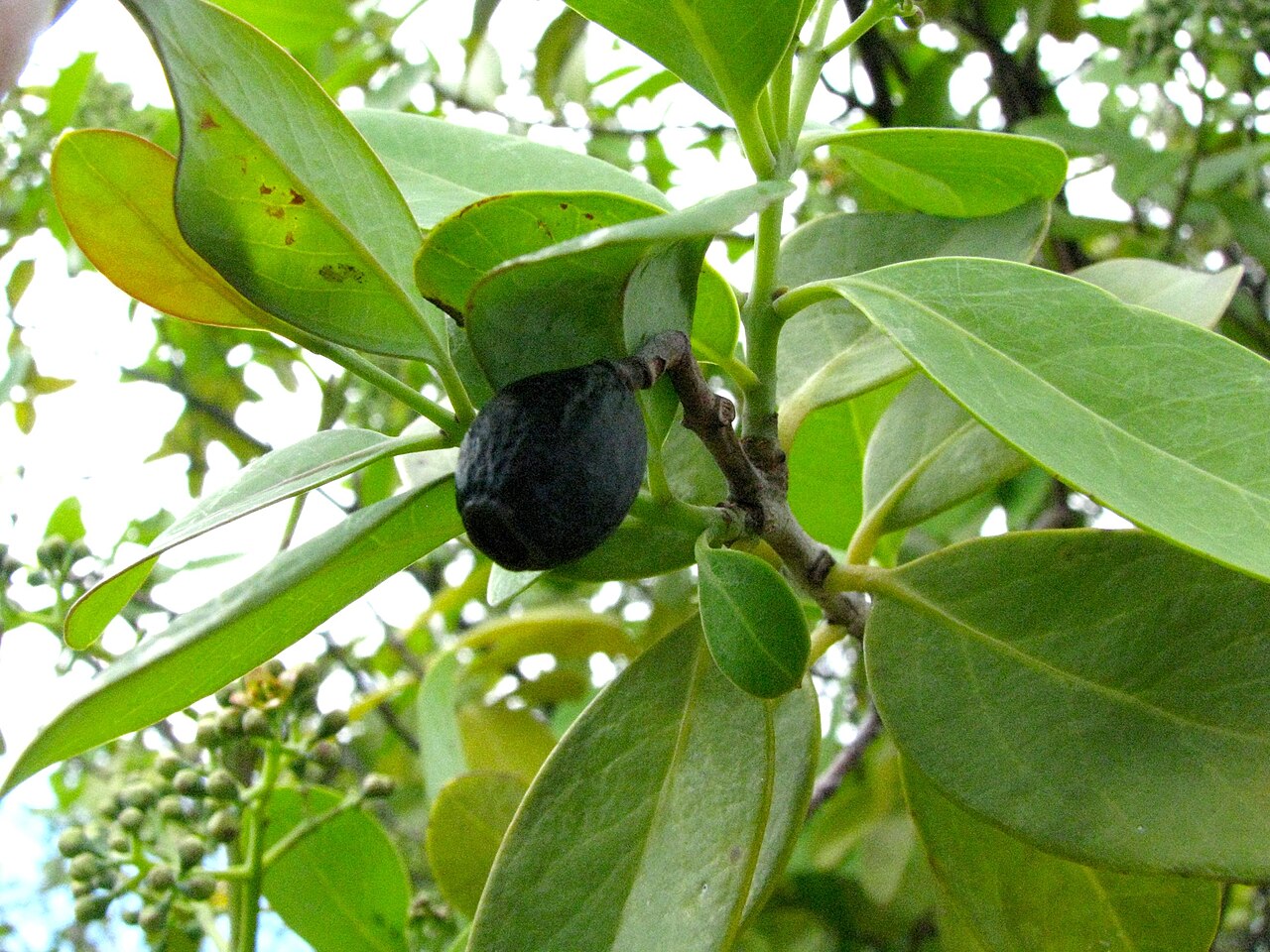
The fruit is a small, rounded drupe about ½ inch across that ripens from green to dark purple-black, with a single hard seed. Birds that feed on the fruit are the tree’s main seed dispersers. The wood — especially the heartwood of older trees — carries the warm, persistent fragrance that made Hawaiian sandalwood so sought after historically; young trees and sapwood have little scent, since the aromatic oils concentrate in the heartwood of mature specimens.
Quick Facts
| Scientific Name | Santalum paniculatum |
| Family | Santalaceae (Sandalwood) |
| Plant Type | Hemiparasitic Shrub / Small Tree |
| Mature Height | 10–25 ft |
| Growth Rate | Slow |
| Sun Exposure | Full Sun to Partial Shade |
| Water Needs | Low to Moderate |
| Soil Type | Well-drained volcanic or rocky soils |
| Flower Color | Greenish-yellow, aging reddish-brown |
| Fruit | Small purple-black drupe |
| Special Need | Requires a nearby host plant (hemiparasitic) |
| USDA Hardiness Zones | 10–11 |
Native Range
Mountain sandalwood is endemic to the island of Hawaiʻi, where it grows in dry to mesic forest and shrubland, mainly on the leeward (Kona and Kaʻū) sides of the island, from near sea level up to roughly 6,000 feet elevation. It is not native to any other Hawaiian island or to the continental United States.
Historically it formed a significant component of Hawaiʻi Island’s dry forest, often growing with Koa, ʻŌhiʻa Lehua, and Naio (Myoporum sandwicense) — itself nicknamed “false sandalwood” because early traders sometimes substituted its wood when true sandalwood supplies ran short. Extensive harvesting during the Hawaiian sandalwood trade of the early 1800s, combined with cattle grazing and habitat conversion, greatly reduced its numbers, and dry forest ecosystems across the islands remain among the most threatened in the state today.
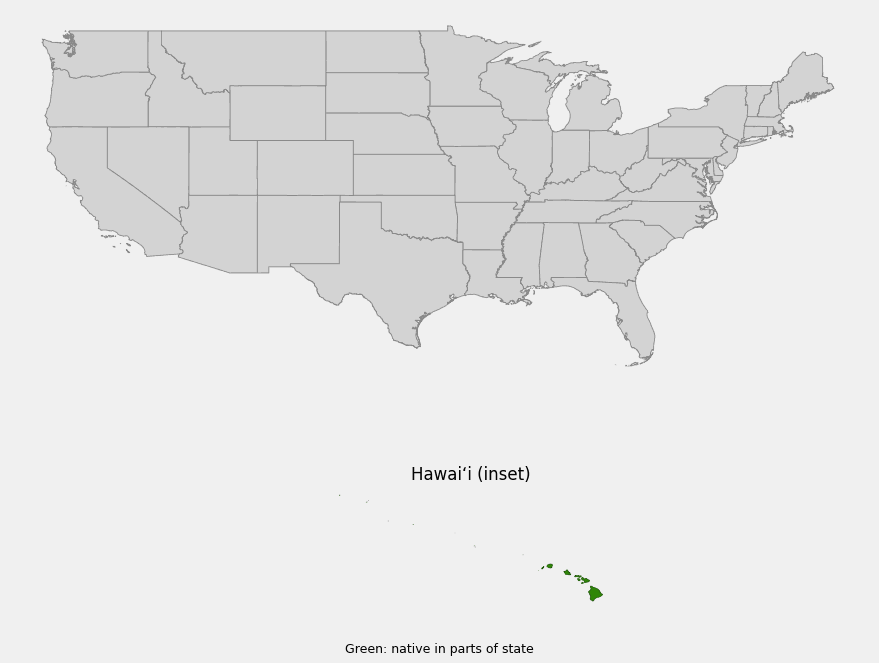
📋 Regional plant lists featuring Mountain Sandalwood: Hawaii
Growing & Care Guide
Mountain sandalwood is not a plant for a typical ornamental bed — it needs a host and patience — but for Hawaiʻi Island residents working on dry forest restoration or culturally rooted native landscaping, it is a worthwhile long-term planting.
The Host Requirement
As a hemiparasite, mountain sandalwood forms root connections (haustoria) with nearby plants and relies on them for part of its water and mineral nutrition throughout its life, even as a mature tree. Growers typically establish a compatible host — native grasses, ʻAʻaliʻi (Dodonaea viscosa), or other shrubby natives are commonly used — in the same planting hole or close by before or at the same time as the sandalwood seedling. Without a host, seedlings grow very slowly or fail outright.
Light & Site
Give it full sun to light shade in a well-drained site. In the wild it tolerates the exposed, often windy conditions of dry leeward slopes, so once established it handles sun and heat well, as long as its host plant and root zone are not disturbed.
Soil & Water
Well-drained volcanic or rocky soils typical of Hawaiʻi Island’s leeward dry forest zone suit it best; it does not tolerate waterlogged ground. Young plants need regular watering to get established alongside their host, but mature trees are drought tolerant and adapted to the long dry seasons of their native range.
Planting Tips
Source seedlings only from reputable native plant nurseries that propagate sandalwood with an appropriate host already established — do not attempt to collect wild seed or plants, since remaining populations are already reduced from historical harvesting. Expect slow growth in the first several years; this is normal for the species and not a sign of a problem.
Pruning & Maintenance
Minimal pruning is needed. Remove dead wood as needed, and avoid disturbing the root zone, which can damage the host connections the tree depends on. Because the fragrant heartwood only develops with age, mountain sandalwood is best treated as a multi-decade planting rather than a quick landscape fix.
Landscape & Restoration Uses
- Dry forest restoration plantings on Hawaiʻi Island
- Culturally significant native gardens highlighting Hawaiian plant heritage
- Xeriscape-style plantings once established, given its drought tolerance
- Mixed native plantings alongside Koa, ʻŌhiʻa Lehua, and Naio
Wildlife & Ecological Value
Mountain sandalwood plays a modest but real role in Hawaiʻi Island’s dry forest ecology, both directly and through the native community it helps support.
For Birds
Native and introduced forest birds feed on the ripe purple-black fruit and help disperse the seeds across the landscape. In intact dry forest fragments, fruiting sandalwood trees are one of several food sources that help sustain resident bird populations through the drier months.
Ecosystem Role
As a hemiparasite, mountain sandalwood is woven directly into the root systems of its neighbors, making it an unusually interconnected part of the dry forest community rather than a standalone tree. Restoring sandalwood alongside its host plants and associates like Koa and Naio helps rebuild the structural and ecological complexity of Hawaiʻi’s critically reduced lowland and montane dry forests, among the most endangered forest types in the United States.
Cultural & Historical Uses
ʻIliahi holds deep significance in Hawaiian culture, where the fragrant wood was used in traditional medicine, scenting kapa (bark cloth) and personal items, and other customary practices. The tree’s broader fame, however, comes from a darker chapter: beginning in the early 1800s, Hawaiian sandalwoods — including this species — were cut on a massive scale and shipped to Canton, China, to meet demand for incense and fine woodwork. The trade, driven largely by Hawaiian aliʻi (chiefs) seeking trade goods, stripped accessible sandalwood forests across the islands within a few decades and left lasting scars on both the forests and the communities forced to harvest them.
By the mid-1800s the most accessible sandalwood stands were exhausted and the trade collapsed. Mountain sandalwood and its relatives never fully recovered their former extent, and today the species survives mainly in protected or remote dry forest remnants on Hawaiʻi Island. Modern conservation and restoration programs, along with cultural practitioners replanting ʻiliahi for its heritage value, are slowly working to rebuild what the historical trade removed.
Frequently Asked Questions
Is mountain sandalwood the same plant used for sandalwood oil and incense?
It is one of several closely related Hawaiian sandalwood species historically harvested for fragrant wood, but most sandalwood oil and incense sold commercially today comes from Indian or Australian sandalwood species, not from the rare, protected Hawaiian species.
Can I grow mountain sandalwood without a host plant?
No. As a hemiparasite, it needs to tap into a neighboring plant’s roots to thrive, and seedlings grown without a suitable host nearby typically struggle or fail. Nurseries that specialize in Hawaiian natives usually supply seedlings already paired with an appropriate host.
Is mountain sandalwood endangered?
It is not currently federally listed, but like much of Hawaiʻi Island’s dry forest flora, its populations remain far below historical levels due to 19th-century harvesting, grazing, and habitat loss, and wild plants should never be disturbed or collected.
How is this different from ʻiliahi grown elsewhere in Hawaiʻi?
Several Hawaiian sandalwood species and varieties exist across the islands, each generally called ʻiliahi; Santalum paniculatum is the one endemic specifically to Hawaiʻi Island, while other islands have their own native sandalwoods, such as Santalum freycinetianum on Oʻahu and Kauaʻi.
Does mountain sandalwood have showy flowers?
No — its small greenish-yellow to reddish-brown flowers are easy to overlook. Gardeners grow it for its cultural significance, fragrant wood, and role in dry forest restoration rather than for floral display.

Looking for a nursery that carries Mountain Sandalwood?
Browse our native plant nursery directory: Hawaii

