
Indian Grass (Sorghastrum nutans)
Sorghastrum nutans, commonly known as Indian Grass, Yellow Indian Grass, or Wood Grass, is one of the most iconic and ecologically important warm-season grasses of the North American tallgrass prairie. This member of the Poaceae (grass) family stands as a towering presence in native grasslands, reaching 3 to 7 feet tall with distinctive golden-bronze seed heads that create spectacular autumn displays across the Great Plains. For thousands of years, Indian Grass served as a foundational species in the vast prairie ecosystems that once covered much of central North America, supporting countless wildlife species and creating some of the richest soils on Earth.
As a warm-season grass, Indian Grass remains dormant through the cool months, then emerges in late spring with vigorous growth that continues through the hot summer months when cool-season grasses struggle. The species gets its common name not from any connection to Native Americans specifically, but from early European settlers who observed its prominence in the “Indian territories” of the western frontier. Its distinctive seed heads, which emerge in late summer as feathery, bronze-colored plumes, create one of the most beautiful sights in the autumn prairie, swaying gracefully in the wind and catching the light with an almost metallic sheen.
Beyond its striking appearance, Indian Grass plays crucial ecological roles that make it invaluable for restoration and landscaping projects. Its deep root system — which can extend 6 to 10 feet into the soil — helps prevent erosion, improves soil structure, and stores significant amounts of carbon. The grass provides essential habitat and food for numerous wildlife species, from prairie birds that nest in its protective cover to small mammals that depend on its seeds. This remarkable native grass combines exceptional beauty with outstanding ecological value, making it an essential component of any authentic prairie restoration or naturalistic landscape design.
Identification
Indian Grass forms distinctive upright clumps (bunches) that typically reach 3 to 7 feet tall, though exceptional specimens can exceed 8 feet under ideal conditions. The growth form is distinctly vertical with stiff, upright stems (culms) that arise from a central crown. Unlike spreading grasses that form continuous sod, Indian Grass maintains its clumping habit throughout its life, creating architectural focal points in the landscape.
Stems & Structure
The stems are robust and sturdy, typically ¼ to ½ inch in diameter at the base, with a characteristic blue-green to green coloration during the growing season. The stems have prominent nodes (joints) and smooth internodes, and they remain standing through winter, providing vertical structure to the dormant landscape. The base of each clump is surrounded by distinctive orange to reddish-brown leaf sheaths that help identify the species even when not in flower.
Leaves
The leaves are long and narrow, typically 12 to 24 inches long and ¼ to ½ inch wide, with a distinctive blue-green color that sets them apart from other prairie grasses. The leaves have prominent parallel veins and slightly rough edges that can catch the skin if handled carelessly. The leaf sheaths (the part that wraps around the stem) are often tinged with orange or reddish-brown, particularly near the base of the plant, creating an attractive color contrast even before the dramatic fall color change.
Seed Heads
The seed heads (inflorescences) are Indian Grass’s most spectacular feature — loose, open panicles 6 to 12 inches long that emerge in late summer. Initially green, they quickly develop into the signature golden-bronze to copper color that makes autumn prairies so breathtaking. Each seed head consists of numerous small spikelets, each with a distinctive twisted awn (bristle-like appendage) that catches the light and creates the characteristic shimmering effect. The seed heads remain attractive well into winter, providing both visual interest and important wildlife food.
Root System
Perhaps Indian Grass’s most impressive feature is its extensive root system, which can extend 6 to 10 feet deep and spread 3 to 4 feet laterally. This massive underground network allows the grass to access water and nutrients unavailable to shallow-rooted plants, enabling it to thrive during hot, dry summers when other plants struggle. The root system represents about 80% of the plant’s total biomass and plays a crucial role in soil development and carbon storage.
Quick Facts
| Scientific Name | Sorghastrum nutans |
| Family | Poaceae (Grass) |
| Plant Type | Warm-Season Perennial Grass |
| Mature Height | 3–7 ft |
| Sun Exposure | Full Sun |
| Water Needs | Moderate |
| Bloom Time | August – October |
| Flower Color | Golden-bronze |
| USDA Hardiness Zones | 3–9 |
Native Range
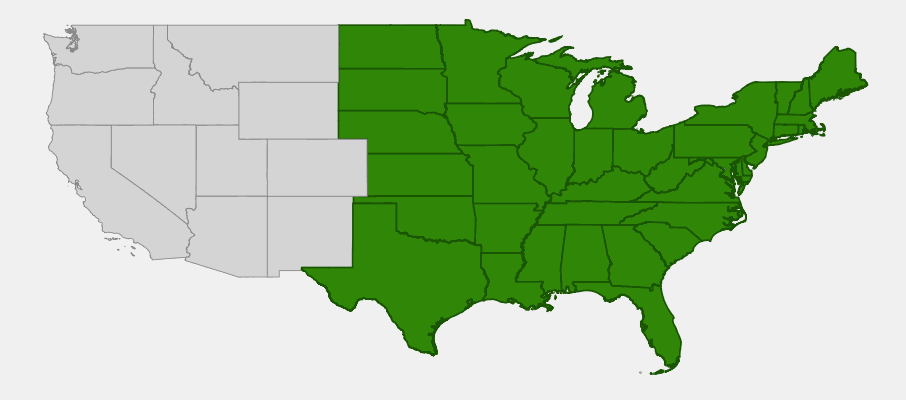
Indian Grass has one of the most extensive ranges of any North American prairie grass, originally covering vast areas from southern Canada to Mexico and from the Rocky Mountains east to the Atlantic Coast. The species was most abundant in the tallgrass prairie region of the Great Plains, where it formed a dominant component of the grassland communities that once covered over 170 million acres. Before European settlement, Indian Grass could be found in virtually every state east of the Rocky Mountains, with isolated populations extending into the intermountain West.
Throughout this enormous range, Indian Grass demonstrated remarkable adaptability to different soil types and precipitation patterns. It thrived in the deep, rich soils of the tallgrass prairie in Iowa and Illinois, but also grew successfully in the sandy soils of pine barrens, the clay soils of blackland prairies in Texas, and even in relatively dry sites receiving as little as 20 inches of annual rainfall. This adaptability reflects the species’ deep root system and efficient water use, allowing it to occupy ecological niches unavailable to most other plants.
Today, Indian Grass persists primarily in remnant prairies, along railroad rights-of-way, in cemeteries, and other areas that escaped conversion to agriculture. However, its value for restoration, erosion control, and wildlife habitat has led to renewed interest in the species, and it is increasingly planted in prairie reconstructions, native landscaping projects, and conservation programs throughout its historic range.
📋 Regional plant lists featuring Indian Grass: North Dakota, South Dakota & Western Minnesota
Growing & Care Guide
Indian Grass is one of the most rewarding native plants you can grow, combining exceptional beauty with remarkable hardiness and minimal maintenance requirements. As a warm-season grass, it follows different growth patterns than cool-season lawn grasses, requiring patience in spring but providing outstanding performance through summer and fall when many other plants struggle with heat and drought.
Light
Indian Grass requires full sun for optimal growth and flowering. While it can tolerate light shade, reduced light levels result in weaker stems, poor flowering, and increased susceptibility to lodging (falling over). In its native prairie habitat, Indian Grass thrives under intense sunlight and develops its characteristic robust growth and spectacular seed heads only when given full sun exposure throughout the day.
Soil & Water
This adaptable grass grows in a wide range of soil types, from clay to sandy loam, and tolerates pH levels from slightly acidic to alkaline (6.0–8.0). Indian Grass prefers well-drained soils but can handle brief periods of flooding and extended drought once established. Its deep root system allows it to access soil moisture unavailable to shallow-rooted plants, making it exceptionally drought-tolerant. Water regularly the first year to encourage deep root development, then reduce to supplemental watering only during extreme drought.
Planting Tips
Plant Indian Grass seed in late spring or early summer when soil temperatures reach 65–70°F consistently. The seed can be planted directly in fall, but spring planting often has better success rates. Plant transplants in late spring after the last frost. Space plants 18–24 inches apart for quick coverage, or farther apart for more naturalistic spacing. Be patient — warm-season grasses are slow to establish and may not show vigorous growth until the second year.
Pruning & Maintenance
Cut Indian Grass to 4–6 inches above ground level in late winter or early spring before new growth begins (March–April in most areas). Never cut warm-season grasses in fall, as the standing stems provide winter wildlife habitat and help protect the crown from freeze damage. Indian Grass requires no fertilization in most soils and is naturally pest and disease resistant. Avoid overwatering, which can lead to soft growth and lodging.
Landscape Uses
Indian Grass’s architectural form and seasonal beauty make it valuable in many landscape settings:
- Prairie gardens — essential component of authentic tallgrass prairie reconstructions
- Specimen plantings — dramatic focal points in perennial borders
- Erosion control — deep roots stabilize slopes and prevent soil loss
- Wildlife habitat — provides food and cover for prairie birds and mammals
- Natural screens — creates seasonal privacy and wind protection
- Rain gardens — tolerates both wet and dry conditions
- Mass plantings — spectacular autumn color when planted in drifts
Wildlife & Ecological Value
Indian Grass is one of the most ecologically valuable plants of the North American prairie, supporting an incredible diversity of wildlife throughout the year and playing fundamental roles in prairie ecosystem function. Its combination of seeds, cover, and habitat structure makes it a keystone species that supports entire food webs.
For Birds
Indian Grass provides essential habitat and food for numerous grassland birds, many of which are species of conservation concern. Greater Prairie-Chickens use the grass for cover and nesting, while Bobolinks, Sedge Wrens, and Henslow’s Sparrows nest within its protective tufts. The seeds feed dozens of bird species, including Northern Cardinals, American Goldfinches, Dark-eyed Juncos, and various sparrow species. The standing winter stems provide crucial cover during harsh weather and support overwintering insects that birds depend on for protein.
For Mammals
Small mammals like meadow voles and deer mice use Indian Grass clumps for shelter and nest sites, while larger mammals including White-tailed Deer and Elk graze on the foliage. The deep root system creates an extensive underground habitat that supports numerous soil organisms, from earthworms to ground beetles, which form the base of many food chains.
For Pollinators
While Indian Grass is wind-pollinated and doesn’t produce showy flowers, it supports pollinator populations indirectly by providing habitat for the numerous wildflowers that grow in association with prairie grasses. The grass structure also provides overwintering sites for beneficial insects and creates the microclimatic conditions that many prairie wildflowers require.
Ecosystem Role
Indian Grass plays crucial roles in prairie ecosystem function, including soil building, carbon sequestration, and fire ecology. Its extensive root system can store up to 2-3 tons of carbon per acre in the soil, making prairie restoration with Indian Grass an important climate change mitigation strategy. The grass is well-adapted to periodic fire, which removes accumulated thatch and stimulates new growth. After fire, Indian Grass quickly resprouts from its deep root system, often growing more vigorously than before burning.
Cultural & Historical Uses
Indian Grass held significant cultural and practical importance for Indigenous peoples throughout the Great Plains and eastern prairies, serving as both a material resource and a fundamental component of the ecosystems that supported their way of life. Various Native American tribes used the grass for basketry, thatching, and other crafts, taking advantage of its strong, flexible stems and leaves. The Lakota and other Plains tribes recognized Indian Grass as one of the “Big Four” grasses that supported the vast buffalo herds, understanding its crucial role in maintaining the prairie ecosystems they depended upon.
The seeds of Indian Grass were occasionally collected and processed as food during times of scarcity, though they were not a primary food source like some other prairie plants. More importantly, Indigenous peoples understood the grass’s role in creating and maintaining the rich prairie soils that supported abundant plant and animal life. They used controlled burning to maintain healthy prairie communities, including Indian Grass, recognizing that periodic fire was essential for the health of these ecosystems.
European settlers initially viewed the vast grasslands dominated by Indian Grass and other prairie species as “wasteland” to be converted to agriculture as quickly as possible. However, they soon discovered that the incredibly rich soils beneath the prairie — built over thousands of years by the deep roots of grasses like Indian Grass — produced some of the most fertile farmland in the world. Unfortunately, this led to the conversion of over 99% of the original tallgrass prairie, making Indian Grass and its associated plant communities among the most endangered ecosystems in North America.
In modern times, there has been a growing recognition of Indian Grass’s value for sustainable agriculture, carbon sequestration, and biodiversity conservation. The grass is increasingly used in prairie restoration projects, conservation programs like the Conservation Reserve Program (CRP), and sustainable landscaping initiatives. Research has shown that prairies dominated by Indian Grass and other native grasses can sequester more carbon than forests in some regions, leading to renewed interest in prairie restoration as a climate change mitigation strategy.
Frequently Asked Questions
Why doesn’t my Indian Grass grow much the first year?
This is completely normal for warm-season grasses. Indian Grass spends its first year developing its extensive root system rather than putting energy into above-ground growth. Most plants won’t reach full size until their second or third year. Be patient and maintain consistent moisture during establishment.
When should I cut back Indian Grass?
Cut Indian Grass in late winter or early spring (March–April in most areas) before new growth begins. Never cut it in fall — the standing stems provide important winter wildlife habitat and protect the crown from freeze damage. Cut to 4–6 inches above ground level.
Can Indian Grass be grown in a small garden?
Yes, Indian Grass makes an excellent specimen plant in smaller spaces. Its clumping habit means it won’t spread aggressively, and individual clumps can be quite dramatic as focal points. Choose a sunny spot and give it adequate space to show off its architectural form.
Is Indian Grass deer resistant?
Deer will browse Indian Grass, especially young growth, but established plants usually recover well from grazing. The grass actually evolved with grazing pressure from buffalo and other herbivores, so occasional browsing doesn’t harm healthy plants. In areas with heavy deer pressure, you may need temporary protection for young plants.
How tall does Indian Grass really get?
Typical height is 3–7 feet, but exceptional plants in ideal conditions can reach 8–10 feet. Height depends on soil moisture, fertility, and growing conditions. Plants tend to be shorter in drier conditions and taller in moist, fertile soils.

Looking for a nursery that carries Indian Grass?
Browse our native plant nursery directory: North Dakota · South Dakota · Minnesota