Indigo Bush (Psorothamnus schottii)
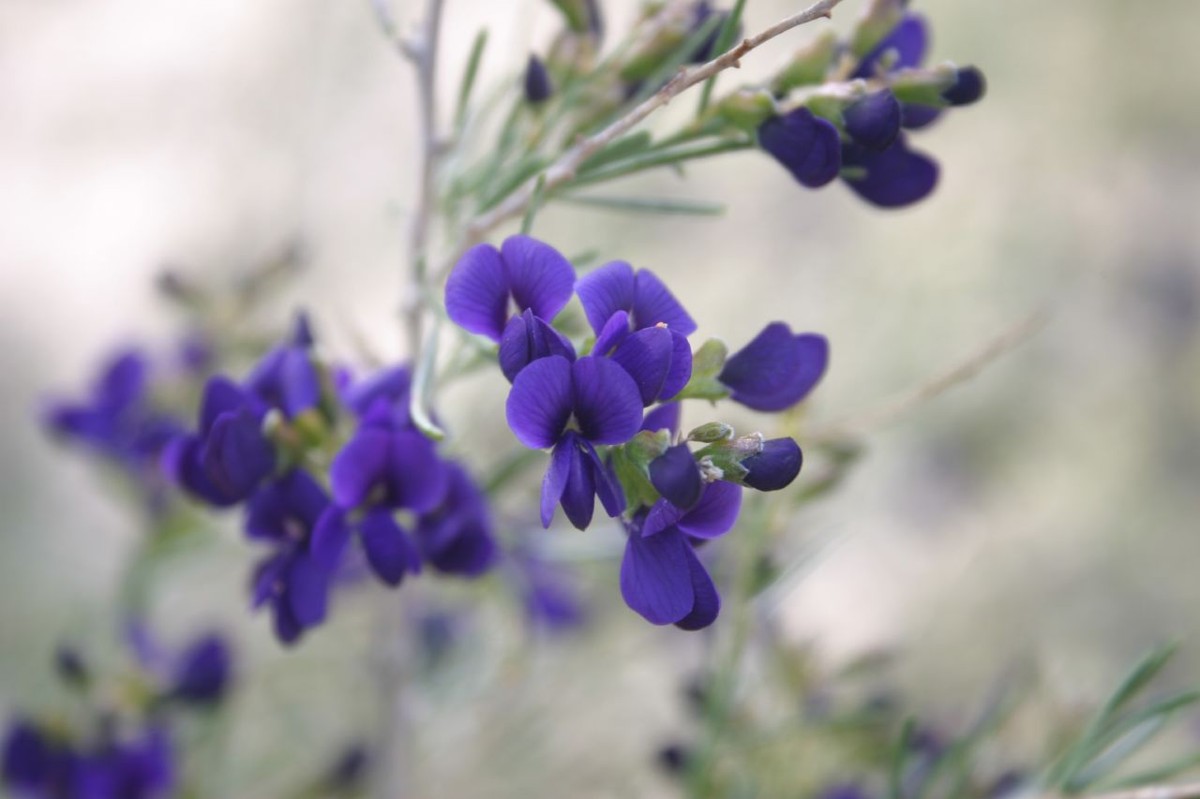
Psorothamnus schottii, called indigo bush or Schott’s indigobush, is a wiry desert shrub of the lower Colorado Desert that spends most of the year as an unremarkable tangle of pale, broom-like branches — and then, for a few weeks in spring, covers itself in small, intensely deep purple-blue, pea-shaped flowers. It is a member of the legume family (Fabaceae) in the genus Psorothamnus, a group of desert shrubs often called “indigo bushes” for the rich blue-purple color of their flowers, though they are unrelated to the true indigo plants once used for dye.
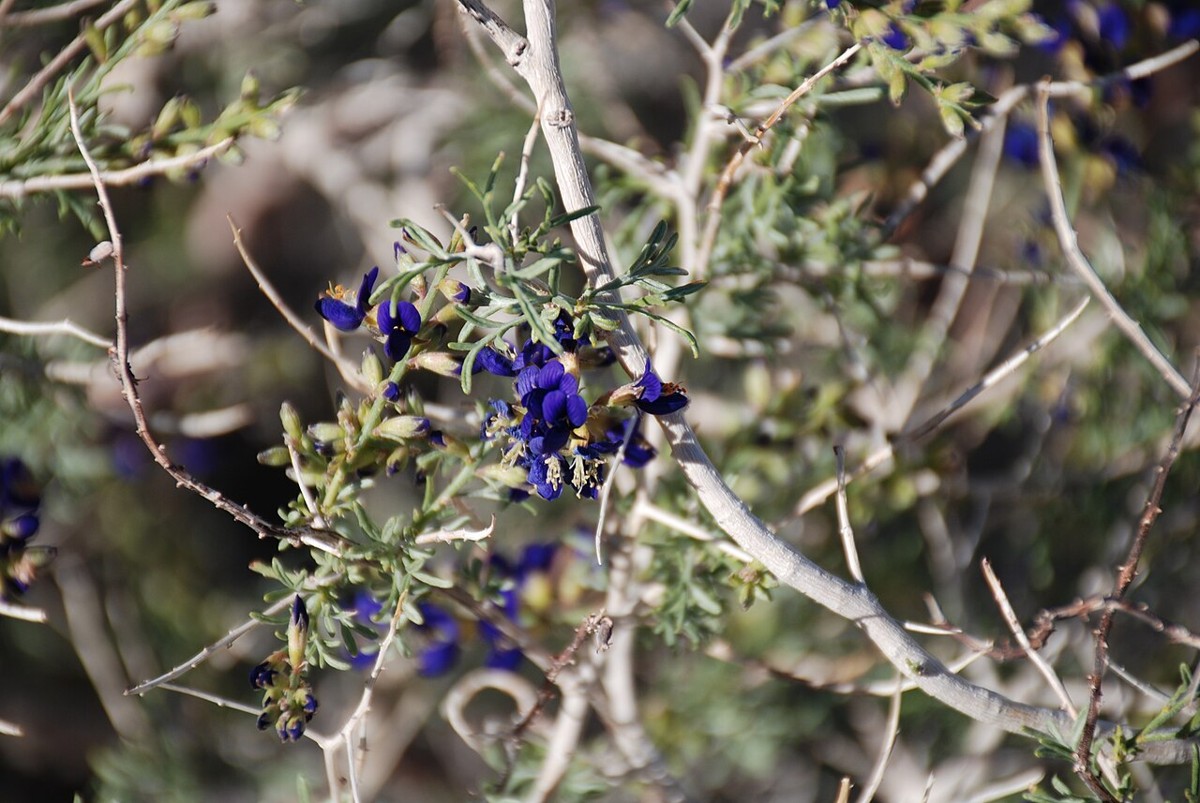
Indigo bush grows as a rounded, densely branched shrub up to about 6 feet tall, with slender green-gray stems dotted in tiny resin glands that give the whole plant a faintly aromatic, almost sticky feel when crushed. Its narrow, simple leaves — unusual among legumes for not being divided into leaflets — are often sparse or shed during drought, leaving the photosynthetic stems to carry the plant through the driest months. When it flowers, the display is brief but striking: dense little clusters of vivid purple-blue blossoms that stand out sharply against the gray desert gravel.
In the garden, indigo bush is a specialty plant for the hottest, driest corners of the Southwest — low Colorado and Sonoran Desert xeriscapes and native habitat restoration within its narrow native range in southern California and southern Arizona. It is not a plant for average garden conditions, but where the climate matches, it needs almost no care at all.
Identification
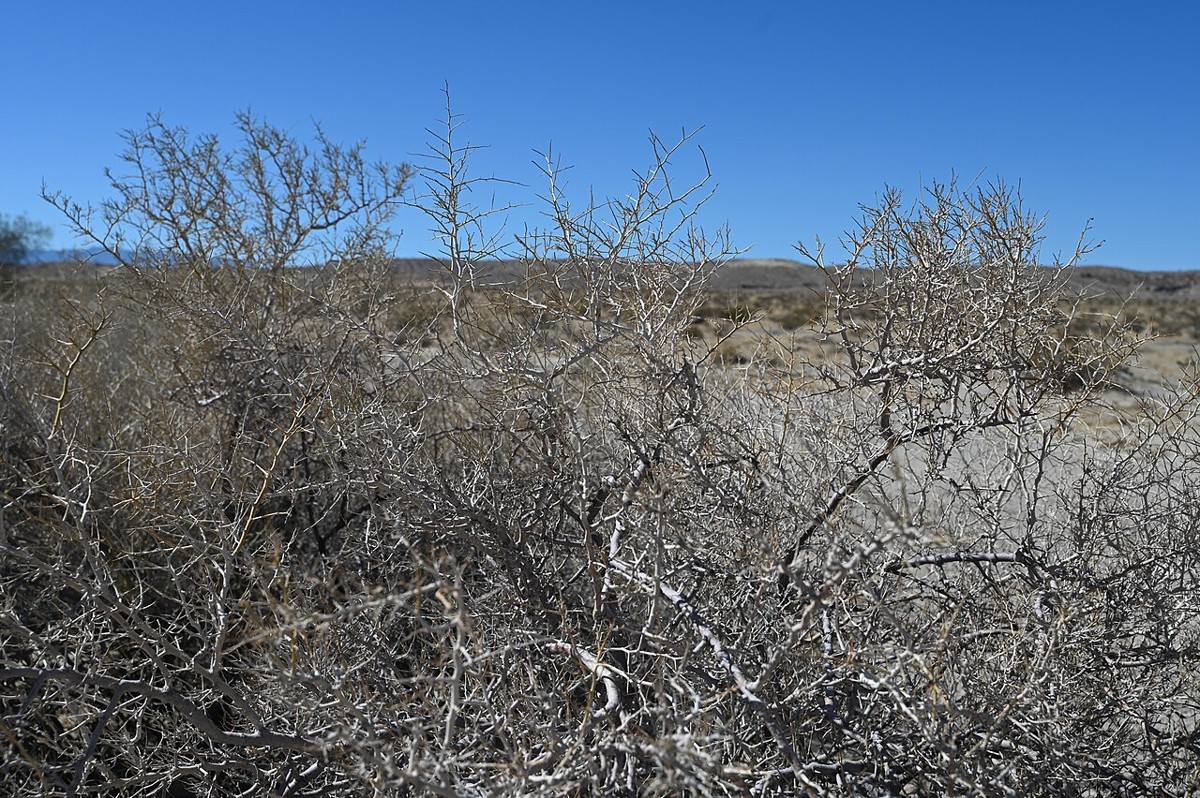
Indigo bush is a rounded, many-branched shrub reaching roughly 3 to 6 feet (1–2 m) tall and about as wide, with slender stems that are green to woolly gray-green and covered in tiny resin glands (giving the surface a dotted, slightly sticky texture). The overall silhouette is airy and broom-like, especially when the plant has shed its leaves during dry periods.
Leaves
The leaves are simple and linear — a distinctive trait, since most legumes have leaves divided into multiple leaflets. Each leaf is up to about 1¼ inches (3 cm) long, narrow, and dotted with resin glands like the stems. Leaves are often sparse and may drop during extended drought, leaving the green stems to continue photosynthesis.
Flowers
Flowers are borne in open, elongated clusters (racemes) of up to about 15 blossoms, each with a deep purple-blue, pea-shaped corolla roughly ⅓ to ½ inch (under 1 cm) long, set in a glandular, tubular calyx with pointed lobes. Bloom typically occurs in spring, from March into May, and the intensity of the color — among the deepest blues and purples of any Southwestern desert shrub — makes the plant easy to spot even from a distance when it is in flower.
Fruit & Seeds
Each flower develops into a small, single-seeded legume pod covered in resin glands. Seed set and timing vary with winter and spring rainfall, as is typical of many Mojave and Sonoran Desert shrubs.
Quick Facts
| Scientific Name | Psorothamnus schottii (syn. Dalea schottii) |
| Family | Fabaceae (Faboideae) |
| Plant Type | Deciduous Desert Shrub |
| Mature Height | 3–6 ft (1–2 m) |
| Mature Spread | 3–5 ft |
| Growth Rate | Slow |
| Sun Exposure | Full Sun |
| Water Needs | Very Low once established |
| Soil Type | Sandy or gravelly desert soil; sharp drainage |
| Soil pH | 7.0–8.5 (neutral to alkaline) |
| Bloom Time | March – May |
| Flower Color | Deep purple-blue |
| Fall Color | None (leaves often drop green in drought) |
| Fruit | Small, one-seeded, resin-glanded legume pod |
| Deer Resistant | Yes |
| USDA Hardiness Zones | 9–11 |
Native Range
Indigo bush is native to the lower Colorado Desert of southeastern California and adjacent low-desert portions of southwestern Arizona, a hot, arid region that sits at the northern edge of the Sonoran Desert. County-level records confirm the species in San Diego, Riverside, and Imperial counties in California, and in Yuma County in southwestern Arizona.
Within this range it typically grows along sandy desert washes, on gravelly flats, and on rocky slopes at low elevations, often alongside creosote bush, ocotillo, and other classic Colorado and Sonoran Desert shrubs. It is adapted to some of the hottest, driest growing conditions found anywhere in the continental United States.
Indigo bush is not native outside this narrow low-desert region, and it should not be expected to perform well, or to represent local native flora, in cooler or higher-elevation parts of California, Arizona, or neighboring states.
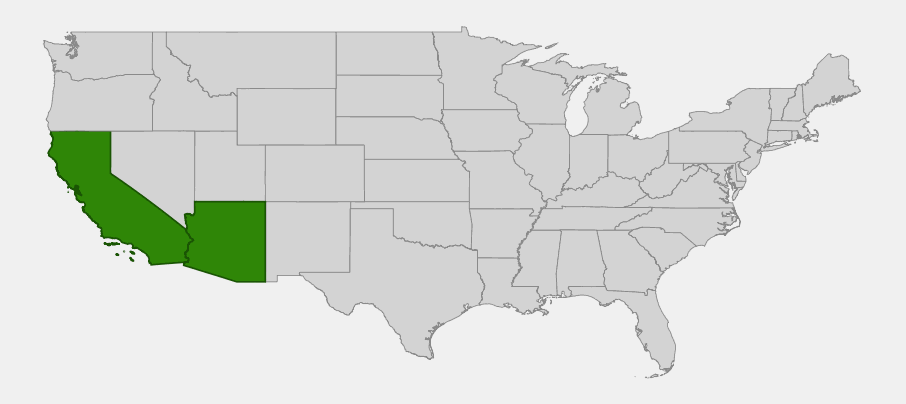
📋 Regional plant lists featuring Indigo bush: California & Nevada · Arizona & New Mexico
Growing & Care Guide
Indigo bush is suited only to the hottest, driest, lowest-elevation desert gardens — essentially a match for its native Colorado Desert conditions. Given full sun and sharp drainage, it is extremely low-maintenance.
Light
Give it full, unfiltered sun. It is adapted to open desert flats and washes with intense light and heat, and will not thrive in shaded or partly shaded sites.
Soil & Water
Plant in sandy or gravelly, fast-draining soil with a neutral to alkaline pH. Once established, indigo bush needs very little supplemental water — occasional deep irrigation during the hottest summer stretch is typically sufficient, and plants in their native range survive on natural rainfall alone. Avoid heavy or poorly drained soils, which will cause root problems.
Planting Tips
Set out young plants in fall so they can establish roots before summer heat arrives. Choose an open, sunny site that mimics a desert wash or gravel flat, and allow enough space for the shrub’s rounded, 3- to 5-foot spread. Because the growth is slow, young plants may need protection from rabbits and rodents until established.
Pruning & Maintenance
Minimal pruning is needed. Remove dead wood after the driest part of the year, once it is clear which branches have survived. Avoid shearing, which disrupts the plant’s natural, airy branching form and reduces next season’s flowering.
Propagation
Indigo bush is typically propagated from seed, which benefits from scarification to break the hard seed coat and improve germination rates. Seedlings should be grown in a very free-draining desert soil mix and hardened off to full sun gradually.
Landscape Uses
- Low-desert xeriscaping in the hottest, driest garden zones
- Native habitat restoration along disturbed desert washes within its range
- Pollinator gardens for its striking, bee-attracting spring bloom
- Specimen or accent planting for its vivid purple-blue flower color against gravel or rock mulch
Wildlife & Ecological Value
Though small in stature, indigo bush provides concentrated floral resources in a landscape where blooming plants are scarce for much of the year.
For Pollinators
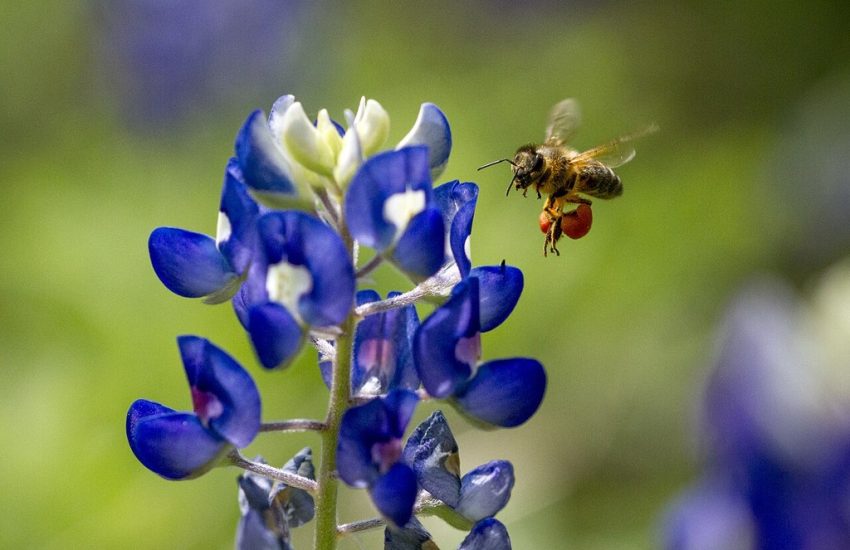
The deep purple-blue flowers attract native bees, which are the primary pollinators of Psorothamnus species and are drawn to the dense flower clusters during the narrow spring bloom window. The intense flower color is thought to be especially visible and attractive to bee pollinators against the muted desert background.
For Birds
The dense, wiry branching provides cover and perching structure for small desert birds, while insects attracted to the flowers provide an incidental food source during the bloom period.
For Mammals
Small desert mammals use the tangled branch structure for shelter from predators and extreme heat. Browsing pressure from larger herbivores is generally light, as is typical for resinous, aromatic desert legumes.
Ecosystem Role
As a nitrogen-fixing legume, indigo bush can help improve the fertility of the sandy, nutrient-poor soils of desert washes where it grows, benefiting neighboring plant species. Its brief, intense bloom contributes to the overall diversity of nectar sources that desert pollinators rely on during the short spring flowering season.
Cultural & Historical Uses
Indigo bush has no major documented history of food, medicinal, or fiber use among Indigenous peoples of the region, unlike larger and more widespread desert legumes such as mesquite or screwbean. Its resinous, aromatic foliage and small stature likely made it a minor plant in traditional use compared to more productive desert resources.
Today, indigo bush is valued almost entirely for its ornamental and ecological role — a tough, low-water native shrub whose brilliant purple-blue spring flowers make it a distinctive, if specialized, choice for native desert gardens and habitat restoration projects within its narrow natural range.
Frequently Asked Questions
Is indigo bush related to the plant used to make indigo dye?
No. True indigo dye traditionally comes from Indigofera species, an unrelated genus. Indigo bush (Psorothamnus) gets its common name simply from the deep indigo-blue to purple color of its flowers, not from any historical use as a dye source.
Why does my indigo bush look leafless for part of the year?
This is normal. Indigo bush often sheds its narrow leaves during drought, relying on its green, resin-dotted stems to continue photosynthesis. New leaves typically return after rain.
How much water does indigo bush need in a garden setting?
Very little once established. It is adapted to one of the driest climates in North America and generally needs only occasional deep watering during the hottest part of summer, if any supplemental water at all.
Can indigo bush be grown outside the low desert?
It is best suited to hot, low-elevation desert climates similar to the Colorado and Sonoran Desert. Gardeners in cooler, wetter, or higher-elevation regions are unlikely to have success and should choose a native shrub better matched to their local conditions.
Is indigo bush invasive or aggressive in the garden?
No. It is a slow-growing, well-behaved native shrub with no tendency to spread aggressively, making it a safe choice for desert native-plant gardens within its natural range.

Looking for a nursery that carries Indigo bush?
Browse our native plant nursery directory: California · Arizona