Island Alumroot (Heuchera maxima)
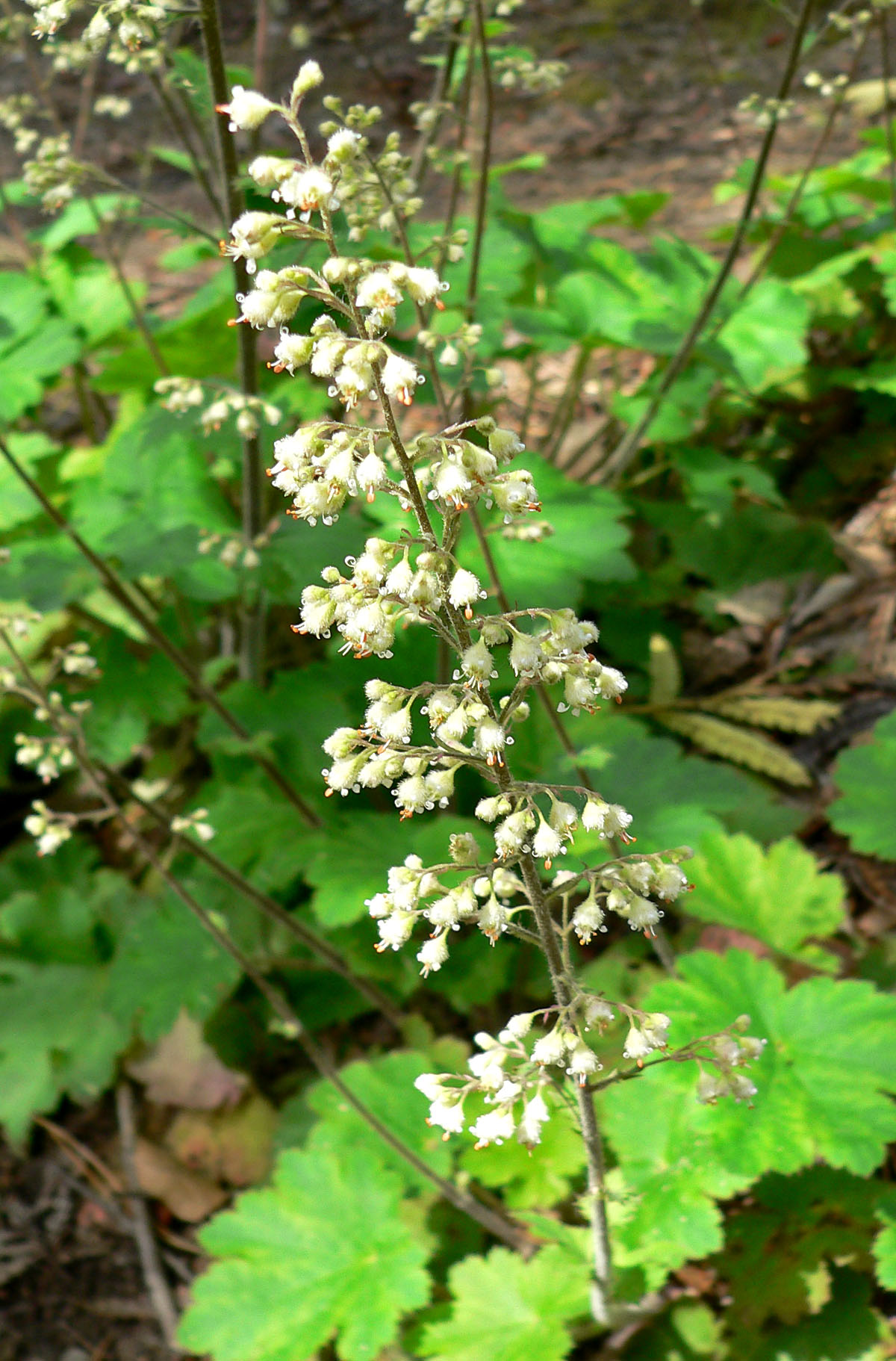
Heuchera maxima, commonly known as Island Alumroot, is a handsome evergreen perennial in the saxifrage family (Saxifragaceae) and one of the largest members of its genus. True to its name, it is endemic to California’s Channel Islands — found nowhere else in the wild — where it grows on coastal bluffs and in the shade of island oak woodlands. It is the biggest-leaved, most vigorous of the native alum roots, forming broad evergreen mounds of rounded, lobed foliage topped in spring by tall, airy spikes of small cream to pink-blushed flowers.
Island Alumroot has become a mainstay of California native gardening far outside its tiny wild range because it is so adaptable: it tolerates heavier soils than most alum roots, shrugs off considerable drought once established, and holds its handsome foliage through the year in gardens from the coast to interior valleys. It was recognized as a UC Davis Arboretum All-Star for exactly this combination of beauty and toughness.
In the garden, Island Alumroot earns its keep as a shade or part-shade groundcover and border plant, its wiry flower stalks attracting hummingbirds for weeks each spring. Because it is native only to the Channel Islands, planting it on the mainland is a straightforward way to grow a true California native without competing with, or cross-pollinating, more geographically widespread Heuchera species growing nearby in wild habitat.
Identification
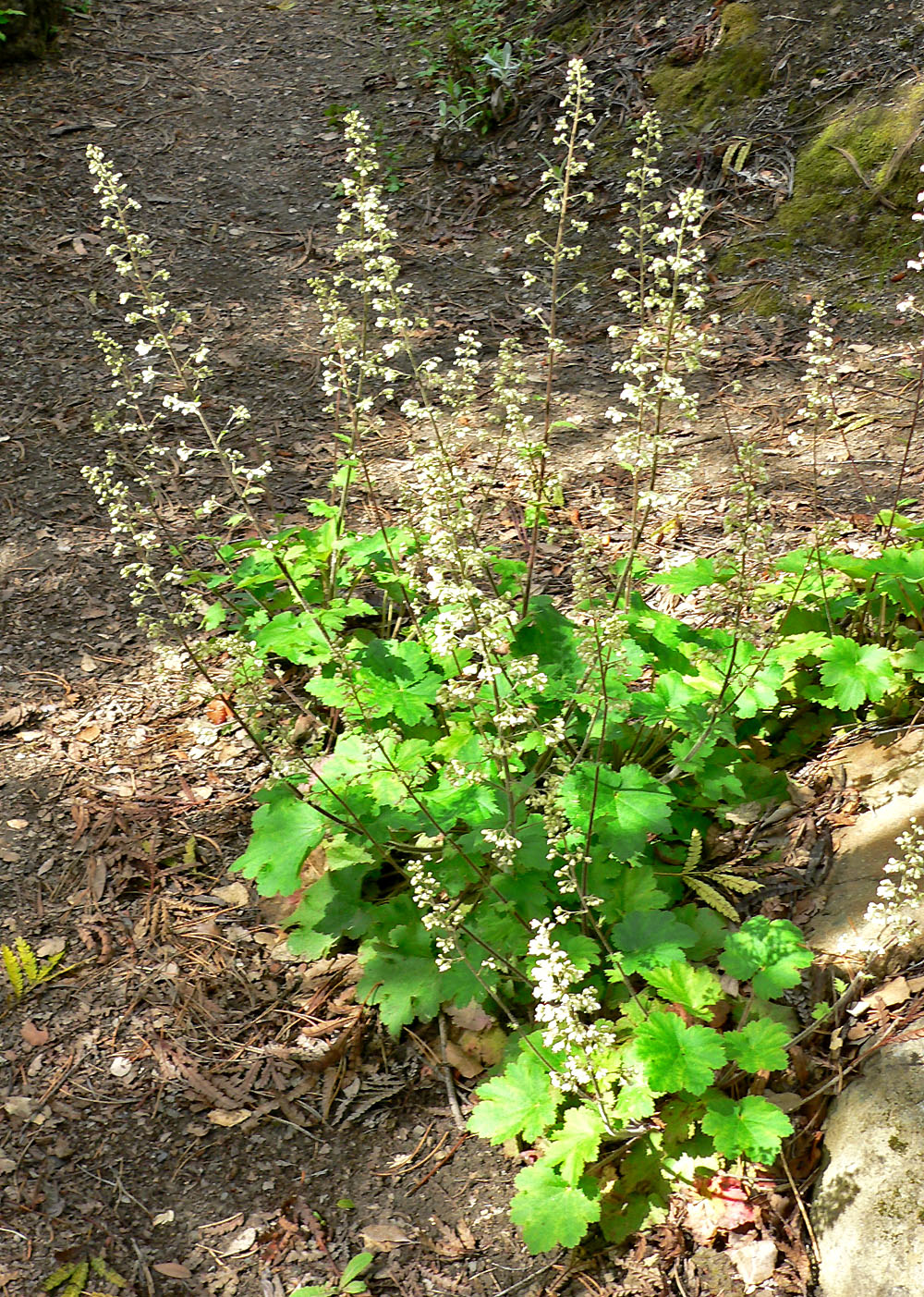
Island Alumroot forms a dense, mounding clump of basal leaves 1 to 1½ feet tall and wide, with flowering stems rising well above the foliage to 2 to 3 feet or more. The plant is evergreen in mild climates, keeping its leaves through winter rather than dying back completely like many other perennials.
Leaves
Leaves are broad, rounded to heart-shaped, 3 to 5 inches across, with shallow lobes and softly toothed margins, held on long petioles that arch outward from a central crown. The bright to dark green leaf surface is somewhat leathery and can take on reddish tones at the margins in full sun or cold weather, a useful identification trait that also makes the foliage ornamental on its own.
Flowers
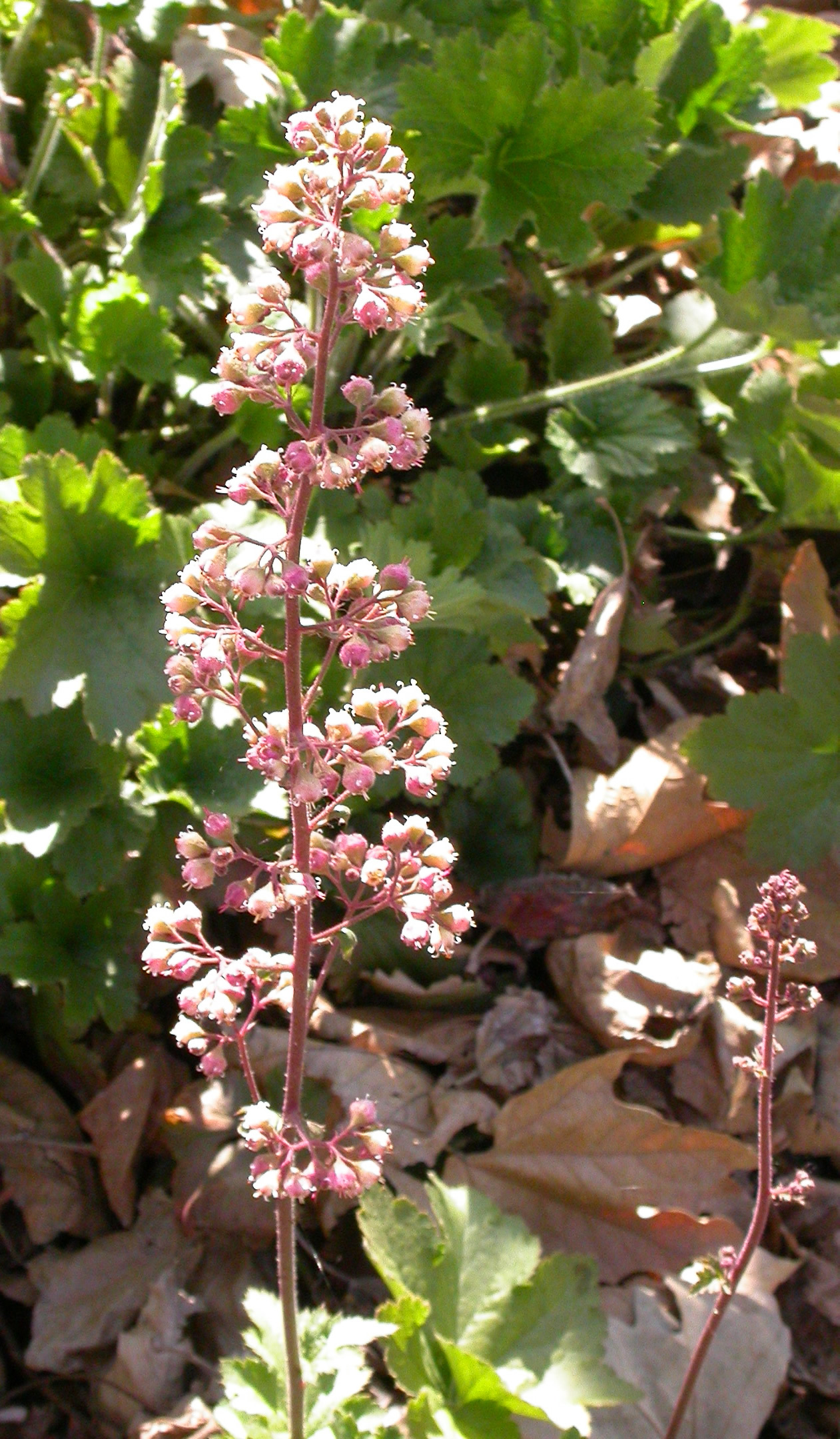
In spring, wiry, maroon-tinted flower stalks rise well above the foliage, carrying airy, one-sided spikes of small bell-shaped flowers in cream, white, or pink-blushed tones. Individual flowers are tiny but numerous, giving the whole spike a frothy, delicate appearance that contrasts with the bold basal leaves.
Fruit & Seeds
After bloom, small dry capsules form along the spent flower stalks, each holding numerous tiny seeds. Deadheading spent stalks keeps the clump tidy, though leaving some seed heads in place allows for natural self-sowing in favorable conditions.
Quick Facts
| Scientific Name | Heuchera maxima |
| Family | Saxifragaceae (Saxifrage) |
| Plant Type | Evergreen Herbaceous Perennial |
| Mature Height | 1–1.5 ft foliage; flower stalks to 3 ft |
| Mature Spread | 1.5–2.5 ft |
| Growth Rate | Moderate to fast |
| Sun Exposure | Part Shade to Full Shade (tolerates more sun near the coast) |
| Water Needs | Low to Moderate once established |
| Soil Type | Adaptable; tolerates clay and heavier soils better than most alum roots |
| Soil pH | 6.0–7.5 |
| Bloom Time | March – June |
| Flower Color | Creamy white, often pink-blushed |
| Fall Color | Evergreen; leaf margins may redden in sun or cold |
| Fruit | Small dry seed capsules |
| Deer Resistant | Yes |
| USDA Hardiness Zones | 8–10 |
Native Range
Island Alumroot is endemic to California’s Channel Islands, growing wild only on islands such as Santa Catalina, Santa Cruz, Santa Rosa, and San Clemente, off the coast of Southern California. It is not native anywhere on the mainland, though it has become a widely cultivated and recommended garden plant throughout coastal and inland California because of its toughness and good behavior outside its native range.
On the islands, it grows in the partial shade of island oak and ironwood woodlands as well as on rocky, north-facing coastal bluffs, where fog drip supplements the limited rainfall typical of the Southern California Bight. This fog-influenced, part-shade habitat is part of why the species performs so well in coastal mainland gardens with similar conditions.
A portion of its native island range has faced historic pressure from introduced grazing animals and habitat disturbance, and the species is treated as locally sensitive on some islands even though it is secure overall and common in cultivation. Gardeners outside California should treat it as a regional specialty plant best suited to California’s mild, dry-summer climate rather than a plant to try broadly across the country.
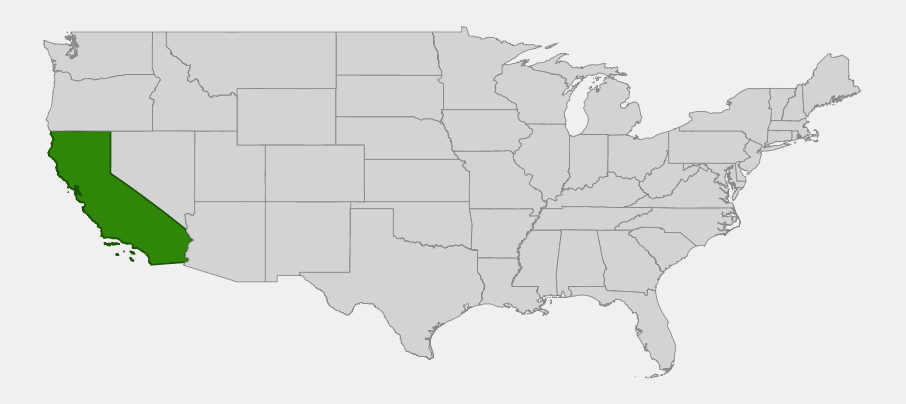
📋 Regional plant lists featuring Island Alumroot: Island Alumroot’s native range (the California Channel Islands) is not yet covered by one of our regional plant lists.
Growing & Care Guide
Island Alumroot is one of the easiest native alum roots to grow, forgiving of garden conditions that would stress other members of the genus.
Light
Part shade to full shade suits it best inland, though in cooler coastal gardens it tolerates considerably more sun, even near-full sun with consistent moisture. Morning sun with afternoon shade is a reliable combination across most of California.
Soil & Water
Unlike many alum roots that demand sharp drainage, Island Alumroot tolerates clay and other heavier soils reasonably well, which makes it a practical choice for gardens that haven’t been amended for rock-garden drainage. It is surprisingly drought tolerant once established, needing only occasional deep watering during the dry season, though it looks lusher with light supplemental water near the coast.
Planting Tips
Plant from containers in fall or early spring so roots can establish before summer dry periods. Space plants 18 to 24 inches apart to allow for mature spread. It works well as underplanting beneath oaks or other part-shade trees, where its root system tolerates competition and summer dryness.
Pruning & Maintenance
Remove spent flower stalks after bloom to tidy the clump and encourage a flush of fresh foliage. Older clumps can be divided in fall if they become woody or open in the center, which also provides new plants for other parts of the garden. Minimal other maintenance is needed.
Propagation
Propagate by division of established clumps in fall, or by seed sown in fall for germination the following spring. Division is the faster, more reliable method for maintaining named forms.
Landscape Uses
Island Alumroot’s bold foliage and reliable performance make it useful throughout California gardens:
- Shade and part-shade groundcover beneath oaks and other native trees
- Border and edging plant where its mounding form reads cleanly
- Hummingbird gardens — flower spikes are a reliable spring nectar source
- Dry shade plantings where few other natives perform well
- Containers, where its evergreen foliage provides year-round structure
Wildlife & Ecological Value
Island Alumroot pulls its weight ecologically despite its small native range, offering season-long value to pollinators and shelter to small garden wildlife.
For Pollinators
The tall, airy flower spikes are a favorite nectar source for hummingbirds, especially Anna’s Hummingbird, which can be seen working the spikes through much of the spring bloom period. Native bees and other small pollinating insects also visit the tiny flowers.
For Birds
Beyond hummingbird nectaring, the dense basal foliage offers cover for ground-foraging songbirds, and the tiny seeds in the dried capsules provide a minor food source for small seed-eating birds late in the season.
For Mammals
The plant’s deer resistance makes it a dependable choice in gardens with browsing pressure; most mammals leave the slightly astringent, leathery foliage alone.
Ecosystem Role
In its native island habitat, Island Alumroot’s dense root system and evergreen cover help stabilize soil on canyon slopes and coastal bluffs, areas prone to erosion once historic overgrazing by introduced livestock removed other understory vegetation. Restoration plantings on several Channel Islands have included this species for exactly that erosion-control value.
Cultural & Historical Uses
Alum roots in general take their common name from the astringent, alum-like taste and feel of the roots of many Heuchera species, some of which were used historically by Indigenous peoples of California for the astringent properties of the root, typically applied externally rather than taken internally. Documentation specific to Heuchera maxima‘s use by the Indigenous peoples of the Channel Islands, including the Tongva and Chumash, is limited compared to mainland alum root species, reflecting the plant’s restricted island distribution and smaller historical human population there relative to the mainland.
In modern times, Island Alumroot’s horticultural history is better documented than its ethnobotanical one. It has been grown in California native plant gardens for decades and was recognized by the UC Davis Arboretum as one of its “All-Star” plants for reliable garden performance, a title given to a select group of California natives and adapted plants proven in trial gardens across the state’s varied climates.
Frequently Asked Questions
Is Island Alumroot native to the California mainland?
No. It is endemic to the Channel Islands off Southern California and does not occur naturally anywhere on the mainland, though it is widely and successfully grown there as a garden plant.
How much sun can Island Alumroot handle?
It prefers part to full shade, especially inland, but tolerates considerably more sun in cool, foggy coastal gardens, particularly with a bit of supplemental water during the driest months.
Does Island Alumroot need rich, well-drained soil like other alum roots?
Not necessarily. It is one of the more adaptable alum roots and tolerates clay and other heavier soils better than most of its relatives, which makes it easier to place in an existing garden bed.
Is Island Alumroot deer resistant?
Yes, it is generally left alone by deer, which makes it a reliable choice in gardens with regular browsing pressure.
How do I propagate Island Alumroot?
Division of established clumps in fall is the most reliable method and gives you flowering-size plants faster than starting from seed.

Looking for a nursery that carries Island Alumroot?
Browse our native plant nursery directory: California