Island Oak (Quercus tomentella)
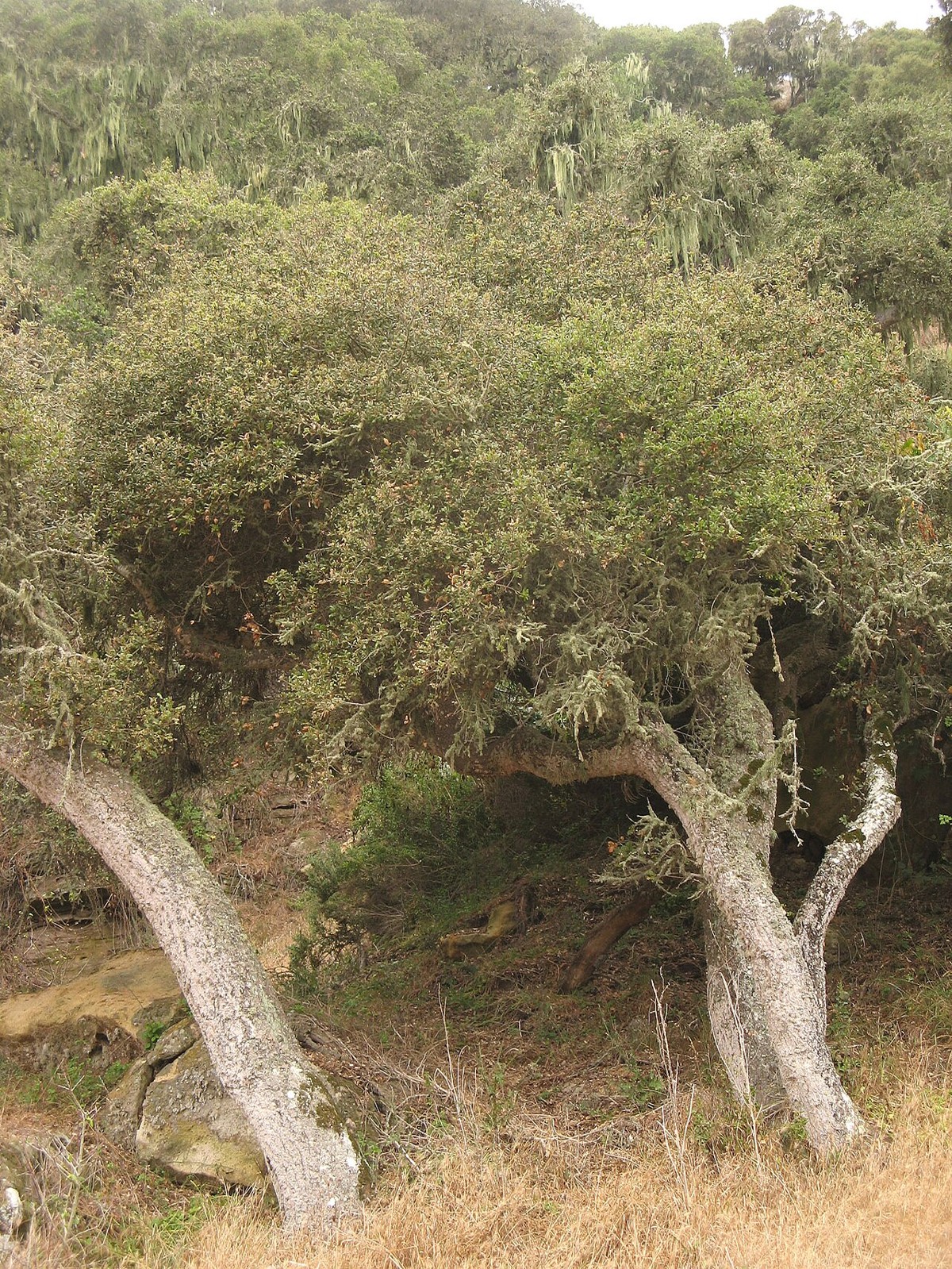
Quercus tomentella, the island oak (also called island live oak), is a handsome evergreen tree found in the wild only on California’s Channel Islands and Mexico’s Guadalupe Island. It is among the rarest oaks in North America, with its entire United States range limited to a handful of islands off the Southern California coast. Large, leathery, felted leaves and a sturdy, often multi-trunked form make it an outstanding specimen tree for mild coastal gardens.
In the wild, island oak grows in island canyons and north-facing slopes where fog drip provides extra moisture, often forming woodlands with other Channel Islands endemics found nowhere else on Earth. Populations were reduced historically by grazing animals introduced to the islands, but recovery has been strong since those animals were removed from most island habitats, and island oak is now a conservation success story within its native range.
For California coastal gardeners, island oak offers the toughness of a native oak with a distinctive, almost tropical-looking leaf and an interesting rarity story. It is increasingly available from native-plant nurseries and makes a striking, long-lived tree for parks, campuses and large coastal gardens.
Identification
Island oak is a medium to large evergreen tree, typically 20 to 50 feet tall, sometimes taller in favorable canyon sites, with a dense, rounded to irregular crown. Many wild trees grow with several leaning or multiple trunks, a response to wind and the steep island terrain where they grow.
Bark
Bark is gray to grayish-brown, thick and deeply furrowed into rough plates on mature trunks, broadly similar to other California oaks but often appearing chalkier gray, especially where lichen colonizes the furrows in the humid island climate.
Leaves
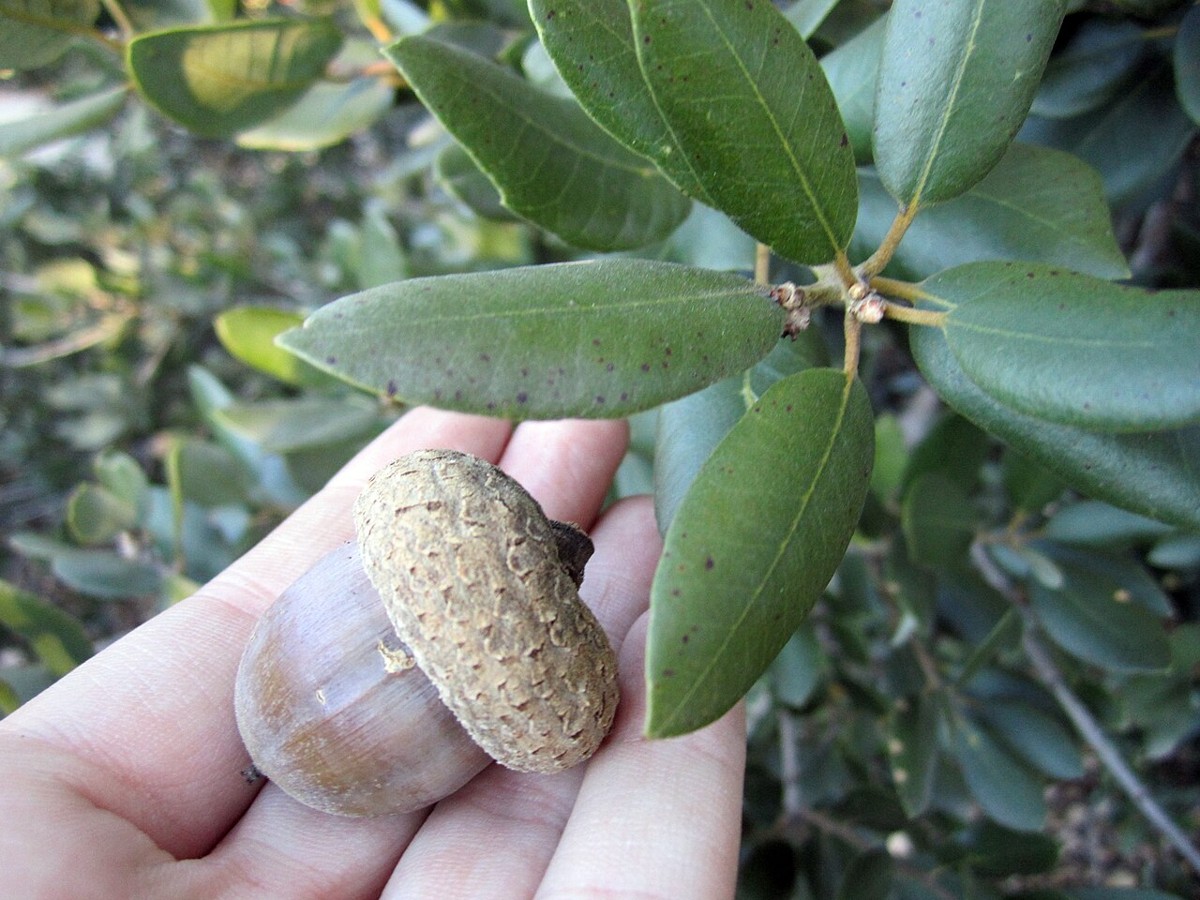
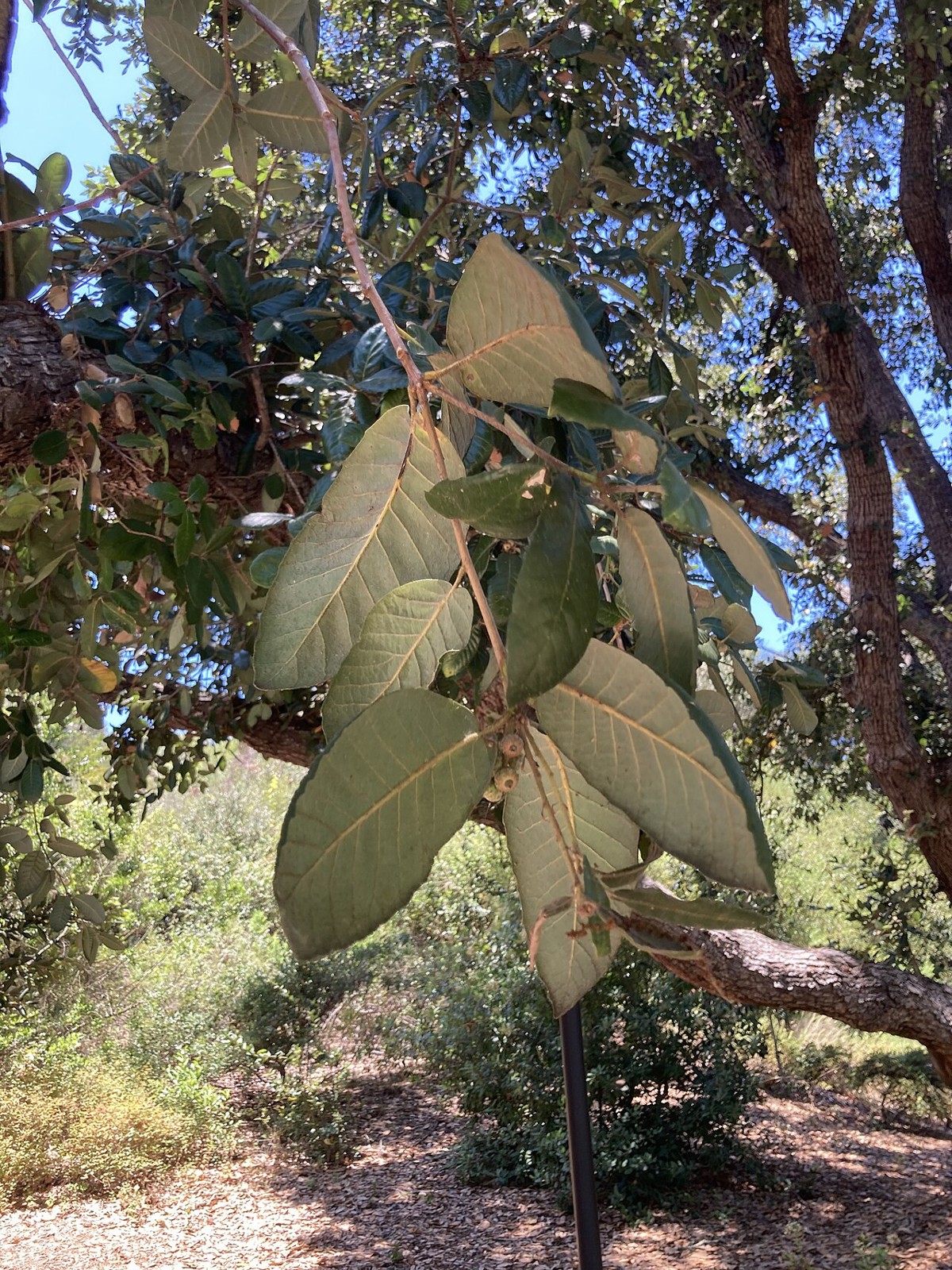
Leaves are the tree’s most distinctive feature: long and narrow (oblong to lance-shaped), 2 to 5 inches long, leathery, dark green above and covered beneath with a dense, felt-like gray-tan fuzz (tomentum) that gives the species its scientific name. Margins are toothed to nearly smooth, and the midrib and veins are prominent on the paler, hairy underside.
Flowers & Acorns
Like other oaks, island oak produces small, inconspicuous male catkins in spring. Acorns are elongated and slender, about 1 to 1.5 inches long, maturing in one season with a shallow, scaly cap, and they are notably larger than those of many mainland California oaks.
Quick Facts
| Scientific Name | Quercus tomentella |
| Family | Fagaceae (Beech/Oak) |
| Plant Type | Evergreen tree |
| Mature Height | 20–50 ft |
| Mature Spread | 20–40 ft |
| Growth Rate | Moderate |
| Sun Exposure | Full Sun to Part Shade |
| Water Needs | Average to low once established; benefits from coastal fog |
| Soil Type | Well-drained loam or rocky soils |
| Soil pH | Slightly acidic to neutral |
| Bloom Time | Spring (inconspicuous catkins) |
| Flower Color | Yellow-green catkins |
| Fall Color | None (evergreen) |
| Fruit | Slender acorns, 1–1.5 in, maturing in one season |
| Deer Resistant | Yes |
| USDA Hardiness Zones | 9–10 |
Native Range
Island oak’s entire United States range is confined to California’s Channel Islands, where it grows on Santa Cruz, Santa Rosa, Santa Catalina and San Clemente islands. Its full native range also includes Guadalupe Island off the coast of Baja California, Mexico. It does not occur naturally anywhere on the California mainland.
Typical habitat is steep canyon slopes and north-facing ravines where coastal fog provides reliable moisture through the dry Mediterranean summer. Island oak often grows with other Channel Islands species, including Catalina ironwood and island ceanothus, forming distinctive island woodlands found nowhere on the mainland.
Island oak populations were historically reduced by grazing from sheep, cattle and feral goats introduced to the islands in the 19th and 20th centuries, which prevented young trees from establishing for decades. Since those grazing animals were removed from most island habitats as part of National Park Service and Nature Conservancy restoration programs, island oak populations have been recovering, and the species today is considered a California native-plant conservation success story, though it remains uncommon and is closely watched.
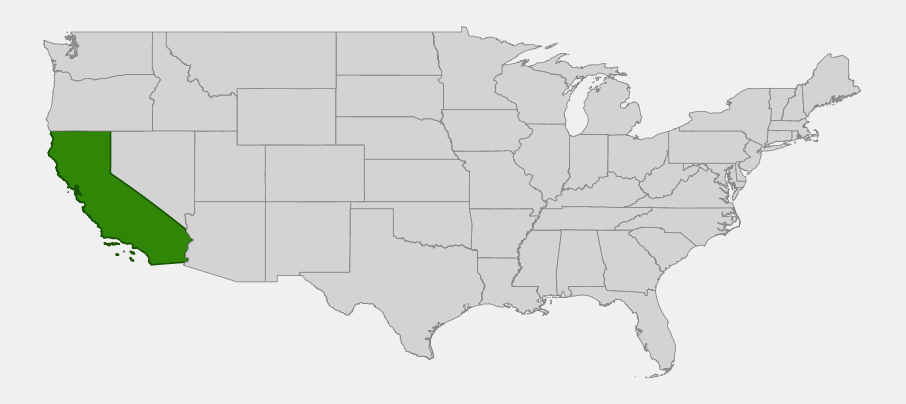
📋 Regional plant lists featuring Island Oak: California & Nevada
Growing & Care Guide
Island oak adapts well to mild coastal California gardens outside its native islands, especially where summer fog or marine influence softens the heat. It is a good, less-common alternative to more widely planted California oaks for gardeners wanting something distinctive.
Light
Plant in full sun along the immediate coast, or light shade in hotter inland areas. Young trees appreciate some protection from intense afternoon sun until established.
Soil & Water
Island oak prefers well-drained soil and, once established, needs only occasional deep watering during the dry season, especially away from foggy coastal influence. Avoid summer irrigation near the trunk, as with most California native oaks, since wet conditions at the root crown promote root disease. Young trees benefit from regular watering during their first two to three years.
Planting Tips
Choose a site with good drainage and enough room for a wide, eventually substantial canopy. Plant from a small container, since oaks develop deep taproots early and transplant best when young. Mulch well to conserve moisture but keep mulch away from direct contact with the trunk.
Pruning & Maintenance
Prune minimally, mainly to remove dead wood or to shape young trees for structure; many wild trees naturally grow with multiple leaning trunks, which can be trained or left as a landscape feature. Island oak has few serious pest or disease problems when planted in suitable well-drained soil and given appropriate watering, similar to other California native oaks.
Propagation
Island oak is propagated from acorns, collected fresh in fall and planted promptly since oak acorns do not store well. Direct-sow in deep containers to accommodate the taproot, and protect young seedlings from rodents, which readily eat the acorns.
Landscape Uses
- Specimen or shade tree for mild coastal gardens, parks and campuses
- California native-plant and island-flora gardens alongside Catalina ironwood and island ceanothus
- Restoration and conservation plantings highlighting rare California endemics
- Alternative to coast live oak where a less common, distinctively textured oak is wanted
- Wildlife habitat plantings, since acorns and canopy support island and coastal wildlife
Wildlife & Ecological Value
Island oak is a keystone species in the rare woodland communities of the Channel Islands, supporting wildlife adapted to this unusual, isolated ecosystem.
For Pollinators
Like other oaks, island oak is primarily wind-pollinated, so it does not rely on insect pollinators, though its foliage supports insects that are part of the island food web and that in turn feed birds.
For Birds
The dense canopy provides important nesting and roosting habitat on islands with limited large trees, and island scrub-jays, a species found only on Santa Cruz Island, rely on acorns from island oak and other oaks as a major food source, caching them much as mainland jays do.
For Mammals
Acorns are eaten by island deer mice and other native island rodents, and historically would have fed larger mammals before many were removed during island restoration. The trees also provide valuable shade and cover in otherwise open island terrain.
Ecosystem Role
As a canopy tree in a landscape with few large natives, island oak stabilizes canyon soils, moderates microclimate, and anchors a woodland community found nowhere else in the world. Its recovery following the removal of introduced grazing animals is an important marker of overall ecosystem recovery on the Channel Islands.
Cultural & Historical Uses
Island oak has a documented history of use by the Indigenous Chumash and Tongva peoples, who lived on and visited the Channel Islands for thousands of years and gathered acorns, like those of mainland oaks, as a food staple, processing them to remove bitter tannins before grinding and cooking.
The species drew significant scientific attention in the 19th and 20th centuries as botanists documented the unique flora of the Channel Islands, and island oak populations became an important case study in the impacts of introduced grazing animals on island ecosystems.
In recent decades, island oak has gained a modest following among native-plant gardeners and restoration professionals, both for its rarity and as a living reminder of successful island habitat recovery efforts led by the National Park Service and conservation partners.
Frequently Asked Questions
Is island oak the same as island live oak?
Yes, “island oak” and “island live oak” both refer to Quercus tomentella. Both names are used, though island oak is more common in current usage.
Can island oak be grown on the California mainland?
Yes. Although it is native only to the Channel Islands and Guadalupe Island, it grows successfully in mild coastal mainland gardens, particularly where fog or marine air moderates summer heat.
Why does island oak have fuzzy leaves?
The dense, felt-like hairs on the leaf undersides, which give the species its scientific name tomentella, likely help the tree conserve moisture and reflect intense sun in its exposed island habitat.
Is island oak endangered?
It is not federally listed as threatened or endangered, but it is considered rare because its entire range is limited to a few Channel Islands and one Mexican island. Populations have been recovering well since introduced grazing animals were removed from most islands.
How is island oak different from coast live oak?
Island oak has longer, narrower, more leathery leaves with a distinctly felted gray underside, compared with the shorter, often spiny-toothed, glossy leaves of coast live oak. Island oak is also naturally restricted to the Channel Islands, while coast live oak is common on the mainland.

Looking for a nursery that carries Island Oak?
Browse our native plant nursery directory: California