Kōlea Lau Nui (Myrsine lessertiana)
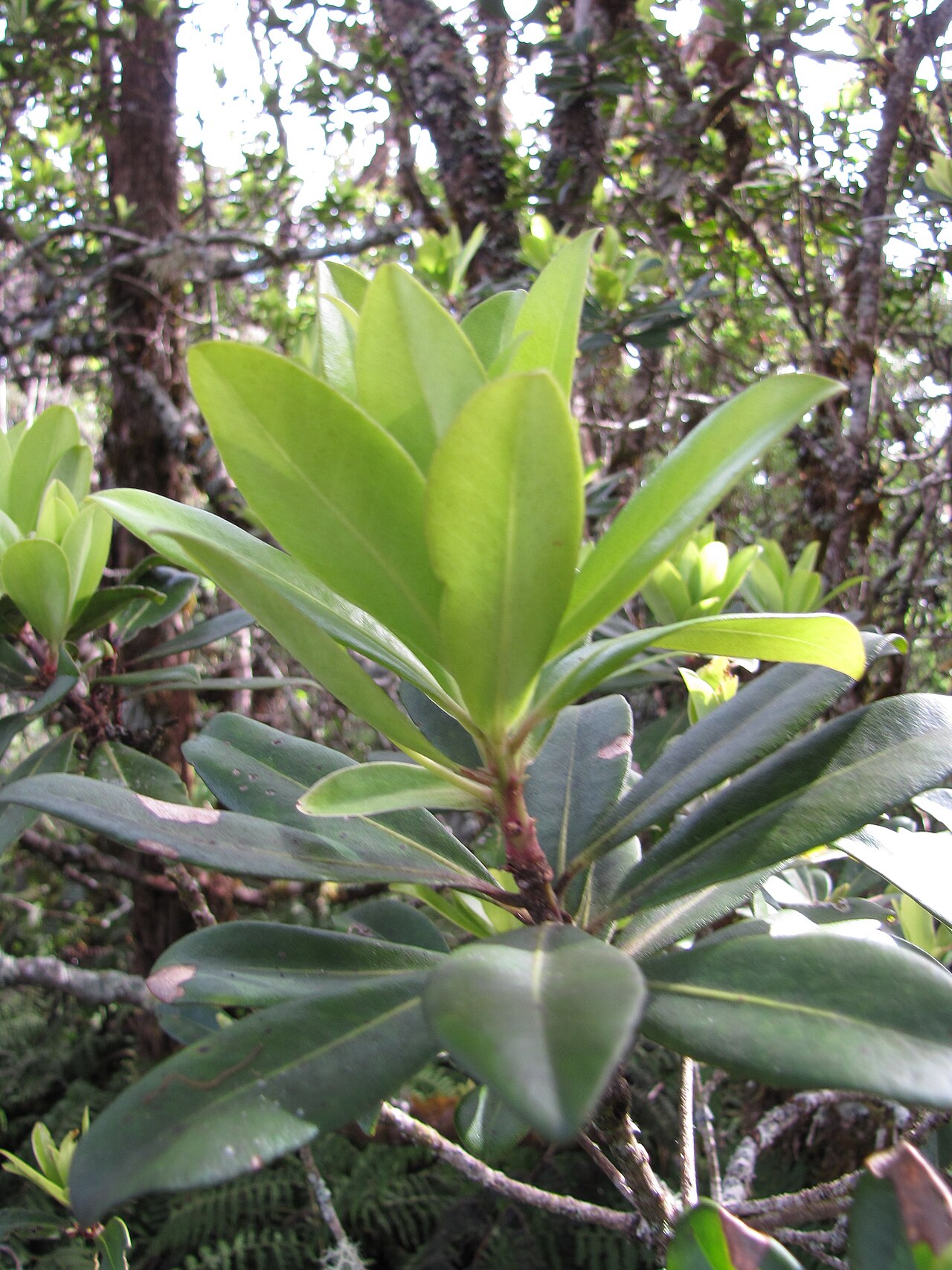
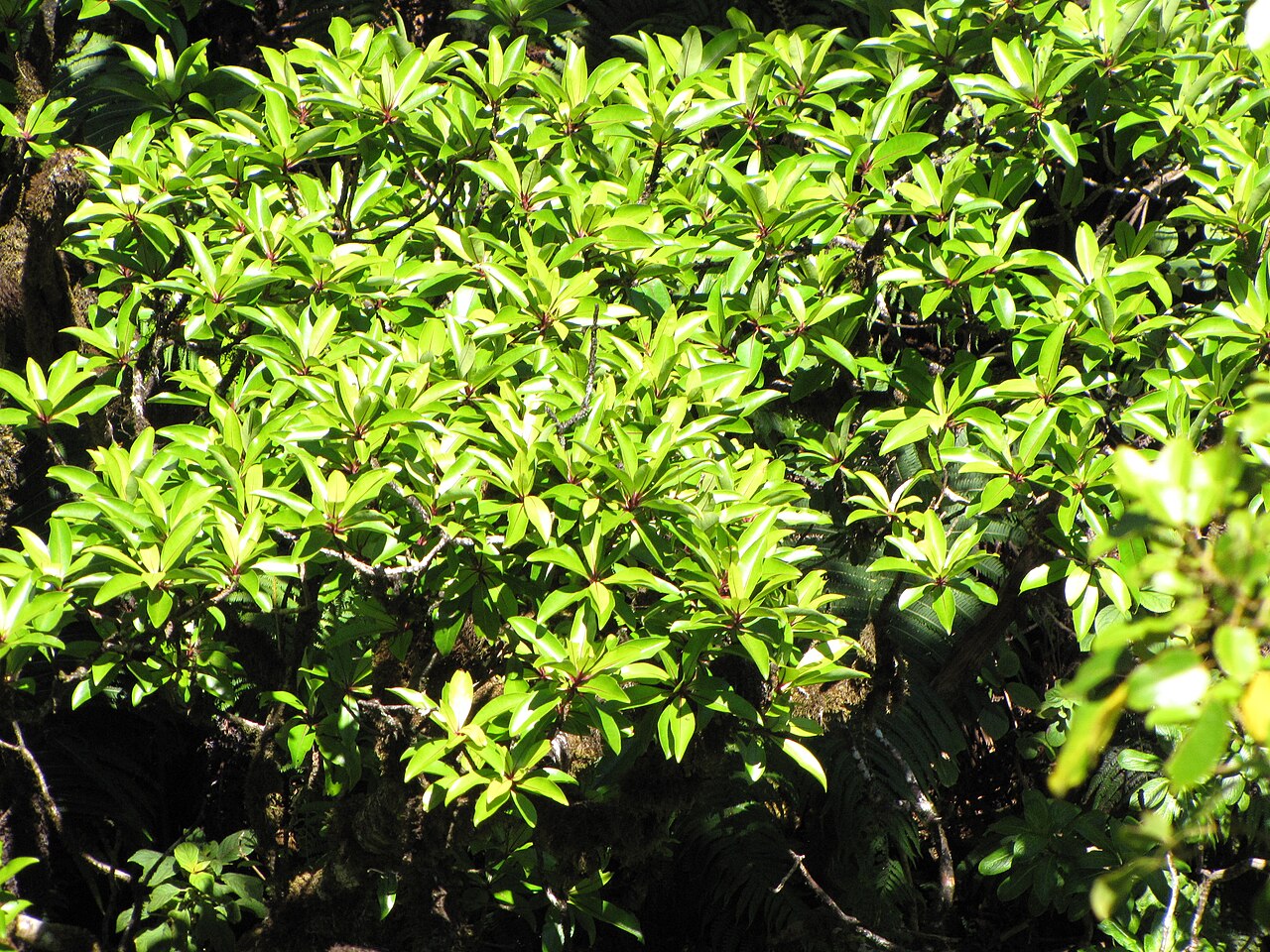
Kōlea lau nui (Myrsine lessertiana) is a Hawaiian native tree best noticed when its new leaves emerge in vivid pink to magenta tones. The older foliage becomes green and leathery, so the contrast is a temporary flush of growth rather than permanent leaf color. It is a distinctive choice for a native garden with suitable moisture and space.
The species is endemic to Hawaiʻi and belongs to Primulaceae in current family treatments. Older forestry books place it in Myrsinaceae and may use names such as Suttonia lessertiana or Rapanea lessertiana. Those historical names refer to the same botanical subject rather than additional species to plant separately.
Hawaiʻi has several kōlea species, and hybrids can complicate identification. A hybrid should not be presented as a typical example of the species without explaining its identity. A nursery label should likewise identify the species and source, especially when the purpose is a conservation planting.
Identification
Bark & Stems
Older trees develop gray bark, from relatively smooth to finely fissured. Stout young shoots carry crowded foliage toward their ends, while older portions of twigs can bear flowers and fruit. Examine those older sections as well as the newest leaves when comparing a plant with a botanical description.
Leaves
The simple, alternate leaves are commonly several inches long, relatively thick, and crowded along shoots. New growth can be strongly colored, then mature to glossy green. A reddish flush is not automatically sunburn or a nutrient problem if it is part of the plant’s normal development.
The name kōlea lau nui distinguishes this larger-leaved kōlea from related plants, but leaf size alone is not sufficient for a difficult identification. Different species and intermediate plants can overlap. Keep nursery documentation and seek botanical help when a restoration collection depends on exact identity.
Flowers
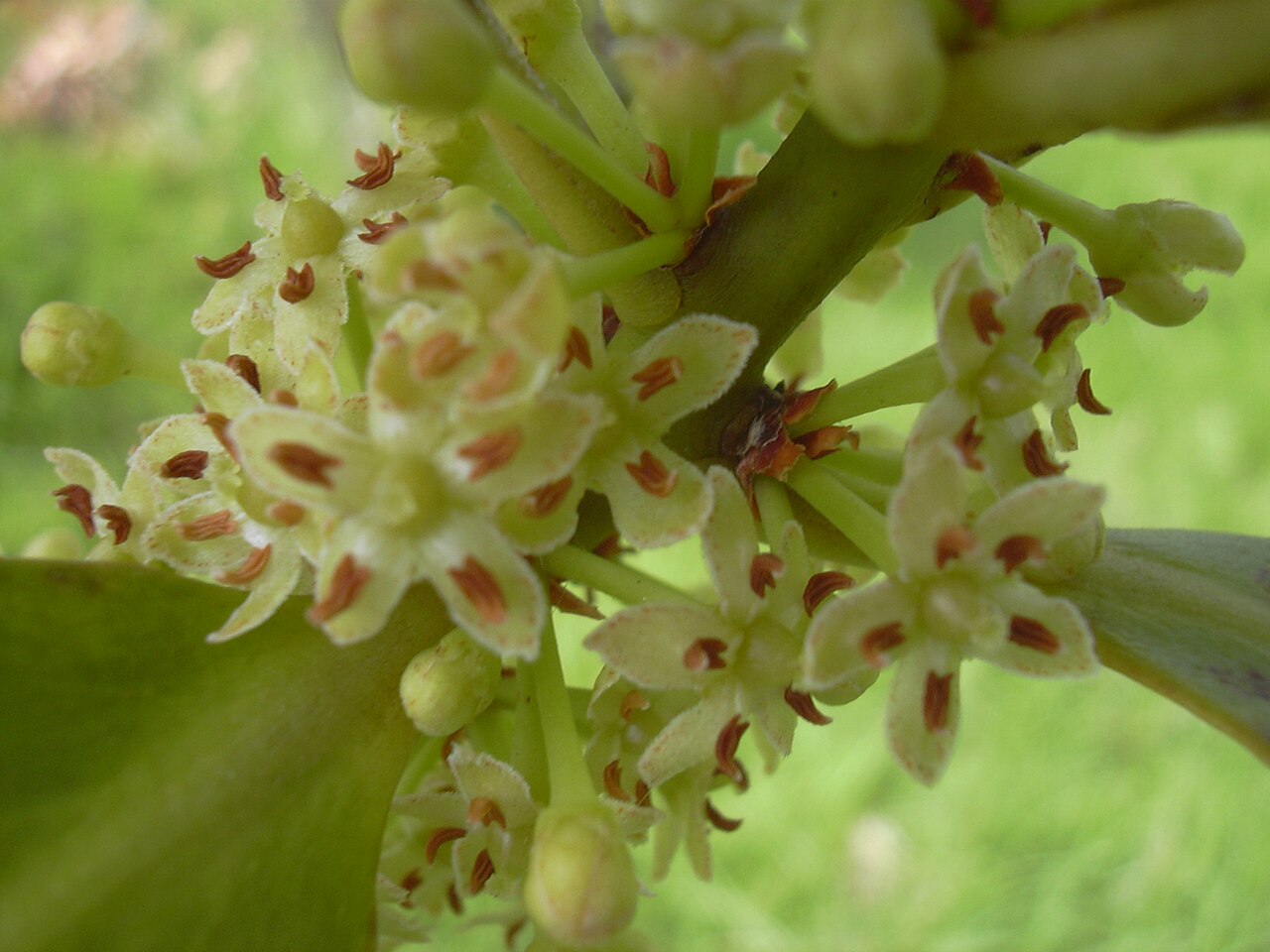
Small greenish to purple-toned flowers occur along twigs behind the newest leaves. They are subtle compared with the magenta flush of foliage. A person looking only for a large flower cluster at the shoot tip may miss them entirely.
Fruit & Seeds
Small rounded fruits develop along the branches and darken as they mature. They are part of the tree’s ecological role, not an invitation to treat every dark native fruit as edible. Propagation material should be collected from correctly identified plants and handled through a reliable nursery method.
Quick Facts
| Scientific Name | Myrsine lessertiana |
| Family | Primulaceae |
| Plant Type | Evergreen native tree or variable shrub/tree |
| Mature Height | 20–50 ft; some forest specimens are larger |
| Mature Spread | Variable; allow room for a tree canopy |
| Growth Rate | Variable with site and provenance |
| Sun Exposure | Full sun to partial sun |
| Water Needs | Average garden moisture; established plants still need water in dry periods |
| Soil Type | Well-drained soil matched to native habitat and nursery provenance |
| Soil pH | Assess local soil and nursery performance before amending |
| Bloom Time | Variable with source and conditions; observe local seasonality |
| Flower Color | Small greenish to purple-toned flowers |
| Fall Color | Evergreen; seasonal new growth may contrast with older foliage |
| Fruit | Small rounded fruits ripening dark |
| Deer Resistant | Not a browse-proof planting; protect young trees where needed |
| USDA Hardiness Zones | Use Hawaiian island, elevation, and exposure guidance for site selection |
Native Range
Kōlea lau nui is endemic to the Hawaiian Islands. Hawaiian botanical accounts record it on Kauaʻi, Oʻahu, Molokaʻi, Lānaʻi, Maui, and Hawaiʻi Island. It occurs in mesic-to-wet forest and can extend into higher-elevation shrubland.
The University of Hawaiʻi profile reports a broad habitat range from around 700 to more than 7,200 feet. A tree from that wide range should still be matched to the planting site. Rainfall, exposure, elevation, and provenance affect garden performance, and a state-native label does not remove those differences.
The map below is a Hawaii state overview rather than a map of individual populations. Use the written range and locality information for more precise decisions. In restoration, retain collection records and avoid moving unidentified kōlea or hybrid material into a wild population.
Native Range
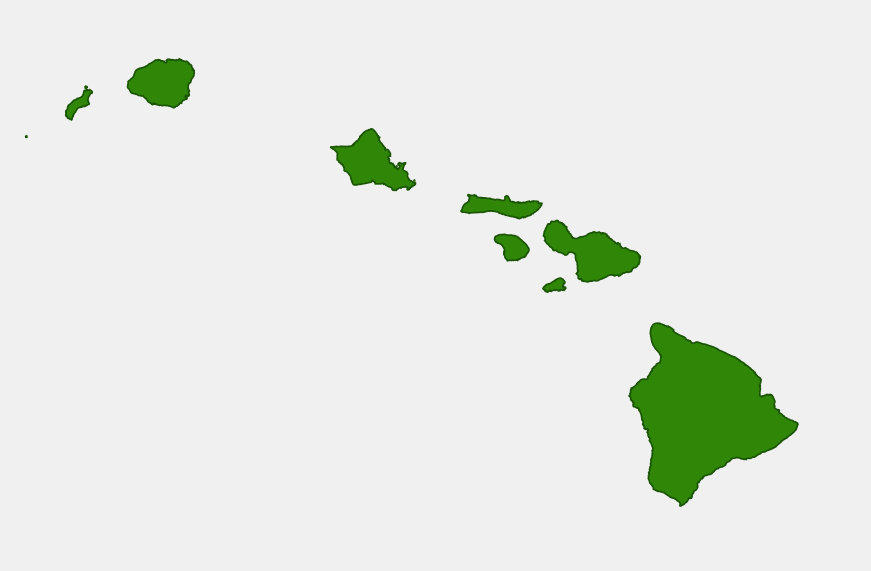
| U.S. States | Hawaii |
| Hawaiian Islands | Kauaʻi, Oʻahu, Molokaʻi, Lānaʻi, Maui, Hawaiʻi |
| Mexico / Canadian Provinces | Not included in the verified native range used here |
| Ecoregion | Hawaiian tropical forest and woodland |
| Elevation Range | Around 700–7,200 ft or more |
| Habitat | Mesic to wet forest, extending into high-elevation shrubland |
| Common Associates | Site-appropriate native forest canopy and understory |
USDA PLANTS profile (MYLE2). Species identity verified; this link is not a guarantee of county-level distribution data.
📋 Compare other canopy and understory choices in our Hawaii native plant list.
Growing & Care Guide
Light
Kōlea lau nui can grow in full or partial sun. Match exposure to the stock and the site rather than choosing the hottest location solely to intensify leaf color. A plant transitioning from a sheltered nursery needs appropriate acclimation before exposure to stronger sun and wind.
Soil & Water
Provide good drainage and monitor moisture during establishment. Hawaiian horticultural guidance allows modest watering for well-established plants but still recommends irrigation during dry periods. Mesic-to-wet forest habitat should not be translated into a permanently saturated planting hole.
Check the original root ball as well as the adjacent soil. A damp surface can conceal a dry nursery mix, while poorly draining ground can remain wet after the surface looks dry. Adjust irrigation to those observations and rainfall instead of relying on an unchanged weekly schedule.
Planting Tips
Handle roots carefully: the University of Hawaiʻi profile specifically cautions that this species dislikes root disturbance. Prepare the planting position before moving the tree, keep the root ball intact, and plant at its established depth. A severely root-bound specimen is not a good candidate for aggressive corrective treatment immediately before planting.
Allow space for a tree in the 20–50-foot planning range, with some forest specimens larger. Avoid placing it where future paving, utility work, or repeated digging will disturb the roots. A permanent mulched planting area with the trunk base kept clear is more useful than a temporary decorative ring in a heavily used lawn.
Pruning & Maintenance
Maintain the natural crown rather than repeatedly cutting away new growth. The colored liko is one of the plant’s attractions; routine shearing can remove that feature and create unnecessary wounds. Address spacing and structural needs while the tree is young.
Watch for sap-feeding insects and branch decline. The Hawaiian profile notes scale, mealybugs, aphids, and black twig borers among potential problems. Identify the cause before treatment, and inspect irrigation and roots as well as the visible pest. A declining branch does not establish that the whole tree needs more water or fertilizer.
Propagation
Use documented seed or nursery stock and retain the species identity through propagation. With multiple kōlea taxa and intermediate plants present in the islands, provenance and identification are more important than collecting whichever dark fruits are most convenient.
Follow a local nursery’s method for cleaning fruit and raising seedlings in well-drained media. Protect young roots during potting and move plants on before severe container restriction develops. Conservation collections should follow an authorized project plan rather than casual seed gathering from a remnant stand.
Landscape Uses
- Foliage specimen: showcase the contrast between magenta new leaves and mature green foliage.
- Native forest garden: combine with plants matched to the same moisture and elevation.
- Educational tree: explain new growth, subtle twig-borne flowers, and changing fruit color.
- Managed restoration: use accurately identified, source-appropriate material and protect the root zone.
Wildlife & Ecological Value
For Pollinators
Small flowers are part of the forest’s reproductive resources even when they escape casual notice. Observe flowering twigs and avoid indiscriminate spraying. Do not assume a plant lacks ecological value because its flowers are less showy than its leaves.
For Birds
Dark fruits and an evergreen crown contribute to native habitat. A garden tree is most useful within a varied planting that also supplies shelter and compatible understory. Avoid promising visits by particular rare birds without evidence that those birds occur at the site.
For Mammals
Protect young trees where introduced browsing animals or livestock are present. Prevent trampling and compaction as well as direct browsing, since root injury can undermine an otherwise healthy canopy.
Ecosystem Role
Kōlea lau nui is part of a diverse native forest community rather than an isolated ornamental. Its roots, litter, foliage, flowers, and fruit contribute at different times. Maintain the surrounding vegetation so that aggressive weeds do not occupy the space made suitable beneath a growing native crown.
Cultural & Historical Uses
Hawaiian accounts describe kōlea wood used in construction and for anvils associated with kapa making. Such uses connect the tree to the properties of its wood and the skills of the people who worked it.
Sources also describe red coloring from bark material and black dye from charcoal. These historical records should not be turned into instructions to strip bark from a living garden or forest tree. Cultural interpretation can acknowledge the material without damaging the plant used to teach about it.
A planted kōlea lau nui offers a living reference for learning Hawaiian names and forest relationships. Keep it correctly identified, work with knowledgeable practitioners on cultural interpretation, and distinguish this species from the other kōlea taxa that share parts of its common-name history.
Frequently Asked Questions
Are the magenta leaves a sign of disease?
Not when they are the normal new-growth flush. Watch how the leaves develop and compare with the plant’s usual pattern before diagnosing a problem.
Is every kōlea the same species?
No. Hawaiʻi has several species and intermediate plants. Use the full scientific name and reliable provenance.
Why does an old book say Myrsinaceae?
That is an older family placement. Current treatments include this group within Primulaceae.
Should I loosen the roots aggressively at planting?
No. This species dislikes root disturbance. Choose healthy stock and handle an intact root ball carefully.
Can I use an unidentified kōlea hybrid for restoration?
Not without project-specific botanical guidance. Restoration requires suitable identity and source, not simply a plant that looks attractive.
Sources & Further Reading
- University of Hawaiʻi, Native Plants Hawaiʻi species profile
- USDA Forest Service: species identification and ecology
Botanical range, identification, and cultural information are based on these sources. Garden-management advice should be adapted to local soil, exposure, and nursery provenance.
Find Native Plants Near You
Look for correctly identified, nursery-propagated plants with documented Hawaiian provenance. Visit our Hawaii native plant nursery directory and ask about stock suited to your island, elevation, and rainfall.