Long Hair Sedge (Carex crinita)
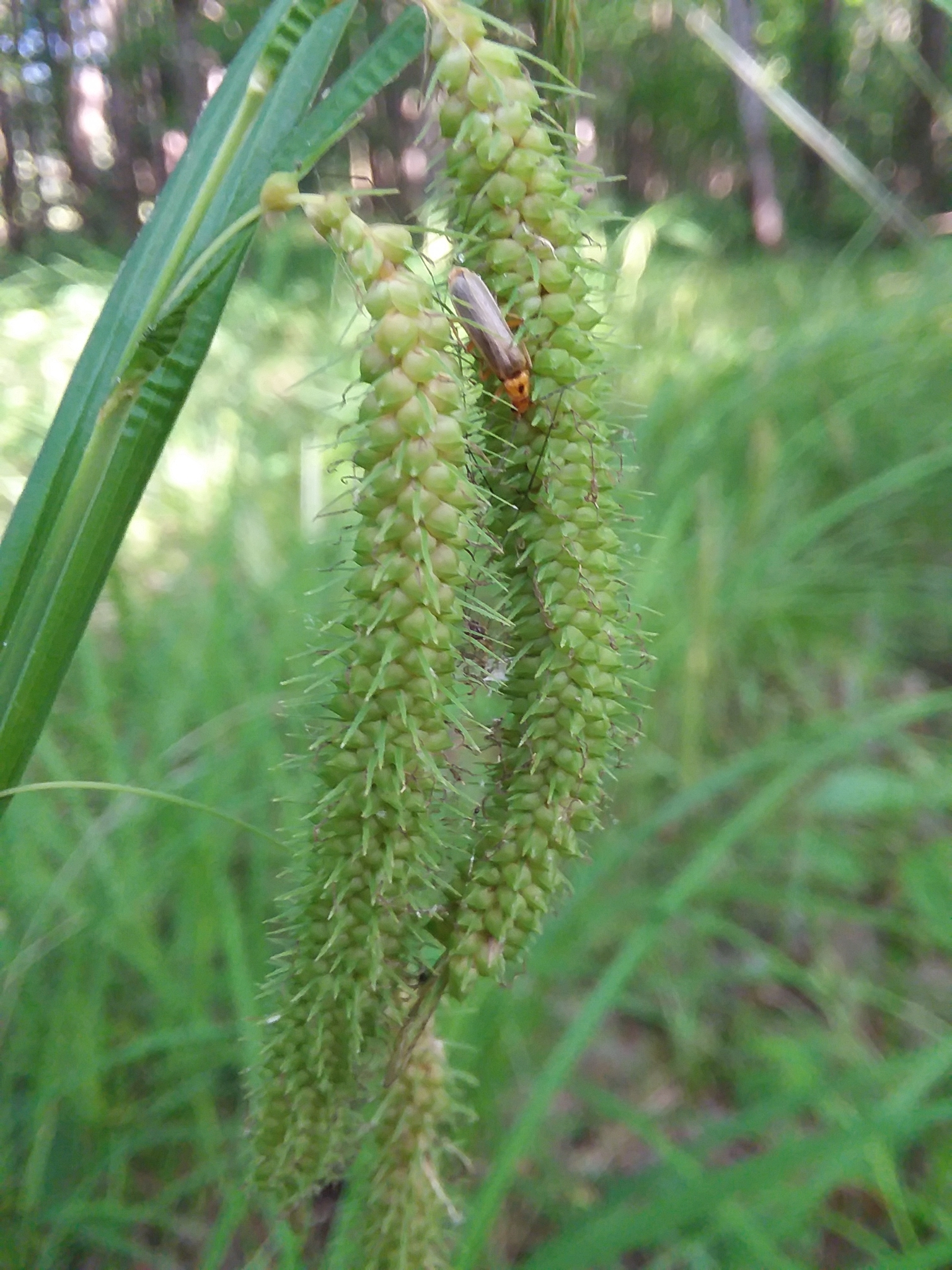
Carex crinita, commonly known as Long Hair Sedge or Fringed Sedge, is one of the most graceful and ecologically valuable native sedges of eastern North America. A member of the large Cyperaceae (Sedge) family, it is instantly recognizable by its long, pendulous, hair-like seed spikes — sometimes reaching 4 to 6 inches in length — that dangle elegantly from arching stems, swaying with the slightest breeze like strands of hair. This distinctive characteristic gives the plant both its common name and its scientific epithet: crinita derives from the Latin word for “long-haired.”
A characteristic plant of wet, shaded habitats throughout the eastern and central United States, Long Hair Sedge thrives along stream banks, in forested wetland edges, seeps, and the wet margins of ponds and lakes. Unlike many sedges, which are primarily valued for their ecological function but overlooked aesthetically, Long Hair Sedge commands attention even from non-botanists — its pendulous spikes and graceful arching form create a movement and texture in the shade garden that few other wetland plants can match. It is increasingly recognized as an outstanding ornamental plant for rain gardens, naturalistic pond edges, and woodland shade gardens in the Mid-Atlantic region and beyond.
The ecological value of Long Hair Sedge extends far beyond its ornamental appeal. The dense, arching clumps provide critical nesting cover and food for wetland wildlife. Waterfowl consume the seeds, while the clump bases shelter frogs, salamanders, and invertebrates. The fibrous root system stabilizes stream banks and filters runoff. For gardeners, restoration ecologists, and landscape designers working with wet shaded areas in Maryland, Virginia, and West Virginia, Long Hair Sedge is a top-tier native plant choice that delivers both ecological function and genuine beauty.
Identification
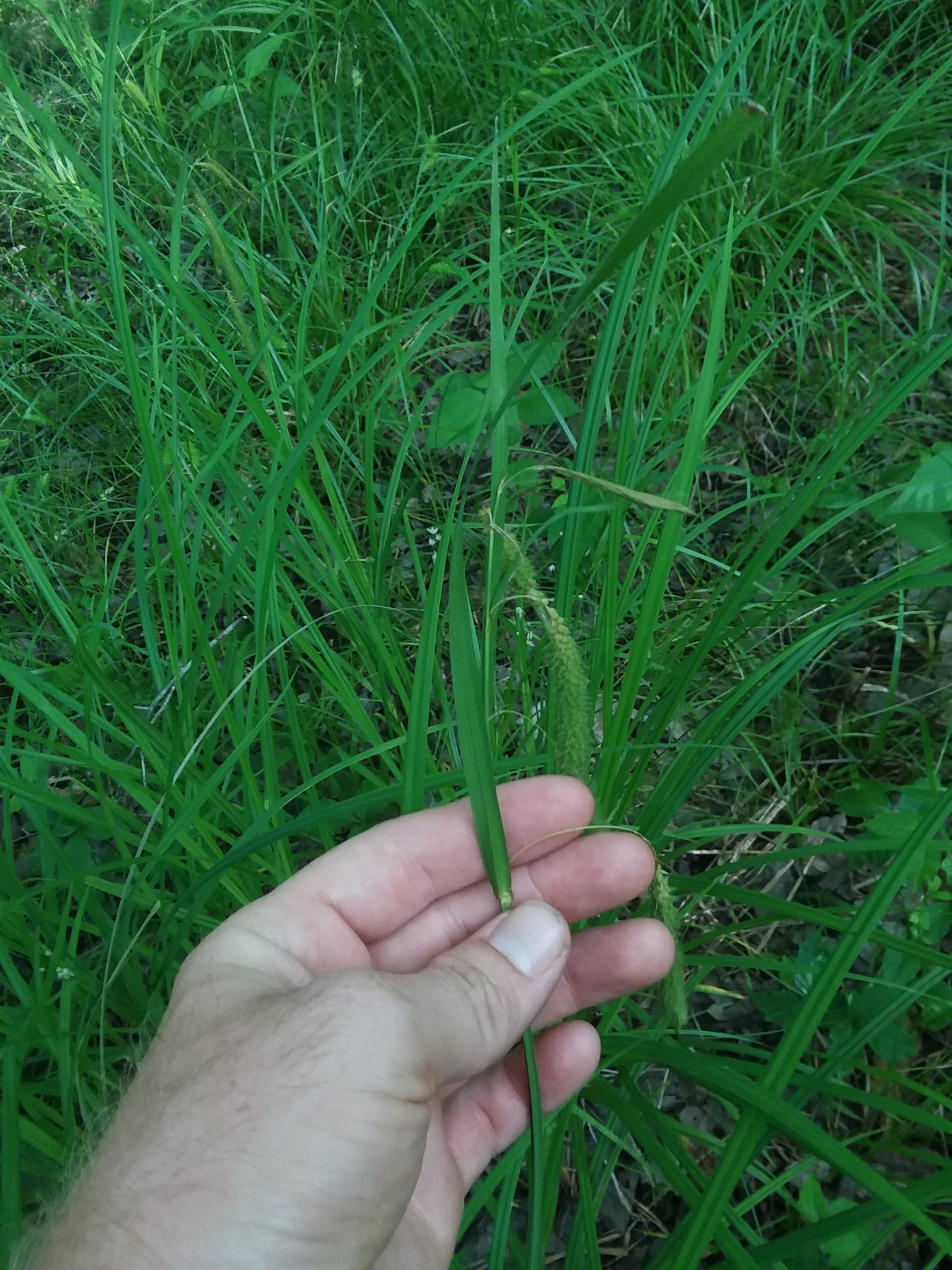
Long Hair Sedge is a medium to large native sedge forming dense, arching clumps of bright to medium green foliage. It grows 2 to 5 feet tall in flower, with the long-drooping seed spikes often extending the visual height further. Like all sedges, it has the characteristic triangular stem cross-section: “sedges have edges” is the classic mnemonic for identifying the sedge family. It can be confused with other large wetland sedges, but the distinctively long, drooping, hair-like spikes are unique and definitive.
Leaves
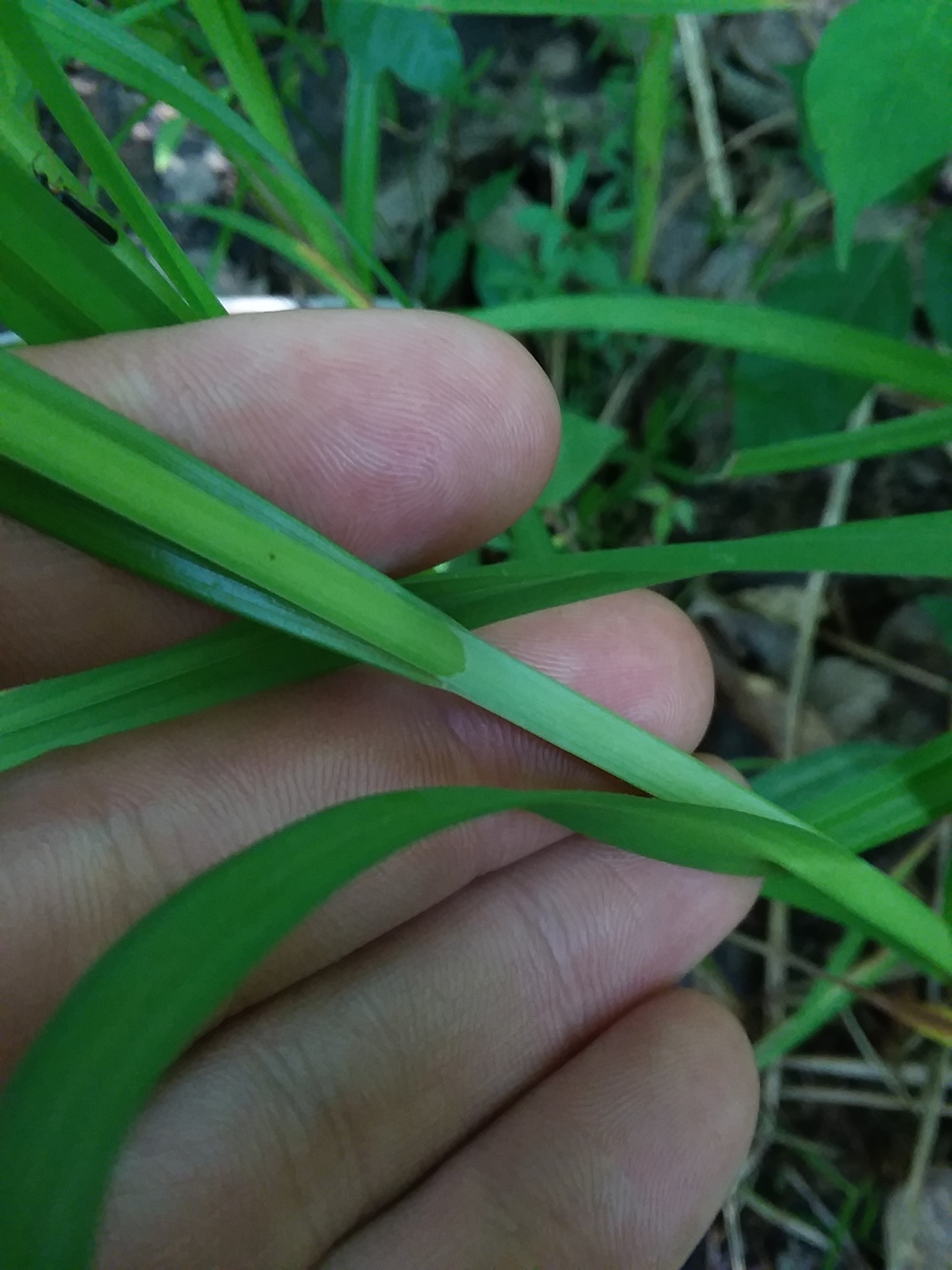
The leaves of Long Hair Sedge are strap-like and grass-like, typically ¼ to ½ inch wide and 12 to 30 inches long, forming a graceful arching clump. They are bright to medium green throughout the growing season, without the glaucous (blue-green) cast seen in some other sedges. The leaf margins are finely rough-textured (scabrous) to the touch. The leaves emerge from the base in a dense, overlapping rosette pattern that creates a full, substantial clump. Leaf texture is soft and flexible compared to the rougher feel of many other wetland sedges.
Flowers & Seeds
The inflorescences are the most distinctive feature. Long Hair Sedge produces multiple (typically 3 to 7) pistillate (female) spikes per stem that are 2 to 6 inches long and hang gracefully on thin, flexible peduncles (stalks). These long, drooping spikes are covered in densely packed scales with distinctive long, hair-like awns that create the “fringed” or “long-haired” appearance. The staminate (male) spikes are much shorter, stiffer, and held at the top of the stem. Blooming occurs from May through July. The mature seed (achene) units ripen in late summer and are consumed by various wetland birds.
Quick Facts
| Scientific Name | Carex crinita |
| Family | Cyperaceae (Sedge) |
| Plant Type | Perennial Sedge |
| Mature Height | 2–5 ft |
| Sun Exposure | Full Sun to Part Shade |
| Water Needs | Moderate to High |
| Bloom Time | May – July |
| Inflorescence | Long, drooping, hair-like seed spikes |
| Soil Type | Wet to moist; tolerates standing water; clay to loam |
| Deer Resistance | Good (fibrous, unpalatable foliage) |
| USDA Hardiness Zones | 4–9 |
Native Range
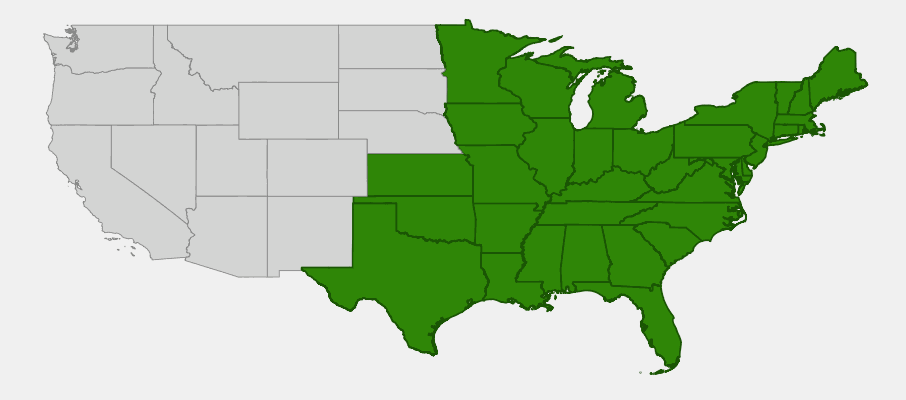
Long Hair Sedge is native to an enormous area of eastern and central North America, ranging from Maine and the Maritime Provinces of Canada west through Quebec and Ontario, south throughout the Atlantic Coastal Plain, Piedmont, and Appalachian highlands, and continuing west through the Midwest to the edge of the Great Plains. The species is native to virtually every state east of the Mississippi River, plus several trans-Mississippi states including Missouri, Iowa, Kansas, Oklahoma, Arkansas, Louisiana, and Texas.
Within this range, Long Hair Sedge is consistently associated with wet, shaded, or partly shaded habitats. It is most characteristic of stream corridor habitats — growing along the banks of forest streams and in floodplain swamps — where it often forms large, dense stands in the zone between the stream’s edge and the upland forest margin. It also occurs in forested seeps, wet depressions in mature hardwood forest, and the shaded margins of ponds and lakes in wooded settings. In the Mid-Atlantic region (Maryland, Virginia, West Virginia), it is a common and ecologically important component of stream corridor communities and forested wetlands throughout the Coastal Plain, Piedmont, and mountain regions.
Long Hair Sedge shows considerable ecological plasticity across its range, occurring from near sea level in coastal wetlands to elevations exceeding 4,000 feet in the Appalachians. Northern populations tend to occupy more sunlit wetland conditions, while southern populations are more consistently associated with shaded stream corridors and forested wetland margins. This adaptability makes it a valuable plant for a wide range of landscape restoration applications.
📋 Regional plant lists featuring Long Hair Sedge: Maryland, Virginia & West Virginia
Growing & Care Guide
Long Hair Sedge is an excellent choice for the wet-shade challenge that stumps many gardeners — the consistently moist, low-light conditions under large trees, along stream margins, and at pond edges where most ornamental plants struggle. Once sited correctly, it requires almost no maintenance and will persist and slowly expand indefinitely.
Light
Long Hair Sedge thrives in full sun to part shade, showing considerable flexibility in light requirements. In nature, it most often grows in dappled shade to moderate shade at stream edges and woodland margins. In full sun, it performs well when consistently moist soil is provided — in drier, sunnier positions it may yellow and decline. The ideal garden situation is morning sun with afternoon shade, or the dappled light of a high deciduous canopy — conditions that replicate its natural streamside habitat.
Soil & Water
Long Hair Sedge requires consistently moist to wet soil and will not tolerate drought. It grows in heavy clay, silty loam, and organic muck soils equally well, as long as moisture is maintained. It can tolerate standing water up to 4 to 6 inches deep for extended periods, making it suitable for rain garden overflow zones, bioswale margins, and pond edges. Unlike some wetland plants, it does not require permanently flooded conditions and performs well in soils that are wet to moist but not constantly inundated. However, the soil must never fully dry out during the growing season.
Planting Tips
Plant Long Hair Sedge in spring or fall, spacing clumps 18 to 24 inches apart for eventual ground cover effect or 24 to 30 inches for individual specimen plantings. Container-grown plants establish quickly — within one growing season they typically double in size and show vigorous new growth. Bare-root transplants from division establish well when planted in early spring. No soil amendment is necessary in typical garden soils; avoid adding sand to clay soils (this makes drainage worse, not better). Mulch lightly with shredded leaves to retain moisture and suppress weeds while plants establish.
Pruning & Maintenance
Long Hair Sedge is semi-evergreen in mild winters and deciduous in cold winters. In spring, cut back any winterkilled foliage to 3 to 4 inches above the ground before new growth emerges — this tidies the planting and removes debris that can harbor disease. Once new growth is underway, no further pruning is needed. The graceful, drooping seed spikes can be left in place through summer and fall to provide wildlife food and ornamental interest. Divide crowded clumps every 3 to 5 years in spring or fall to maintain vigor and create additional plants.
Landscape Uses
- Rain garden overflow zones — the premier native sedge for wet areas within rain gardens
- Stream and pond edges — beautiful naturalistic planting along water features
- Wet shade garden — fills the challenging niche of moist, shaded garden areas
- Stormwater management — bioswales, detention basins, wet ditches
- Erosion control — fibrous roots stabilize stream banks and wet slopes
- Native ground cover — in moist woodland settings where grass struggles
- Wetland restoration — a priority species for stream corridor and wetland restoration plantings
Wildlife & Ecological Value
Long Hair Sedge is one of the most ecologically productive native sedges for wetland and stream corridor habitats, providing food, cover, and structure for an impressive array of wildlife across multiple seasons.
For Birds
The seeds of Long Hair Sedge and other native sedges are an important food source for wetland and ground-feeding birds. Canada Geese, Mallards, Wood Ducks, and other waterfowl consume the seeds directly from the plant. Swamp Sparrows, Common Yellowthroats, Red-winged Blackbirds, and other marsh birds nest in or near dense stands of Long Hair Sedge, which provides excellent concealment and shelter. The dense clump structure offers thermal cover for small birds during winter storms.
For Mammals
Muskrats and beaver regularly eat the rhizomes and young shoots of Long Hair Sedge. Meadow voles and other small mammals use the dense clumps for cover and nesting. The adjacent moist, organic-rich soil supports high populations of earthworms, grubs, and other invertebrates that attract foraging mammals including raccoons, skunks, and moles.
For Pollinators
While sedges are wind-pollinated and do not produce nectar, the moist, shaded areas where Long Hair Sedge thrives are important habitat for many moisture-dependent native bee species, including several Andrena species that nest in stream banks and moist soils. The plant’s clump structure provides nesting cover for solitary ground-nesting bees. Additionally, the moist soil and decomposing leaf litter in Long Hair Sedge stands supports rich invertebrate communities that are important prey for insectivorous birds.
Ecosystem Role
Long Hair Sedge plays a crucial structural role in stream corridor ecosystems. Its dense root system binds the soil of stream banks against erosion — particularly important during flood events — while the above-ground canopy of leaves intercepts rainfall and slows the flow of runoff into streams. The leaf litter from senescing Long Hair Sedge clumps is a major input of organic matter into stream ecosystems, supporting the aquatic invertebrate communities (midges, caddisflies, stoneflies) that form the base of stream food webs. Studies have shown that streams with intact native riparian sedge communities export less nitrogen and phosphorus to downstream waterbodies, making Long Hair Sedge an important player in watershed water quality.
Cultural & Historical Uses
Like most sedges, Carex crinita was not a prominent plant in traditional Indigenous or European folk medicine — its value lay primarily in its ecological role and practical utility rather than medicinal application. However, sedges as a group were widely used by Native American peoples throughout the eastern United States for a variety of practical purposes, and Long Hair Sedge, as one of the most abundant and widespread wetland sedges, would certainly have been part of this cultural resource base.
The leaves and stems of large sedges, including Long Hair Sedge, were used by various Eastern Woodland peoples for weaving, basketry, and mat-making. The flexible, grass-like leaves could be gathered in late summer, dried, and woven into mats, baskets, and floor coverings. Sedge mats were important household items in many Indigenous communities, used for sleeping, sitting, and covering the floors of longhouses and wigwams. The tough rhizomes of some sedges were occasionally used as material for binding and lashing in construction.
In the modern era, Long Hair Sedge has attracted attention primarily from restoration ecologists and native plant horticulturalists who recognize its value as a wetland restoration species and shade-tolerant ornamental. It is increasingly specified in stream bank stabilization projects, stormwater management plantings, and ecological landscape designs throughout the Mid-Atlantic region. Its availability at native plant nurseries has increased significantly over the past decade as awareness of its landscape value has grown among ecologists, landscape architects, and home gardeners alike.
Frequently Asked Questions
What makes Long Hair Sedge different from other wetland sedges?
The most distinctive feature is the extraordinarily long, drooping, hair-like seed spikes (2 to 6 inches), which are unlike those of any other common native sedge in the Mid-Atlantic region. This characteristic, combined with its relatively large size (2 to 5 feet) and preference for shaded to partly shaded wet conditions, makes Long Hair Sedge easy to identify once you know what to look for.
Can Long Hair Sedge grow in standing water?
Yes — it tolerates standing water up to 4 to 6 inches for extended periods, making it suitable for the permanently wet zones of rain gardens and pond edges. However, it doesn’t need to grow in standing water — it performs equally well in wet, moist soils at the water’s edge. Avoid planting in deep water (more than 6 inches), where it may struggle to maintain its growth and flowering.
Is Long Hair Sedge invasive or aggressive?
No — Long Hair Sedge is a well-behaved native plant. It spreads slowly by rhizome, forming gradually expanding clumps, but it is not aggressive and will not overtake a garden or displace other native plants. It self-seeds to a limited extent in optimal conditions. In a properly designed rain garden or pond edge planting, it will spread gradually to fill available space without becoming a problem.
Will deer eat Long Hair Sedge?
Long Hair Sedge is generally considered deer-resistant. The fibrous, somewhat rough texture of the leaves makes it less palatable to deer than many garden plants. Deer may browse tender new growth in early spring but typically move on to more palatable vegetation. This makes it a good choice for gardens with high deer pressure near wetlands and stream corridors.
When is the best time to plant Long Hair Sedge?
Spring and fall are both excellent times for planting Long Hair Sedge. Spring planting (April–May) allows the plant to establish during the active growing season, though consistent watering may be needed during dry spells. Fall planting (September–October) gives roots time to establish before winter and often results in faster spring emergence. Avoid planting in mid-summer heat, when establishment stress is highest.

Looking for a nursery that carries Long Hair Sedge?
Browse our native plant nursery directory: Maryland · Virginia · West Virginia