Longleaf Pine (Pinus palustris)
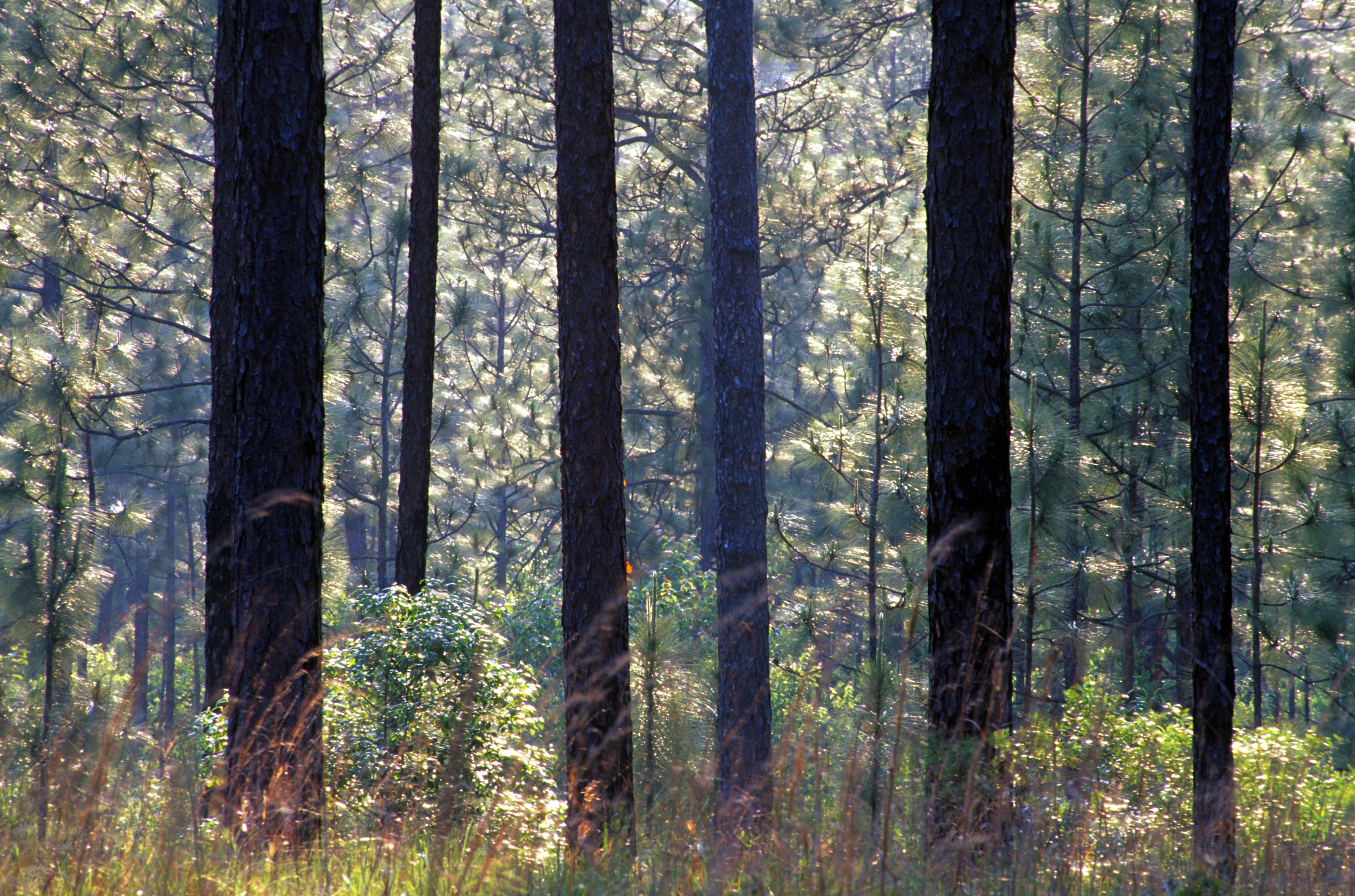
Pinus palustris, commonly known as Longleaf Pine, is arguably the most ecologically significant tree of the southeastern United States — a towering, majestic conifer whose long, sweeping needles and massive cones have defined the southern coastal plain for millions of years. At maturity, Longleaf Pine reaches heights of 80 to 120 feet with a clear, straight trunk and an open, irregular crown that casts dappled light on one of the most biodiverse ecosystems in North America: the longleaf pine savanna. Once covering over 90 million acres from Virginia to Texas, this ecosystem has been reduced to less than 3% of its original extent — making Longleaf Pine one of the most urgently needed restoration trees in the world.
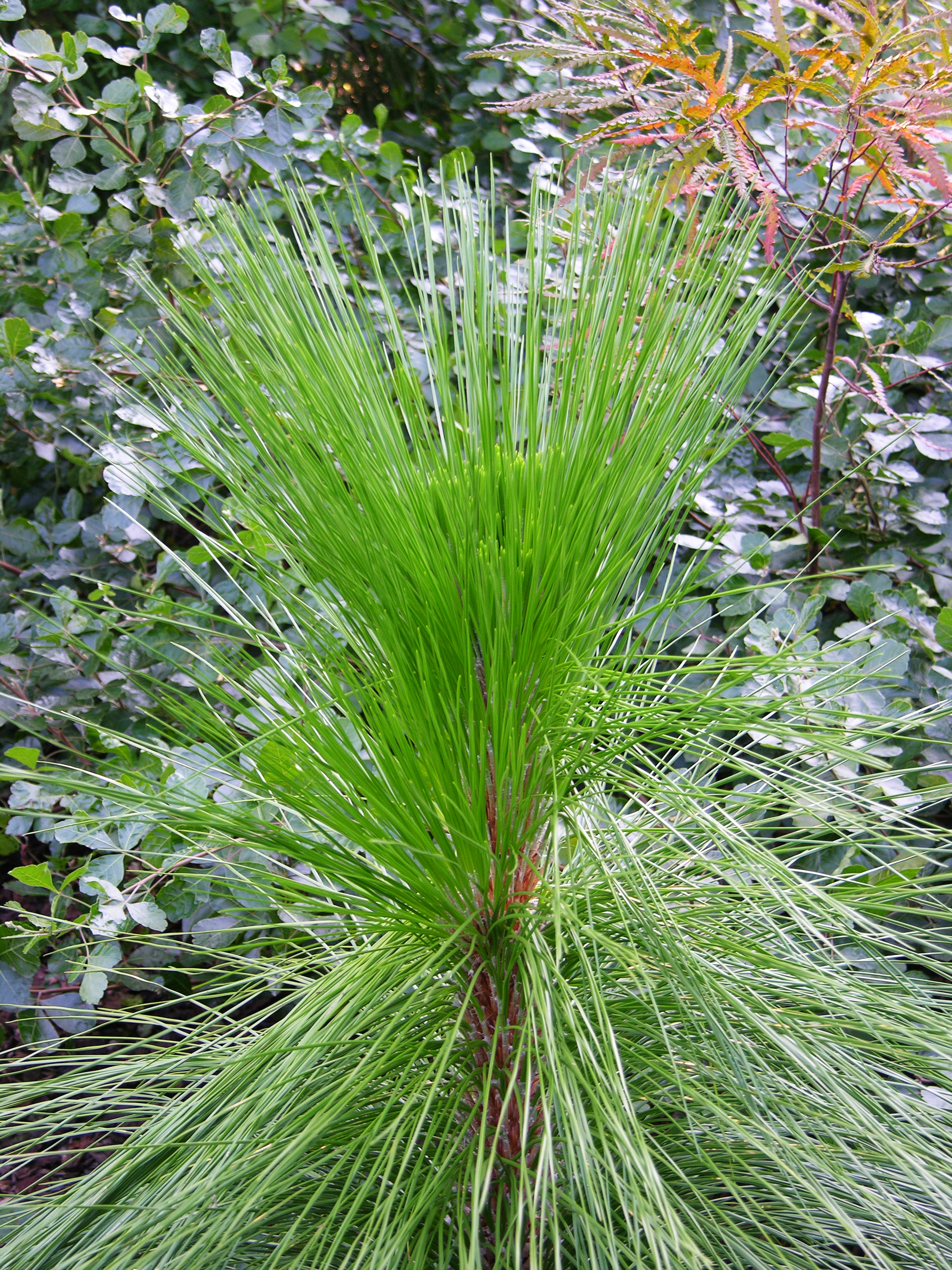
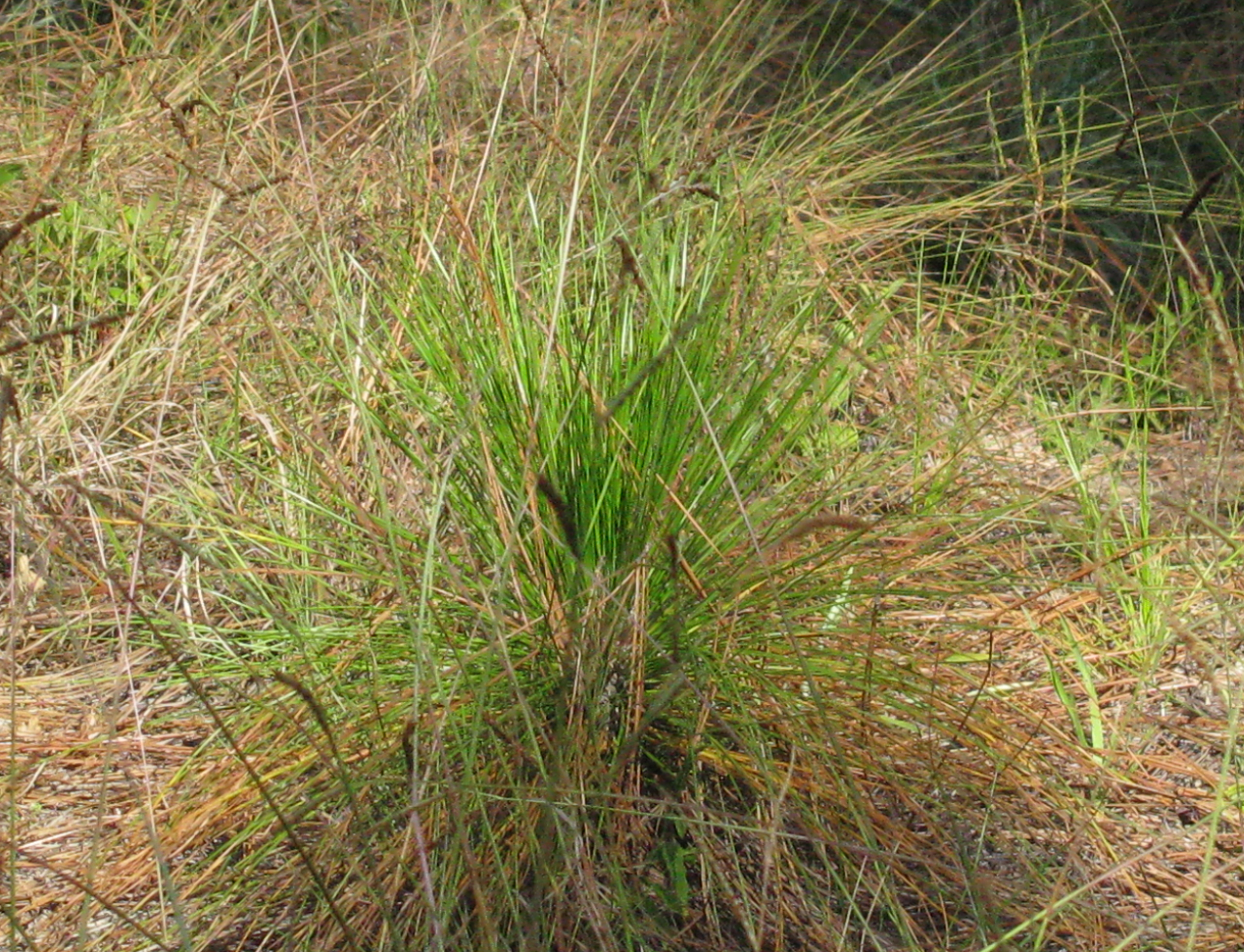
The species is famous for its extraordinary needles — the longest of any North American pine, typically 10 to 15 inches and sometimes reaching 18 inches — which grow in bundles of three and create a distinctive, shaggy, bottle-brush appearance unlike any other tree in the southeastern landscape. Equally remarkable is the plant’s life history strategy: Longleaf Pine seedlings spend anywhere from 2 to 15 years in a “grass stage,” growing little or no visible height above ground while investing in a massive taproot system up to 12 feet deep. This stage makes the seedlings nearly invulnerable to fire — the very mechanism that Longleaf Pine uses to outcompete other, less fire-adapted trees and maintain the open, grassy savannas it requires.
Once above the grass stage, Longleaf Pine grows rapidly until it reaches maturity at several hundred years old. The trees are extraordinarily long-lived, with some specimens confirmed at over 500 years of age, and they produce massive cones — the largest of any eastern pine — that serve as critical food for Red-cockaded Woodpeckers, Eastern Fox Squirrels, Wild Turkeys, and many other threatened and endangered species. For native plant enthusiasts committed to ecological restoration, there is no more important tree to plant in the Southeast than Longleaf Pine.
Identification
Longleaf Pine is a large, straight-trunked conifer that grows to 80–120 feet tall, occasionally more, with a narrow to broadly spreading open crown that becomes more irregular and picturesque with age. The trunk is tall and clear of branches for much of its length, with a distinctive rusty-orange to reddish-brown bark. Young trees are easily distinguished from all other southeastern pines by their grass stage — a low, ground-hugging cluster of very long needles with virtually no visible stem above ground. The grass stage can persist for 2–15 years, after which the tree rapidly elongates in a “rocket stage” of fast upward growth.
Bark
The bark of mature Longleaf Pine is one of its most distinctive features: thick, scaly, and orange-brown to reddish-brown in color, broken into large, flat plates separated by shallow furrows. On very old trees the bark can be 2–3 inches thick, providing substantial protection against the low-intensity ground fires that sweep through longleaf pine savannas. The orange-brown color is particularly striking against the blue sky and grassland understory, giving mature Longleaf Pine savannas their characteristic warm, golden palette. The bark is aromatic with a pleasant resinous scent.
Needles
The needles are the most immediately recognizable feature of Longleaf Pine — the longest of any North American pine, typically 10 to 15 inches long (occasionally up to 18 inches), growing in bundles of three. The needles are dark green, flexible, and slightly twisted, with fine serrations along their margins. They are borne in dense tufts at the ends of upswept branches, giving the crown a distinctive shaggy, mop-like appearance that contrasts sharply with the sparser, more orderly crowns of Loblolly or Slash Pine. Longleaf Pine holds its needles for 2 years before dropping them, creating a deep, springy needle duff on the forest floor that is critical habitat for many ground-nesting animals.
Cones & Flowers
Longleaf Pine produces the largest cones of any pine in the eastern United States, typically 6 to 10 inches long, cylindrical to ovoid, and armed with small but sharp prickles on each scale. The cones take two years to mature from pollination to seed dispersal, ripening to a warm brown in their second fall and opening to release the seeds. Male pollen cones are borne in dense clusters at the branch tips in early spring, releasing massive quantities of yellow pollen that can color the air during calm weather. Female strobili are small and purple-red, clustered near branch tips, receiving pollen in March and April before developing into the massive seed cones.
Quick Facts
| Scientific Name | Pinus palustris |
| Family | Pinaceae (Pine) |
| Plant Type | Evergreen Conifer |
| Mature Height | 100+ ft |
| Sun Exposure | Full Sun |
| Water Needs | Low to Moderate |
| Bloom Time | March – April (pollen release) |
| Flower Color | Purple-red (pollen strobili) |
| USDA Hardiness Zones | 7–10 |
Native Range
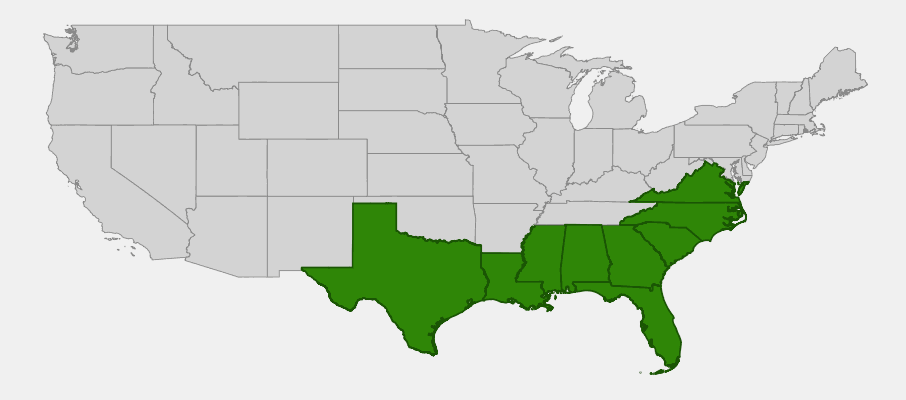
Longleaf Pine is native to the Atlantic and Gulf coastal plains of the southeastern United States, historically forming one of the most extensive forest ecosystems in North America. Its natural range extends from southeastern Virginia south through the Carolinas, Georgia, and all of Florida, then west along the Gulf Coastal Plain through Alabama, Mississippi, Louisiana, and into eastern Texas. Within this range, Longleaf Pine is primarily a species of the outer Coastal Plain, where the sandy, well-drained, fire-prone soils of the longleaf pine–wiregrass ecosystem are most prevalent. It also extends into the Piedmont of the Carolinas and Georgia, and into the rolling sandhills of the interior Coastal Plain.
The longleaf pine ecosystem once covered an estimated 90 million acres of the southeastern United States — making it one of the most extensive forest types in North America before European colonization. This vast ecosystem has been reduced to approximately 3% of its original extent due to over-harvesting for timber and naval stores (tar, pitch, and turpentine), fire suppression, conversion to agriculture and development, and replacement by faster-growing species such as Loblolly Pine (Pinus taeda) in plantation forestry. Today, the longleaf pine ecosystem is recognized as one of the most biodiversity-rich and endangered ecosystems in North America, harboring hundreds of plant species and dozens of threatened and endangered animals including the Red-cockaded Woodpecker and Gopher Tortoise.
Longleaf Pine is specifically adapted to the nutrient-poor, well-drained, sandy soils of the Coastal Plain and Sandhills that are prone to frequent, low-intensity fire — the disturbance regime that Longleaf Pine both requires and creates. Without fire, Longleaf Pine savannas are quickly invaded by hardwoods that shade out both the pine seedlings and the diverse ground-layer plants that make these ecosystems so botanically rich. Restoration of Longleaf Pine requires not only replanting the trees but also reestablishing the fire regime that maintains the open, grassy savanna structure.
📋 Regional plant lists featuring Longleaf Pine: Alabama, Georgia & Mississippi
Growing & Care Guide
Growing Longleaf Pine requires patience — particularly during the grass stage — but the rewards are extraordinary. This is a tree that will outlive you, your children, and your grandchildren, becoming a towering landscape anchor and an ecological powerhouse on whatever property it inhabits.
Light
Longleaf Pine is strictly a full-sun species. It cannot tolerate shade at any life stage and requires open, unobstructed sunlight to establish and grow. In its natural habitat, it maintains open conditions through its partnership with fire, which top-kills competing vegetation and prevents the forest from closing over. In garden settings, plant Longleaf Pine in the most open, sunniest position available and ensure that no large trees are positioned to shade it as they grow. A minimum of 8–10 full-sun hours per day is ideal.
Soil & Water
Longleaf Pine is adapted to the infertile, sandy, acidic, well-drained soils of the southeastern Coastal Plain. It thrives in soils that are too poor for most other trees — deep sands, sandy loams, and loamy sands with a pH of 4.5–6.0. It performs poorly in heavy clay, high-fertility soils, or areas with poor drainage, where competing vegetation overwhelms it. Established trees are remarkably drought-tolerant, their deep taproots accessing subsurface moisture unavailable to shallow-rooted competitors. Do not amend the soil with compost or fertilizer — this will stimulate competing vegetation and is counterproductive in longleaf restoration plantings.
Planting Tips
Plant Longleaf Pine from bareroot or container stock in fall or early winter. The grass stage seedling has a minimal above-ground presence — do not mistake lack of height growth for failure. The tree is investing in its root system during this stage; height growth will come rapidly once it transitions. Plant grass-stage seedlings in full sun in native, unamended sandy soil, water in well, and then largely leave them alone. Avoid mulching close to the stem. Spacing for restoration plantings is typically 6–10 feet apart; for landscape specimens, allow 20–30 feet.
Pruning & Maintenance
Mature Longleaf Pines require virtually no maintenance. The trees are naturally pest- and disease-resistant and are rarely affected by the pine bark beetles that devastate Loblolly Pine plantations during drought years. Avoid overwatering and soil compaction — the two main causes of decline in cultivated Longleaf Pines. Prescribed burning of the ground layer every 2–5 years, where legally permissible, dramatically improves the health and survival of Longleaf Pines and supports the diverse ground-layer flora associated with the ecosystem.
Landscape Uses
Longleaf Pine is suitable for a range of landscape contexts:
- Open lawn specimen — the graceful crown and orange bark are striking at maturity
- Savanna restoration — the core tree of one of America’s most endangered ecosystems
- Sandy upland gardens — thrives where most trees struggle due to poor, dry soils
- Long-term legacy planting — a tree that will outlive generations
- Wildlife habitat — supports Red-cockaded Woodpecker, Fox Squirrel, Wild Turkey, and hundreds of other species
- Large estates and conservation properties — best at scales where fire management is feasible
Wildlife & Ecological Value
Longleaf Pine and the savanna ecosystem it creates support a biodiversity that is, hectare for hectare, among the richest in North America. The tree itself, the open savanna structure, and the thick needle duff all provide critical resources for an extraordinary range of wildlife.
For Birds
The Red-cockaded Woodpecker (Dryobates borealis) is perhaps the most emblematic bird of the Longleaf Pine ecosystem, a federally endangered species that nests exclusively in cavities excavated in living longleaf pines afflicted with red heart fungus. A single colony of Red-cockaded Woodpeckers requires dozens of mature Longleaf Pines for foraging and nesting. Beyond the woodpecker, Longleaf Pine savannas support Bachman’s Sparrow, Brown-headed Nuthatch, Eastern Towhee, and numerous neotropical migrants. Wild Turkeys consume the large seeds, and Northern Bobwhite — another species of conservation concern — depend on the open, grassy savanna structure for foraging and nesting.
For Mammals
The Sherman’s Fox Squirrel and Eastern Fox Squirrel depend heavily on Longleaf Pine seeds and are major seed dispersers for the species. The Gopher Tortoise, a keystone species of the longleaf pine ecosystem, digs burrows in the open sandy ground beneath the pines — burrows that provide habitat for over 350 other species of plants, invertebrates, and vertebrates. White-tailed Deer, Eastern Cottontail, and numerous small mammals use the open savanna structure for foraging and escape cover.
For Pollinators
While pine flowers do not provide nectar, the open, grassy ground layer of Longleaf Pine savannas is among the most diverse wildflower communities in North America, supporting hundreds of plant species including many endemic to the longleaf pine ecosystem. This ground layer — maintained by fire — provides critical nectar and pollen for native bees, butterflies, and other pollinators. Longleaf Pine savannas have been identified as globally significant hotspots for rare and endemic bee species.
Ecosystem Role
Longleaf Pine is the keystone species of one of the most biologically diverse and most endangered ecosystems in the world. The tree’s partnership with fire maintains the open savanna structure that is required by hundreds of plant and animal species found nowhere else. Its massive, resin-soaked heartwood resists decay for decades after death, providing critical snag habitat for cavity-nesting birds and mammals. The deep sandy soils of longleaf pine savannas are important for groundwater recharge, and the ecosystem’s high permeability helps regulate regional hydrology across the southeastern coastal plain.
Cultural & Historical Uses
Longleaf Pine has shaped the human history of the southeastern United States more profoundly than perhaps any other single tree species. For thousands of years before European contact, Indigenous peoples of the coastal plain used Longleaf Pine resin, wood, bark, and needles extensively. The Cherokee, Creek, Choctaw, and other southeastern nations used the resin as a waterproofing material, the inner bark as emergency food and a source of vitamin C, and pine needle baskets woven from the long needles of Longleaf Pine were a highly developed art form practiced by numerous tribes. Coiled pine needle baskets remain a living Native American art form today, particularly among the Lumbee of North Carolina and the Eastern Band of Cherokee.
For European colonizers and the young United States, Longleaf Pine was the foundation of the naval stores industry — one of the most economically significant industries of colonial and antebellum America. Tar, pitch, turpentine, and resin extracted from Longleaf Pines were essential for waterproofing the wooden hulls of sailing ships, and the long, straight, rot-resistant trunks of old-growth Longleaf Pines were the preferred material for ship masts, spars, and structural lumber. The phrase “heart pine” — synonymous with the dense, resin-soaked heartwood of old-growth Longleaf Pine — became a byword for quality in southern construction. Many 19th-century buildings throughout the Southeast were built with Longleaf Pine lumber so dense and durable that it is still being salvaged and repurposed today.
The timber rush of the late 19th and early 20th centuries, combined with the turpentine industry and the subsequent conversion of cutover land to agriculture, essentially eliminated old-growth Longleaf Pine forests across the Southeast within a few decades. The ecological catastrophe that followed — the loss of hundreds of species of plants and animals dependent on the longleaf pine ecosystem — is now recognized as one of the most significant biodiversity crises in North American history. Restoration of Longleaf Pine has become a major conservation priority, with millions of acres targeted for recovery through partnerships between federal agencies, state governments, and private landowners.
Frequently Asked Questions
Why isn’t my Longleaf Pine seedling growing taller?
This is completely normal. Longleaf Pine seedlings spend their early years in the ‘grass stage’ — a rosette of very long needles that looks more like ornamental grass than a tree. During this stage (which can last 2–15 years), the tree is investing in a massive taproot system rather than upward growth. Once the taproot is well established, the tree shifts to a ‘rocket stage’ of rapid vertical growth, sometimes adding 3–5 feet per year. Patience is essential.
How big do Longleaf Pine cones get?
Longleaf Pine produces the largest cones of any pine in the eastern United States, typically 6 to 10 inches long. The cones take two years to develop fully and ripen to a warm brown in the fall of their second year. They are armed with small, sharp prickles and contain large, nutritious seeds that are eagerly consumed by squirrels, Wild Turkeys, and other wildlife.
Does Longleaf Pine need fire to grow?
In its natural ecosystem, Longleaf Pine is dependent on regular fire to maintain the open savanna conditions it requires. Fire top-kills competing hardwoods and shrubs, preventing them from shading out Longleaf Pine seedlings. In garden settings without fire management, the trees will still grow but competing vegetation must be managed mechanically or with targeted herbicides to prevent overtopping. Prescribed burning every 2–5 years is ideal for restoration settings.
How long does a Longleaf Pine live?
Longleaf Pine is one of the longest-lived trees in the eastern United States, with verified ages exceeding 500 years. The oldest known specimens in old-growth remnants are estimated at 400–500+ years. Modern plantation Longleaf Pines are typically harvested at 40–80 years, far short of the ecological ages at which the trees develop the characteristics required by species like the Red-cockaded Woodpecker.
What is ‘heart pine’ and is it from Longleaf Pine?
Yes — ‘heart pine’ is the common name for the dense, amber-colored, resin-soaked heartwood of old-growth Longleaf Pine. It is extraordinarily hard, strong, and resistant to rot and insects. Heart pine was the material of choice for floors, structural beams, and furniture in 19th-century southern buildings, and antique heart pine is highly prized for reclaimed wood projects today. Modern Longleaf Pine does not develop true heart pine until the tree is 80–100+ years old.

Looking for a nursery that carries Longleaf Pine?
Browse our native plant nursery directory: Alabama · Georgia · Mississippi