
Mangrove Spiderlily (Hymenocallis latifolia)
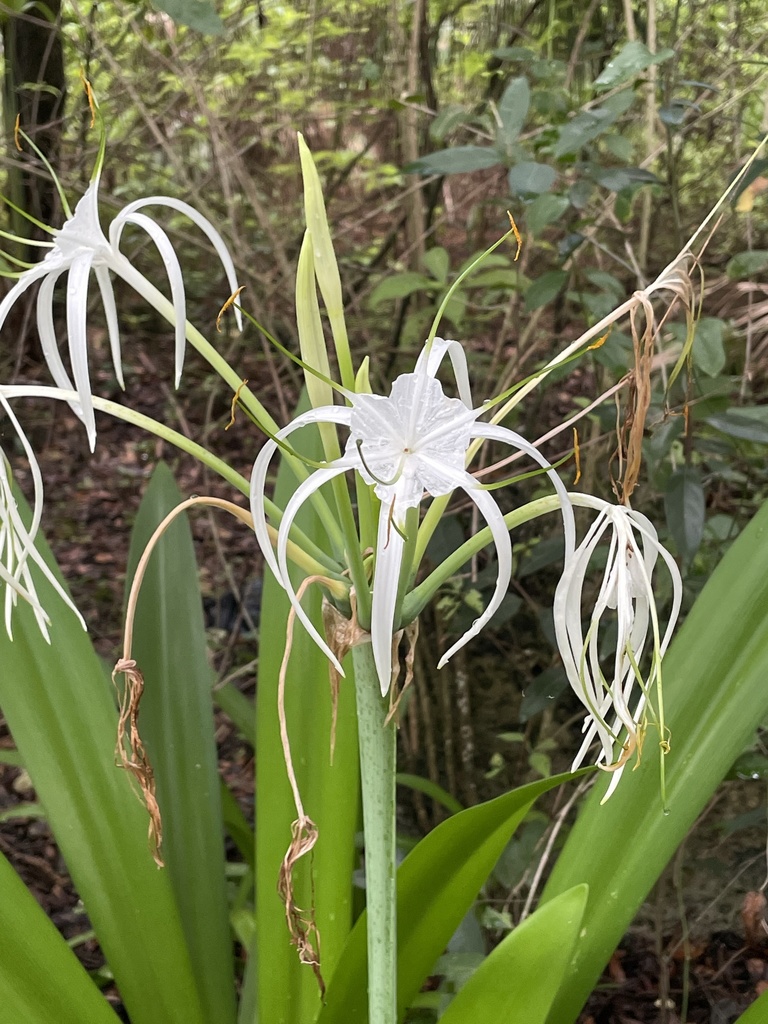
Hymenocallis latifolia, known as Mangrove Spiderlily or perfumed spiderlily, is a large evergreen bulb of south Florida’s coasts. It forms bold clumps of glossy, strap-shaped leaves 2 to 3 feet long, and in spring and summer it sends up stout stalks topped with clusters of fragrant white flowers. Each flower has a delicate white cup in the center and six long, narrow petals that hang and curl like a spider’s legs.
It belongs to the amaryllis family (Amaryllidaceae), along with the swamp lily and the rain lilies. The genus name Hymenocallis comes from Greek for “beautiful membrane”, a reference to the cup of tissue that joins the stamens. The species name latifolia means “broad-leaved”. Older references and some nurseries list it as Hymenocallis keyensis, a name once used for plants in the Florida Keys.
Mangrove spiderlily grows along the edges of mangrove swamps, in coastal hammocks, on beach dunes and shell mounds, and on rocky shores from central to south Florida and the Keys, and throughout much of the Caribbean. It tolerates salt spray and occasional flooding with brackish water, which makes it one of the showiest native plants for coastal gardens. This guide covers identification, range, care and wildlife value.
Identification
Several spiderlilies grow in Florida, and they can be hard to tell apart. Mangrove spiderlily is the common coastal species of south Florida and is recognized by its broad, glossy, evergreen leaves, its large clumps, and its many-flowered clusters of fragrant flowers.
Bulb & Leaves
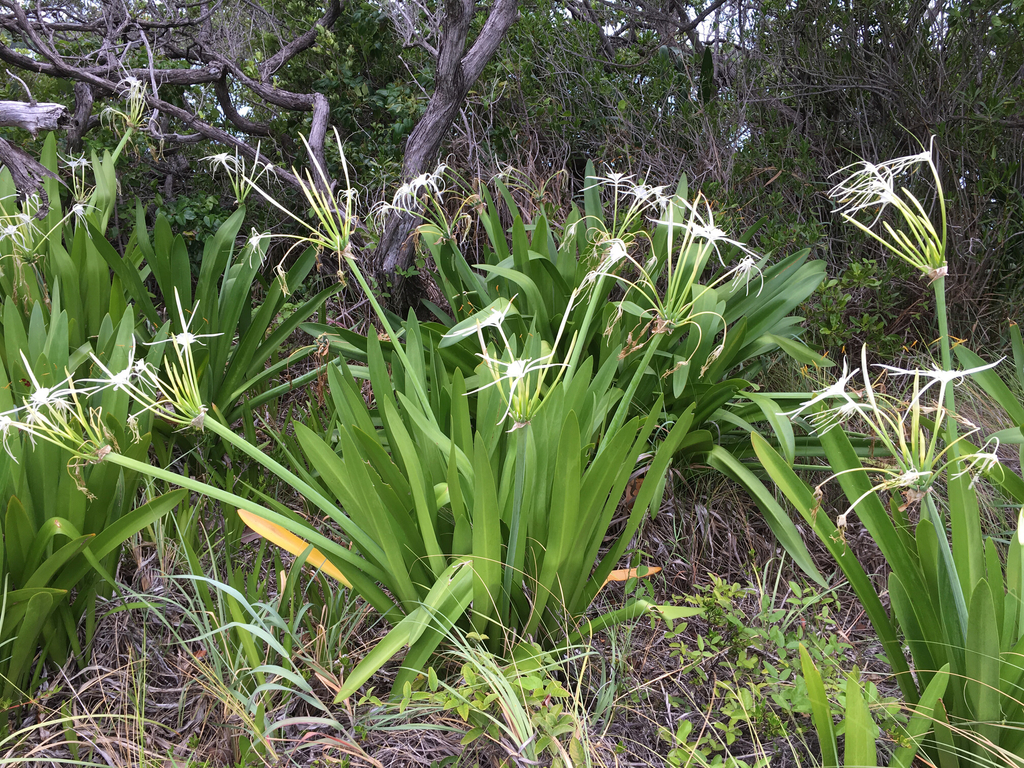
It grows from a large, rounded bulb up to about 4 inches across, often with a long neck. Plants multiply by offsets and form dense clumps. The leaves are evergreen, strap-shaped, thick and glossy, usually 1½ to 3 inches wide and 2 to 3 feet long, arching out from the base in a fountain-like rosette.
Flower Stalk
The flower stalk (scape) is thick, flattened and solid, 1½ to 3 feet tall, and usually shorter than or about as tall as the leaves. At the top it bears an umbel of roughly 6 to 16 flowers, which open over a few days.
Flowers
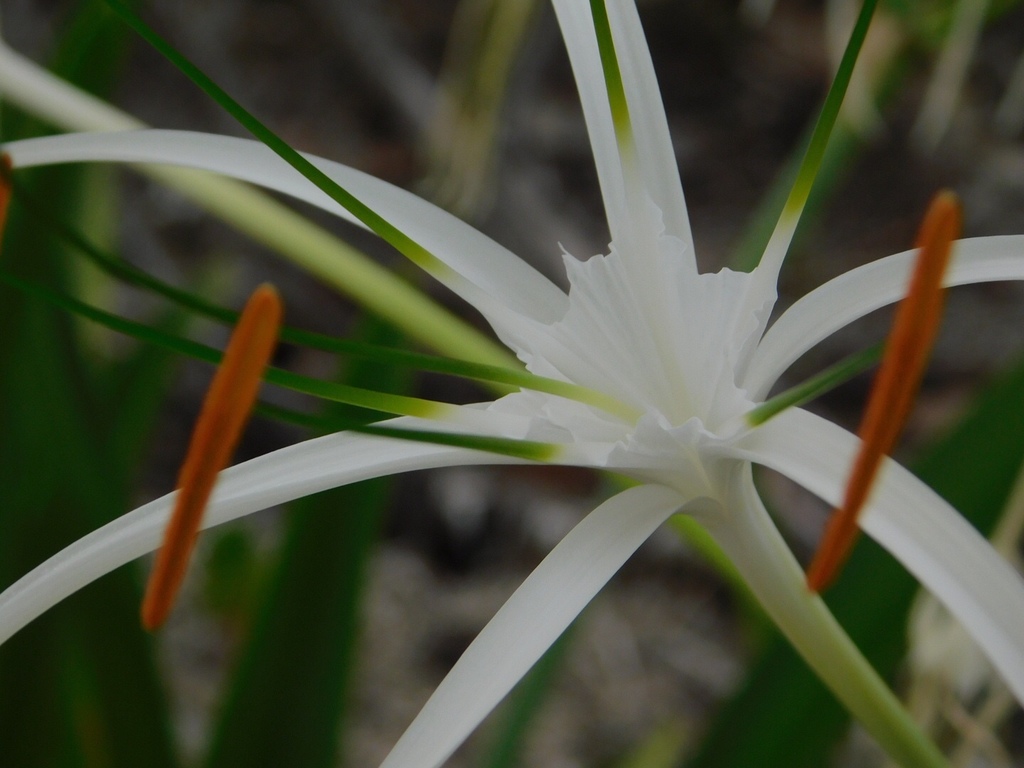
Each flower has a slender green tube 4 to 7 inches long, six very narrow white tepals 4 to 6 inches long, and a white staminal cup about an inch across that connects the bases of the six stamens. The stamens extend beyond the cup on long, greenish-white filaments and carry orange anthers. The flowers are strongly fragrant, especially in the evening and at night. In south Florida most flowering is from spring into early fall, with scattered blooms at other times.
Fruit & Seeds
After flowering, each pollinated flower produces a green, somewhat fleshy capsule containing one to a few large, green, fleshy seeds. The seeds have no dormancy and often begin to sprout soon after they fall, sometimes while still on the stalk.
Quick Facts
| Scientific Name | Hymenocallis latifolia (Mill.) M. Roem. (syn. H. keyensis) |
| Family | Amaryllidaceae (amaryllis family) |
| Plant Type | Evergreen bulbous perennial |
| Mature Height | 2–3 ft |
| Mature Spread | 3–4 ft per clump |
| Growth Rate | Moderate |
| Sun Exposure | Full sun to part shade |
| Water Needs | Medium; tolerates both drought and brief flooding |
| Soil Type | Sand, shell, limestone or organic coastal soils |
| Soil pH | Slightly acidic to alkaline, about 6.0–8.5 |
| Bloom Time | Spring–early fall in south Florida |
| Flower Color | White, with orange anthers |
| Fall Color | None; evergreen |
| Fruit | Green capsule with large fleshy seeds |
| Deer Resistant | Yes; foliage and bulbs contain toxic alkaloids |
| USDA Hardiness Zones | 9b–11 |
Native Range
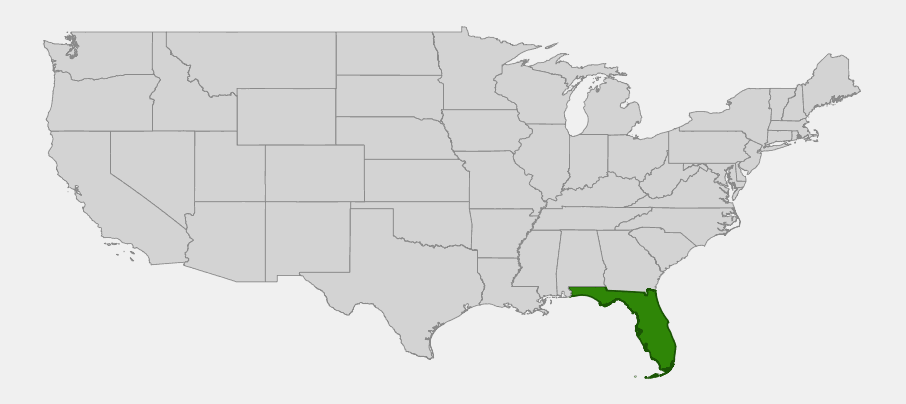
In the continental United States, mangrove spiderlily is native to Florida, where the Atlas of Florida Plants maps it in coastal counties of the central and southern peninsula and throughout the Florida Keys. USDA PLANTS also lists it as native in Puerto Rico, the U.S. Virgin Islands and Navassa Island. USDA distribution data include an additional record from Texas, but its native occurrence there is not well documented, so this guide maps it to Florida only.
Beyond U.S. territory it is widespread in the Caribbean, including the Bahamas, Cuba, Hispaniola and the Lesser Antilles. It is also widely planted as an ornamental in tropical regions.
Its natural habitats are the upper edges of mangrove swamps and salt marshes, coastal hammocks, coastal strand and dunes, shell mounds, and rocky shores. It usually grows just above normal high tide, where it receives salt spray and occasional storm-surge flooding but not daily tidal flooding.
📋 Regional plant lists featuring Mangrove Spiderlily: North & South Florida
Growing & Care Guide
Mangrove spiderlily is an adaptable, low-maintenance plant for coastal and south Florida landscapes, and it is sold by many native plant nurseries. It is often grown alongside or confused with non-native spiderlilies, so buy it from a native plant nursery that labels it correctly. Do not dig bulbs from the wild.
Light
It grows in full sun to part shade. Plants in full sun are more compact and flower more heavily; in shade they have longer, darker leaves and fewer blooms.
Soil & Water
Mangrove spiderlily tolerates a wide range of soils, from beach sand and limestone to rich, moist organic soils. It does best with moderate moisture, and it handles both drought and short periods of flooding, including brackish water. It has high salt tolerance and can be planted near the shore where it receives salt spray. Water new plants regularly until they are established.
Planting Tips
Plant bulbs or potted plants at any time of year in south Florida, setting the bulb with its neck just at or slightly above the soil surface. Space plants 3 to 4 feet apart; clumps fill in over a few years. It is effective in mass plantings, along water features, at the edge of mangrove or hammock plantings, and as a bold foliage plant in a tropical-style garden. It is frost-tender and best suited to south and coastal central Florida.
Pruning & Maintenance
Remove old flower stalks and dead leaves as needed. Plants respond to light fertilization in poor soils but grow well without it. Watch for lubber grasshoppers and the caterpillars of the spanish moth (convict caterpillar), which can chew leaves of plants in the amaryllis family; the damage is usually cosmetic.
Propagation
Propagate by dividing clumps and separating offset bulbs, or by planting the large fleshy seeds as soon as they ripen. Seeds should be pressed into the surface of moist soil, not buried deeply. Seedlings may flower in a year or two.
Landscape Uses
- Coastal landscapes: salt-tolerant accent for seaside yards and shoreline buffers
- Mass plantings: bold, fountain-like foliage for borders and large beds
- Moonlight and fragrance gardens: night-fragrant white flowers near patios and walks
- Pond and water-feature edges: tolerates wet soil and brief flooding
- Habitat restoration: in coastal hammock and mangrove-edge restoration in south Florida
Wildlife & Ecological Value
Mangrove spiderlily is an important nectar source for night-flying moths in coastal south Florida, and its dense clumps provide shelter at the edge of mangroves and hammocks.
For Pollinators
The long-tubed, night-fragrant flowers are adapted to pollination by sphinx moths (hawk moths), which hover and reach the nectar at the base of the tube with their long tongues while their wings and bodies brush the anthers. Daytime visitors such as butterflies and bees also take pollen and nectar.
For Birds
The plant is not a significant food source for birds, but clumps give cover to small birds, lizards and crabs at the edges of mangrove and coastal habitats.
For Mammals
The bulbs and leaves contain toxic alkaloids typical of the amaryllis family and are rarely eaten by mammals.
Ecosystem Role
Its large fleshy seeds fall close to the parent or are carried short distances by water, which helps the species spread along shorelines. Its dense clumps help stabilize sandy and shelly soils along the upper edges of the shore.
Cultural & Historical Uses
Mangrove spiderlily was described by the Scottish botanist Philip Miller in the eighteenth century as a species of Pancratium, and later transferred to Hymenocallis by the German botanist Max Joseph Roemer. Its taxonomy has been confusing, and plants in the Florida Keys were for a time called Hymenocallis keyensis.
Spiderlilies are widely grown as ornamentals in the tropics, and mangrove spiderlily is one of several species planted around homes, hotels and public gardens in Florida and the Caribbean. All parts contain alkaloids such as lycorine and should not be eaten.
Florida native plant gardeners value it as a showy alternative to non-native ornamental spiderlilies and crinums, and it is frequently used in coastal restoration and public landscapes in south Florida.
Frequently Asked Questions
Is mangrove spiderlily poisonous?
Yes. Like other members of the amaryllis family, its bulbs and leaves contain toxic alkaloids. Keep children and pets from eating it.
Does mangrove spiderlily tolerate salt?
Yes. It has high salt tolerance and grows naturally at the edges of mangrove swamps and on dunes and shell mounds, where it receives salt spray and occasional brackish flooding.
When does mangrove spiderlily bloom?
Mostly from spring into early fall in south Florida, with occasional blooms in other months.
Can I grow mangrove spiderlily in north Florida?
It is frost-tender and grows best in USDA zones 9b to 11. In colder areas, choose a hardier native relative such as swamp lily or a regionally native Hymenocallis.
Why are the flowers fragrant at night?
The flowers are pollinated mainly by sphinx moths, which fly at dusk and at night. The fragrance and white color help the moths find the flowers in low light.

Looking for a nursery that carries Mangrove Spiderlily?
Browse our native plant nursery directory: Florida