Matilija Poppy (Romneya coulteri)
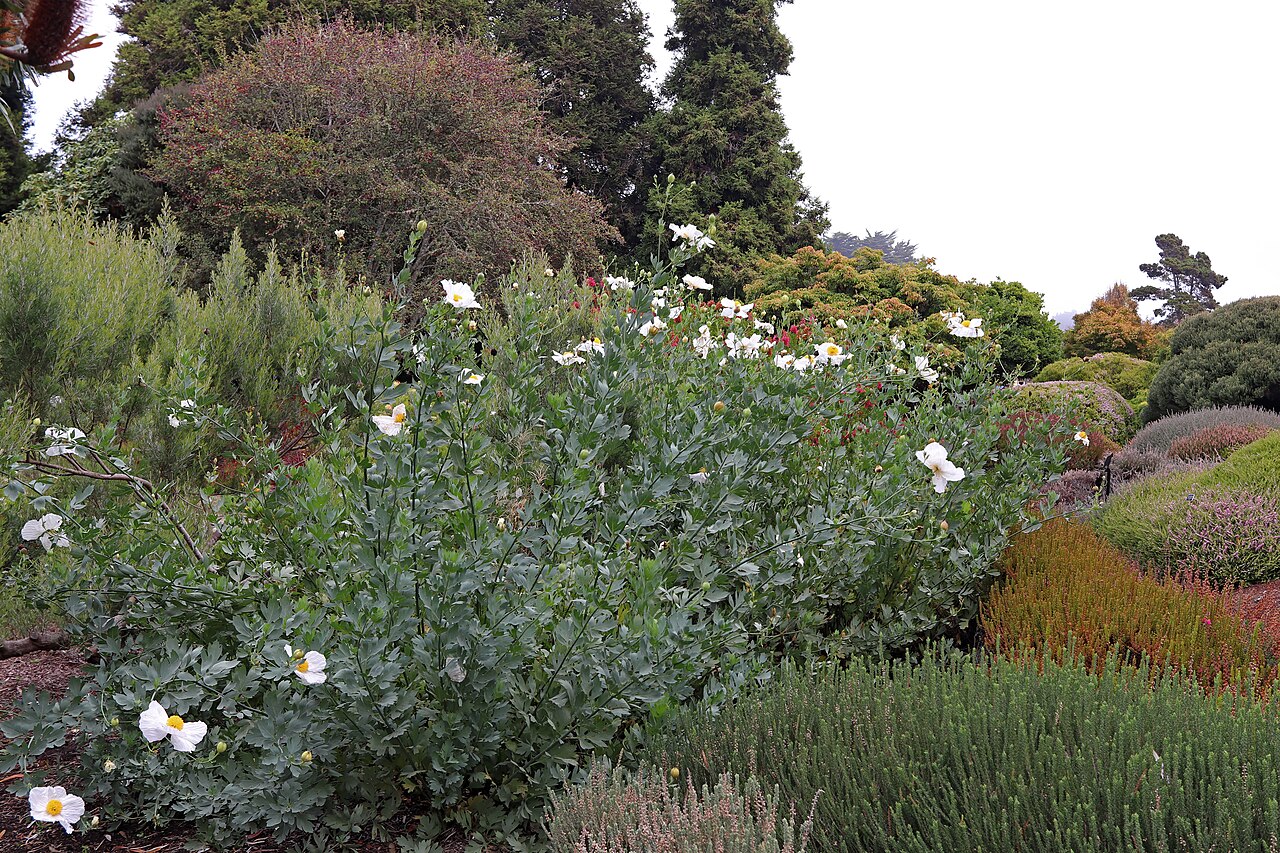
Romneya coulteri, commonly called the Matilija Poppy or Coulter’s Matilija poppy, is a tough, rhizomatous perennial in the poppy family (Papaveraceae) found only in a narrow band of Southern California. Gardeners sometimes call it the “fried-egg plant,” a nod to its enormous white petals wrapped around a bright yellow boss of stamens — flowers that can reach 6 to 9 inches across, among the largest of any plant native to North America. It is also, without much exaggeration, one of the most dramatic and most unruly native plants you can put in a garden.
In the wild, Matilija poppy grows in dry washes, canyon bottoms, and disturbed chaparral and coastal sage scrub from San Diego and Orange counties north into the Santa Monica Mountains and Transverse Ranges, with a related population across the border in northern Baja California. It forms loose colonies of gray-green, deeply lobed stems that die back to the rootstock after a hard freeze or summer drought and resprout the following season, often after wildfire has cleared the surrounding brush.
In the landscape, this is a plant people either love for its show-stopping flowers or regret for its relentless spread. Once established — and establishment itself can be a challenge, since the deep, brittle roots resent any disturbance — Matilija poppy spreads by underground rhizomes that can send up new shoots 10, 15, or even 20 feet from the original planting. It is not a plant for a small border or a bed near other delicate perennials; it belongs in a dry, open corner where it can be given room to roam, or where a buried barrier or mowed strip can keep it in bounds.
Identification
Matilija poppy is a woody-based perennial subshrub, typically reaching 5 to 8 feet tall with an indefinite spread once its rhizomes get going. New growth emerges from the rootstock each spring as smooth, blue-green to gray-green stems that stiffen and partially woody toward the base as the season progresses.
Stems & Roots
Stems are stout, upright, and sparsely branched, with a waxy, glaucous bloom that gives the whole plant a silvery cast. The real engine of the plant is underground: a coarse, deep, and widely wandering system of rhizomes that is nearly impossible to fully remove once established and is the reason Matilija poppy is notorious for outgrowing its welcome in smaller gardens.
Leaves
Leaves are alternate, 3 to 8 inches long, deeply pinnately lobed into several narrow, pointed segments, and colored a distinctive dusty blue-gray to gray-green. The foliage alone — before a single flower opens — is a reason gardeners plant Matilija poppy, giving the same soft, cool color as artemisia or rue but on a much bigger, bolder plant.
Flowers & Fruit
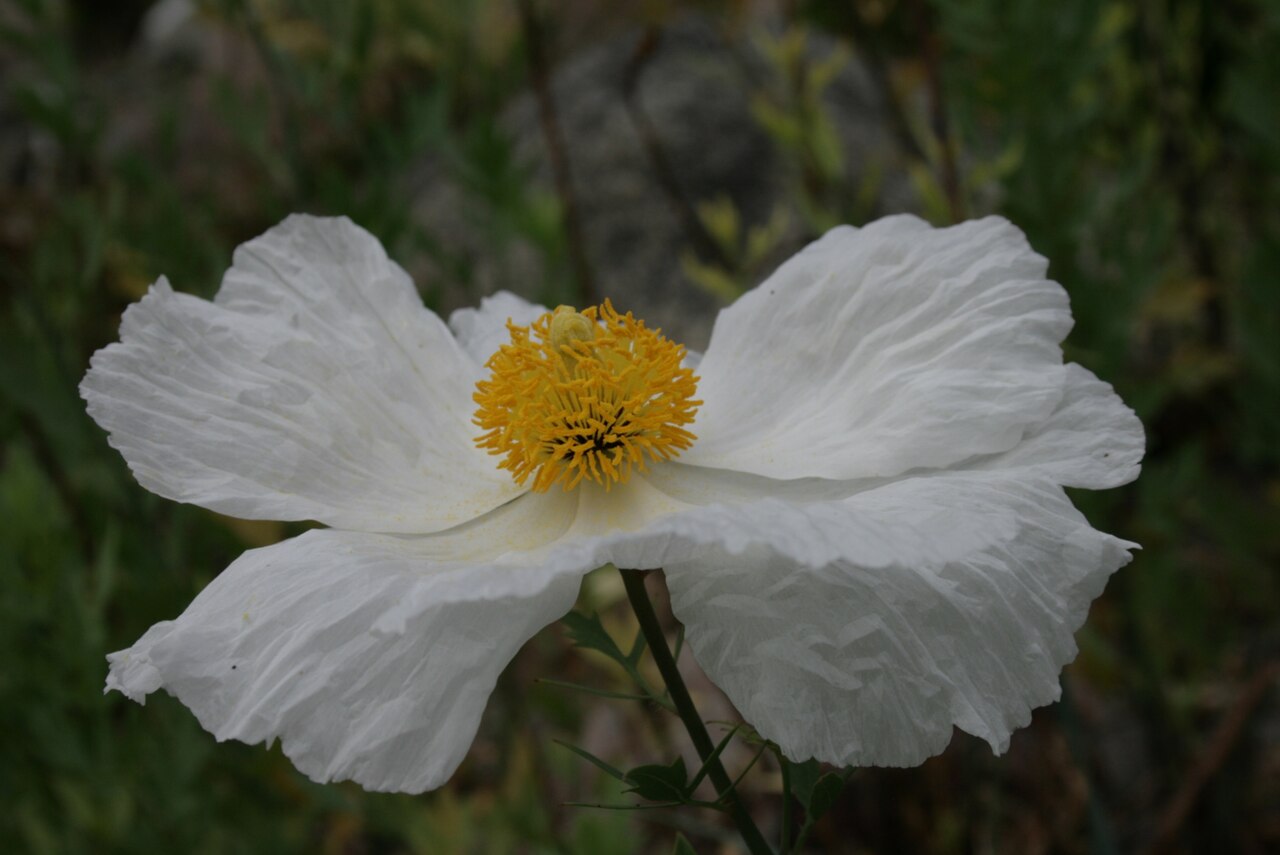
The flowers are the plant’s signature: solitary, fragrant, borne at the ends of the branches from late spring into summer (May through July, later with occasional irrigation). Six crinkled, crepe-paper-textured white petals surround a dense central cluster of golden-yellow stamens, with blooms commonly 6 to 7 inches across and occasionally larger. After flowering, the plant sets a bristly, oval seed capsule that splits open to release numerous small seeds, which germinate most readily after exposure to the smoke and heat of wildfire.
Quick Facts
| Scientific Name | Romneya coulteri Harv. |
| Family | Papaveraceae (Poppy) |
| Plant Type | Rhizomatous Perennial Subshrub |
| Mature Height | 5–8 ft |
| Mature Spread | Indefinite — spreads by rhizomes, often 10–20 ft from original planting |
| Growth Rate | Slow to establish, fast and aggressive once rooted in |
| Sun Exposure | Full Sun |
| Water Needs | Low once established; resents regular summer water |
| Soil Type | Dry, well-drained; tolerates poor, rocky, or sandy soils |
| Soil pH | 6.0–7.5 (neutral, tolerant of slightly alkaline soils) |
| Bloom Time | May – July |
| Flower Color | White with a golden-yellow center |
| Fall Color | None — foliage stays gray-green, may die back after frost |
| Fruit | Bristly oval seed capsule |
| Deer Resistant | Yes |
| USDA Hardiness Zones | 8–10 |
Native Range
Matilija poppy is a true California endemic: its entire natural range lies within Southern California, with an extension across the international border into adjacent northern Baja California, Mexico. Within the United States it is confirmed from San Diego County north through Orange, Riverside, and Los Angeles counties, reaching into the Santa Monica Mountains and the southern Transverse Ranges.
It should not be confused for a plant native throughout California — outside this Southern California core it is not found growing wild, even though it is widely sold and planted as an ornamental in gardens up and down the West Coast and well beyond, including in parts of central and northern California, Oregon, and Washington, where it is strictly a garden escapee rather than a native occurrence. If you garden outside Southern California, Matilija poppy is a beautiful choice, but it is not a locally native plant for those areas.
Within its native range, look for Matilija poppy along dry washes, canyon bottoms, and the margins of chaparral and coastal sage scrub, especially in disturbed ground and areas that have burned within the past several years — the seeds germinate readily in response to fire-related heat and smoke compounds, and the plant is often one of the first showy wildflowers to reappear after a chaparral fire.
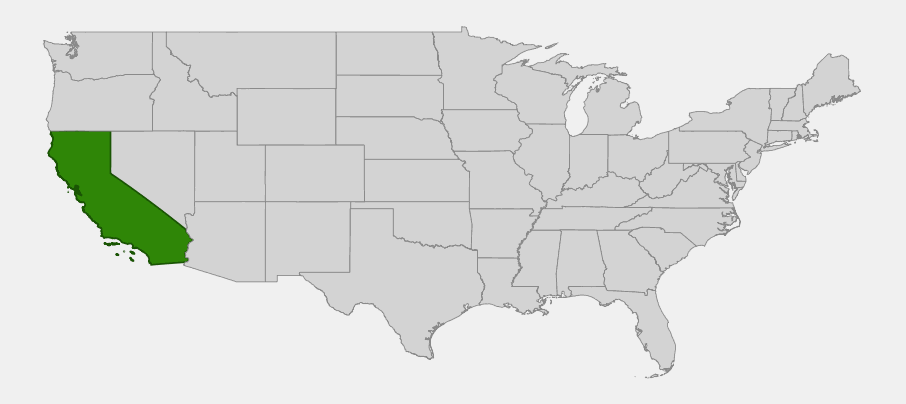
📋 Matilija Poppy is native only to Southern California; no PlantNative regional list currently covers that area, so it is not yet linked from a 📋 regional plant list.
Growing & Care Guide
Matilija poppy rewards patience and the right placement far more than it rewards fussing. Give it a dry, sunny, out-of-the-way spot and it will largely take care of itself — and then some.
Light
Full sun is essential. Matilija poppy flowers sparsely and grows weakly in shade; it wants the same hot, open exposure it gets on a chaparral slope.
Soil & Water
This is a plant built for lean, fast-draining soil and very little summer water. Established plants are extremely drought tolerant and often do best when left almost entirely on natural rainfall once their second or third season is behind them; regular irrigation or rich, amended soil tends to produce weak, floppy growth and can even kill the plant by encouraging root rot. Good drainage matters more than fertility — rocky, sandy, or poor soils are preferable to heavy, wet clay.
Planting Tips
Matilija poppy is famously difficult to transplant because its brittle, deep taproot-like rhizomes do not tolerate disturbance. Start with small container stock, plant it in fall or early spring, and disturb the root ball as little as possible — many gardeners simply cut away the bottom of the pot and plant it intact rather than unpotting the roots. Expect a slow first year or two while the root system establishes, followed by a sudden and sometimes startling burst of spread once it settles in. Choose the planting site with real commitment: because of how it spreads, Matilija poppy is extremely difficult to relocate or remove later.
Pruning & Maintenance
Cut stems back hard — to within a few inches of the ground — in late fall or winter after bloom has finished and foliage has gone tatty; the plant resprouts vigorously from the rootstock each spring. The main maintenance task for most gardeners is not pruning but containment: a buried root barrier, a mowed or paved edge, or simple vigilance in digging out stray shoots is usually necessary to keep the colony within bounds over the years.
Propagation
Division of rooted rhizome sections is more reliable than seed for home gardeners, though it must be done with care given how poorly the roots tolerate disturbance. Seed is viable but typically requires smoke treatment or other fire-cue stimulation to germinate well, mimicking the conditions of a chaparral wildfire.
Landscape Uses
- Dry slope or bank stabilization where its spreading habit is an asset rather than a liability
- Large, naturalistic chaparral or Mediterranean-style gardens with room to let it roam
- Background or specimen planting prized for its oversized white flowers and gray-green foliage
- Fire-wise and xeriscape plantings in Southern California gardens
- Containment plantings between pavement, a wall, or a mowed strip, where spread is naturally limited
Wildlife & Ecological Value
Matilija poppy is primarily valued by pollinators rather than by birds or mammals, but it plays a real role in supporting both.
For Pollinators
The huge, open flowers are a magnet for native bees and bumblebees, which forage directly on the dense cluster of pollen-laden stamens, and the blooms are also visited by various beetles and butterflies. Because each flower offers such an abundant pollen supply in a single visit, Matilija poppy can be a disproportionately valuable nectar- and pollen-source plant for its size in a chaparral garden.
For Birds & Mammals
Direct wildlife use is modest compared with fruiting shrubs or trees, but the dense summer foliage offers cover for small birds and other animals moving through open chaparral, and the seed capsules provide a minor food source for seed-eating birds and rodents later in the season.
Ecosystem Role
Matilija poppy is a classic fire-follower: its rootstock survives chaparral fires that kill the surrounding shrubs, and its seeds germinate readily in response to smoke and heat, allowing the species to flush into bloom on recently burned slopes before slower-growing shrubs recover. In this way it functions as an early post-fire stabilizer, holding bare soil with its spreading rhizomes while longer-lived chaparral species regenerate around it.
Cultural & Historical Uses
The common name “Matilija” comes from Matilija Canyon near Ojai in Ventura County, where the plant grows in spectacular natural stands; the canyon in turn is said to carry the name of a Chumash leader. The species name coulteri honors Thomas Coulter, the Irish botanist and physician who collected plants in California and Mexico in the 1830s.
Historically, Indigenous peoples of Southern California, including Chumash and other coastal and inland groups, made use of various parts of poppy-family plants from the region in traditional practice, though documented, specific historical uses of Matilija poppy itself are less thoroughly recorded than for some other Southern California natives. The striking appearance of the flower made it a recognizable landmark plant in regional folklore and place names well before it entered the nursery trade.
Matilija poppy entered cultivation in the late 1800s and was popularized in gardens on the strength of its enormous flowers, eventually becoming something of a horticultural icon for Southern California gardens and even inspiring its nickname, the “fried-egg plant,” for the way the broad white petals and yellow center resemble an egg sunny-side up. It remains a favorite in native plant and drought-tolerant gardens today, admired as much for its toughness and drama as for any practical use.
Frequently Asked Questions
Is Matilija Poppy invasive?
Within its native Southern California range it is not considered an invasive weed, but it is notoriously aggressive in garden settings, spreading widely by rhizomes once established. Give it a dedicated space with a barrier or edge, and think carefully before planting it near smaller perennials.
Why won’t my Matilija poppy bloom or survive after planting?
This plant is difficult to establish because its brittle rhizomes resent root disturbance. Plant small container stock without disturbing the roots, avoid overwatering, and be patient — it is common for a new planting to sulk for a year or two before taking off.
Can Matilija poppy grow outside California?
It is only native to Southern California (and adjacent Baja California), but it is hardy and widely cultivated well beyond its native range, including in other parts of California, the Pacific Northwest, and similar dry-summer climates, as a garden ornamental rather than a native plant.
Does Matilija poppy need regular watering?
No — once established, it is drought tolerant and generally performs best with little to no supplemental summer water. Regular irrigation can actually weaken the plant and encourage root problems.
How do I control Matilija poppy’s spread?
Install a deep, solid root barrier at planting time, keep it bounded by pavement, a mowed strip, or a wall, and remove any stray shoots as soon as they appear. Once a colony is fully established, complete removal is very difficult because of the extensive, deep rhizome system.

Looking for a nursery that carries Matilija Poppy?
Browse our native plant nursery directory: California