
Mexican Morning Glory (Ipomoea tricolor)
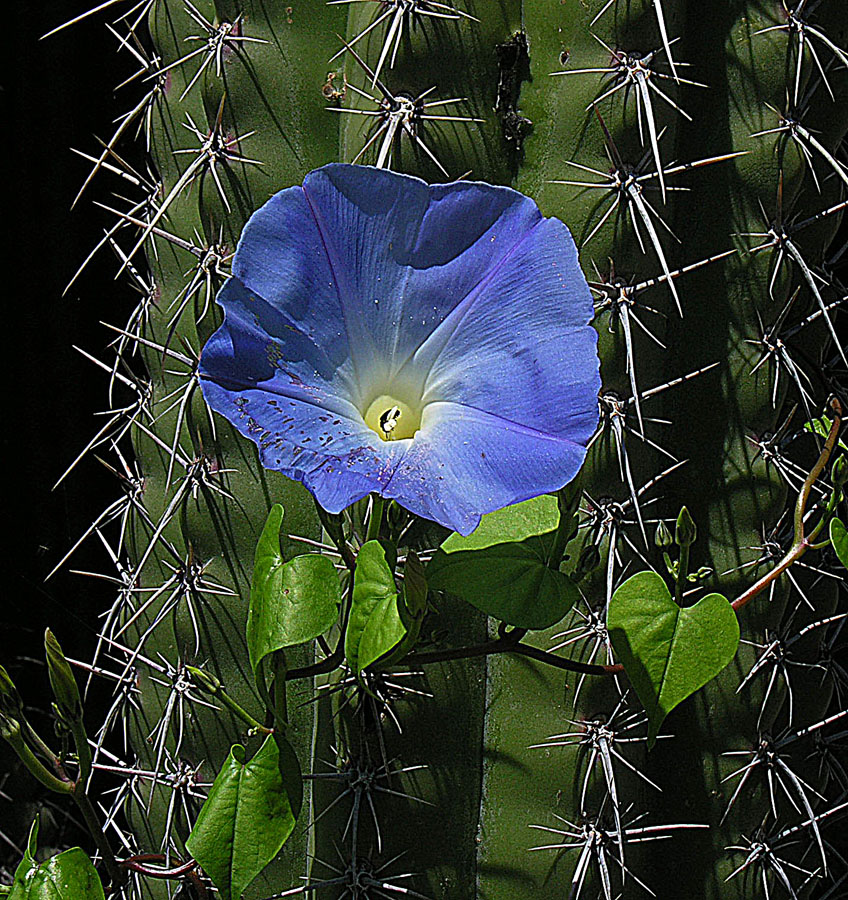
Ipomoea tricolor, known as Mexican Morning Glory, morning glory or grannyvine, is a fast-growing twining vine of the tropical Americas, famous for its large, sky-blue, funnel-shaped flowers. Each flower opens in the morning, lasts a single day, and fades by afternoon, but a healthy vine produces a fresh crop almost every day for months. It belongs to the morning glory family (Convolvulaceae), along with sweet potato and many native wild morning glories.
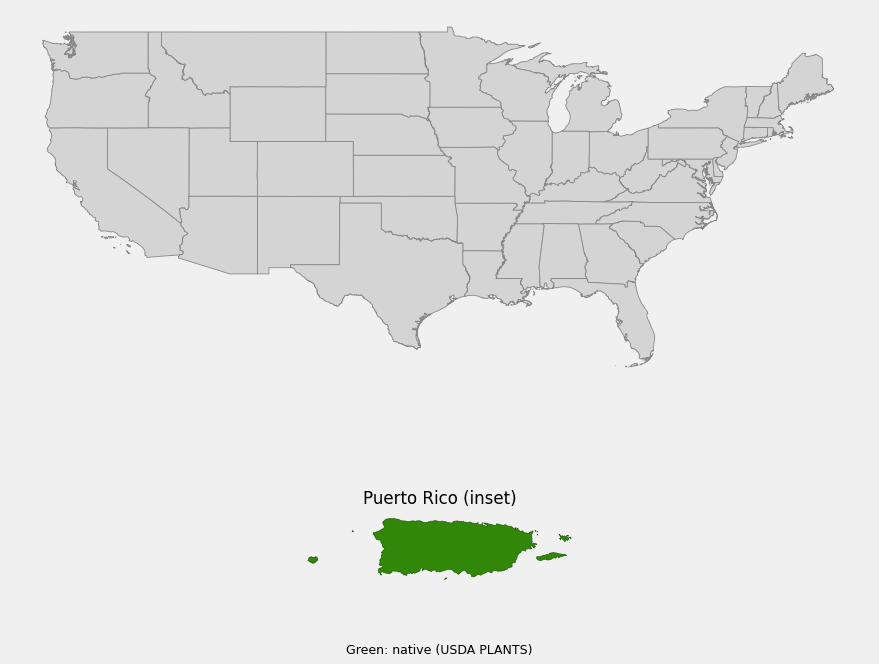
On the mainland United States this is a garden plant rather than a wild one. Cultivars such as ‘Heavenly Blue’ are among the most widely grown annual vines in North America, and USDA PLANTS lists the species as introduced in the lower 48 states and the U.S. Virgin Islands. In Puerto Rico, however, USDA PLANTS lists it as native, part of a natural range that Wikipedia and other references describe as the tropics of the Americas. That makes it a native plant on PlantNative’s Puerto Rico scope, and a non-native ornamental almost everywhere else in the country.
This guide covers how to recognize Mexican morning glory, how its native status differs between sources and regions, how to grow it responsibly, and the long cultural history of its seeds, which contain potent alkaloids and are toxic if eaten. If you garden in the mainland United States and want a native morning glory, see the alternatives in the FAQ below.
Identification
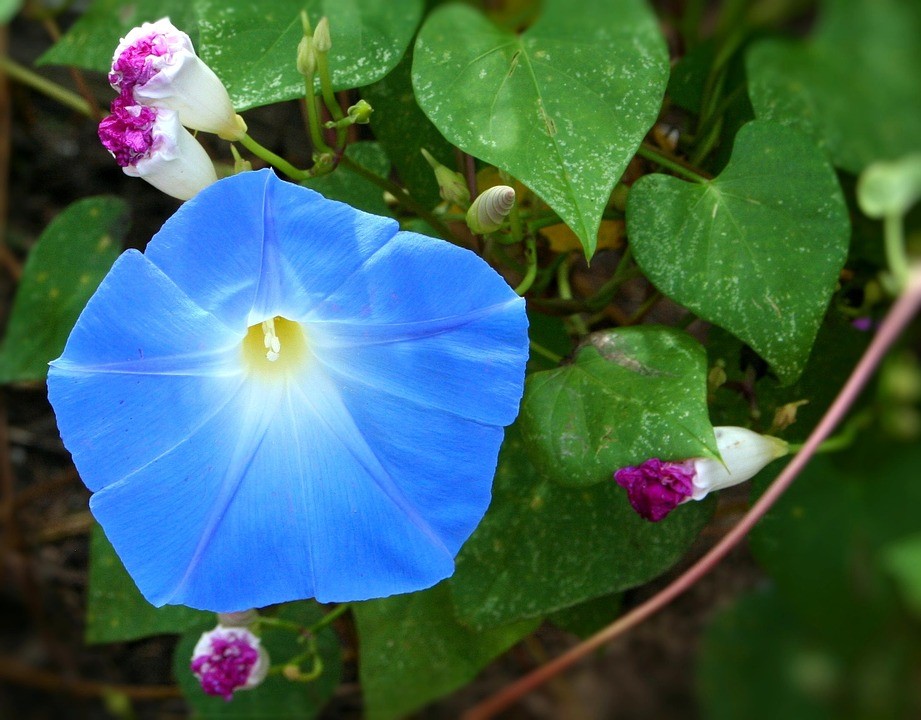
Many morning glories are grown in gardens, and several are often sold under confused names. Mexican morning glory is identified by its smooth, heart-shaped, unlobed leaves, its large blue (or cultivated white, pink or purple) flowers with a pale throat, and its pink-tinged buds that turn blue on opening.
Stems
The plant is an annual or short-lived perennial vine that twines around any thin support. Stems are slender, smooth or nearly so, and reach about 7 to 13 feet in a season, more in frost-free climates where plants live longer.
Leaves
The leaves are alternate, heart-shaped, smooth and unlobed, about 1¼ to 3 inches long on a long leaf stalk, and larger on vigorous plants. Their smooth surfaces help separate this species from common morning glory (Ipomoea purpurea), which has hairy stems and leaves, and from ivyleaf morning glory (I. hederacea), which usually has three-lobed leaves.
Flowers
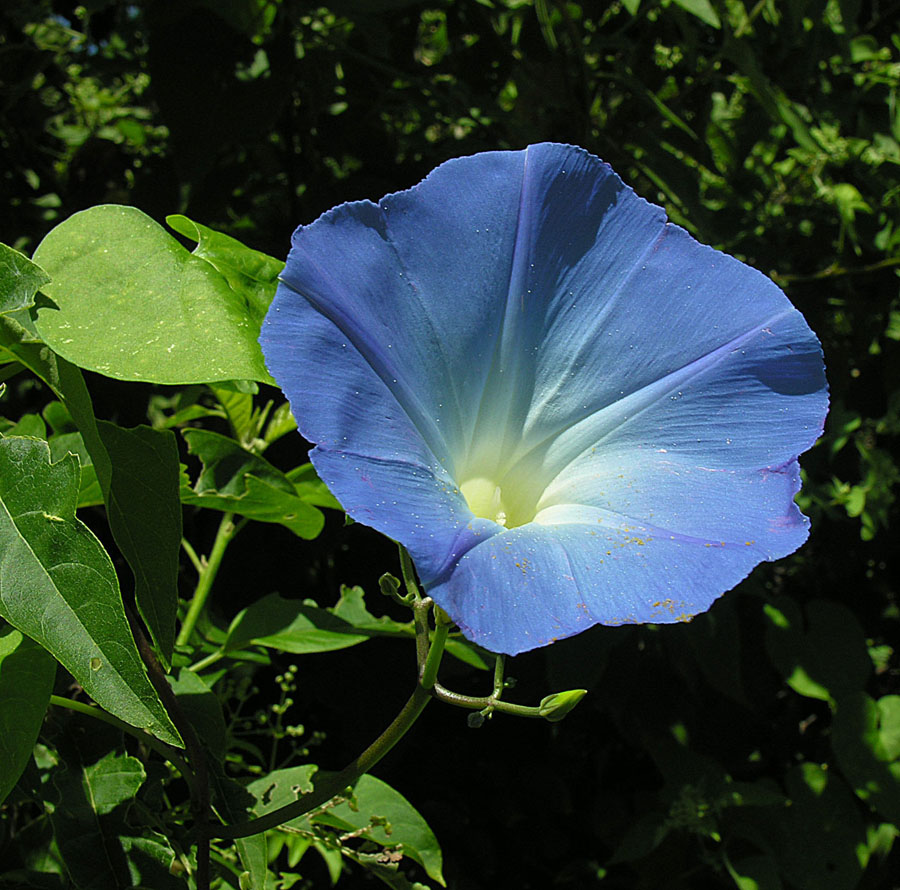
Flowers are borne singly or in small clusters on long stalks from the leaf axils. Each is a wide funnel or trumpet about 1½ to 3½ inches across, most often sky blue with a white to golden-yellow throat; garden selections may be white, pink, purple or striped. Buds and fading flowers are pink to purple. The flowers open at dawn and usually close by early afternoon, opening for longer on cool, cloudy days.
Fruit & Seeds
Pollinated flowers ripen into small, round capsules that split to release a few hard, angular, dark seeds. The seeds are toxic. They contain ergoline alkaloids, mainly ergine (LSA), produced by a fungus (Periglandula ipomoeae) that lives in the plant. Seed packets are commonly labeled as toxic, and seeds should be kept away from children and pets.
Quick Facts
| Scientific Name | Ipomoea tricolor Cav. |
| Family | Convolvulaceae (morning glory family) |
| Plant Type | Twining vine; annual or short-lived tender perennial |
| Mature Height | Vine 7–13 ft long |
| Mature Spread | 3–6 ft on a trellis or fence |
| Growth Rate | Fast |
| Sun Exposure | Full sun |
| Water Needs | Moderate; tolerates short dry spells |
| Soil Type | Average, well-drained soil; very rich soil favors leaves over flowers |
| Soil pH | About 6.0–7.5 |
| Bloom Time | Summer to frost in gardens; much of the year in frost-free climates |
| Flower Color | Sky blue with a white to yellow throat; cultivars white, pink or purple |
| Fall Color | None; killed by frost |
| Fruit | Small round capsule with hard, angular, toxic seeds |
| Deer Resistant | Not reliably |
| USDA Hardiness Zones | 10–12 as a perennial; grown as an annual elsewhere |
Native Range
Mexican morning glory is native to the American tropics. Wikipedia describes its natural range as the tropics of the Americas, and it is widely cultivated and naturalized well beyond that. Within the area PlantNative covers, USDA PLANTS lists it as native in Puerto Rico and as introduced in the lower 48 states and the U.S. Virgin Islands. Mainland records come from garden plantings and from plants that have escaped onto roadsides, fencerows and vacant lots.
Where the sources disagree. The two references PlantNative uses for native status do not agree on this species. USDA PLANTS treats it as native in Puerto Rico, which is why this page exists. The Atlas of Florida Plants does not list Ipomoea tricolor as part of Florida’s flora at all, native or otherwise, and nothing in either source supports it as native anywhere in the contiguous United States or Canada. Florida does have a native relative often confused with it in the garden trade: Ipomoea violacea, the beach moonflower, which the Atlas lists as native and which has white, night-opening flowers.
Because there is no PlantNative regional list for Puerto Rico, this page is not linked from a regional table. Mainland gardeners should treat Mexican morning glory as a non-native annual: it rarely spreads aggressively the way common morning glory can, but it does self-sow in warm climates and is best kept to the garden.
📋 Regional plant lists: PlantNative does not yet have a regional list for Puerto Rico, the only part of our coverage area where USDA PLANTS lists Mexican Morning Glory as native. Browse all regional plant lists
Growing & Care Guide
Mexican morning glory is one of the easiest vines to grow from seed. In most of the mainland United States it is grown as a summer annual; in Puerto Rico and other frost-free areas it can persist as a short-lived perennial.
Light
Plant it in full sun. In shade it grows leaves but few flowers. A warm, sheltered spot such as a south- or west-facing wall or fence gives the best show.
Soil & Water
Ordinary, well-drained garden soil is ideal. Very rich soil or heavy feeding with nitrogen produces lush foliage at the expense of flowers, so skip the fertilizer. Water young plants regularly; established vines tolerate short dry spells but flower best with steady moisture.
Planting Tips
Sow seed outdoors after the soil has warmed and all danger of frost is past. The plant does not tolerate temperatures below about 41°F (5°C). Nick the hard seed coat or soak seeds overnight to speed germination, and sow ½ inch deep where the vines will grow, since seedlings dislike transplanting. Provide a trellis, fence, string or arbor right away; the vines twine around thin supports better than flat surfaces.
Pruning & Maintenance
Guide young shoots onto their support and pinch stray tips as needed. Removing spent flowers before seed forms reduces self-sowing and keeps vines flowering. In mainland gardens, pull plants after frost and collect or discard the seed pods rather than letting seed fall where it may come up in neighboring beds.
Propagation
Grow from seed. Collect capsules when they turn brown and dry, store the seed cool and dry, and label it clearly as toxic. Named cultivars come reasonably true from seed when grown apart from other color forms.
Landscape Uses
- Trellises and fences: fast summer screening with large blue flowers
- Arbors and porches: morning color on a light support
- Containers: one or two vines on an obelisk in a large pot
- Puerto Rico native gardens: a native twining vine within its Puerto Rico range
- Cover crop (traditional): used by farmers in Mexico as a weed-suppressing cover plant
Wildlife & Ecological Value
In its native tropical range, Mexican morning glory is part of the vine layer of thickets, clearings and forest edges. In gardens it mainly feeds daytime pollinators.
For Pollinators
The wide, open flowers attract honey bees and native bees, which collect nectar and pollen from the flower’s base during the morning hours. Because each flower lasts only one morning, a vine in full bloom offers a fresh supply of flowers every day.
For Birds
Birds do not eat the toxic seeds to any notable extent, but dense vines on fences and shrubs provide cover for small birds.
For Mammals
The seeds and other parts of the plant are toxic to people and pets; ingesting any part of the plant may cause discomfort, and the seeds can cause more serious effects. It is not a food plant for wildlife of note.
Ecosystem Role
Mexican morning glory has phytotoxic (allelopathic) effects that inhibit the growth of weed seedlings, which is why farmers in parts of Mexico encourage it as a cover plant and then turn it into the soil before planting crops such as sugarcane. Outside its native range, it is a garden ornamental that sometimes escapes but is not generally considered a major invasive species.
Cultural & Historical Uses
The Spanish botanist Antonio José Cavanilles described Ipomoea tricolor in the 1790s. The name tricolor (three-colored) fits the wild flower’s blue limb, pale band and yellow throat. In gardens the species is very often sold under the wrong name Ipomoea violacea, which belongs to a different, white-flowered species.
Seeds of this morning glory have a long ritual history in Mexico. The Aztecs called the seeds tlitliltzin and used them in divination and religious ceremony, and twentieth-century ethnobotanists documented their continued use in healing rites in Oaxaca. In the twentieth century chemists identified ergine (LSA), a relative of LSD, as the main active compound. Because of these alkaloids the seeds are toxic and can cause severe nausea and other effects; some retailers have stopped carrying them, and seed packets typically carry a warning.
The cultivar ‘Heavenly Blue’ became a garden classic in the twentieth century and holds the Royal Horticultural Society’s Award of Garden Merit. Its flowers have also been studied by plant scientists, who showed that the change from pink buds to blue flowers comes from a rise in the pH of the petal cell vacuoles, which changes the color of the same anthocyanin pigment.
Frequently Asked Questions
Is Mexican morning glory native to the United States?
Only in Puerto Rico, according to USDA PLANTS. USDA lists it as introduced in the lower 48 states and the U.S. Virgin Islands, and the Atlas of Florida Plants does not include it in Florida’s flora. On the mainland, treat it as a non-native garden annual.
Are morning glory seeds poisonous?
Yes. Mexican morning glory seeds contain ergoline alkaloids, mainly ergine (LSA), and can cause nausea, vomiting and other serious effects if eaten. Keep seeds away from children and pets and store them clearly labeled.
Is it the same as Ipomoea violacea?
No. Gardeners and seed catalogs often use the name Ipomoea violacea for this plant, but true I. violacea is a different species, the beach moonflower, with white flowers that open at night. The Atlas of Florida Plants lists I. violacea as native to Florida.
Is Mexican morning glory invasive?
It is not generally listed as a major invasive species. It can self-sow in warm climates, so deadhead the flowers or collect the pods if you do not want volunteers. It is far less aggressive than common morning glory (Ipomoea purpurea).
What native morning glories can I grow on the mainland?
Good choices include wild potato vine (Ipomoea pandurata) in the East and Midwest, and on southeastern beaches, beach morning glory (Ipomoea pes-caprae).

Looking for a nursery that carries Mexican Morning Glory?
Our nursery directory does not yet include Puerto Rico. Browse the native plant nursery directory by state: Alabama–Arkansas · California · Colorado–Hawaii · Idaho–Kansas · Kentucky–Montana · Nebraska–Oklahoma · Oregon · Pennsylvania–Virginia · Washington · West Virginia–Wyoming