Monterey Pine (Pinus radiata)
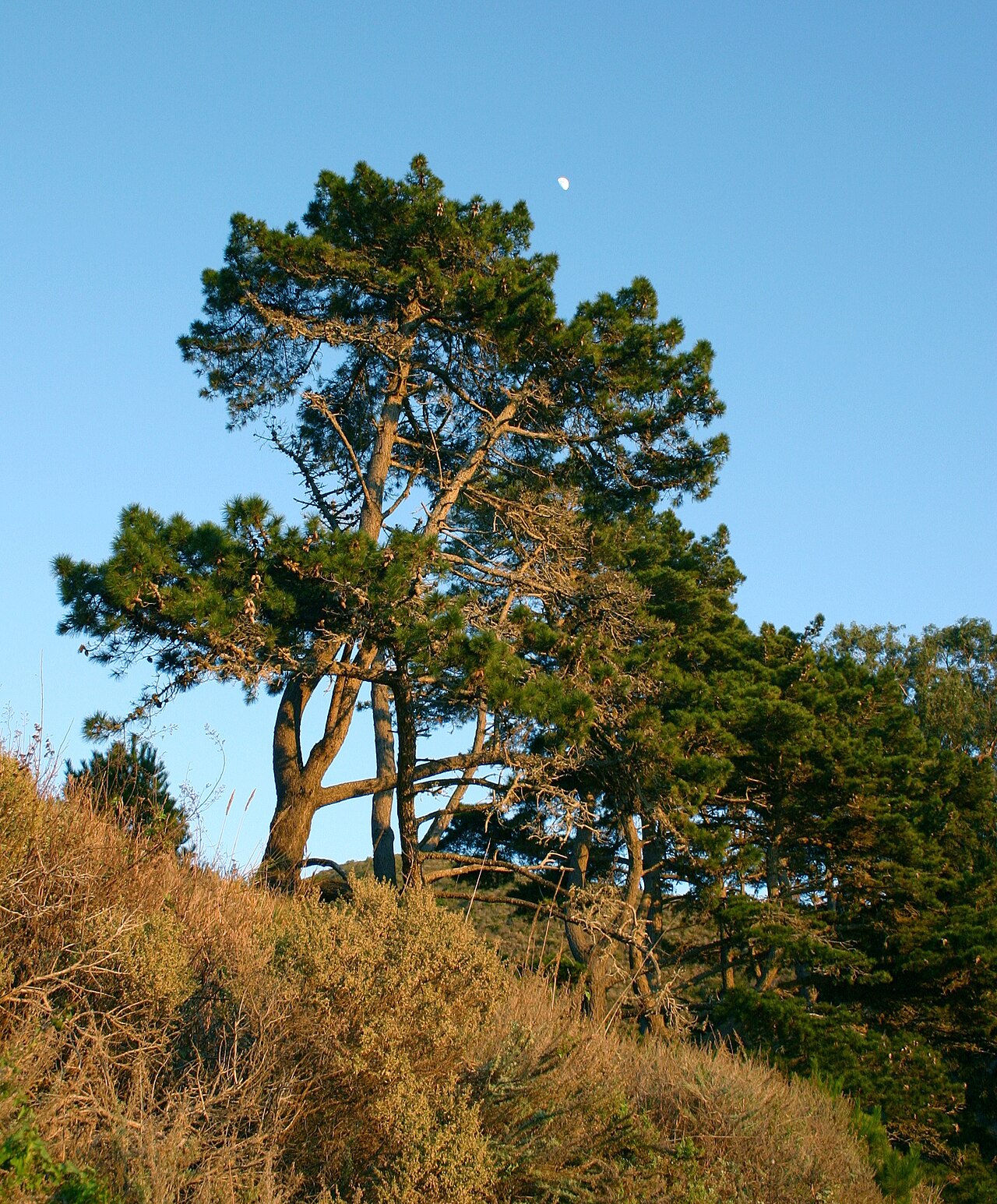
Pinus radiata, the Monterey Pine, is one of the strangest success stories in the plant world: a species that is critically rare in the wild but, through forestry plantations, has become one of the most widely planted trees on the planet. Native wild Monterey Pines exist in only three small stands on the California coast — around the Monterey Peninsula, at Año Nuevo Point, and near Cambria — plus two island populations off Baja California, Mexico. Outside that narrow native footprint, Monterey Pine is an introduced species everywhere else it grows, including vast plantation forests in New Zealand, Chile, Australia, and Spain.
This is a genuinely important distinction for anyone gardening with native plants: a Monterey Pine growing anywhere outside Santa Cruz, Monterey, or San Luis Obispo counties, California (or its native Mexican islands) is not native there, no matter how common or well-established it has become. In several countries it is a major commercial forestry species; in parts of Australia and New Zealand it has also escaped cultivation and is treated as an invasive “wilding conifer” that displaces native vegetation. Gardeners and land managers outside its true native range should not treat it as a native planting choice.
Within its true native range on the central California coast, Monterey Pine is a different story — a fast-growing, picturesque pine of fog-belt headlands and coastal forest, co-occurring with Monterey Cypress and Gowen Cypress in plant communities found nowhere else in the world. The wild populations are considered globally rare and are listed as Endangered by the IUCN, threatened above all by pitch canker disease. Planting local-origin Monterey Pine within its native range supports a conservation-significant ecosystem; planting it elsewhere does not.
Identification
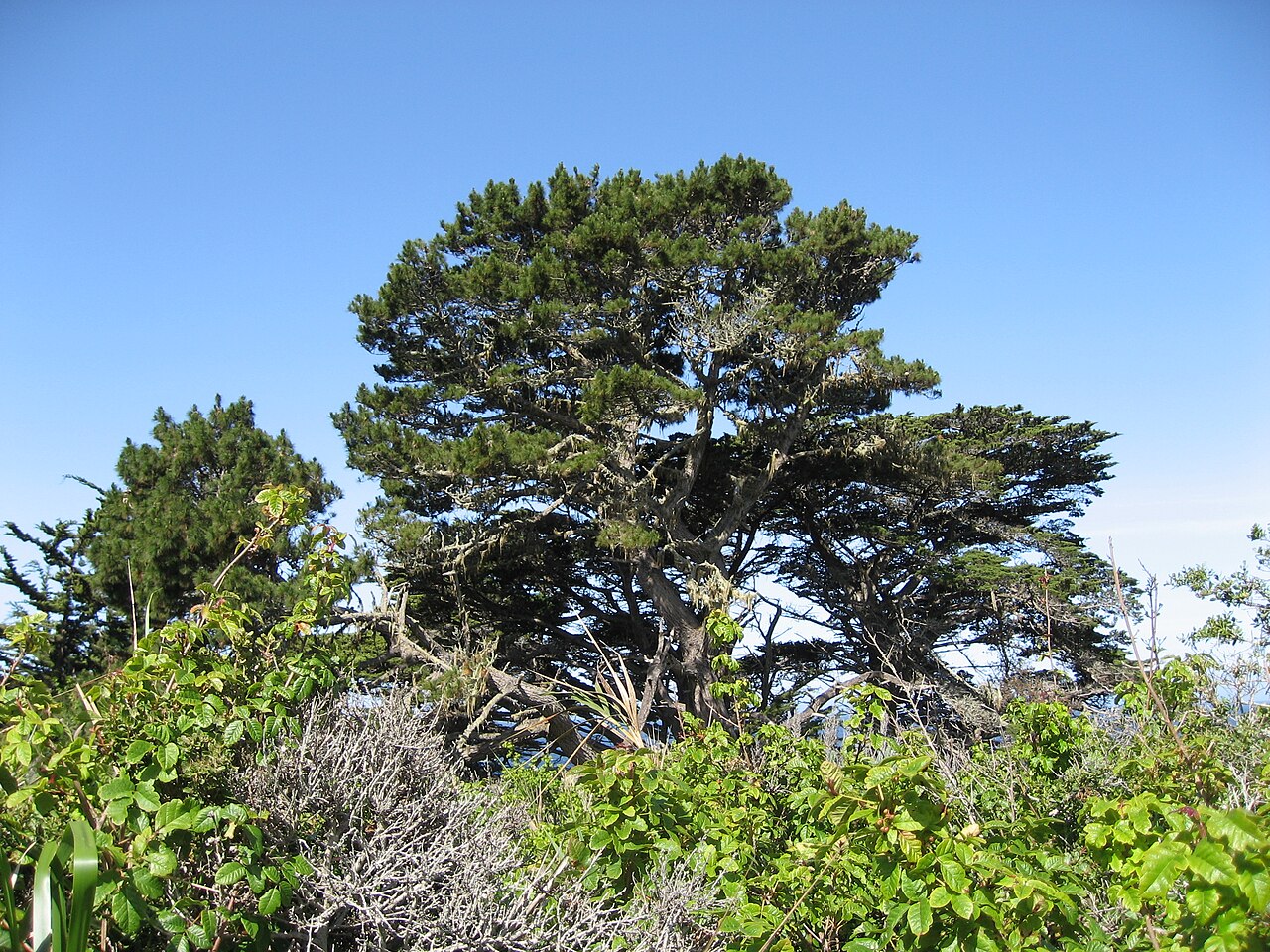
Monterey Pine is a medium to large evergreen conifer, typically 50 to 100 feet tall in the wild (taller in cultivation under ideal conditions), with a broad, rounded crown of upward-angled branches and a trunk that can reach several feet in diameter on old trees.
Bark & Stems
Bark is dark gray-brown and deeply furrowed into irregular plates on mature trunks, while young branches are smoother and gray-green. Trees growing in exposed, wind-blown coastal sites are often twisted and asymmetrical, leaning away from the prevailing onshore wind.
Needles
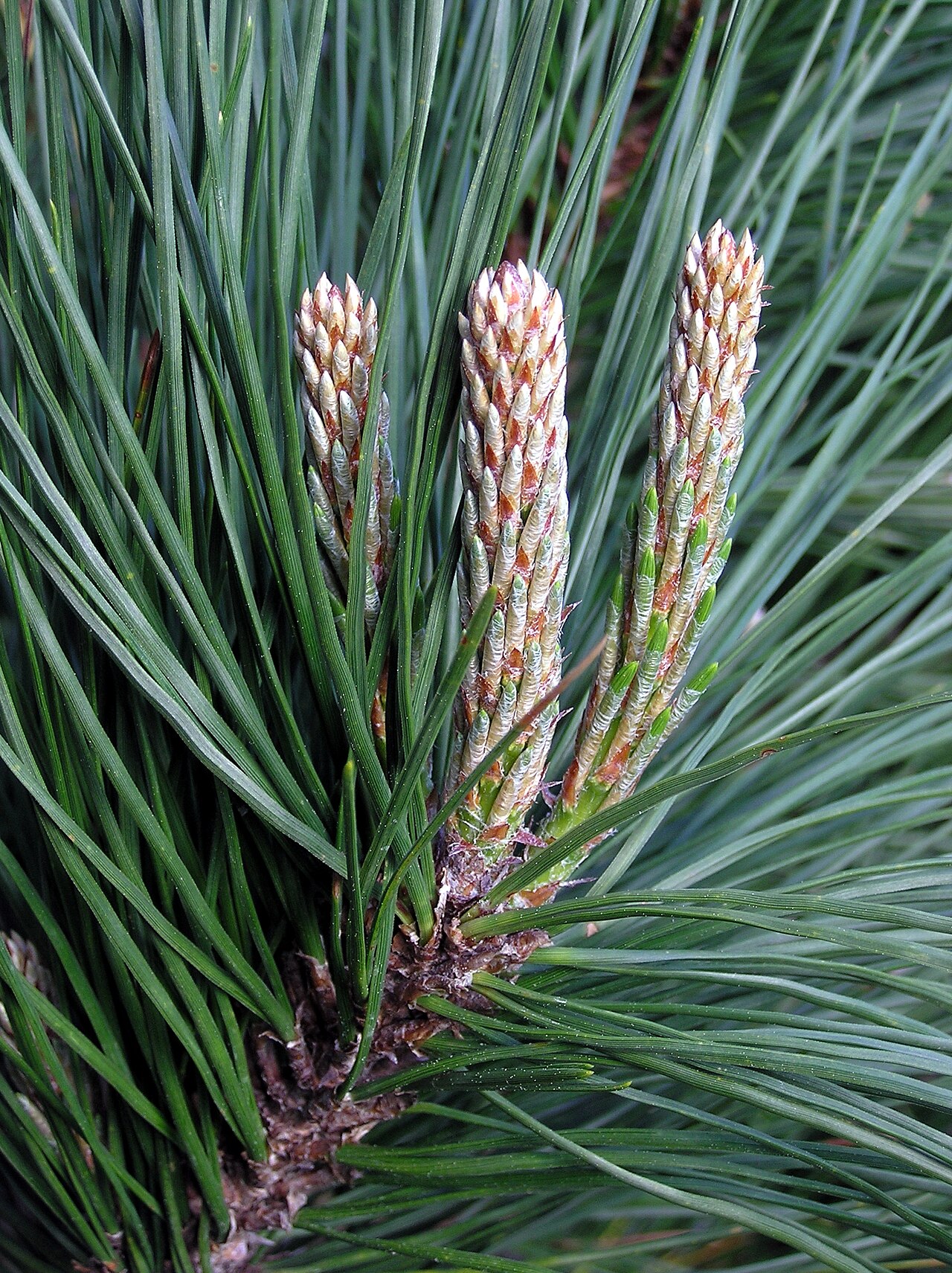
Needles grow in bundles of three (rarely two on some island trees), are bright, slightly yellowish green, slender, and 3 to 6 inches long with a blunt tip. The dense, tufted look of the foliage at branch tips is one of the tree’s most recognizable features.
Cones
Cones are egg-shaped, 3 to 6.5 inches long, brown, and usually set asymmetrically on the branch at an oblique angle, often in whorled clusters of two or more. Like several of its close relatives, Monterey Pine has serotinous cones that can remain closed and attached for years, opening fully only after the heat of a fire, though some cones also open gradually in hot weather.
Quick Facts
| Scientific Name | Pinus radiata (syn. Pinus insignis) |
| Family | Pinaceae (Pine) |
| Plant Type | Evergreen Conifer Tree |
| Mature Height | 50–100 ft in the wild |
| Mature Spread | 30–50 ft, broad and rounded |
| Growth Rate | Fast |
| Sun Exposure | Full Sun |
| Water Needs | Moderate; benefits from coastal fog |
| Soil Type | Sandy to loamy, well-drained |
| Soil pH | Slightly acidic to neutral |
| Bloom Time | Late winter to early spring (pollen cones) |
| Flower Color | Yellow pollen cones |
| Fall Color | None (evergreen) |
| Fruit | Large, asymmetrical woody cones |
| Deer Resistant | Yes |
| USDA Hardiness Zones | 7–10 |
Native Range
Monterey Pine’s true native range is extraordinarily small for such a well-known tree. In the United States it grows wild in only three locations on the central California coast: the Monterey Peninsula and Del Monte Forest area of Monterey County, the Año Nuevo area straddling the San Mateo–Santa Cruz county line, and a stand near Cambria in San Luis Obispo County. Beyond California, two more native populations grow on Guadalupe Island and Cedros Island off the Pacific coast of Baja California, Mexico, each with distinctive two-needle varieties found nowhere else.
Within its narrow range, Monterey Pine grows on coastal terraces, bluffs, and foothills within reach of summer fog, often forming closed-cone pine forest with Monterey Cypress and Gowen Cypress — plant communities as geographically restricted as the pine itself. It thrives on sandy, well-drained soils from near sea level to a few hundred feet, in a climate moderated by the cold California Current and persistent coastal fog.
Despite the species’ extraordinary global cultivation footprint, the wild native populations are in serious trouble. All three mainland California stands are infected with pitch canker, a fungal disease (Fusarium circinatum) first found in California in 1986 and believed introduced from the southeastern United States, where a related native pine fungus is less damaging to local species. In the hardest-hit native stands, 80 to 90 percent of trees show infection, and the IUCN lists the species as globally Endangered, with NatureServe ranking the core wild populations Critically Imperiled. Nowhere else in its vast planted range does Monterey Pine face this level of risk to its wild genetic stock.
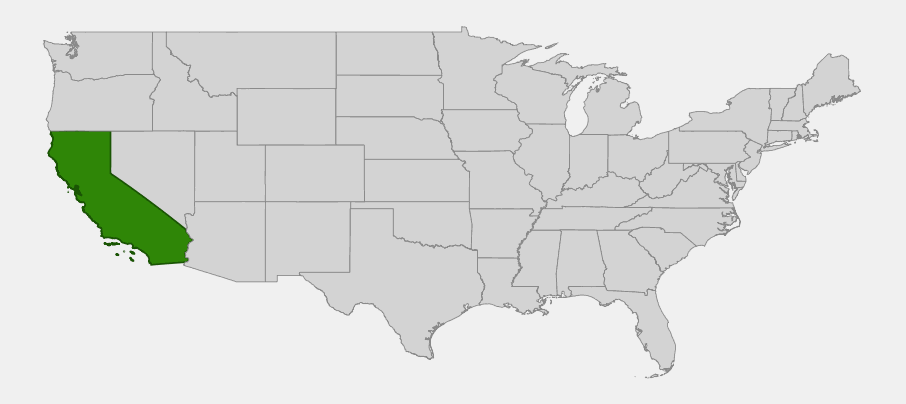
📋 Monterey Pine’s native range is too narrow — just three small coastal stands — to fit any of our current regional native plant lists. California nurseries near the Monterey Peninsula and Central Coast can supply responsibly propagated, local-origin stock; see the nursery directory below.
Growing & Care Guide
Growing Monterey Pine as a native planting makes sense only within or very near its historic range on the central California coast. Elsewhere, even within California, it should be treated as an introduced ornamental or plantation tree rather than a native-garden choice, and in regions where it has become weedy it should not be planted at all.
Light
Full sun. Monterey Pine grows fastest and develops its best form in open, unshaded coastal sites, which also matches the exposed terraces and bluffs where it grows wild.
Soil & Water
It prefers sandy to loamy, well-drained soil and benefits from the moisture that coastal summer fog provides within its native range; inland or non-coastal plantings that lack this fog subsidy are more drought-stressed and more susceptible to disease and pests. Established trees tolerate wind, salt spray, and periodic drought reasonably well, but consistent moisture during establishment improves survival.
Planting Tips
Within its native California range, plant from local-origin nursery stock rather than generic plantation seed sources, and site trees away from structures given their large eventual size and fast growth. Because pitch canker is already established in the wild population, avoid wounding trunks or branches, which creates infection sites for the fungus.
Pruning & Maintenance
Minimal pruning is needed beyond removing dead, storm-damaged, or canker-infected branches. Prune during dry weather when possible, since the fungus that causes pitch canker spreads more readily through wounds in wet conditions, and sanitize tools between cuts on infected trees.
Landscape Uses
- Coastal windbreaks and screens within the native Central Coast range
- Habitat restoration in closed-cone pine forest remnants
- Erosion control on coastal bluffs and terraces
- Large specimen tree where ample space allows for its mature size
- Wildlife plantings supporting monarch butterfly overwintering sites
Wildlife & Ecological Value
Within its tiny native range, Monterey Pine anchors an unusually rich and geographically restricted ecosystem found nowhere else in the world.
For Pollinators
Like other pines, Monterey Pine is wind-pollinated rather than insect-pollinated, so its pollen cones do not directly feed pollinators, but the structural habitat of native pine-cypress forest supports a diversity of native bees and other insects using the understory shrubs and wildflowers that grow beneath it.
For Birds
Seeds from the large cones feed various seed-eating birds, and the dense evergreen canopy offers year-round cover and nesting habitat. A remnant native stand at the Monarch Grove Sanctuary in Pacific Grove, California, is a well-known overwintering site for migratory Monarch Butterflies, which cluster in Monterey Pine and eucalyptus canopy for protection from wind and cold.
For Mammals
Native rodents and tree squirrels feed on pine seeds, and the structurally complex native forest provides cover for coastal wildlife moving between scrub, forest, and dune habitats.
Ecosystem Role
Monterey Pine is a co-dominant canopy species in one of California’s rarest forest types, closed-cone pine-cypress forest, alongside the equally range-restricted Monterey Cypress. This habitat supports several other narrowly endemic species, including the endangered Yadon’s piperia orchid and Hickman’s potentilla, both found in or near native Monterey Pine forest on the Monterey Peninsula. Because the entire ecosystem occupies such a small geographic footprint, the pitch canker epidemic in the native pines is a conservation concern for the whole plant community, not just the pine itself.
Cultural & Historical Uses
Monterey Pine has an unusual cultural history: a tree of only local importance in its true home, and a cornerstone of the forestry economy almost everywhere else it grows. Indigenous peoples of the central California coast, including Ohlone and Esselen communities, lived among native Monterey Pine forests, though the tree itself was not a major food or material resource compared with the acorn-bearing oaks of the region.
Monterey Pine’s global importance began in the 19th century, when the species was introduced to New Zealand, Australia, Chile, and Spain for its remarkably fast growth. In New Zealand it now makes up the vast majority of commercial plantation forest and remains the country’s most widely used timber species; in Chile it is the basis of a major export lumber and pulp industry. This worldwide plantation success stands in sharp contrast to the precarious state of the wild populations back in California, which receive none of the same economic investment and face an ongoing disease epidemic.
On the Monterey Peninsula itself, the tree has long been a defining feature of the regional landscape and tourism identity, with windswept native pines and cypresses along the coastline — around Pebble Beach and the 17-Mile Drive — serving as some of the most photographed trees in California.
Frequently Asked Questions
Is Monterey Pine native where I live?
Almost certainly not, unless you live on the central California coast in Monterey, Santa Cruz, San Mateo, or San Luis Obispo County, or on Guadalupe or Cedros Island in Mexico. Everywhere else — including most of California, and especially New Zealand, Australia, Chile, and Spain, where it is widely planted — it is an introduced tree.
Is Monterey Pine invasive?
In its native range, no. But in parts of Australia and New Zealand, trees that escape cultivation are considered an invasive “wilding conifer,” spreading into grasslands and native vegetation beyond plantation boundaries and requiring active removal in some conservation areas.
What is pitch canker, and why does it matter for this species?
Pitch canker is a fungal disease, Fusarium circinatum, that causes resin-soaked cankers on branches and trunks, often killing infected limbs or whole trees. It was introduced to California in the 1980s and now infects a high percentage of trees in all three native mainland stands, making it the single greatest threat to the species’ wild genetic diversity, even as the species thrives as a plantation tree elsewhere.
Why is a tree this common considered endangered?
Global cultivation success and wild rarity are not the same thing. Monterey Pine’s cultivated range covers millions of plantation acres worldwide, nearly all derived from a narrow genetic base, while its truly wild, naturally regenerating populations are confined to three small California stands and two Mexican islands, all under active disease pressure — which is why conservation groups and the IUCN assess it as Endangered in the wild despite its abundance in cultivation.
Can I plant Monterey Pine as a native tree in my California garden?
Only if you are within or very near its native Central Coast range. Elsewhere in California, it is better treated as a non-native ornamental choice, and a true California native pine suited to your specific region is usually a better fit for a native-plant garden.

Looking for a nursery that carries Monterey Pine?
Browse our native plant nursery directory: California