Mountain Fetterbush (Pieris floribunda)
⚠ Toxic foliage. Like other members of the heath family, Mountain Fetterbush contains grayanotoxins in its leaves and flowers. All parts are poisonous if eaten by people or livestock, and the plant has caused fatal poisoning in grazing animals that browsed it. Do not plant it where livestock graze, and discourage children from chewing the foliage or flowers.
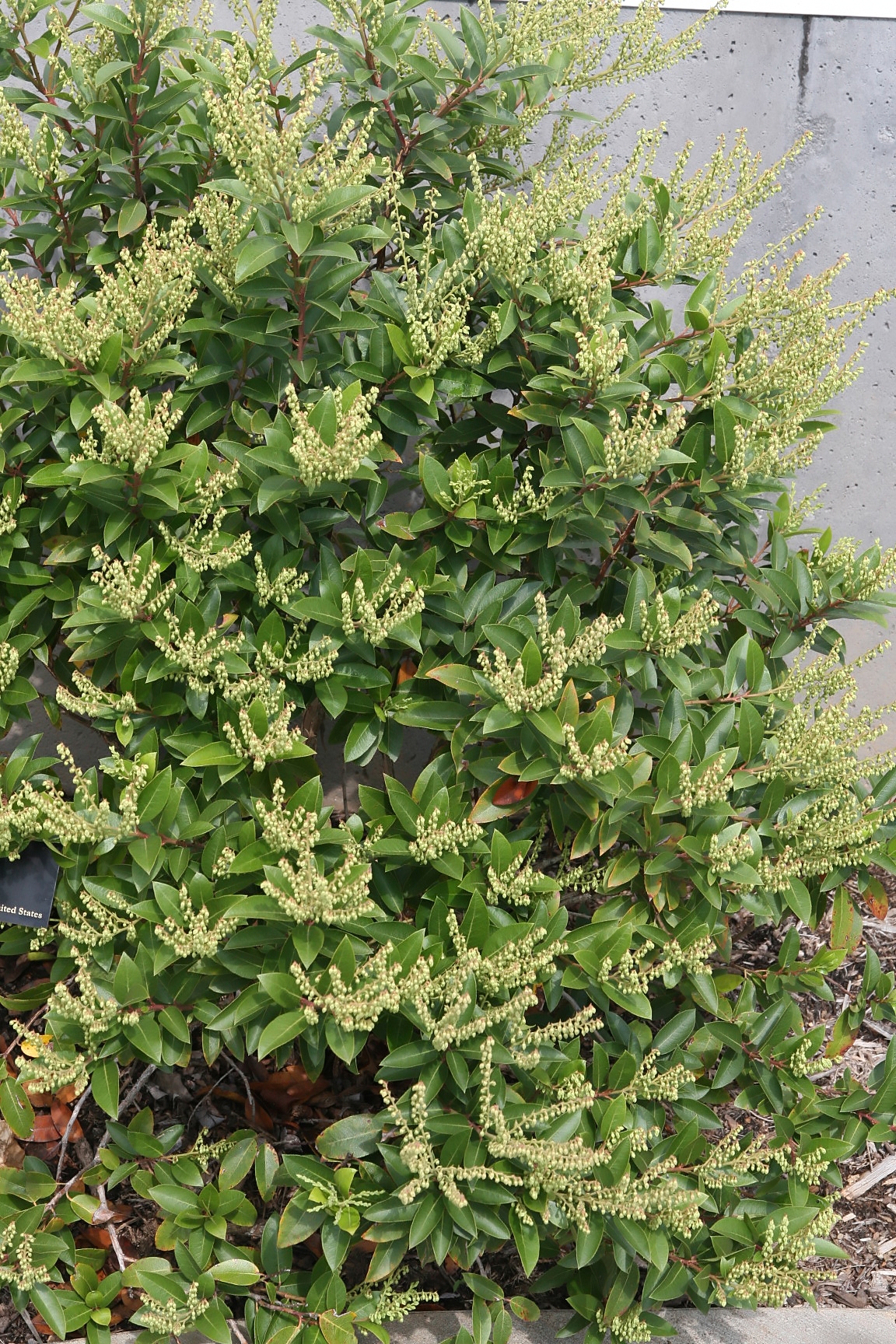
Pieris floribunda, commonly called Mountain Fetterbush or Mountain Andromeda, is a compact, broadleaf evergreen shrub native to the southern Appalachian Mountains. It forms a dense, rounded mound of small, leathery, dark-green leaves, typically reaching 3 to 6 feet tall, and in early spring it is covered with upright, slightly arching racemes of small white urn-shaped flowers that open from pink-tinged buds formed the previous fall.
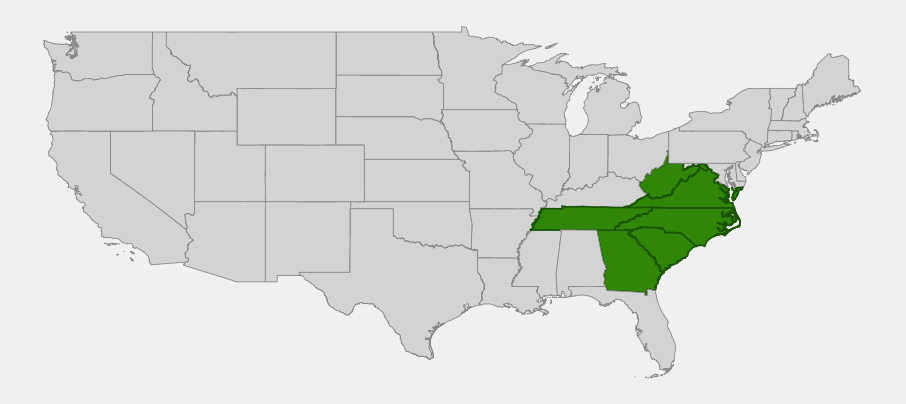
In the wild, Mountain Fetterbush grows in the understory of rocky, acidic woodlands and along exposed ridgelines in the mountains of Tennessee, North Carolina, South Carolina, Georgia, Virginia, and West Virginia. It is a tough, cold-hardy native shrub that tolerates rocky, lean soils far better than many broadleaf evergreens, making it valuable for difficult sites in native gardens within its range.
Gardeners sometimes confuse this species with the far more common landscape shrub Japanese Pieris (Pieris japonica), an Asian import sold at nearly every garden center. The two are related but distinct — Mountain Fetterbush is the true eastern U.S. native, with upright rather than drooping flower clusters and a smaller, tidier habit.
Identification
Mountain Fetterbush is identified by its dense evergreen habit, upright flower spikes, and leathery, smooth-edged leaves — all useful traits for telling it apart from its Asian relative.
Bark & Stems
Mature stems and the main trunk develop shaggy, peeling gray-brown bark, a distinctive feature for an evergreen shrub of this size. Young twigs are smooth and reddish-brown, becoming woodier with age.
Leaves
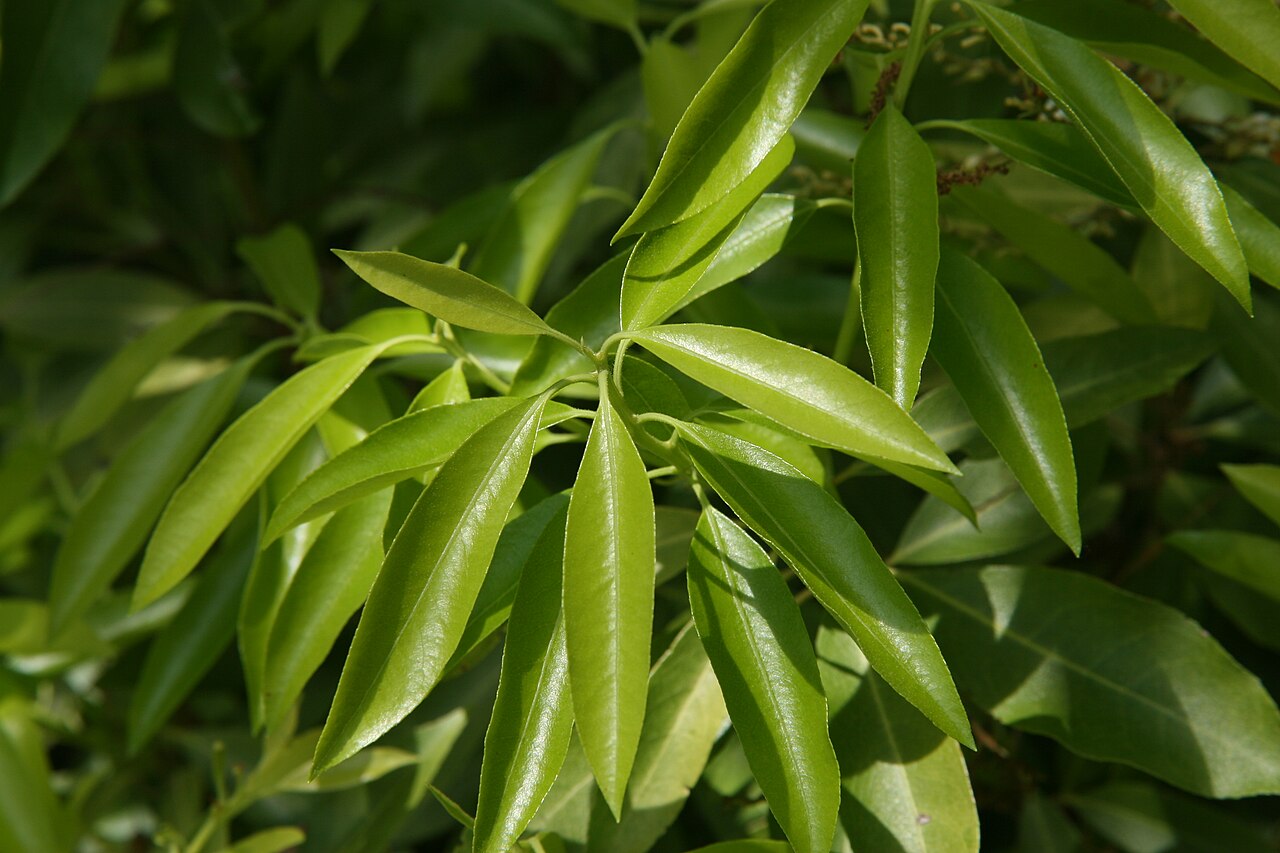
Leaves are alternate, elliptic to oblong, 1 to 3 inches long, with smooth (entire) margins and a glossy, leathery texture. They are evergreen, persisting through most winters, though foliage may bronze or drop in an unusually harsh one. This smooth leaf margin is one way to distinguish Mountain Fetterbush from Japanese Pieris, which more often has finely toothed leaf edges.
Flowers
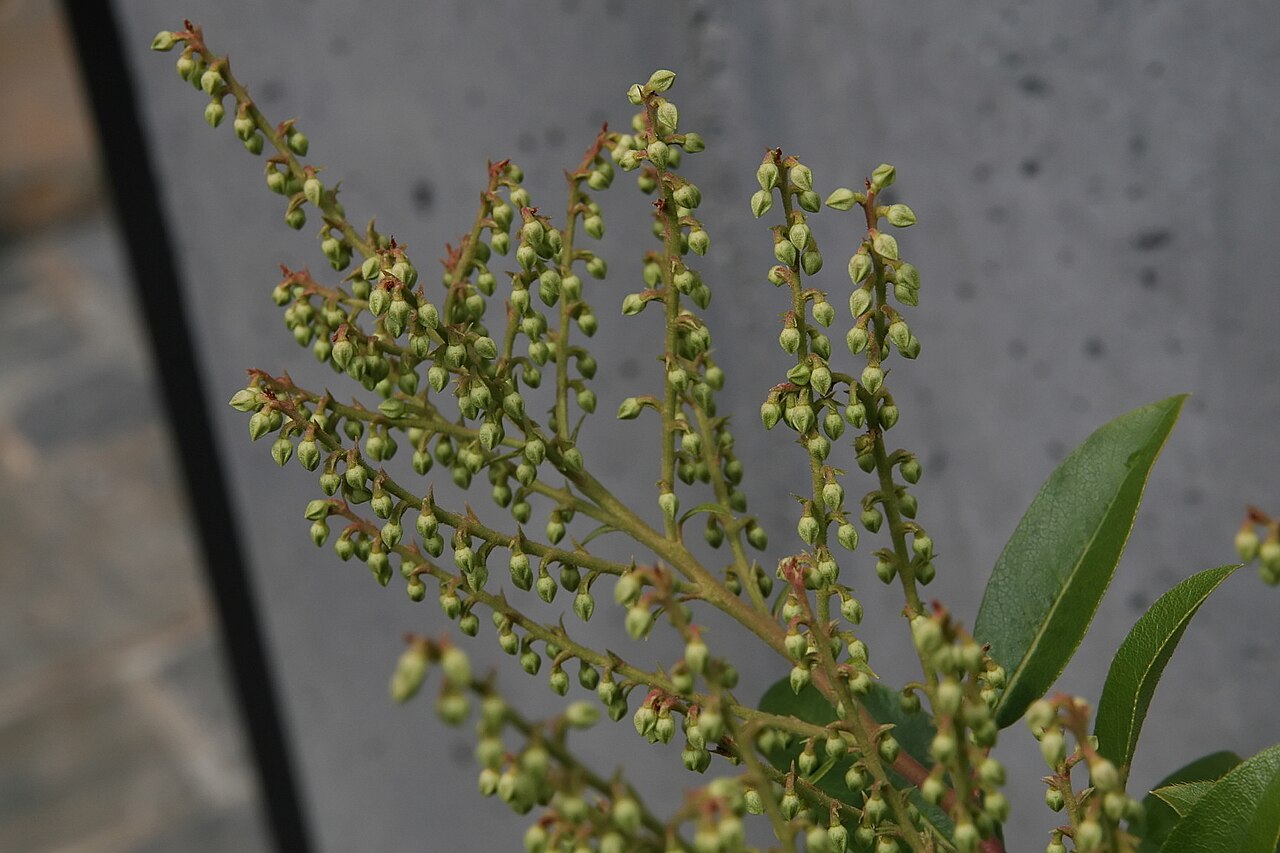
The small, white, urn-shaped flowers are borne in erect to slightly nodding panicles at the branch tips, a key identification trait: Japanese Pieris typically bears its flower clusters drooping downward, while Mountain Fetterbush holds its racemes upright or only gently arching. Flower buds form in autumn as pink-tinged clusters and persist visibly over winter before opening in early to mid spring.
Fruit & Seeds
After flowering, Mountain Fetterbush produces small, dry, five-angled capsules about ⅜ inch long that ripen from green to brown and often remain on the shrub well into the following winter, adding minor textural interest after the leaves and flowers are gone.
Quick Facts
| Scientific Name | Pieris floribunda |
| Family | Ericaceae (Heath) |
| Plant Type | Broadleaf Evergreen Shrub |
| Mature Height | 3–6 ft |
| Mature Spread | 3–5 ft |
| Growth Rate | Slow |
| Sun Exposure | Part Shade to Full Shade |
| Water Needs | Moderate |
| Soil Type | Rocky, well-drained, humus-rich |
| Soil pH | 4.5–6.0 (acidic) |
| Bloom Time | March – April |
| Flower Color | White (pink-tinged buds) |
| Fall Color | Evergreen; may bronze in cold winters |
| Fruit | Small dry brown capsules |
| Deer Resistant | Yes (toxic foliage) |
| USDA Hardiness Zones | 4–7 |
Native Range
Mountain Fetterbush is native to the southern Appalachian Mountains, occurring in Tennessee, North Carolina, South Carolina, Georgia, Virginia, and West Virginia. Its range is centered on the higher elevations of the Blue Ridge and surrounding ranges, where it grows as a true mountain plant rather than a lowland species.
It is far less widely distributed than the Asian Japanese Pieris sold at nurseries nationwide — true wild Mountain Fetterbush is restricted to this relatively narrow Appalachian band, and gardeners outside this region planting it are growing it well beyond its native habitat, which is fine horticulturally but worth knowing.
Within its range, Mountain Fetterbush typically grows on rocky outcrops, balds, and the acidic understory of oak and pine-oak forests at mid to high elevations, often alongside other heath-family shrubs in the same rugged, well-drained terrain.
📋 Regional plant lists featuring Mountain Fetterbush: North & South Carolina · Georgia, Alabama & Mississippi · Maryland, Virginia & West Virginia · Kentucky & Tennessee
Growing & Care Guide
Mountain Fetterbush is a rewarding but somewhat exacting shrub — it wants the cool, acidic, rocky conditions of its mountain home, and struggles where those needs are not met.
Light
It grows best in part shade to full shade, especially with protection from hot afternoon sun, which mimics its native understory habitat. In its mountain range it can tolerate more sun where summers stay cool, but in warmer lowland gardens, shade is important to prevent leaf scorch.
Soil & Water
Give it acidic, well-drained, humus-rich soil — rocky or gravelly sites that mimic its native ridgetop habitat suit it well. It does not tolerate wet feet or heavy clay. Consistent moisture during establishment is important, but mature plants are reasonably drought tolerant once their roots are established in appropriate soil.
Planting Tips
Plant in fall or early spring, siting it in a sheltered spot out of drying winter winds, which can damage the evergreen foliage. Mulch with pine needles or leaf litter to help maintain soil acidity and moisture. Avoid planting in low spots where cold air or standing water collects.
Pruning & Maintenance
Mountain Fetterbush needs very little pruning. Remove dead or winter-damaged branches in spring after new growth starts, and shape lightly right after flowering if needed, since next year’s flower buds form over the summer. It is naturally compact and rarely needs hard pruning.
Propagation
Propagation is usually done from semi-hardwood cuttings taken in summer, which root slowly but reliably with rooting hormone. Seed propagation is possible but slow, requiring fine seed sown on the soil surface and patience over several growing seasons.
Landscape Uses
Mountain Fetterbush fits naturally into shaded, acidic native plantings:
- Woodland gardens beneath high, open canopy
- Foundation plantings on the shaded side of a house
- Rock gardens and slopes with lean, rocky soil
- Companion plantings with Mountain Laurel and native rhododendrons
- Evergreen structure in a native shade border
Wildlife & Ecological Value
Mountain Fetterbush contributes structure and early-season nectar to its mountain habitat, though its toxicity limits its role as a food source for most animals.
For Pollinators
The early spring flowers provide nectar for native bees and other early-flying pollinators at a time when few other mountain shrubs are blooming, making it a useful early-season nectar source in its native range.
For Birds
The dense evergreen branching offers year-round cover and nesting structure for small songbirds, particularly valuable on exposed ridges where evergreen shelter is limited.
For Mammals
Because its foliage contains grayanotoxins, Mountain Fetterbush is avoided by deer and most browsing mammals, which makes it useful as a deer-resistant planting but also means it offers little as forage; livestock should never have access to it, since ingestion can be fatal.
Ecosystem Role
As a component of the heath-family understory on rocky Appalachian slopes, Mountain Fetterbush helps stabilize thin mountain soils and contributes to the dense, acidic shrub layer that defines much of the region’s high-elevation forest and bald habitat.
Cultural & Historical Uses
Mountain Fetterbush has no significant history of food or medicinal use among Indigenous peoples or early settlers, likely owing to its recognized toxicity within the heath family, a group that includes other poisonous relatives such as mountain laurel and some rhododendrons.
It has long been valued ornamentally, however. Botanists and plant collectors documented it from the southern Appalachians in the early 1800s, and it was introduced into cultivation in Europe and the northeastern United States as an unusual, cold-hardy evergreen shrub well before its more famous Asian relative, Japanese Pieris, became the dominant landscape plant in the genus.
Today it remains a specialty plant favored by native-plant gardeners and collectors who appreciate its wild Appalachian origins, modest size, and reliable spring bloom, even as Japanese Pieris and its many cultivars dominate general nursery sales.
Frequently Asked Questions
Is Mountain Fetterbush poisonous?
Yes. All parts of the plant contain grayanotoxins, the same class of toxic compounds found in mountain laurel and some rhododendrons. The foliage and flowers are poisonous if eaten by people or animals, and it has caused serious or fatal poisoning in livestock. Do not plant it where grazing animals have access.
What is the difference between Mountain Fetterbush and Japanese Pieris?
Mountain Fetterbush (Pieris floribunda) is the native eastern U.S. species, with upright to slightly arching flower clusters, smooth leaf edges, and a compact habit. Japanese Pieris (Pieris japonica), the species commonly sold at garden centers, is an Asian import with drooping flower clusters and often finer-toothed leaf margins. Both are evergreen heath-family shrubs with similar flowers, which is why they’re frequently confused.
Why is Mountain Fetterbush also called Mountain Andromeda?
“Andromeda” reflects its original botanical placement — early botanists classified it under the genus Andromeda before it was moved to Pieris. Both “Mountain Fetterbush” and “Mountain Andromeda” remain in common use today.
Can Mountain Fetterbush grow outside its native Appalachian range?
Yes, it is hardy and grown ornamentally well beyond the southern Appalachians, including in the Northeast and parts of Europe, as long as it has acidic, well-drained soil and some shade. It is simply not native outside its original mountain range.
Is Mountain Fetterbush deer resistant?
Yes. Its toxic, grayanotoxin-containing foliage makes it one of the more reliably deer-resistant native evergreen shrubs, which is part of its appeal for woodland gardens in areas with heavy deer pressure.

Looking for a nursery that carries Mountain Fetterbush?
Browse our native plant nursery directory: Georgia · North Carolina · South Carolina, Tennessee & Virginia · West Virginia