Northern Pin Oak (Quercus ellipsoidalis)
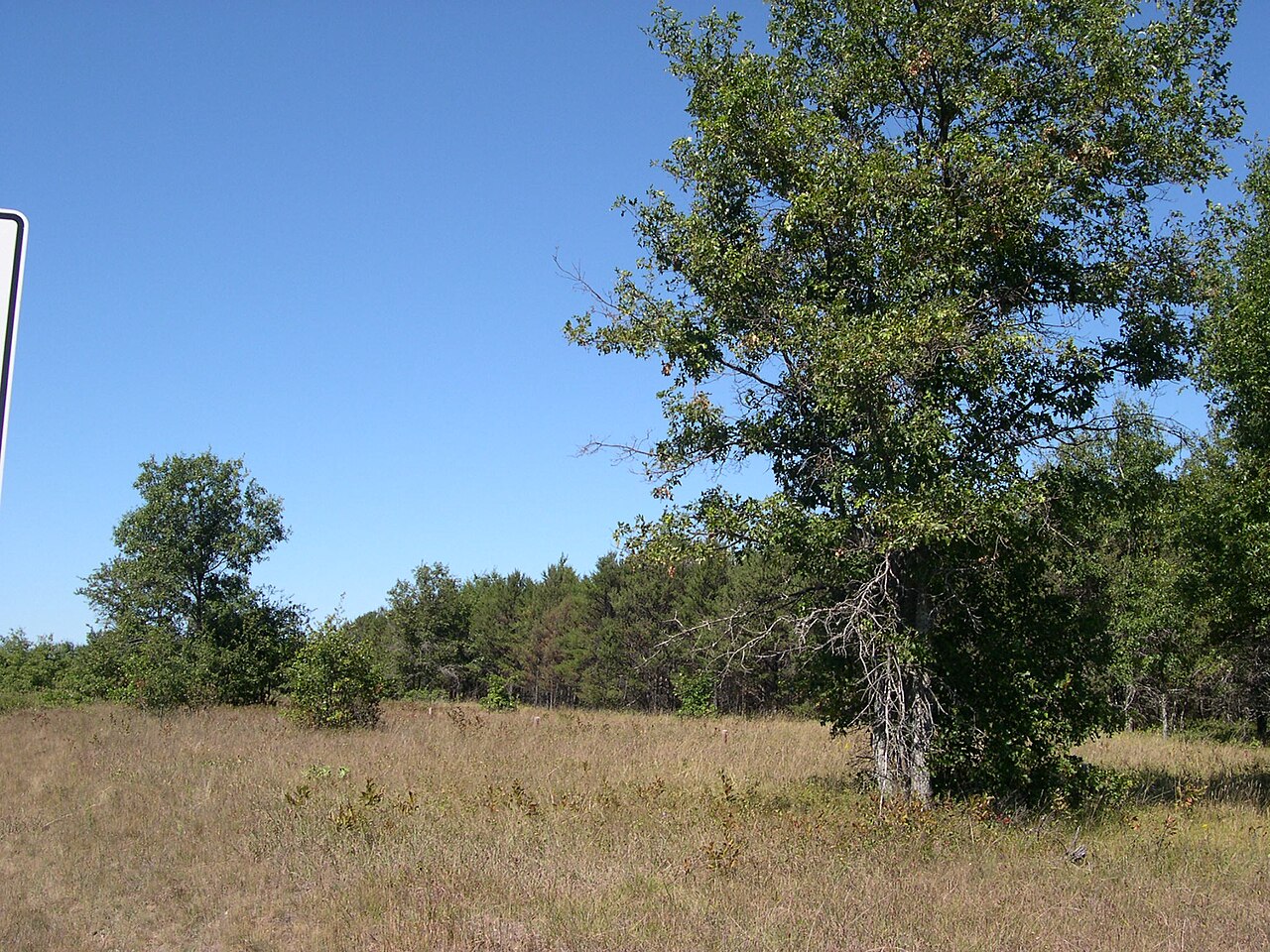
Quercus ellipsoidalis, commonly called Northern Pin Oak or Hill’s Oak, is a tough, mid-sized tree of the Upper Midwest’s driest, sandiest soils. It belongs to the red oak group, and for most of the twentieth century botanists lumped it together with scarlet oak (Quercus coccinea), which it resembles closely. Recent taxonomic work treats it as a distinct species confined to the Great Lakes region and the Upper Mississippi Valley, where it is often the dominant tree on glacial outwash plains too poor and dry for most other oaks.
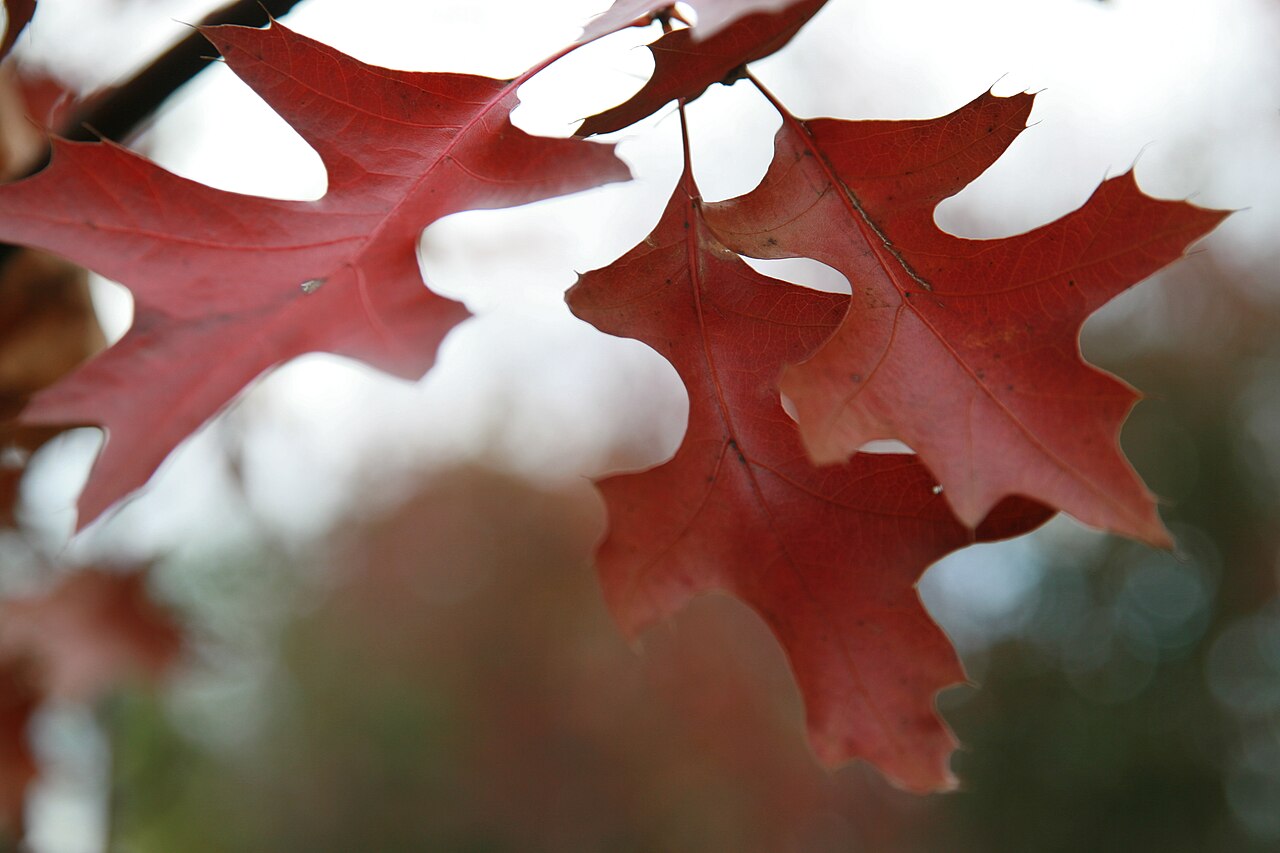
In the open, sunny conditions it prefers, Northern Pin Oak grows into a medium-sized tree 50 to 70 feet tall with a narrow, somewhat ragged, open crown. One of its most reliable field marks, visible even from a moving car, is persistence: many of the lower branches die but stay attached to the trunk for years, giving mature trees a shaggy, pin-cushion silhouette that explains the “pin” in the common name. The glossy, deeply lobed leaves turn a strong red to reddish-bronze in fall, among the best autumn colors of any midwestern oak.
Gardeners and land managers value Northern Pin Oak for exactly the conditions that frustrate other trees: dry, infertile, sandy or rocky soil in full sun. It is the backbone species of oak savannas and barrens from Wisconsin to Ohio, and it is an excellent choice for restoring that increasingly rare habitat, for erosion control on sandy slopes, or simply as a durable shade tree on a site too lean for sugar maple or red oak.
Identification
Northern Pin Oak is usually 50 to 70 feet tall at maturity, occasionally reaching 90 feet on better sites, with a trunk 1 to 2.5 feet in diameter. The crown is narrow, rounded to irregular, and noticeably open compared with the dense crowns of red oak or bur oak, since dead lower branches (“pin branches”) are retained rather than shed cleanly.
Bark & Stems
Young bark is smooth and gray-brown; with age it develops shallow furrows and narrow, somewhat scaly ridges, staying thinner and less deeply fissured than red oak bark well into maturity. Twigs are slender and reddish-brown, and the persistent dead lower branches, often retained for a decade or more, are one of the easiest ways to pick this tree out of a stand at a distance.
Leaves
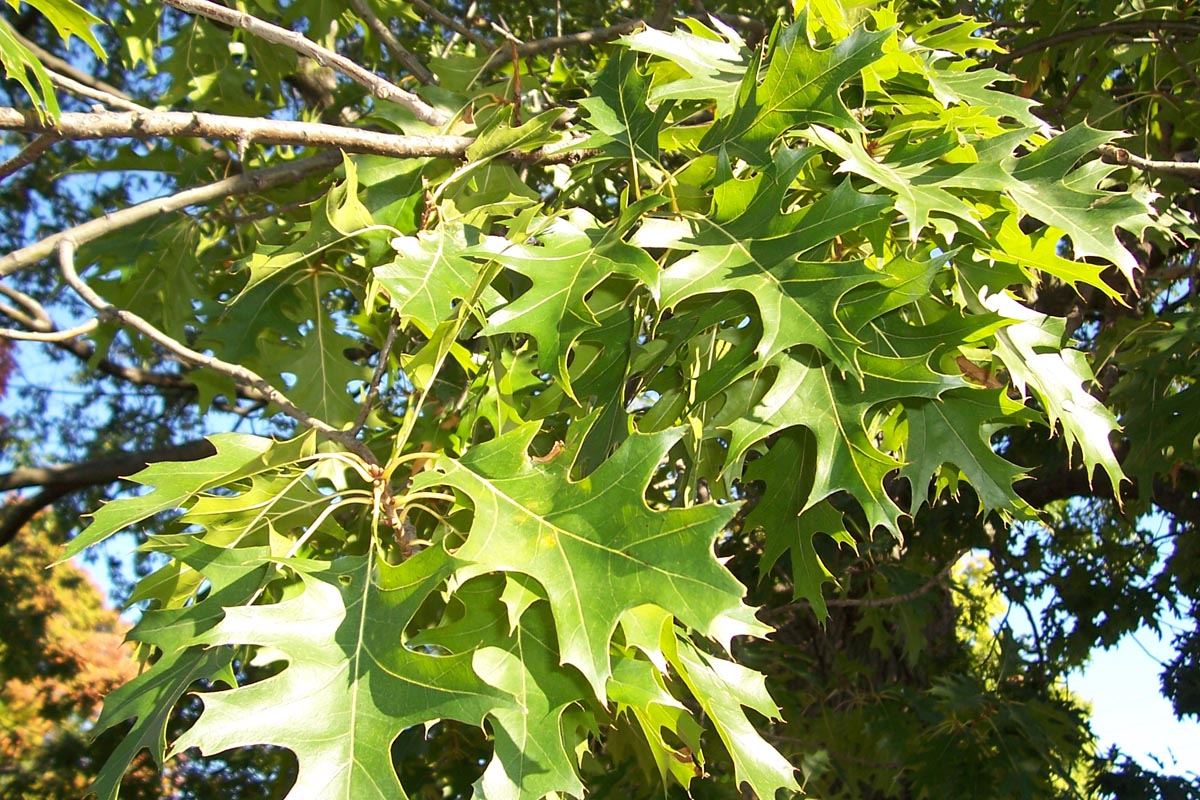
Leaves are alternate, simple, 3 to 5 inches long, glossy dark green above and paler below, with 5 to 7 deeply cut lobes separated by wide, rounded sinuses that typically reach more than halfway to the midrib. Each lobe ends in several bristle-tipped teeth, a trait shared by all oaks in the red oak group. Small tufts of pale rust-colored hairs sit in the vein axils on the leaf underside. Fall color is a dependable deep red to reddish-bronze, often held later into autumn than red oak.
Flowers & Fruit
Like other oaks, Northern Pin Oak is wind-pollinated and monoecious, with drooping yellow-green male catkins and inconspicuous female flowers appearing as the leaves emerge in spring. Acorns mature over two growing seasons and are small, 1/2 to 3/4 inch long, egg-shaped to nearly round, about a third to half enclosed in a thin, scaly cap, ripening to a pale, striped brown. The kernel is notably bitter, even by oak standards, so acorns are a wildlife food rather than a human one.
Quick Facts
| Scientific Name | Quercus ellipsoidalis |
| Family | Fagaceae (Beech) |
| Plant Type | Deciduous Tree |
| Mature Height | 50–70 ft (occasionally to 90 ft) |
| Mature Spread | 35–50 ft |
| Growth Rate | Moderate |
| Sun Exposure | Full Sun |
| Water Needs | Low; excellent drought tolerance once established |
| Soil Type | Dry, sandy or rocky; well-drained |
| Soil pH | Acidic (about 5.0–6.5) |
| Bloom Time | April – May |
| Flower Color | Yellow-green (inconspicuous) |
| Fall Color | Red to reddish-bronze |
| Fruit | Small, bitter acorns, about 1/2–3/4 in |
| Deer Resistant | Moderate (young trees can be browsed) |
| USDA Hardiness Zones | 3–6 |
Native Range
Northern Pin Oak is native to the Upper Midwest and western Great Lakes region, centered on Minnesota and Wisconsin and extending east through Michigan and Ohio, south into Illinois, Indiana and northern Missouri, and west into Iowa. It reaches its greatest abundance on the sandy outwash plains and glacial moraines of east-central Minnesota and central Wisconsin, where it often forms nearly pure stands.
This is a tree of dry, infertile, well-drained ground: sand plains, gravelly moraines, rocky ridgetops and old dune fields. It thrives in full sun and struggles in shade, which is why it is so closely tied to fire-maintained oak savanna and barrens communities. Where fire has been suppressed, Northern Pin Oak stands are gradually being replaced by shade-tolerant trees, making it a priority species for prescribed-fire restoration.
The species is sometimes planted as a street or landscape tree outside this core range for its tolerance of poor, dry soils, but it is not native beyond the Upper Midwest; gardeners farther east or south should treat it as an introduced ornamental rather than a native planting.
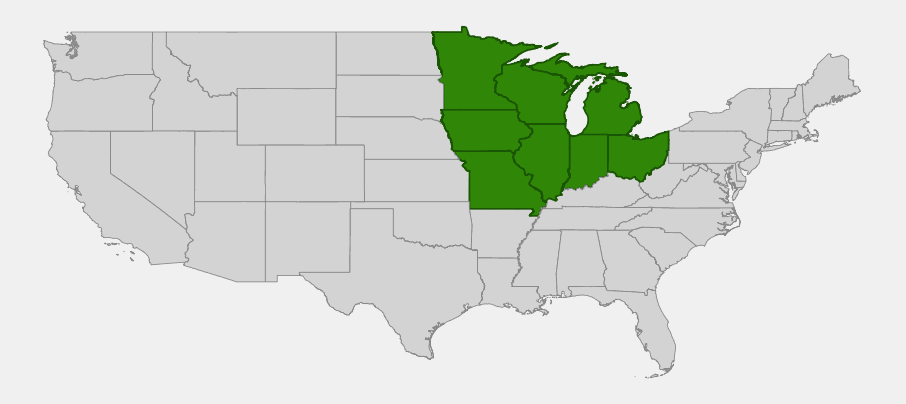
📋 Regional plant lists featuring Northern Pin Oak: Illinois, Iowa & Missouri · Michigan, Wisconsin & Eastern Minnesota · Ohio & Indiana
Growing & Care Guide
Northern Pin Oak is the tree to plant when a site is too dry, sandy or infertile for almost anything else. Once established, it needs very little from the gardener, but it does demand sun and good drainage from day one.
Light
Give it full sun. This is a pioneer species of open savanna and sand plains, and it grows thin and weak in shade. A site with at least six to eight hours of direct sun will produce the best form and fall color.
Soil & Water
Northern Pin Oak is built for lean, acidic, sandy or gravelly soils with excellent drainage; it does poorly in heavy clay or in soils that stay wet. Established trees are drought tolerant and rarely need supplemental watering outside of extended dry spells in the first few years. Avoid rich, heavily amended soil, which can produce weak, overly fast growth.
Planting Tips
Plant small, container-grown or balled-and-burlapped stock in spring or early fall; like most oaks, Northern Pin Oak has a strong taproot and transplants better when young. Choose the permanent site carefully, since large specimens resent being moved. Give it room: a mature tree needs 35 to 50 feet of spread.
Pruning & Maintenance
Prune only to remove dead, damaged or crossing branches, ideally in late winter while the tree is dormant, to reduce the risk of oak wilt infection through fresh wounds. Avoid pruning in late spring and early summer, when sap-feeding beetles that spread oak wilt are most active. Otherwise this is a low-maintenance tree that needs little beyond an occasional check for storm damage.
Propagation
Propagate from acorns, which should be collected in fall as soon as they drop, since they lose viability quickly and do not store well. Plant them promptly, about an inch deep, either directly in the garden or in deep nursery containers that accommodate the long taproot; many require no cold stratification beyond a normal outdoor winter.
Landscape Uses
Northern Pin Oak fits a specific but valuable niche in the native landscape:
- Oak savanna and barrens restoration on sandy or gravelly sites
- Shade tree for poor, dry soils where other oaks struggle
- Erosion control on sandy slopes and glacial outwash
- Wildlife plantings for acorn-dependent birds and mammals
- Street and park tree within its native Upper Midwest range
Wildlife & Ecological Value
As a dominant tree of oak savanna and sand-plain communities, Northern Pin Oak anchors a habitat type that has become increasingly scarce across the Upper Midwest, making every planted or protected tree ecologically significant.
For Pollinators
Like other oaks, it hosts an exceptional number of native moth and butterfly caterpillars, which in turn feed breeding songbirds. The wind-pollinated catkins themselves provide an early pollen source for some generalist bees in spring.
For Birds
Acorns, though bitter, are eaten by blue jays, wild turkeys, woodpeckers and many other birds, and jays are important dispersers that cache acorns and effectively plant new trees. The open, savanna-type canopy also suits species that favor sunlit woodland edges, such as red-headed woodpeckers.
For Mammals
White-tailed deer, fox squirrels and gray squirrels rely on the acorn crop, and squirrels in particular help disperse and plant seed. Young trees can suffer heavy deer browsing on sandy sites where other forage is limited.
Ecosystem Role
Northern Pin Oak is a keystone species of fire-adapted savanna and barrens, communities that depend on periodic burning to stay open; mature trees have thick enough bark to survive low-intensity fire that kills competing shade-tolerant trees. Where fire has been excluded for decades, stands are gradually converting to closed-canopy forest, and restoring this species often goes hand in hand with reintroducing prescribed fire.
Cultural & Historical Uses
For much of the twentieth century, foresters and taxonomists did not clearly separate Northern Pin Oak from scarlet oak, and older timber records and field guides from the Upper Midwest sometimes describe the two interchangeably. The clearer modern distinction has mattered mainly to botanists and restoration ecologists rather than to the lumber trade, which historically grouped it with other red oaks for construction lumber, flooring and fuelwood.
Indigenous peoples of the Great Lakes region, including Ojibwe and Dakota communities, used acorns from various regional oaks, including pin oaks, as a famine or supplemental food after extensive leaching to remove bitter tannins, and used oak bark in tanning hides. These are historical practices, not a recommendation; the raw, unleached acorns of Northern Pin Oak are too bitter and tannin-rich to eat.
Today the tree’s main human value is ecological and horticultural: as the structural backbone of oak savanna restoration projects across Minnesota and Wisconsin, and as a tough, low-input shade tree for sandy residential and municipal sites where few other large trees will thrive.
Frequently Asked Questions
How can I tell Northern Pin Oak apart from scarlet oak or red oak?
Northern Pin Oak’s persistent dead lower branches, smaller and more rounded acorns, and acorn cap covering about a third to half the nut are the most reliable field marks. Scarlet oak is very similar and the two overlap in some areas, but scarlet oak does not naturally occur in the core Upper Midwest range of Northern Pin Oak. Red oak has larger leaves with shallower sinuses and a flatter acorn cap.
Can I eat the acorns?
Not without extensive processing. The kernels are notably bitter even by oak standards, and while historically some Indigenous communities leached acorns from various oaks to remove tannins, raw acorns from this tree are not palatable or safe to eat as is.
Why does my pin oak keep dead branches on the trunk?
That is normal and one of the species’ signature traits. Lower branches lose their leaves as the crown grows upward and the tree self-shades them, but the dead “pin” branches often stay attached for years rather than dropping cleanly, giving the trunk its shaggy look.
Is Northern Pin Oak susceptible to oak wilt?
Yes, like other members of the red oak group it is highly susceptible to oak wilt, a serious vascular disease. Avoid pruning or wounding the tree from April through June, when sap beetles that spread the fungus are most active, and prune only in late fall or winter.
Will it grow in clay soil or a wet yard?
Not well. This species is adapted to dry, sandy, well-drained sites, and it tends to struggle and decline in heavy clay or poorly drained soil. For a similar native oak on richer or heavier ground, bur oak or red oak are better choices.

Looking for a nursery that carries Northern Pin Oak?
Browse our native plant nursery directory: Illinois, Indiana & Iowa · Michigan, Minnesota & Missouri · Ohio · Wisconsin