Shingle Oak (Quercus imbricaria)
Quercus imbricaria, commonly called Shingle Oak, is a distinctive member of the red oak group named for a very un-oak-like trait: entire, unlobed leaves shaped more like a large willow or laurel leaf than a typical oak leaf. Early settlers in the Ohio Valley split the straight-grained wood into shingles, which gave the tree both its common name and its species epithet imbricaria, Latin for “overlapping,” a reference to how the split shingles were laid.
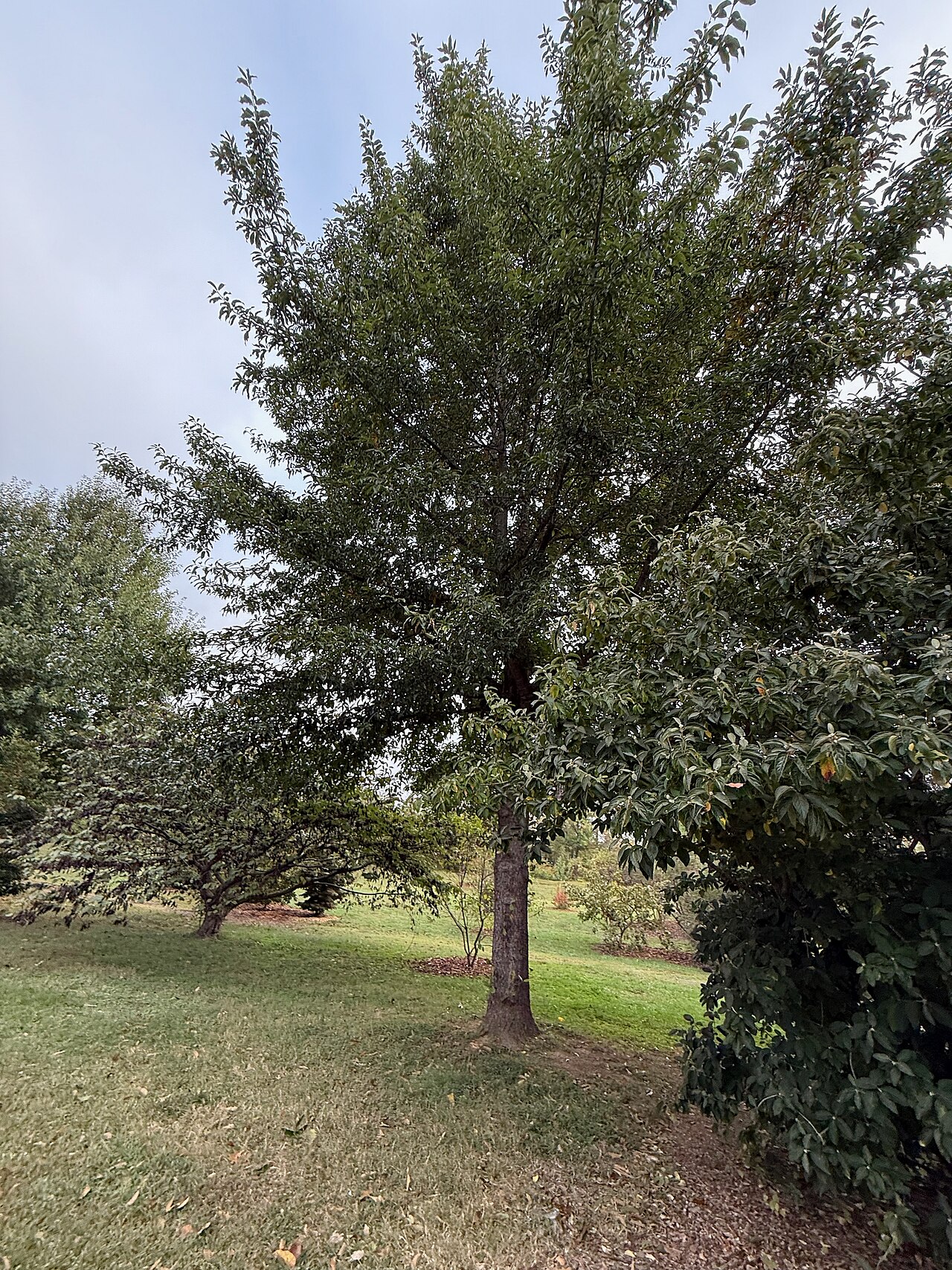
Shingle Oak is a medium to large tree of the Midwest and Upper South, growing into a broad, symmetrical, pyramidal form when young that becomes rounded and wide-spreading with age. Its smooth-margined leaves, often mistaken for willow or laurel foliage, turn yellow-brown to russet-red in fall and frequently persist on the tree well into winter, a trait called marcescence that is shared with some other oaks, including young white oaks.
Among native oaks, Shingle Oak is unusually well suited to the ordinary conditions of a home landscape: it tolerates compacted, poorly drained or occasionally wet soil better than many oaks, transplants more easily, and adapts to city conditions reasonably well, making it a good choice as a durable, long-lived shade tree where other oaks might struggle.
Identification
Shingle Oak typically grows 50 to 65 feet tall, occasionally to 100 feet on excellent sites, with a trunk up to 3 feet in diameter. Young trees have a dense, symmetrical, pyramidal crown that broadens and flattens into a wide, rounded form with maturity.
Bark & Stems
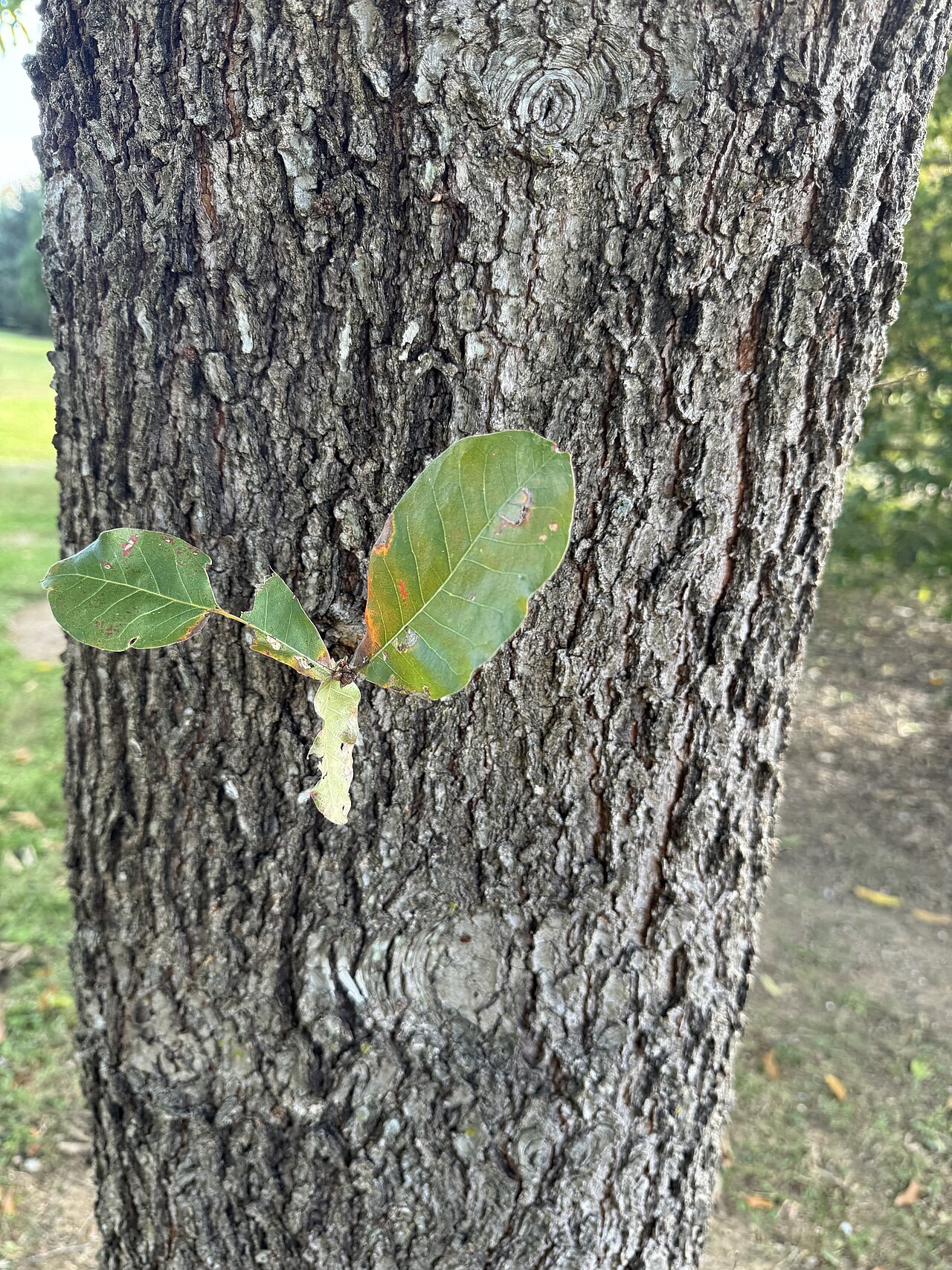
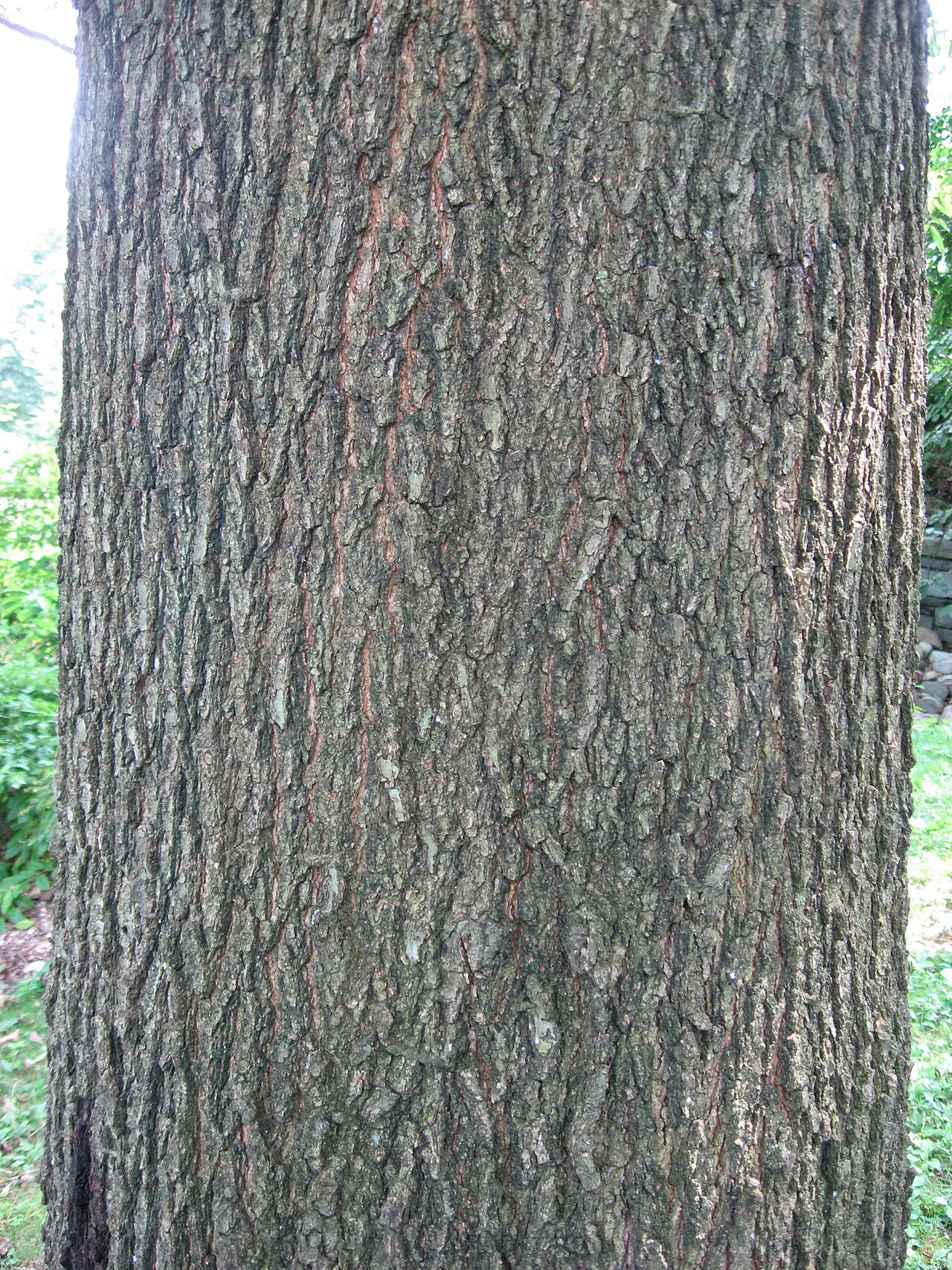
Bark is light grayish-brown, smooth on young stems, developing shallow fissures and flat, scaly ridges with age, and pinkish on the inner bark when freshly cut. Twigs are slender, smooth to lightly hairy, and brown; winter buds are small, brown and sharply pointed.
Leaves
Leaves are simple, alternate, 4 to 8 inches long and oblong to narrowly elliptical, broadest near the middle, with smooth (entire) margins that may be slightly wavy, tapering to a single bristle tip — a leaf shape so different from the typical lobed oak leaf that the species is often mistaken for willow oak or laurel oak at a glance. The upper surface is shiny dark green; the underside is pale, whitish-green with fine, even pubescence. Fall color is a reliable yellow-brown to russet-red, and dead leaves often cling to the branches well into winter.
Flowers & Fruit
Like other oaks, Shingle Oak is wind-pollinated and monoecious, with slender yellow male catkins and inconspicuous female flowers appearing with new leaves in spring. Acorns mature over two growing seasons, are nearly round, 3/8 to 3/4 inch long, chestnut-brown with faint stripes and concentric rings near the tip, enclosed up to half their length in a thin, scaly, minutely downy cap. Shingle Oak hybridizes naturally with black oak to form the uncommon Lea’s hybrid oak.
Quick Facts
| Scientific Name | Quercus imbricaria |
| Family | Fagaceae (Beech) |
| Plant Type | Deciduous Tree (marcescent) |
| Mature Height | 50–65 ft (occasionally to 100 ft) |
| Mature Spread | 40–60 ft |
| Growth Rate | Moderate |
| Sun Exposure | Full Sun |
| Water Needs | Average; tolerates both dry and occasionally wet soil |
| Soil Type | Moist, rich, well-drained; tolerates clay and compaction |
| Soil pH | Acidic (below about 6.8) |
| Bloom Time | March – May |
| Flower Color | Yellow (inconspicuous) |
| Fall Color | Yellow-brown to russet-red |
| Fruit | Rounded acorns, 3/8–3/4 in, biennial |
| Deer Resistant | Moderate |
| USDA Hardiness Zones | 4–8 |
Native Range
Shingle Oak is native to the Midwest and Upper South, ranging from Iowa and eastern Kansas east through Illinois, Indiana, Ohio and Pennsylvania, south through Kentucky, Tennessee and Arkansas to Louisiana, Mississippi and Alabama, and east to the mid-Atlantic in Maryland, Delaware, New Jersey, New York and western Virginia and West Virginia. It is most abundant and reaches its largest size in the lower Ohio Valley, particularly southern Illinois and Indiana.
Typical habitat ranges from dry, well-drained upland woods and ridges to moist bottomlands along streams, reflecting the species’ broad tolerance for different soil moisture conditions compared with many other oaks. It grows in mixed hardwood forests alongside white oak, black oak and various hickories, and also appears as a scattered tree in old fields and fencerows, where its acorns are readily spread by jays and squirrels.
Shingle Oak is planted as an ornamental well beyond this native range, including parts of New England, where it is considered introduced rather than native; gardeners there should treat it as a well-adapted non-native shade tree rather than a native planting.
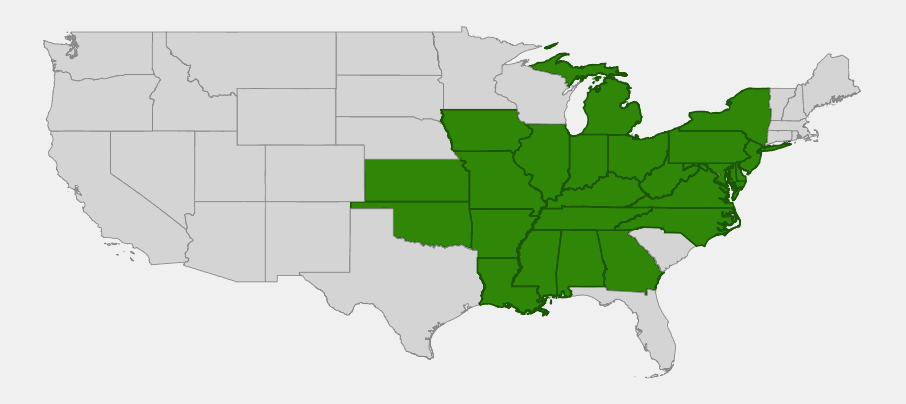
📋 Regional plant lists featuring Shingle Oak: Illinois, Iowa & Missouri · Ohio & Indiana · Michigan, Wisconsin & Eastern Minnesota · Kentucky & Tennessee · Georgia, Alabama & Mississippi · Arkansas, Louisiana, Eastern Oklahoma & Eastern Texas · North Carolina & South Carolina · Maryland, Virginia & West Virginia · Delaware, Southern New Jersey & Long Island · New York, Pennsylvania & Northern New Jersey · Nebraska, Kansas & Eastern Colorado
Growing & Care Guide
Shingle Oak is one of the more forgiving native oaks for the home landscape, adapting readily to a wider range of soil conditions than most of its relatives while still providing the long-term structure and wildlife value every oak brings.
Light
Plant in full sun for the best, densest crown and strongest fall color. It tolerates a bit of shade when young but grows best and develops its full pyramidal-to-rounded form in open, sunny sites.
Soil & Water
Shingle Oak prefers moist, rich, well-drained soil but is notably adaptable, tolerating both drier upland sites and occasionally wet bottomland conditions better than many other oaks. It also handles the compacted, disturbed soils common around buildings and streets reasonably well, one reason it transplants and establishes more easily than most oaks.
Planting Tips
Plant container-grown or balled-and-burlapped stock in spring or fall, siting it where its eventual 40- to 60-foot spread will not crowd structures or power lines. Because it is more tolerant of disturbed and compacted soil than many oaks, it is a reasonable choice for suburban yards and larger urban planting sites.
Pruning & Maintenance
Prune in late fall or winter to remove dead, damaged or crossing branches, avoiding spring and early summer cuts when sap-feeding beetles that spread oak wilt are most active; Shingle Oak is susceptible to this serious disease like other red oak group members. Otherwise it needs little regular maintenance once established.
Propagation
Propagate from acorns, collected as soon as they fall since they do not store well. Plant immediately, about an inch deep, in deep containers or directly in the garden to accommodate the long taproot; stratify at about 41°F for 30 to 60 days if seed must be held over winter before sowing.
Landscape Uses
Shingle Oak’s adaptability and dense form make it useful in several landscape roles:
- Shade tree for suburban and urban sites with variable soil conditions
- Hedge or screen — a traditional use thanks to its dense, retained winter foliage
- Windbreak on exposed sites
- Wildlife plantings for acorn-dependent birds and mammals
- Street tree where its tolerance of compacted soil is an asset
Wildlife & Ecological Value
As a reliable mast producer across much of the Midwest and Upper South, Shingle Oak supports a wide range of wildlife through its acorn crop, foliage and structure.
For Pollinators
Like other oaks, it supports an exceptional diversity of native moth and butterfly caterpillars, which make up the majority of the food that breeding songbirds feed their young.
For Birds
Acorns attract songbirds, ground-feeding birds such as wild turkey, and woodpeckers, and blue jays are especially effective at dispersing and caching the seed. The dense, often leaf-retaining winter crown provides valuable cover and roosting habitat during the colder months, when many other trees stand bare.
For Mammals
White-tailed deer, gray squirrels, fox squirrels and other mammals rely on the acorn crop, particularly in years when other mast trees produce poorly. The tree transplants with less difficulty than many oaks, which has made it a popular, easily established food source in wildlife and reforestation plantings.
Ecosystem Role
Shingle Oak contributes to the structural and species diversity of Midwest and Upper South hardwood forests, often filling niches in old fields, fencerows and disturbed edges where its acorns are readily dispersed. It is susceptible to oak wilt and, like other red oaks, to pine-oak rusts and leaf blister, so monitoring and good pruning hygiene matter in managed landscapes.
Cultural & Historical Uses
Shingle Oak takes both its common and scientific names from a practical use: nineteenth-century settlers in the Ohio Valley and across the Midwest split the straight-grained wood into shingles for roofing, a practice common enough in southern Illinois and Indiana, where the tree reaches its largest size, to leave a lasting mark on local place names and tree lore.
The Cherokee and other Indigenous peoples of the region reportedly used the bark of Shingle Oak and related oaks medicinally in traditional practice; this is recorded history, not a present-day recommendation, and the raw acorns and bark are not food or medicine for casual use. Beyond shingles, the heavy, close-grained wood also saw use in general construction and fencing by early settlers.
Today Shingle Oak’s main value is as an ornamental and shade tree, appreciated by landscapers for its symmetrical form, reliable fall color and unusual willow-like leaves, as well as its tolerance for the imperfect soils of real-world planting sites.
Frequently Asked Questions
Why does Shingle Oak have leaves that don’t look like oak leaves?
Shingle Oak belongs to a group of southern and midwestern red oaks that evolved smooth-margined, unlobed leaves rather than the classic lobed shape, a group that also includes willow oak and the laurel oaks. Despite the different leaf form, it is confirmed an oak by its bristle-tipped leaf apex, acorns and other red oak group characteristics.
Does Shingle Oak drop its leaves in fall like other deciduous trees?
Partially. Shingle Oak is marcescent, meaning many of its dead leaves stay attached through much of winter instead of dropping immediately, a trait it shares with young white oaks and some beeches. They typically fall as new growth pushes them off in spring.
Can Shingle Oak grow in wet or compacted soil?
Better than most oaks. It tolerates occasionally wet bottomland soil and compacted urban or suburban ground more readily than many native oak species, though it still performs best in moist, well-drained, fertile soil.
Is Shingle Oak susceptible to oak wilt?
Yes, as a member of the red oak group it is highly susceptible. Avoid pruning or wounding it from spring through early summer, when the beetles that spread the fungus are most active, and prune only in late fall or winter.
Can you eat Shingle Oak acorns?
Not without extensive leaching. Like other red oak group acorns, they are high in bitter tannins and are not suitable to eat raw; they are valuable food for wildlife rather than people.

Looking for a nursery that carries Shingle Oak?
Browse our native plant nursery directory: Alabama & Arkansas · Delaware & Georgia · Iowa, Illinois, Indiana & Kansas · Kentucky, Louisiana, Maryland, Michigan, Missouri & Mississippi · North Carolina, New Jersey, New York, Ohio & Oklahoma · Pennsylvania, Tennessee & Virginia · West Virginia