Pacific Madrone (Arbutus menziesii)
Arbutus menziesii, commonly known as Pacific Madrone, Madrona, or Strawberry Tree, stands as one of the most magnificent and distinctive trees of the Pacific Coast, combining extraordinary beauty with remarkable ecological importance. This evergreen giant, with its sculptural reddish-orange bark and lustrous leaves, creates some of the most stunning displays in western forests. From the windswept coastal bluffs of Northern California to the mountain slopes of British Columbia, Pacific Madrone serves as both a keystone species in forest ecosystems and one of the most beloved trees among Pacific Coast naturalists.
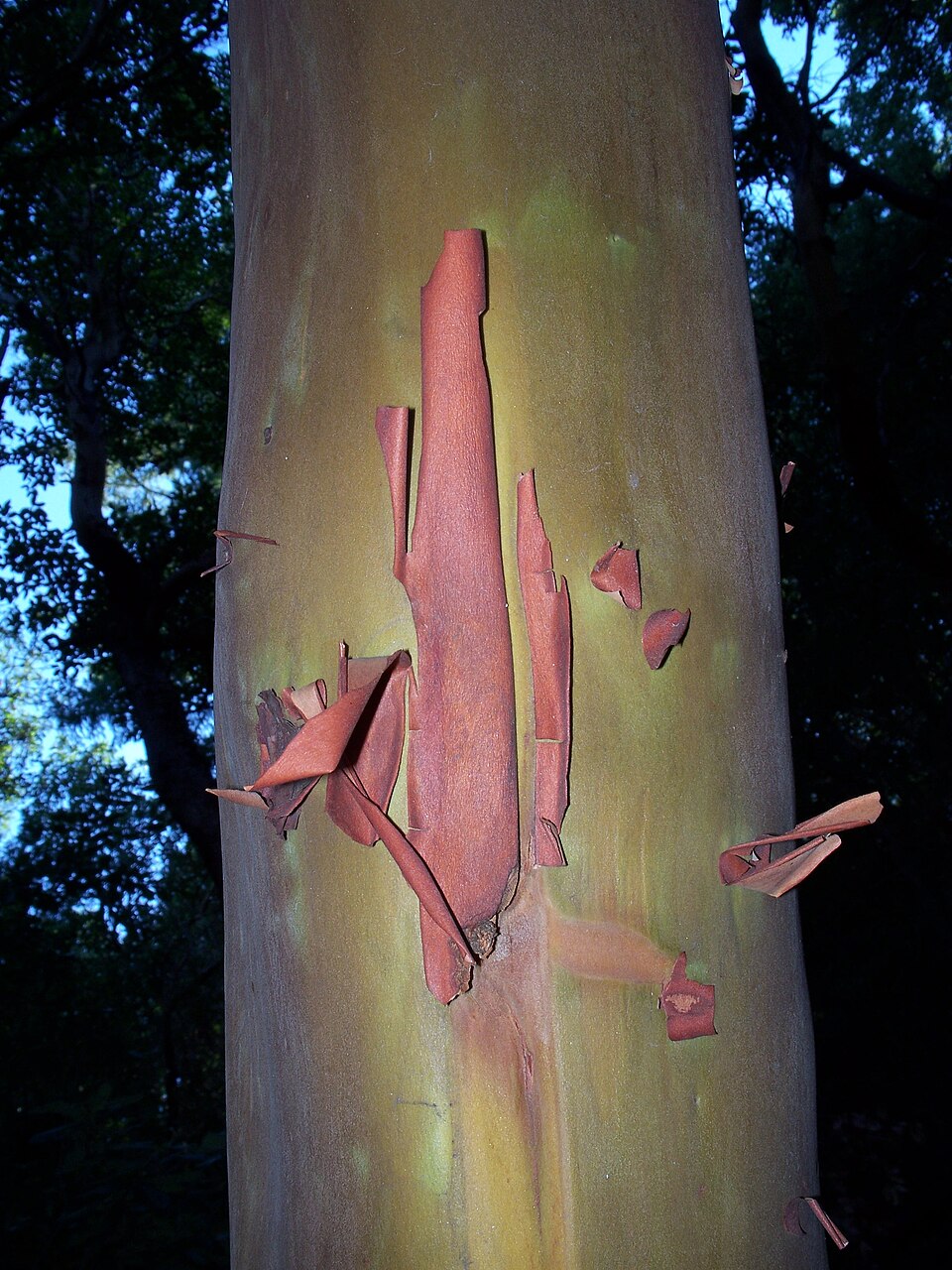
The tree’s most distinctive feature is its smooth, reddish-orange to cinnamon-colored bark that peels away in thin sheets throughout the year, revealing patches of lighter-colored bark underneath and creating a living sculpture that changes with the seasons. This remarkable adaptation helps the tree shed lichens, mosses, and parasites while creating the striking patchwork pattern that makes mature madrones instantly recognizable from great distances.
Despite its breathtaking beauty, Pacific Madrone is notoriously challenging to cultivate, requiring specific soil fungi, excellent drainage, and minimal root disturbance. However, those fortunate enough to have madrones growing naturally on their property possess one of the most ecologically valuable trees in North American forests—supporting over 50 species of birds and mammals while serving as a crucial component of Pacific coastal forest ecosystems.
Identification
Pacific Madrone is unmistakable once you know its key features, growing as a medium to large evergreen tree that typically reaches 50 to 100 feet tall with a trunk diameter of 2 to 4 feet, though exceptional specimens can exceed these dimensions. The tree develops an irregular, often multi-trunked form with distinctive branching patterns that become more sculptural and picturesque with age, especially in coastal environments where wind sculpts the crown into dramatic shapes.
Bark & Trunk
The bark is Pacific Madrone’s most distinctive and celebrated feature. Young bark is smooth and reddish-orange to cinnamon-colored, peeling annually in thin, papery sheets to reveal lighter patches of yellow, green, or orange bark beneath. This creates a constantly changing patchwork of colors that ranges from deep terra cotta to pale yellow-green. Older trunks may develop some furrowing at the base, but the smooth, colorful bark pattern extends well up into the crown and onto major branches.
Leaves
The leaves are evergreen, leathery, and oval to elliptical, measuring 3 to 6 inches long and 1.5 to 3 inches wide. They are thick and waxy with a dark green upper surface and lighter, often whitish undersides. The leaves have smooth margins (occasionally with small teeth on young growth) and prominent veins. New growth often emerges with a reddish tinge before maturing to dark green. The leaves typically persist for 2-3 years before dropping.
Flowers & Fruit
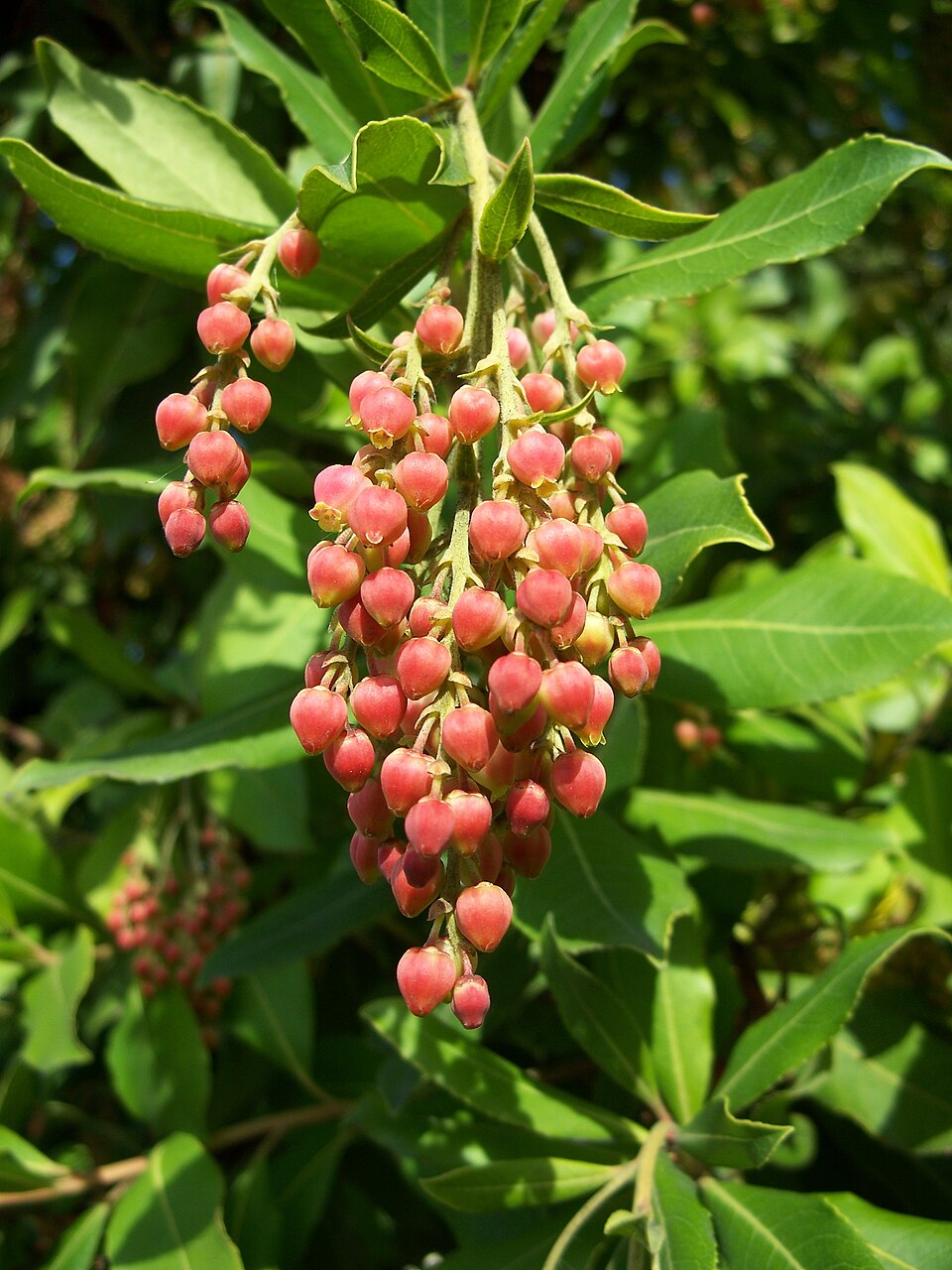
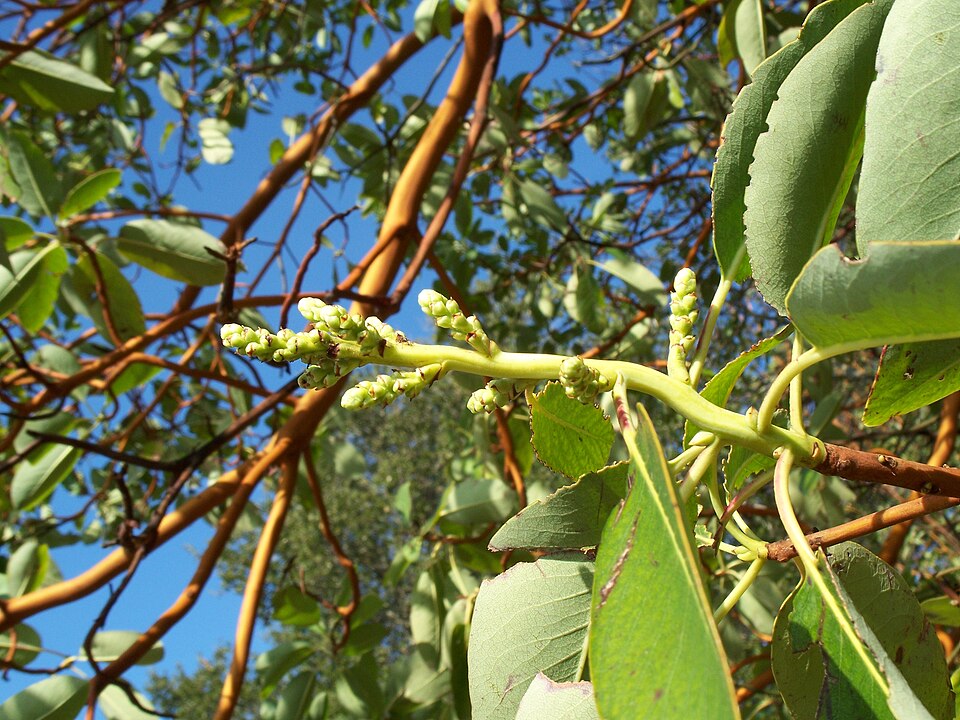
Pacific Madrone produces spectacular clusters of small, white to pale pink flowers that are urn-shaped, typical of the heath family (Ericaceae). These fragrant flower panicles can be 4 to 6 inches long and appear at the branch tips from March through June, depending on location and weather. The flowers are followed by clusters of bright red to orange berries that ripen in fall and persist into winter, providing both exceptional ornamental value and crucial wildlife food. The berries are about ½ inch in diameter with a warty surface texture and contain several small seeds.
Quick Facts
| Scientific Name | Arbutus menziesii |
| Family | Ericaceae (Heath) |
| Plant Type | Evergreen Tree |
| Mature Height | 40–80 ft |
| Trunk Diameter | 2–4 ft (0.6–1.2 m) |
| Growth Rate | Slow to Moderate |
| Sun Exposure | Full Sun |
| Water Needs | Moderate |
| Soil Type | Well-drained, acidic soils |
| Soil pH | 5.0–6.5 (acidic) |
| Bloom Time | March – June |
| Flower Color | White to pale pink, fragrant clusters |
| Fruit | Bright red to orange berries |
| Deer Resistant | Yes (generally) |
| USDA Hardiness Zones | 7–9 |
Native Range
Pacific Madrone has a distinctive coastal distribution extending from southern British Columbia south to Southern California, typically found within 100 miles of the Pacific Ocean. The species thrives from sea level up to elevations of 5,000 feet in California and somewhat lower elevations further north, where it forms a characteristic component of mixed evergreen forests, oak woodlands, and chaparral communities. This coastal distribution reflects the tree’s adaptation to the Mediterranean climate pattern of wet winters and dry summers that characterizes much of the Pacific Coast.
The species shows remarkable adaptability across its range, growing in diverse habitats from exposed coastal bluffs where it is sculpted by salt winds into picturesque forms, to protected canyon bottoms where it can achieve impressive size, to mixed coniferous forests where it often forms a distinctive understory canopy layer. In its northern range, Pacific Madrone is most common in the Puget Sound region and along the Columbia River Gorge, while in California it extends inland through the Coast Range and into the foothills of the Sierra Nevada.
Pacific Madrone commonly associates with Douglas-fir, Coast Live Oak, Tan Oak, and Bigleaf Maple in mixed evergreen forests. In drier sites, it mingles with manzanita species, ceanothus, and various oak species. The tree’s deep taproot and drought tolerance allow it to thrive in sites too dry for many associated species, making it particularly important in transition zones between forest and chaparral plant communities.
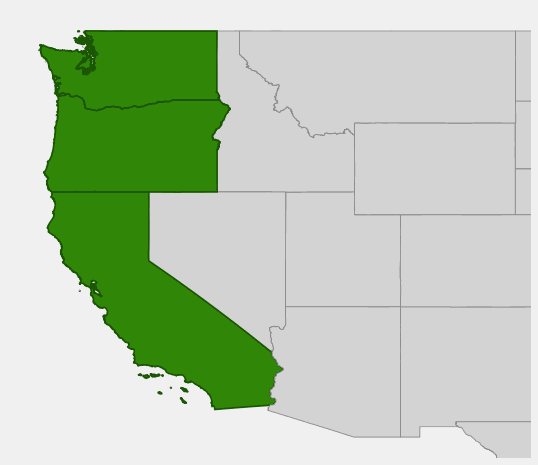
📋 Regional plant lists featuring Pacific Madrone: Western Oregon & Western Washington
Growing & Care Guide
Pacific Madrone is challenging but extraordinarily rewarding to grow, requiring specific conditions to thrive in cultivation. The species is notoriously difficult to establish and is extremely sensitive to root disturbance, overwatering, and changes in soil drainage. However, those who succeed in growing Pacific Madrone are rewarded with one of the most beautiful and distinctive trees available to Pacific Coast gardeners.
Light
Pacific Madrone performs best in full sun to partial shade, developing its most attractive form and heaviest flowering in sunny locations. In too much shade, the tree becomes leggy and may not flower well. However, some protection from the most intense afternoon sun can be beneficial in hotter inland locations. Young trees benefit from some protection during their establishment period.
Soil & Water
The key to success with Pacific Madrone lies in providing excellent drainage—the tree absolutely cannot tolerate waterlogged soils or standing water. Pacific Madrone thrives in acidic, well-draining soils (pH 5.0-6.5) and depends on specific mycorrhizal fungi for nutrient uptake. Once established, the tree is remarkably drought tolerant and prefers to receive most of its water during winter months, mimicking its natural Mediterranean climate adaptation. Avoid summer irrigation, particularly around the trunk area, as this can lead to root rot and sudden oak death susceptibility.
Planting Tips
Choose small container-grown specimens and plant them in their permanent location, as Pacific Madrone is extremely difficult to transplant successfully. Plant in fall to allow root establishment during cool, moist winter months. Dig the planting hole no deeper than the root ball and twice as wide, avoiding any soil amendments that might alter drainage patterns. The tree is extremely sensitive to root disturbance, so handle carefully and avoid any future excavation or soil compaction in the root zone.
Pruning
Pacific Madrone requires minimal pruning and generally maintains an attractive natural form. Remove only dead, diseased, or crossing branches, and avoid any unnecessary cuts that might stress the tree. Pruning should be done during dry weather to prevent disease transmission. The tree’s distinctive branching pattern and sculptural form are best left to develop naturally.
Landscape Uses
Pacific Madrone’s applications in landscaping are somewhat limited by its specific requirements, but where it can grow successfully, it provides unmatched beauty:
- Specimen planting on slopes with excellent drainage
- Natural woodland gardens in appropriate climates
- Coastal landscaping where adapted to salt exposure
- Wildlife gardens for exceptional bird and pollinator support
- Erosion control on steep slopes with good drainage
- Fire-wise landscaping in appropriate zones (fire-resistant when established)
Wildlife & Ecological Value
Pacific Madrone ranks as one of the most ecologically valuable trees in Pacific Coast ecosystems, supporting an exceptionally diverse array of wildlife throughout the year. The tree’s abundant berries, nectar-rich flowers, distinctive bark, and overall architectural structure create multi-seasonal resources that have supported complex ecological relationships over millions of years.
Birds
Over 50 species of birds depend on Pacific Madrone, making it one of the most important wildlife trees in western North America. The nutritious berries are consumed by Band-tailed Pigeons, various thrushes including Varied Thrush and American Robin, Cedar Waxwings, Steller’s Jays, and numerous finches. Woodpeckers including Pileated, Acorn, and Hairy Woodpeckers work the bark for insects and may excavate nesting cavities in dead wood. The tree’s irregular branching provides excellent nesting sites for a wide variety of songbirds.
Mammals
Black bears are among the most important dispersers of madrone seeds, often climbing high into the canopy to reach fruit clusters during late summer and fall. The berries are also consumed by raccoons, gray foxes, and various rodents including chipmunks, squirrels, and woodrats. Deer and elk browse the foliage seasonally, particularly during drought when other food sources are scarce. The dense canopy provides thermal cover for many species during extreme weather.
Pollinators
The abundant spring flowers provide crucial early-season nectar and pollen resources for an extraordinary diversity of native bees, including bumblebees, mason bees, leafcutter bees, and numerous smaller solitary bee species. The flowers also attract beneficial insects like hoverflies and parasitic wasps that help control forest pest species. Butterflies, including Western Tiger Swallowtails and various skippers, visit the flowers for nectar during the extended blooming period.
Ecosystem Role
Pacific Madrone serves as a keystone species in many Pacific Coast forest communities. The tree’s deep taproot system helps stabilize slopes and access deep water sources, while its evergreen canopy modifies local microclimates, creating cooler, moister conditions beneath. The annual bark shedding provides organic matter and creates microhabitat for countless invertebrates. Pacific Madrone forests support distinctive understory plant communities and serve as crucial corridors for wildlife movement through increasingly fragmented landscapes.
Cultural & Historical Uses
Pacific Madrone holds profound cultural significance for Indigenous peoples of the Pacific Coast, particularly among California, Oregon, and southern British Columbia tribes. The Yurok, Hupa, Karuk, Pomo, and other Northern California nations considered madrone berries a crucial staple food source, ranking among the most important wild foods in their seasonal diet. The bright red berries were eaten fresh during the harvest season, dried and stored for winter consumption, or ground into flour for making nutritious bread and cakes that could be stored for months.
The medicinal uses of Pacific Madrone were extensive and sophisticated. Tribal healers prepared bark tea to treat stomach ailments, colds, tuberculosis, and various internal disorders. The astringent properties of the inner bark made it valuable for treating wounds, sores, cuts, and diarrhea. Some tribes used specially prepared madrone leaf teas as eyewashes or to treat various skin conditions. The Mendocino and other California peoples used inner bark preparations in women’s medicine, demonstrating the sophisticated pharmacological knowledge of Indigenous communities.
The exceptionally hard, dense wood was prized for making durable tools, bowls, and ceremonial objects. The fine-grained timber was carved into spoons, dishes, combs, and other implements that could last for generations. The beautiful reddish bark was sometimes used as a dye for basketry materials, while the wood’s natural polish made it ideal for decorative and ceremonial items. In spiritual practices, madrone was often considered a sacred tree, and many tribes maintained specific protocols for respectfully harvesting its bark, berries, and wood.
Spanish colonizers named the tree “madroño” after a similar European species (Arbutus unedo), and European settlers quickly adopted Indigenous uses of the berries for food, making jellies, preserves, and fermented beverages. The exceptionally hard wood found use in furniture making, tool handles, and specialty woodworking projects. Today, Pacific Madrone wood remains highly valued by artisan woodworkers and is prized for its beautiful grain, natural polish, and distinctive reddish color. The species has also become increasingly important in restoration efforts as climate change and development pressure threaten its native habitats throughout the Pacific Coast region.
Frequently Asked Questions
Why is my Pacific Madrone losing its bark?
This is completely normal and natural! Pacific Madrone sheds its outer bark annually in thin, papery sheets, revealing the smooth, colorful inner bark beneath. This peeling bark is one of the tree’s most distinctive and attractive features, creating beautiful patterns of red, orange, yellow, and green throughout the year.
Can Pacific Madrone grow outside its native range?
Pacific Madrone is extremely particular about growing conditions and rarely succeeds outside its native Pacific Coast range. It requires specific mycorrhizal soil fungi, Mediterranean climate patterns, and precise drainage conditions found naturally along the Pacific Coast. Attempts to grow it in other regions with different climates usually fail.
Are Pacific Madrone berries safe to eat?
Yes, the berries are edible and nutritious when fully ripe (deep red to orange-red color). They have a sweet but somewhat bland flavor with a mealy texture. However, since they’re a crucial food source for over 50 species of wildlife, it’s best to leave most berries for the birds and animals that depend on them.
How can I tell if my Pacific Madrone is healthy?
Healthy Pacific Madrones have bright green foliage year-round, bark that peels naturally in colorful sheets, annual berry production, and vigorous new growth. Signs of stress include yellowing or dropping leaves, black spots on foliage (possible sudden oak death), excessive branch dieback, or bark that stops peeling naturally. Stressed trees are more vulnerable to diseases and pests.
Why is Pacific Madrone so difficult to grow in gardens?
Pacific Madrone has very specific requirements: it needs excellent drainage, acidic soil, specific mycorrhizal fungi, minimal root disturbance, and Mediterranean climate patterns. The tree is extremely sensitive to overwatering, soil compaction, and root damage. Most failures occur because gardeners treat it like other trees rather than respecting its unique requirements developed over millions of years in Pacific Coast ecosystems.

Looking for a nursery that carries Pacific Madrone?
Browse our native plant nursery directory: Oregon · Washington