
Paw Paw (Asimina triloba)
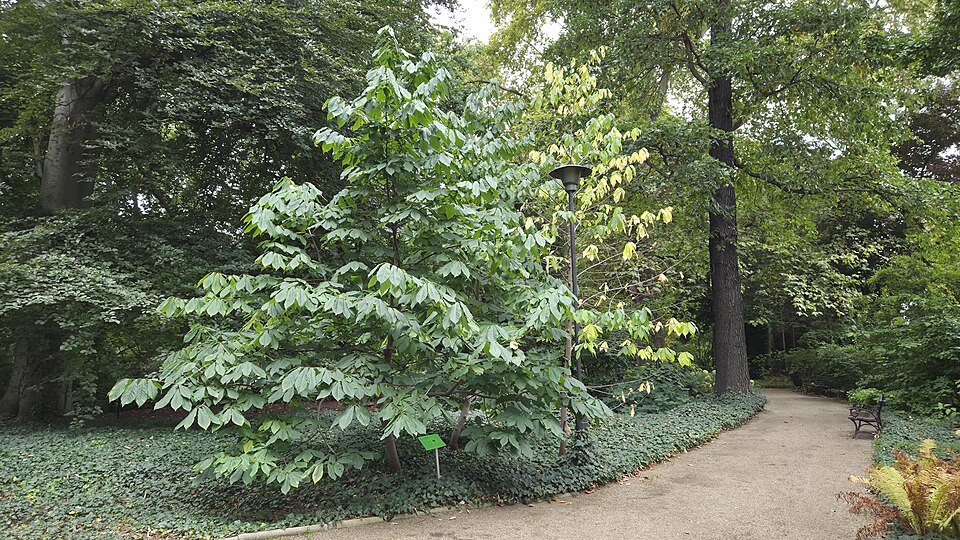
Asimina triloba, commonly known as the Paw Paw, American Pawpaw, or simply Pawpaw, is North America’s largest native fruit and one of the most unique trees in the eastern United States. This deciduous member of the Annonaceae family — the same tropical family that includes custard apples and soursops — brings an exotic touch to temperate forests with its large, drooping leaves that can reach up to 12 inches long and create a distinctly tropical appearance in an otherwise temperate landscape.
The Paw Paw’s remarkable fruit is what truly sets this tree apart. Ripening in late summer to early fall, these greenish-yellow, kidney-shaped fruits contain a creamy, custard-like flesh with a flavor often described as a cross between banana, mango, and vanilla — earning it the nickname “poor man’s banana.” At 3–6 inches long, they represent the largest edible fruit native to the continental United States, and have been cherished by Indigenous peoples, early settlers, and wildlife for thousands of years.
Growing naturally in the rich, moist soils of eastern North American forests from southern Ontario to northern Florida and from the Atlantic coast to the Great Plains, the Paw Paw thrives in partial shade as an understory tree, though it can adapt to full sun conditions. Its unique pollination strategy, requiring flies and beetles rather than bees, and its tendency to form colonies through root suckers make it a fascinating addition to any native plant garden seeking to support biodiversity while providing a truly distinctive and delicious harvest.
Identification
Paw Paw is easily recognizable by its distinctive tropical appearance, unusual for a tree native to temperate North America. It typically grows as a small to medium-sized tree reaching 15–30 feet tall, though exceptional specimens can reach 40 feet. The tree often develops a pyramidal shape when young, becoming more rounded with age, and frequently forms colonies through underground runners (root suckers).
Bark
The bark is smooth and thin, colored grayish-brown with distinctive light patches and horizontal lines called lenticels. Young stems are smooth and brown, often with a slightly reddish tinge. As the tree matures, the bark may develop shallow furrows and become slightly rougher, but it retains its generally smooth appearance — quite different from most other native trees in its size range.
Leaves
The leaves are the Paw Paw’s most striking feature. They are simple, alternate, and remarkably large — typically 6–12 inches long and 3–5 inches wide — with an obovate (egg-shaped with the broad end toward the tip) shape that tapers to a point. The leaf margins are entire (smooth-edged) and the surface is smooth with prominent veining. During the growing season, they are bright to medium green above and slightly paler beneath. The leaves cluster toward the ends of branches, creating a distinctly tropical, almost banana-like appearance that makes the tree instantly recognizable. In autumn, they turn a beautiful golden yellow before dropping.
Flowers & Fruit
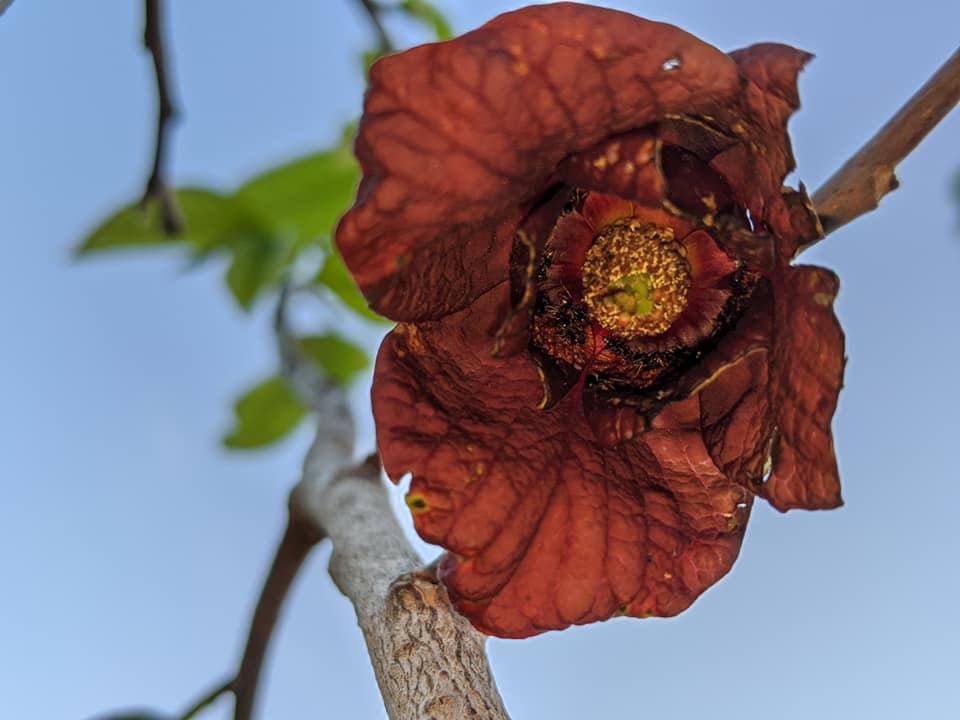
The flowers appear in early spring before the leaves are fully developed, emerging from previous year’s wood. Each flower is about 1–2 inches across with six petals arranged in two whorls: three outer petals that are initially green and turn maroon-purple, and three smaller inner petals that are initially pale yellow-green and darken to deep purple-maroon. The flowers have a somewhat unpleasant odor — described as resembling rotting meat — which attracts their specialized pollinators: flies and beetles rather than bees.
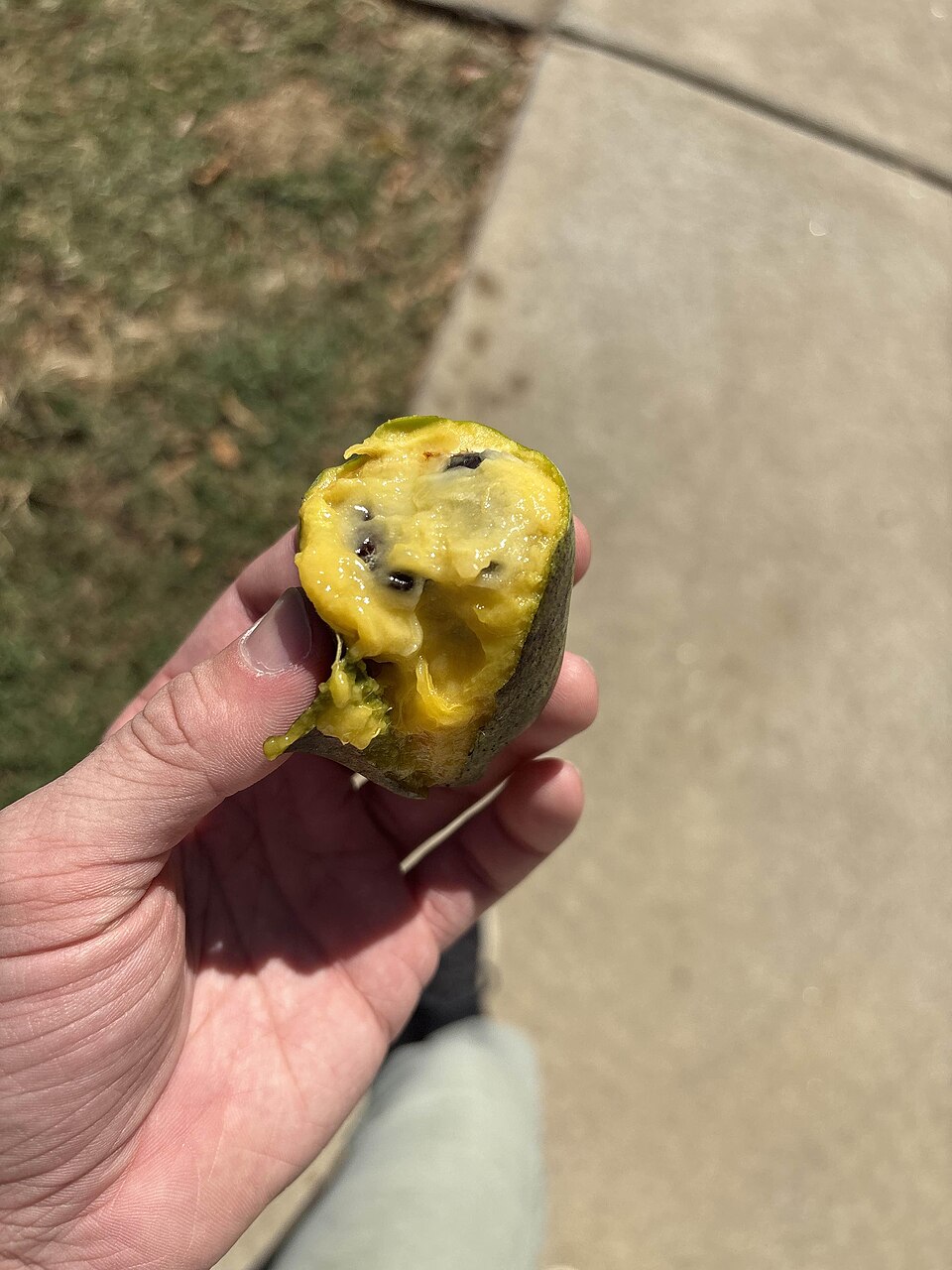
The fruit is truly remarkable — the largest edible fruit native to North America. Individual fruits are 3–6 inches long and roughly kidney or irregularly oval-shaped, with thin, smooth skin that ranges from green to yellowish-green when ripe. The skin often develops brown or black patches as the fruit fully ripens. Inside, the creamy, custard-like flesh is pale yellow to orange in color and contains several large, dark brown seeds arranged in rows. The flesh has an incredibly complex flavor combining notes of banana, mango, cantaloupe, and vanilla with hints of caramel — a truly unique taste that must be experienced to be believed.
Quick Facts
| Scientific Name | Asimina triloba |
| Family | Annonaceae (Custard Apple) |
| Plant Type | Deciduous Tree |
| Mature Height | 40 ft |
| Sun Exposure | Part Shade to Full Shade |
| Water Needs | Moderate |
| Bloom Time | April – May |
| Flower Color | Maroon-purple |
| USDA Hardiness Zones | 5–8 |
Native Range
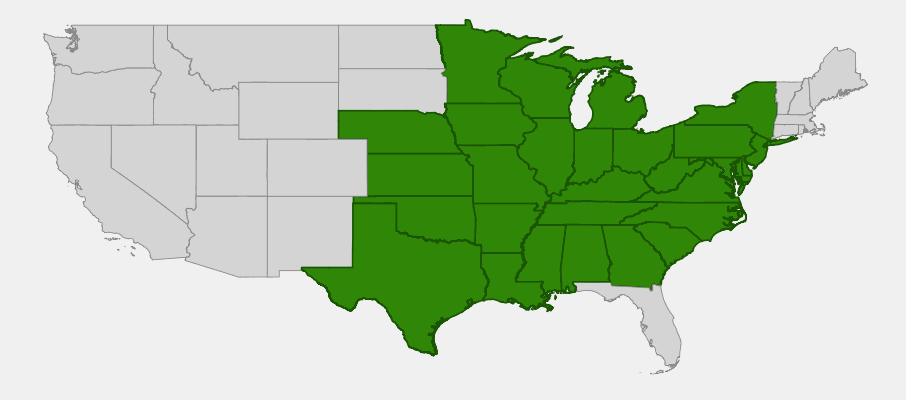
The Paw Paw is native to eastern North America, with a range extending from southern Ontario and the Great Lakes region south to northern Florida and the Gulf Coast, and from the Atlantic seaboard west to southeastern Nebraska, eastern Kansas, Oklahoma, and eastern Texas. This extensive range makes it one of the most widely distributed native fruit trees in North America, thriving across diverse climatic and geographic conditions.
In its natural habitat, Paw Paw typically grows as an understory tree in rich, moist bottomlands, stream valleys, and floodplains, though it also occurs on hillsides and slopes with adequate moisture. It is commonly found in association with other moisture-loving trees such as Black Walnut (Juglans nigra), American Elm (Ulmus americana), Sugar Maple (Acer saccharum), and various oak species. The tree shows a preference for deep, fertile, well-drained soils with high organic content, though it can adapt to various soil types.
Paw Paw often forms dense colonies through root suckers, creating thickets that provide important habitat structure in forest understories. While historically more common, populations have declined in some areas due to habitat loss, deer browsing pressure, and forest fragmentation, making conservation and cultivation efforts increasingly important for maintaining this unique native species.
📋 Regional plant lists featuring Paw Paw: North Carolina & South Carolina
Growing & Care Guide
Paw Paw can be somewhat challenging to establish but is quite rewarding once settled. Understanding its natural habitat preferences — rich, moist, well-draining soil in partial shade — is key to success. While young trees prefer shade protection, mature specimens can tolerate more sun if adequate moisture is provided.
Light
In nature, Paw Paw grows as an understory tree, thriving in dappled sunlight or partial shade. Young trees (under 3 years) are particularly shade-dependent and can be damaged by intense direct sunlight. As trees mature, they become more sun-tolerant and can even thrive in full sun conditions, provided they receive adequate water. For best fruit production, mature trees benefit from at least 4–6 hours of sunlight daily, though too much intense afternoon sun in hot climates can stress the plant.
Soil & Water
Paw Paw performs best in deep, rich, slightly acidic to neutral soils (pH 5.5–7.0) with high organic matter content. The soil should be well-draining yet moisture-retentive — similar to what you’d find in a stream valley or rich bottomland. Heavy clay soils should be amended with organic matter, while sandy soils benefit from compost and mulch to improve water retention. Consistent moisture is crucial, especially during the growing season. A 2–3 inch layer of organic mulch helps maintain soil moisture and temperature.
Planting Tips
Paw Paw can be challenging to transplant due to its deep taproot. For best success, plant young container-grown seedlings in spring after the last frost. Choose a location protected from strong winds and intense afternoon sun if you’re in a hot climate. Dig a hole twice as wide as the root ball but no deeper — planting too deep can kill the tree. For fruit production, you’ll need at least two genetically different trees for cross-pollination, planted within 50 feet of each other.
Pruning & Maintenance
Paw Paw requires minimal pruning. Remove dead, diseased, or crossing branches in late winter while the tree is dormant. If you want to prevent colony formation, remove root suckers as they appear. Young trees may benefit from light pruning to encourage a strong central leader. Be patient — Paw Paws are slow-growing when young and may take 4–8 years to begin fruiting from seed, though grafted varieties may fruit sooner.
Landscape Uses
Paw Paw offers multiple landscape applications:
- Shade gardens — excellent understory tree for woodland settings
- Edible landscaping — provides unique, delicious fruit for adventurous gardeners
- Wildlife habitat — supports specialized butterflies and provides food for mammals
- Native plant gardens — authentic representation of eastern forest ecosystems
- Stream bank stabilization — natural choice for moist areas and erosion control
- Naturalized areas — forms attractive colonies in suitable conditions
- Four-season interest — spring flowers, summer foliage, fall color, interesting winter silhouette
Wildlife & Ecological Value
Despite being North America’s largest native fruit, Paw Paw has a surprisingly specialized ecological niche. Its unique pollination system and specific wildlife relationships make it an important component of eastern forest ecosystems.
For Birds
While many birds cannot digest the large seeds, several species do consume Paw Paw fruit and help disperse the seeds. Wild Turkeys are perhaps the most important avian disperser, able to consume whole fruits and pass the seeds unharmed. Other birds, including various woodpeckers, may consume portions of the soft fruit flesh. The dense foliage also provides nesting sites and shelter for forest songbirds, particularly those that prefer understory habitats.
For Mammals
Paw Paw fruits are relished by many mammals, which serve as the primary seed dispersers. Raccoons, opossums, squirrels, and foxes all consume the fruits eagerly. Black bears, where present, are significant consumers and dispersers, often seeking out Paw Paw patches during the late summer fruiting season. Even domestic animals like cattle and pigs will eat fallen fruits when available, though the seeds are toxic to most livestock.
For Pollinators
Paw Paw has evolved a fascinating pollination strategy. Rather than attracting bees, the flowers’ carrion-like scent draws flies, beetles, and gnats — insects that typically feed on decaying organic matter. Various species of flies (including blow flies and flesh flies) and beetles serve as the primary pollinators. This specialized relationship means that supporting diverse insect populations is crucial for Paw Paw fruit production.
Ecosystem Role
Perhaps most importantly, Paw Paw serves as the sole host plant for the Zebra Swallowtail butterfly (Eurytides marcellus), one of North America’s most beautiful butterflies. The caterpillars feed exclusively on Paw Paw leaves, and the butterfly’s distribution closely matches that of its host plant. Without Paw Paw, this striking butterfly cannot survive. The tree also provides important understory structure, creating microclimates that benefit shade-loving plants and animals while its extensive root system helps prevent erosion along waterways.
Cultural & Historical Uses
The Paw Paw holds a remarkable place in North American cultural history, serving as an important food source for Indigenous peoples long before European colonization. Native American tribes including the Cherokee, Iroquois, Chippewa, and many others incorporated Paw Paw fruits into their diets, often drying the flesh into portable cakes for winter sustenance or travel provisions. The name “pawpaw” itself is believed to derive from the Spanish word “papaya,” though the fruits are unrelated — early European explorers may have confused the two tropical-tasting fruits.
During the westward expansion of the United States, Paw Paw earned the nickname “poor man’s banana” and provided crucial nutrition for pioneers, explorers, and settlers. The Lewis and Clark expedition survived on Paw Paw fruits during several periods of their journey when other food sources were scarce. The fruit’s high caloric content and rich flavor made it particularly valuable during harsh frontier conditions. Even Presidents George Washington and Thomas Jefferson were reported to enjoy the fruits, with Jefferson reportedly serving them at Monticello.
Beyond its nutritional value, various parts of the Paw Paw tree served medicinal purposes in traditional folk medicine. Indigenous peoples and early settlers used the bark to treat fever, malaria, and worms, while the leaves were sometimes employed to treat skin conditions. The inner bark contains compounds similar to those found in some chemotherapy drugs, though traditional uses should never replace modern medical treatment. The strong fiber from the inner bark was also used to make ropes, fishing nets, and mats — earning the tree another common name, “Indiana banana rope.”
In modern times, Paw Paw has experienced a renaissance among foragers, permaculture enthusiasts, and those interested in native foods. Several improved varieties have been developed through selection and breeding programs, particularly at Kentucky State University, which maintains the National Clonal Germplasm Repository for Pawpaw. The Ohio Pawpaw Festival, held annually since 1999, celebrates this unique fruit with food, music, and educational activities, helping to introduce new generations to North America’s forgotten banana.
Frequently Asked Questions
Where can I find Paw Paw fruit to try?
Paw Paw fruit is rarely sold in stores due to its short shelf life (2-3 days when ripe). Your best bets are local farmers markets in late August through September, foraging in areas where they grow wild (with proper permission), or growing your own trees. Some specialty online retailers occasionally offer frozen pulp.
How long does it take for a Paw Paw tree to produce fruit?
Paw Paw trees grown from seed typically take 4–8 years to begin fruiting, while grafted varieties may produce fruit in 3–4 years. The trees need cross-pollination, so you’ll need at least two genetically different trees for fruit production.
Are Paw Paw seeds poisonous?
Yes, Paw Paw seeds contain compounds that can be toxic if consumed in large quantities. Always remove the seeds before eating the fruit. The seeds should never be eaten, and even the bark and leaves contain potentially harmful alkaloids.
Can I grow Paw Paw in containers?
Young Paw Paw trees can be grown in large containers for a few years, but they develop deep taproots and eventually need to be planted in the ground. Container growing can be useful for protecting young trees or in areas with harsh winters, but long-term container cultivation is not ideal.
Do deer eat Paw Paw trees?
Interestingly, deer typically avoid Paw Paw trees due to the alkaloids in the bark and leaves, which give them a bitter taste. This makes Paw Paw a good choice for areas with heavy deer pressure where other fruit trees might be damaged.

Looking for a nursery that carries Paw Paw?
Browse our native plant nursery directory: North Carolina · South Carolina