
Pin Oak (Quercus palustris)
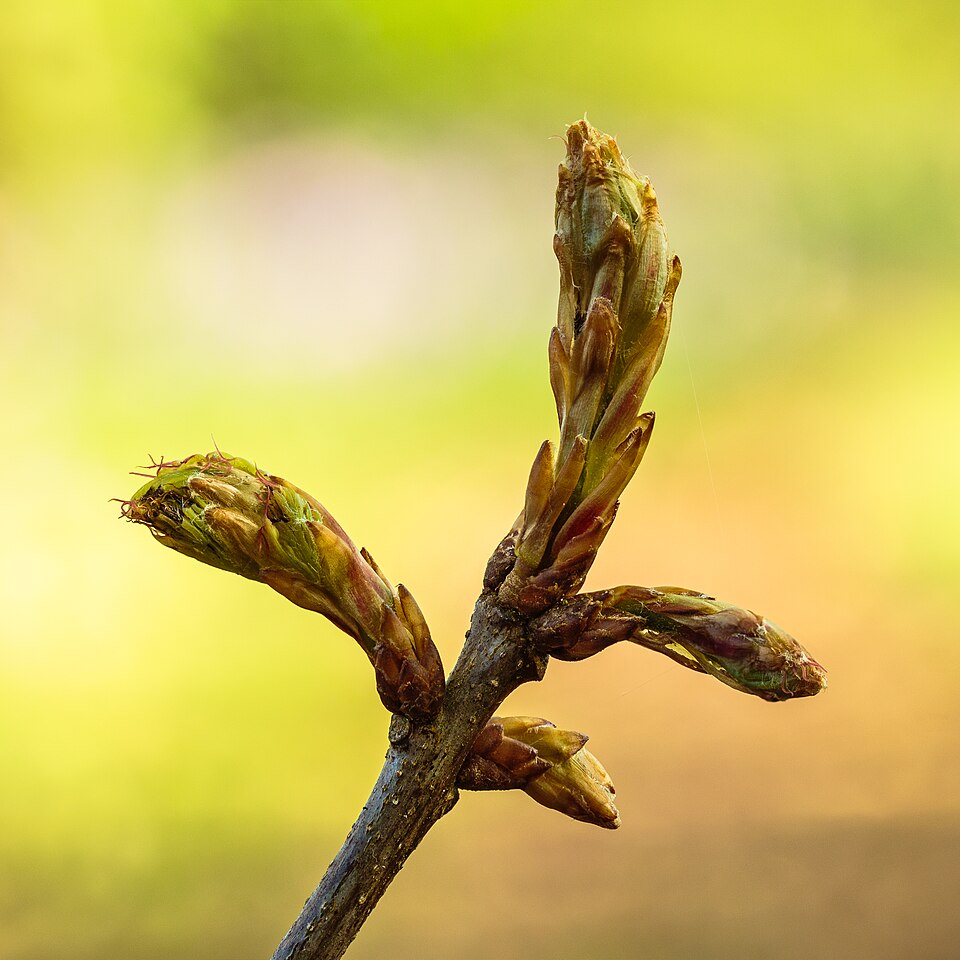
Quercus palustris, the Pin Oak, is one of the most distinctive and widely recognized native oaks of the eastern United States — instantly identified by its symmetrical, pyramidal crown, drooping lower branches, and deeply lobed leaves with sharply pointed tips. The species name palustris (“of swamps”) reflects its natural affinity for wet, poorly drained bottomlands and floodplain forests, yet it has been planted as a street and lawn tree so extensively that urban dwellers often see it far more frequently than its natural wetland habitat would suggest.
Pin Oak is one of the most ecologically productive oaks in the eastern forest, producing small but abundant acorns that are consumed by dozens of bird and mammal species. Its deep root system, tolerance of periodic flooding, and adaptation to heavy clay soils make it the go-to choice for wet, difficult sites where White Oak and other prized oaks struggle to establish. In autumn, the deeply cut leaves turn brilliant shades of russet, bronze, scarlet, and deep red — a spectacular display that rivals any native tree for fall garden color.
For gardeners in New York, Pennsylvania, and New Jersey working with wet, poorly drained, or clay-heavy soils, Pin Oak is often the best large native tree available. Its predictable form, excellent acorn production, exceptional wildlife value, and tolerance of difficult conditions have made it a cornerstone species of both naturalistic woodland gardens and urban landscapes throughout the region.
Identification
Pin Oak is a medium to large deciduous tree reaching 60–80 feet tall in maturity, with a trunk up to 3 feet in diameter. Its silhouette is one of the most distinctive of any oak — pyramidal in youth, maintaining a broadly pyramidal to oval crown in maturity, with a clear central leader and characteristic branch arrangement: upper branches ascending, middle branches horizontal, and lower branches drooping downward at 45 degrees or more. This drooping lower branch habit is the single most reliable field identification feature.
Bark
The bark of young Pin Oaks is smooth and grayish-brown, becoming slightly furrowed with age but remaining relatively smooth compared to many other oaks. The inner bark is pale tan. Small, pin-like dead branches (the “pins” that give the tree its common name) frequently persist on the lower trunk — another reliable identification characteristic. These small dead stubs, called epicormic branches, occur because the shaded lower branches die back but their stubs remain attached for years.
Leaves
The leaves are deeply lobed with 5–7 lobes, each lobe ending in 1–3 sharp bristle-tipped teeth — characteristic of the red oak group (section Lobatae). Leaves are 3–6 inches long and nearly as wide, with deep sinuses (spaces between the lobes) extending nearly to the midrib, giving the leaf a very cut, deeply divided appearance. The upper surface is shiny, dark green; the lower surface is pale green with small tufts of tan hairs in the vein axils. In autumn, the leaves turn magnificent shades of russet, bronze, scarlet, and deep burgundy-red. Many leaves persist on the tree through winter (marcescence), adding texture to the winter landscape.
Flowers & Fruit (Acorns)
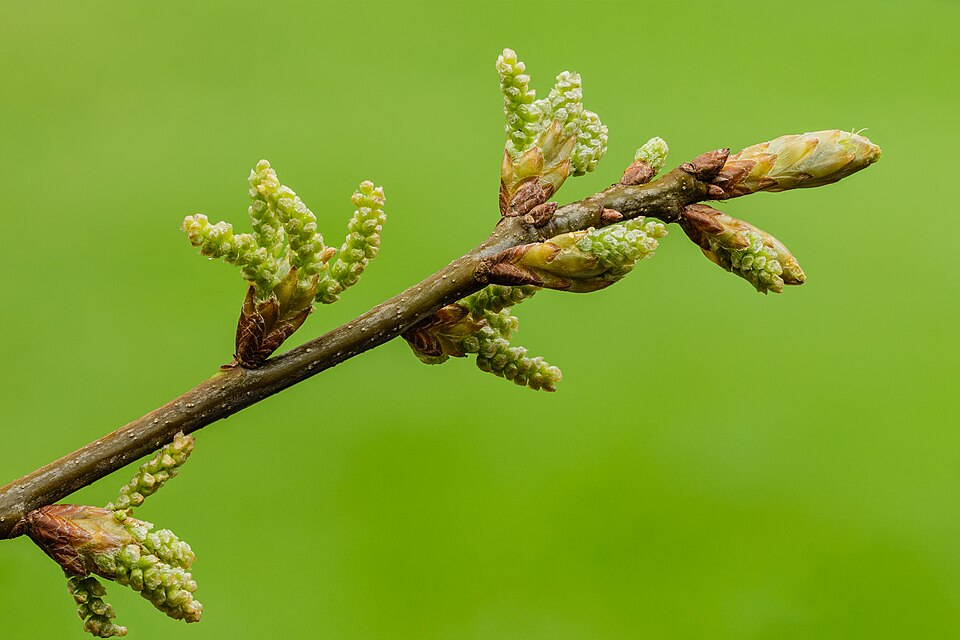
Like all oaks, Pin Oak is monoecious — male and female flowers occur on the same tree. Male flowers appear as drooping catkins in spring, releasing pollen as the leaves emerge. Female flowers are tiny and inconspicuous, located at the axils of new leaves. The acorns are small — just ½ to ¾ inch long — with a very shallow, saucer-like cap covering only the base. Pin Oaks produce acorns in enormous quantities; the small size makes them accessible to a wide range of wildlife, from large mammals to small birds. Acorns mature in the second year after flowering, a characteristic of all red-group oaks.
Quick Facts
| Scientific Name | Quercus palustris |
| Family | Fagaceae (Beech/Oak) |
| Plant Type | Deciduous Tree |
| Mature Height | 60–80 ft |
| Sun Exposure | Part Shade to Full Shade |
| Water Needs | Moderate to High |
| Bloom Time | April – May |
| Flower Color | Yellow-green (catkins) |
| USDA Hardiness Zones | 4–8 |
Native Range
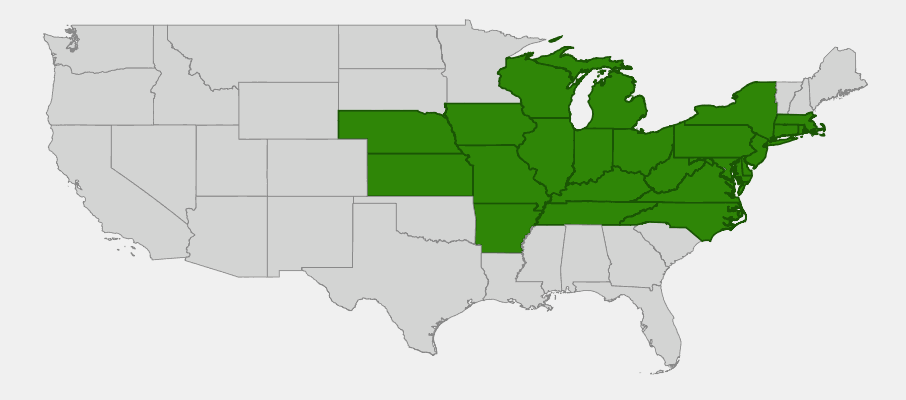
Pin Oak is native to the eastern United States, with a range extending from southwestern Massachusetts and Connecticut south to North Carolina and Virginia, and west through Ohio, Indiana, and Illinois to Nebraska and Kansas. The species is naturally associated with moist to wet, poorly drained lowland sites — bottomland forests, floodplain edges, clay-pan prairies, and areas with a seasonally high water table. It is one of the dominant trees of the wet oak flatwoods communities of the Midwest.
In New York, Pennsylvania, and New Jersey, Pin Oak is native primarily in the Delaware Valley lowlands, the Atlantic Coastal Plain, and wet bottomlands throughout the region. It has been extensively planted as a street and landscape tree far beyond its natural range, so both native and non-native populations exist in the region. Natural populations occupy floodplain forests, poorly drained river terraces, and wet bottomlands with clay-heavy soils.
The species is particularly successful on the heavy clay soils of the glacial lake plains of western New York and the poorly drained moraines and flats of central Pennsylvania. Its tolerance of extended periods of soil saturation — up to several weeks — allows it to thrive where other upland oaks cannot persist. In the natural landscape, Pin Oak is often found in association with Silver Maple, Green Ash, Swamp White Oak, and Red Maple in the floodplain forest community.
📋 Regional plant lists featuring Pin Oak: New York, Pennsylvania & New Jersey
Growing & Care Guide
Pin Oak is an outstanding choice for moist to wet sites in the landscape, combining strong wildlife value with good tolerance of difficult soil conditions and a handsome, consistent form. Once established, it is a long-lived and low-maintenance tree.
Light
Pin Oak grows well in part shade to full sun. In its natural bottomland habitat, it often grows in the partial shade of taller canopy trees but also succeeds in open, sunny conditions when moisture is adequate. As a landscape tree, it typically performs best in full sun where its crown can develop fully. In part shade, growth may be slightly slower and the crown less symmetrical, but the tree remains healthy and productive.
Soil & Water
Pin Oak is highly tolerant of wet, poorly drained, and clay-heavy soils — far more so than most other oaks. It naturally grows in areas that are seasonally flooded for weeks at a time. In the garden or landscape, plant it in low areas, rain gardens, bioswales, or any site with consistently moist to wet soil. It is not well suited to dry, well-drained, or alkaline soils — on high-pH soils, Pin Oak develops interveinal chlorosis (yellowing between leaf veins) due to iron deficiency, a common problem when it is planted on limestone or concrete-influenced soils. Avoid sites with pH above 7.0.
Planting Tips
Plant in spring or fall. Container-grown trees establish well; balled-and-burlapped trees should have the wire basket removed before planting. Dig a planting hole 2–3 times wider than the root ball but no deeper — pin oaks are extremely sensitive to soil compaction over the root zone. Mulch with 3–4 inches of organic material, keeping mulch away from the trunk. Do not plant in compacted urban soils above pH 6.8 — this is the single most common cause of Pin Oak decline in urban settings.
Pruning & Maintenance
Pin Oak has a naturally symmetrical form that requires minimal pruning. Remove the dead, pin-like stubs on the lower trunk if desired for aesthetic reasons, but these are natural and harmless. Lower drooping branches can be removed over several years if clearance is needed, but avoid removing too many branches in a single season (no more than 25% of the crown). Prune in winter when the tree is dormant and the absence of leaves makes branch structure visible. Pin Oak is relatively resistant to oak wilt but should not be pruned during the active growing season (April–July) when sap-feeding beetles are active.
Landscape Uses
- Large specimen tree in spacious yards and parks
- Wet, low-lying sites where most trees cannot thrive
- Bioswales and rain gardens for stormwater management
- Street tree in areas with adequate soil volume and appropriate pH
- Wildlife habitat anchor producing abundant acorns for birds and mammals
- Woodland restoration of bottomland and floodplain forest communities
- Fall color anchor providing russet, bronze, and red autumn foliage
Wildlife & Ecological Value
As an oak, Pin Oak is one of the most ecologically productive trees in the eastern landscape, supporting hundreds of species of insects, birds, and mammals through every season of the year.
For Birds
Pin Oak acorns are consumed by over 100 bird species, including Wood Ducks (which nest in the tree cavities of mature specimens), Mallards, Blue Jays, Red-bellied Woodpeckers, White-breasted Nuthatches, and Wild Turkeys. The tree’s catkins feed Yellow-rumped Warblers and other insectivorous birds in spring. The dense canopy provides nesting habitat for Red-shouldered Hawks (which favor bottomland oaks), Baltimore Orioles, and many other species. Large, mature Pin Oaks with cavities become critical nesting habitat for Wood Ducks, Barred Owls, and flying squirrels.
For Mammals
The abundant small acorns of Pin Oak are avidly consumed by White-tailed Deer, squirrels (Gray, Fox, and Red), chipmunks, raccoons, and opossums. Because Pin Oak acorns are produced in large quantities and are smaller than White Oak acorns, they are more accessible to a wider range of mammal species. Squirrels cache Pin Oak acorns in large numbers, and uncached acorns germinate the following spring — a service that contributes significantly to oak regeneration in the forest.
For Pollinators
Pin Oak supports over 500 species of caterpillars and other Lepidoptera larvae — among the highest of any native tree genus. This caterpillar diversity is a critical food source for nesting songbirds, which must feed their nestlings soft-bodied insects during the breeding season. Native bees collect pollen from the spring catkins, and the massive insect community associated with oak foliage supports a cascade of other wildlife throughout the food web.
Ecosystem Role
In bottomland forest communities, Pin Oak is a foundational species — its large size, long life (200+ years), and prolific acorn production make it a keystone resource for the entire forest community. As trees age and develop cavities, they become critical nest sites for cavity-nesting birds and mammals. The leaf litter from Pin Oak decomposes more slowly than that of more nitrogen-rich species, contributing to the distinctive soil chemistry of bottomland forests. The tree’s shade, structural complexity, and biological productivity make it an ecological cornerstone of the wet lowland landscape.
Cultural & Historical Uses
Like all oaks, Pin Oak has deep cultural and historical significance in North America. The acorns, though small, were collected and processed by many Indigenous peoples as a food source. The tannin-rich acorns require leaching (soaking in running water or multiple changes of water) to remove bitter tannins before they can be eaten. Once leached, acorn meal was used to make bread, porridge, and other foods. Pin Oak’s acorns were particularly favored for their abundance, even if they required more processing than the sweeter acorns of White Oak.
The wood of Pin Oak is strong and heavy but difficult to work due to the numerous small dead branches (the “pins”) distributed through the lumber. It was used for rough construction, railroad ties, mine timbers, and fuel wood, but was less prized for furniture and fine woodworking than White Oak or Black Walnut. In the 19th century, Pin Oak was a significant source of bark for tanning — the tannin content of oak bark was used to convert animal hides to leather, and pin oak forests were harvested extensively for this purpose in Pennsylvania, New Jersey, and Ohio.
The species’ popularity as a street and landscape tree in the 20th century created significant urban forests throughout the northeastern and midwestern United States. The predictable pyramidal form, fast growth, and tolerance of wet soils made it a favorite of municipal foresters and landscape architects. This widespread planting has created both benefits (increased urban tree canopy and wildlife habitat) and challenges — Pin Oak’s intolerance of high-pH urban soils has led to widespread chlorosis and decline in many urban street plantings over alkaline utility trenches and near concrete infrastructure.
Frequently Asked Questions
Why are the leaves on my Pin Oak turning yellow with green veins?
This is iron chlorosis, caused by high soil pH (usually above 6.5–7.0) interfering with iron uptake. Pin Oak is a strongly calcifuge (lime-hating) species. Test your soil pH and, if too high, apply sulfur to lower it, or treat with chelated iron fertilizer. On persistently alkaline soils, consider replacing with a more lime-tolerant oak like Swamp White Oak.
Do the dead lower branches (pin branches) hurt the tree?
No — the dead pin branches are a natural feature of the species and cause no harm to the tree. They can be pruned off for aesthetic reasons if desired, but this is purely cosmetic and not necessary for tree health.
How quickly does Pin Oak grow?
Pin Oak is one of the faster-growing oaks — typically adding 12–18 inches per year in good conditions. Over 20 years, a well-sited Pin Oak can easily reach 40–50 feet, making it one of the best large native trees for achieving significant tree canopy within a generation.
Is Pin Oak a good tree for a wet yard?
Yes — it is one of the best large native trees for wet, low-lying, and periodically flooded sites. If your yard has poor drainage, clay soil, or a low spot that collects water, Pin Oak is an excellent choice. Just avoid alkaline soils.
How do I identify Pin Oak from other oaks?
Three features are definitive: (1) drooping lower branches, (2) small, shallow-capped acorns, and (3) small, pin-like dead branch stubs on the lower trunk. The deeply lobed, bristle-tipped leaves are typical of the red oak group but less distinctive at the species level.

Looking for a nursery that carries Pin Oak?
Browse our native plant nursery directory: New York · Pennsylvania