Plains Cottonwood (Populus deltoides subsp. monilifera)
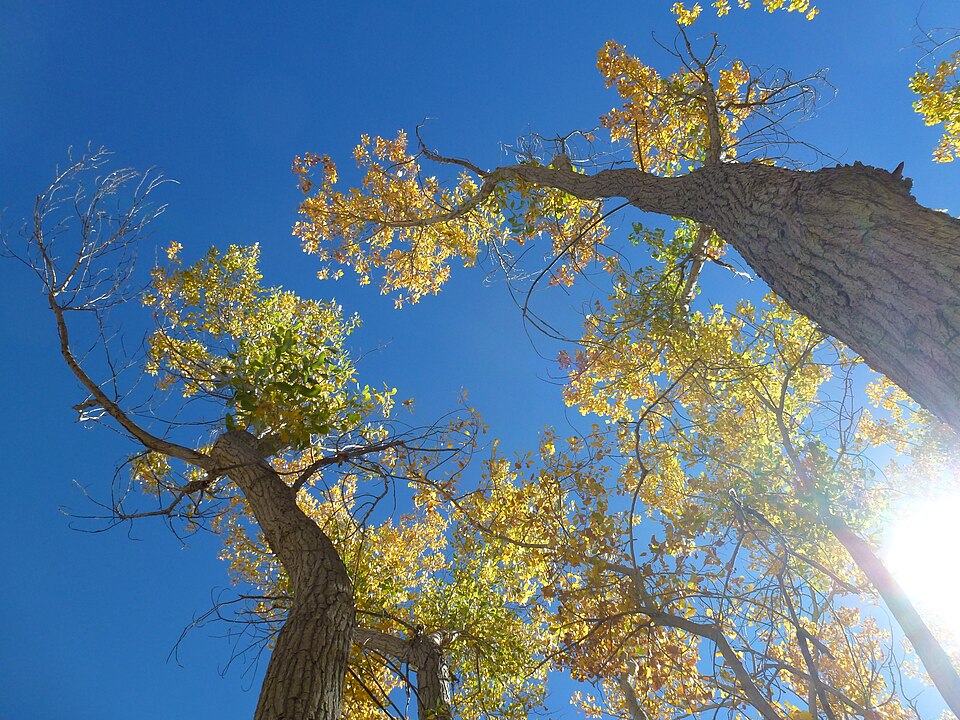
Populus deltoides subsp. monilifera, commonly known as Plains Cottonwood or Necklace Cottonwood, is the iconic riparian tree of the North American Great Plains — a massive, fast-growing deciduous giant that defines the river corridors, stream banks, and floodplain forests of Montana, Wyoming, and the broader central plains. As one of the largest native trees of the Great Plains region, Plains Cottonwood creates the only significant canopy forest in an otherwise treeless landscape, transforming the ecological character of every river and creek it colonizes with its towering presence, deep shade, and extraordinary wildlife value.
The name “cottonwood” refers to the spectacular annual seed release: in late spring and early summer, female trees produce enormous quantities of tiny seeds, each attached to a tuft of cottony white fibers, that fill the air like a blizzard of white snow. The seeds drift for miles, settling in moist soils along waterways where they germinate quickly — cottonwood seeds are among the shortest-lived seeds in the plant kingdom, remaining viable for only a few days to weeks after release, which means the seeds must land in exactly the right conditions (moist bare soil) to establish. This requirement concentrates cottonwood establishment along the dynamic, ever-shifting margins of rivers and streams where new bare substrate is constantly being created by floods.
Plains Cottonwood (P. deltoides subsp. monilifera) is the western subspecies of Eastern Cottonwood, specifically adapted to the semi-arid conditions of the Great Plains and Rocky Mountain foothills. Distinguished from the Eastern subspecies by its more northern and western distribution, somewhat smaller size, and adaptation to continental climates with cold winters and hot, dry summers, Plains Cottonwood has been the dominant large tree of Great Plains river systems since the retreat of the Pleistocene glaciers. Its disappearance from many rivers due to altered flow regimes, dams, and agricultural clearing represents one of the most significant ecological changes in the Great Plains landscape of the past century.
Identification
Plains Cottonwood is one of the most easily recognized trees in the Great Plains and northern Rockies. Its massive size, distinctive triangular leaves with their flattened petioles, deeply furrowed gray bark on mature trees, and the annual “snowstorm” of cottony seeds make it instantly identifiable. Mature trees typically reach 40 to 80 feet in height (with the Montana/Wyoming table data recording 40–50 feet for landscape specimens), with a broad, open crown and massive, often multiple large trunks on older trees. It is among the fastest-growing native trees in its range, adding 3 to 8 feet of height per year under favorable conditions.
Bark
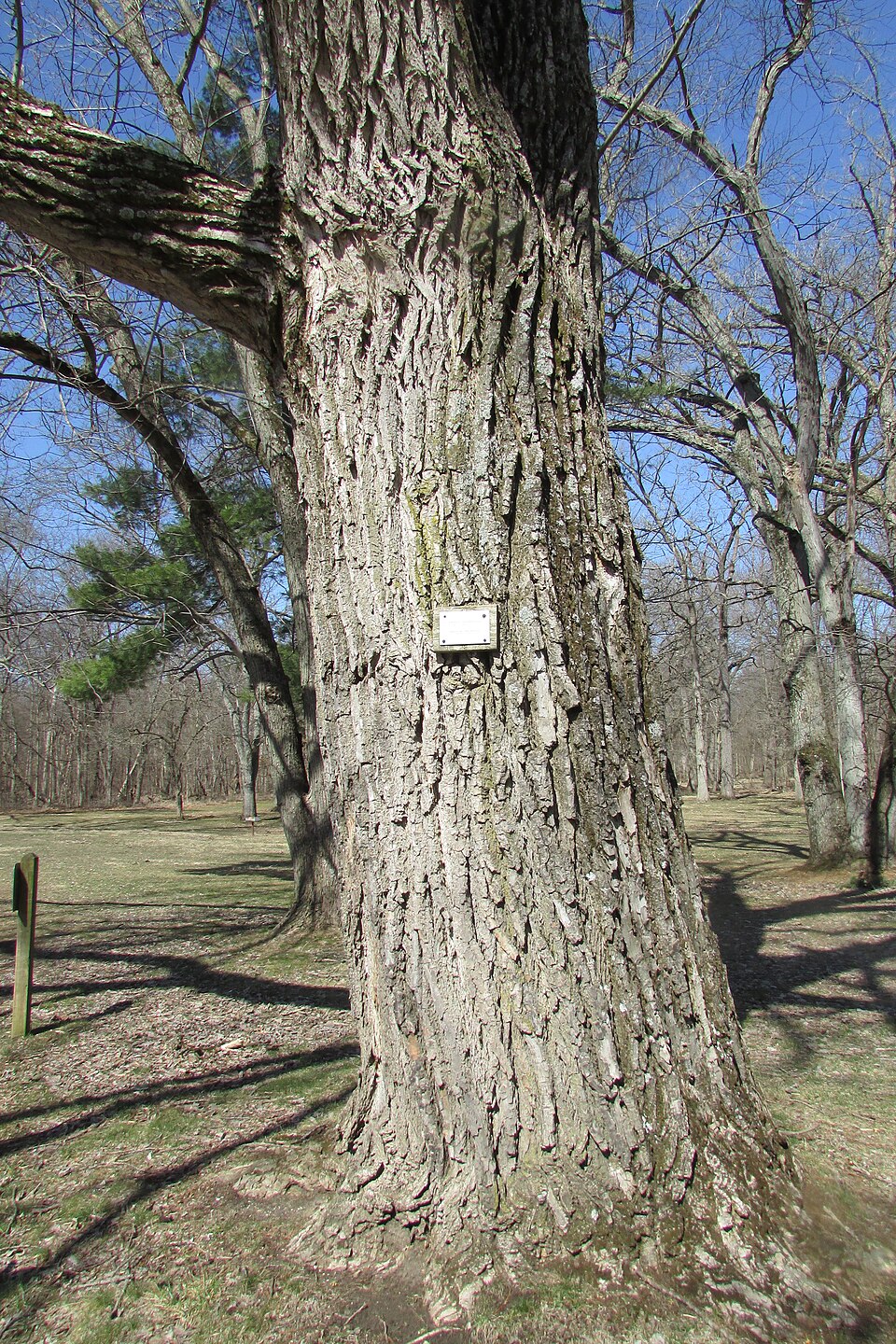
Young cottonwood bark is smooth, thin, and yellowish-green to grayish-green — almost photosynthetic in character. As trees mature, the bark thickens dramatically, developing deep, rough, interlacing ridges and furrows that give old cottonwoods their characteristic rugged, ancient appearance. The bark of very old trees can be 3 to 5 inches thick, providing excellent fire resistance. The deeply ridged bark is one of the most reliable identification features for mature trees, even in winter without leaves. Dead cottonwood logs and snags have very distinctive bark texture that persists long after the tree dies.
Leaves
The leaves are the definitive identification feature: broadly triangular (deltoid — hence the species name deltoides) with a broadly truncate or slightly cordate base, coarsely toothed margins (usually 2 to 3 teeth per centimeter), and a long, flattened petiole (leaf stalk). The flattened petiole is crucial — it allows the leaves to flutter and tremble in the slightest breeze, creating the characteristic rustling sound that makes cottonwood groves so distinctive and evocative. Leaves are 3 to 4 inches long and wide, dark shiny green above, paler below, and turn a brilliant gold-yellow in early fall before dropping. The leaf tips are drawn to an elongated apex, and the base teeth at the junction of blade and petiole are typically 2 to 3 pairs of enlarged glands.
Flowers, Catkins & Seeds
Plains Cottonwood is dioecious — male and female flowers are on separate trees. Catkins emerge before the leaves in early spring: male catkins are 2 to 4 inches long, reddish, with dense clusters of stamens producing abundant pollen; female catkins are longer (3 to 5 inches), greenish, with numerous ovaries. After pollination, female catkins develop into “necklace-like” strings of seed capsules (the basis for the subspecies name monilifera, meaning “necklace-bearing”). When mature in late spring, each capsule splits to release the cottony seeds in enormous quantities.
Quick Facts
| Scientific Name | Populus deltoides subsp. monilifera (Plains Cottonwood) |
| Family | Salicaceae (Willow) |
| Plant Type | Deciduous Tree |
| Mature Height | 40–50 ft |
| Sun Exposure | Full Sun |
| Water Needs | Moderate to High |
| Bloom Time (Catkins) | March – April (before leaves) |
| Fall Color | Brilliant golden yellow |
| USDA Hardiness Zones | 2–9 |
Native Range
Plains Cottonwood is native to the Great Plains and Rocky Mountain foothills of North America, ranging from southern Alberta and Saskatchewan in Canada south through Montana, Wyoming, the Dakotas, Nebraska, Kansas, Oklahoma, and Texas, and westward into New Mexico, Colorado, and Idaho. Its range follows the major river systems of the central plains — the Missouri, Yellowstone, Platte, Arkansas, and their tributaries — where it forms dense gallery forests or scattered groves in the riparian zone. It is the cottonwood of the interior West, as distinguished from the narrowleaf cottonwood (Populus angustifolia) of mountain streams and the Fremont cottonwood (Populus fremontii) of the Southwest.
Plains Cottonwood is fundamentally a riparian species — it occurs almost exclusively along rivers, streams, and other watercourses where its seeds can reach the constantly refreshed bare, moist substrate necessary for germination. In Montana and Wyoming, it forms the dominant tree canopy of river corridors at lower elevations, creating the gallery forest ecosystem that supports an extraordinary diversity of wildlife — from songbirds and raptors nesting in the canopy to deer, elk, moose, and beaver utilizing the understory, riparian vegetation, and shade. It is especially abundant along the Yellowstone River, the Missouri River drainage, and the major tributaries of the Platte River in Wyoming.
The historic range and abundance of Plains Cottonwood has been significantly reduced by the construction of dams and water diversion structures on the major plains rivers, which have altered the flood pulse necessary for cottonwood seed establishment. Many existing cottonwood groves are aging populations without successful seedling recruitment, and ecologists are concerned about the long-term future of cottonwood forests in regulated river systems. Restoration plantings and flow management experiments are underway on several rivers to restore the natural regeneration dynamics of Plains Cottonwood.
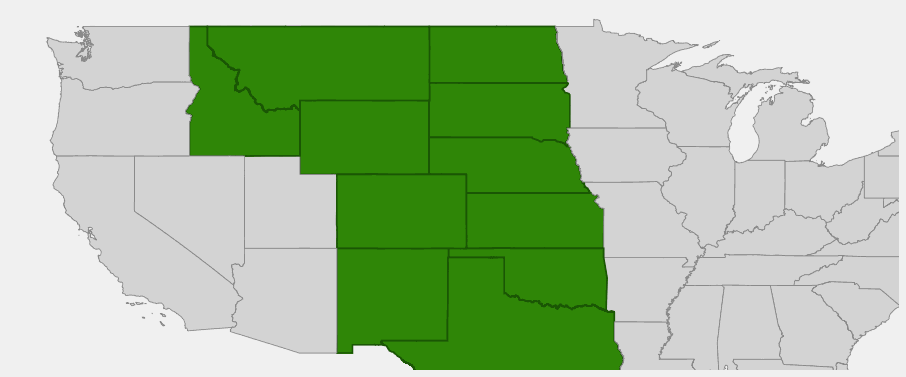
📋 Regional plant lists featuring Plains Cottonwood: Montana & Wyoming
Growing & Care Guide
Plains Cottonwood is one of the fastest-growing native trees in North America — both a tremendous asset and an important consideration for planting. In the right location (a large, open site with access to consistent moisture), it will establish quickly and grow into a magnificent, long-lived tree. The key requirements are space, sun, and moisture — it is not suitable for small urban lots or sites with limited root space or water availability.
Light
Plains Cottonwood is an obligate full-sun species — it requires at least 8 hours of direct sunlight daily and performs best in open, unshaded locations. Even moderate shading from nearby buildings or trees significantly slows growth and reduces the vigor of young cottonwoods. Plant in the most open, sunny part of your property, well away from buildings, as the tree’s ultimate size and extensive root system make proximity to structures problematic over time.
Soil & Water
Plains Cottonwood thrives in moist to wet soils — its natural habitat is the moist alluvial soils of river banks and floodplains where the water table remains within a few feet of the surface year-round. It tolerates temporary flooding and does well in heavy clay soils with consistent moisture. Without adequate moisture, it grows slowly and may decline. It is not suitable for dry, upland sites. In garden situations, plant near a water source, natural drainage, pond edge, or in a low area that collects runoff. Once established with a deep root system accessing groundwater, it becomes far more drought-tolerant.
Planting Tips
Plant cottonwood in early spring from large bareroot whips, container stock, or unrooted stem cuttings. Cottonwood roots from stem cuttings with remarkable ease — simply push a 12-to-18-inch section of a pencil-thick young stem into moist soil in early spring and keep it watered. This is the easiest and most economical propagation method. Space trees at least 40 to 60 feet apart (or more) to allow for full canopy development. Keep well away from underground utilities, sewer lines, and building foundations — cottonwood roots are aggressive water-seekers that can damage infrastructure. Avoid planting near septic systems.
Pruning & Maintenance
Young Plains Cottonwood needs little pruning. Remove dead or damaged branches as needed. In urban or suburban settings, maintain a single dominant leader by removing competing co-dominant stems early, as large cottonwoods with multiple co-dominant trunks are structurally weak and prone to storm damage. Mature cottonwoods are relatively brittle and lose large branches regularly in storms — this is natural and ecologically important (the cavities and fallen wood provide critical wildlife habitat) but needs to be considered in placement decisions near structures and activity areas.
Landscape Uses
- Large-scale riparian plantings — ideal for stream bank stabilization and riparian corridor restoration
- Windbreaks and shelterbelts — fast growth and large size make it excellent for prairie windbreaks
- Wildlife plantings — outstanding habitat tree for birds, mammals, and beneficial insects
- Shade tree for large properties — provides deep, cooling shade very quickly
- Prairie restoration — planting cottonwood along degraded stream banks restores the native gallery forest ecosystem
Wildlife & Ecological Value
Plains Cottonwood is one of the most ecologically important native trees of the Great Plains — the keystone species of the riparian forest ecosystem that sustains an extraordinary diversity of wildlife in an otherwise grassland-dominated landscape.
For Birds
Cottonwood forest supports one of the highest densities and diversities of nesting birds of any habitat in the Great Plains and Rocky Mountain region. More than 200 bird species use cottonwood forests during migration, breeding, or winter. Large raptors — Bald Eagles, Great Horned Owls, Red-tailed Hawks, and Osprey — nest in the upper canopy. Yellow Warblers, Yellow-breasted Chats, Eastern Kingbirds, Lazuli Buntings, and numerous other songbirds nest in the mid-canopy and shrub layer beneath. Cavity-nesting species including woodpeckers, flickers, nuthatches, and wrens colonize the abundant dead wood and cavities in aging trees. The dense “cottonwood snow” of seed fibers in spring is harvested by hummingbirds for nest-building material.
For Mammals
Beaver (the Great Plains cottonwood’s most important natural partner) harvest cottonwood bark, branches, and trunks as their primary food and building material. The relationship between cottonwood and beaver is one of the most significant plant-animal partnerships in the Great Plains ecosystem — beaver dams create the wetland habitat that cottonwood seeds need for establishment, while cottonwood provides the beaver’s primary food supply. Mule deer, white-tailed deer, elk, and moose browse cottonwood foliage, bark, and twigs. Porcupines girdle young trees to eat the inner bark. Mountain lions use the dense gallery forest for stalking prey at river crossings.
Ecosystem Role
Plains Cottonwood is a foundational ecosystem engineer of the Great Plains river corridor. Its deep root system stabilizes banks and prevents erosion; its massive canopy creates the microclimate of deep shade and high humidity that allows an entirely different community of plants, animals, and fungi to exist in the riparian zone than in the surrounding grassland. Cottonwood leaf litter — enormous quantities from mature trees — enters the river system and forms the base of the aquatic food web for invertebrates, fish, and waterfowl. The natural life cycle of cottonwood trees, including the production of snags, fallen logs, and bank debris, creates the complex aquatic and terrestrial habitat structure that rivers need to support maximum biodiversity.
Cultural & Historical Uses
Plains Cottonwood held profound cultural and practical significance for the Indigenous peoples of the Great Plains. The Lakota, Cheyenne, Arapaho, and other plains nations used virtually every part of the cottonwood tree. The inner bark was an important emergency food source in late winter and early spring, when other foods were scarce — it contains sugars and is palatable when fresh, and was fed to horses during severe winters to prevent starvation. The wood was carved into bowls, utensils, and the frames of bull boats (circular boats used for river crossing). The soft wood was also used for carving the ceremonial Sun Dance pole — a sacred use that made cottonwood particularly significant in Plains spiritual life.
For many Plains peoples, cottonwood groves marked safe camp locations, indicating the presence of water, shelter from wind, shade from summer sun, and fuel wood. The rustling of cottonwood leaves in the wind was interpreted as a spiritual sound — the voice of the tree communicating with the natural world. The “cottonwood spring” — the brief, spectacular release of cottony seeds in late May and June — was a reliable seasonal marker used to track the calendar of the Great Plains year. The fallen leaves of cottonwood were used in tanning hides, and the bark and leaves provided medicinal compounds used for treating wounds, fevers, and pain.
Euro-American settlers of the Great Plains relied on cottonwood for virtually all their timber needs in a landscape almost entirely devoid of other trees. Cottonwood was used for everything from railroad ties to log cabins, from fence posts to fuel wood. Early homesteaders planted cottonwood windbreaks around their claims as the fastest-growing available lumber source. Today, Plains Cottonwood is recognized as an irreplaceable ecological resource, and its conservation — particularly in regulated river systems where natural regeneration has been disrupted by dams and diversions — is a major priority for river conservation organizations throughout the Great Plains and Rocky Mountain West.
Frequently Asked Questions
Is the cottony fluff from cottonwood trees harmful?
The cottony white fibers produced by female cottonwood trees in late spring are not actually allergenic — they are seed fibers, not pollen. However, the cottony fluff can be a nuisance (it clogs window screens, air conditioners, and carpets, and can be a fire hazard when dry). People who want to avoid the fluff can plant male cottonwood trees only, which produce pollen but no fluff. Many commercial cottonwood cultivars are male-only selections for this reason.
How big does Plains Cottonwood really get?
In their natural riparian habitat with optimal moisture, Plains Cottonwood trees can reach 80 to 100 feet tall with trunk diameters of 4 to 6 feet. The table records 40–50 feet for typical landscape or rangeland specimens. Under garden conditions with adequate water and space, expect growth of 3 to 8 feet per year in the first decade, slowing as the tree matures. Cottonwood is one of the fastest-growing native trees on the continent.
Are cottonwood roots invasive?
Yes — cottonwood roots are very aggressive, extending far from the trunk in search of water. They are particularly problematic near sewer lines, septic systems, and water mains, which they can infiltrate and damage. Always plant cottonwood well away from underground utilities, building foundations, sidewalks, and driveways. A minimum of 50 to 100 feet from structures is recommended for large trees.
Do cottonwoods have any uses beyond wildlife and shade?
Yes — cottonwood wood, while soft and weak compared to hardwoods, has many uses. It is used commercially for pulpwood (paper production), lightweight plywood, and specialty lumber applications. Indigenous peoples historically used it extensively for carvings, bowls, and construction. The inner bark and leaves contain salicin (related to aspirin) and have been used medicinally for pain and fever relief by both Indigenous peoples and early settlers.
Why are cottonwood forests disappearing in the Great Plains?
The primary cause is the elimination of natural flood disturbance by river dams and water diversions. Cottonwood seeds require bare, moist soil (created by spring floods) to germinate — without periodic flooding that scours riverbanks and deposits fresh alluvium, cottonwood regeneration fails. In addition, grazing by livestock in riparian areas prevents seedling establishment, and the invasion of non-native species like salt cedar (tamarisk) and Russian olive outcompetes cottonwood in disturbed areas. Restoration requires either managed flooding or active replanting programs.