
Rough-leaved Goldenrod (Solidago rugosa)
Solidago rugosa, commonly known as Rough-leaved Goldenrod, is a striking native perennial wildflower that adds brilliant golden color to late summer and fall landscapes across much of the eastern United States. This hardy member of the Asteraceae (sunflower) family is one of the most distinctive goldenrods, recognized by its wrinkled, rough-textured leaves that give the species both its scientific and common names. Unlike many goldenrods with simple, narrow leaves, Rough-leaved Goldenrod has broad, prominently veined foliage that creates an attractive backdrop for its spectacular autumn flower display.
Growing naturally in open woodlands, prairie edges, and disturbed soils from Canada to the Gulf Coast, this adaptable wildflower produces dense, pyramidal clusters of tiny golden-yellow flowers that seem to radiate outward like fireworks — a characteristic that makes it particularly valuable for naturalizing and wildflower gardens. Each flower head contains both ray and disk flowers, creating the classic daisy-like appearance that attracts dozens of butterfly, bee, and beneficial insect species during its peak blooming period in late summer through fall.
Rough-leaved Goldenrod is an excellent choice for gardeners seeking low-maintenance native plants that provide both visual impact and ecological value. Its tolerance of various soil conditions, drought resistance once established, and exceptional wildlife value make it ideal for naturalized areas, pollinator gardens, and restoration projects throughout its extensive native range.
Identification
Rough-leaved Goldenrod typically grows 2 to 5 feet tall, forming clumps that spread gradually by rhizomes and self-seeding. The plant has a distinctive upright growth habit with multiple branched stems that become woody toward the base by late summer.
Leaves
The leaves are the most distinguishing feature of this goldenrod species. They are alternate, broadly oval to elliptical, and 2 to 5 inches long with prominent, deeply impressed veins that give them a distinctly wrinkled, rough texture — hence both the scientific name rugosa (meaning wrinkled) and the common name. The leaf margins are sharply serrated, and the upper surface feels notably rough to the touch due to tiny hairs and the textured venation pattern. Lower leaves are larger and have petioles, while upper leaves become smaller and more sessile toward the flower clusters.
Flowers & Fruit
The flowers appear in late summer through fall (August to October) in large, dense, pyramidal or plume-like clusters called panicles. Each individual flower head is small — about ¼ inch across — but the overall flower cluster can be 6 to 12 inches long and nearly as wide. The flower heads contain both yellow ray petals (typically 7-9 per head) and a central disk of tiny tubular flowers, creating the classic composite flower structure. The overall effect is a spectacular golden display that appears to radiate outward in all directions like exploding fireworks.
Seeds are small achenes topped with fluffy white pappus (similar to dandelion seeds) that allow them to disperse on the wind. The seed heads persist into winter, providing food for finches and other seed-eating birds.
Stems & Roots
Stems are sturdy, often reddish-tinged, and become somewhat woody by flowering time. The plant spreads by underground rhizomes, forming loose colonies over time. The root system is fibrous and relatively shallow, making it drought-tolerant once established.
Quick Facts
| Scientific Name | Solidago rugosa |
| Family | Asteraceae (Sunflower) |
| Plant Type | Perennial Wildflower |
| Mature Height | 2–5 ft |
| Sun Exposure | Full Sun to Part Shade |
| Water Needs | Moderate |
| Bloom Time | August – October |
| Flower Color | Golden Yellow |
| USDA Hardiness Zones | 3–9 |
Native Range
Rough-leaved Goldenrod has one of the most extensive native ranges of any North American goldenrod, naturally occurring from southeastern Canada south to Florida and from the Atlantic Coast west to the Great Plains. This wide distribution reflects the species’ remarkable adaptability to diverse climatic and soil conditions across the eastern two-thirds of North America.
The species is particularly common throughout the eastern deciduous forests, prairie-forest transition zones, and coastal plain regions. It thrives in the varied habitats of the Appalachian Mountains, where it can be found from valley floors to moderate elevations. In the northern portions of its range, it grows in open woodlands and forest edges, while in the south it’s often found in pine savannas, old fields, and disturbed areas.
Rough-leaved Goldenrod demonstrates exceptional ecological flexibility, growing in habitats ranging from dry, sandy soils of the coastal plain to rich, moist bottomlands along rivers and streams. This adaptability has allowed it to maintain stable populations across its extensive range, unlike some goldenrods that have more restrictive habitat requirements.
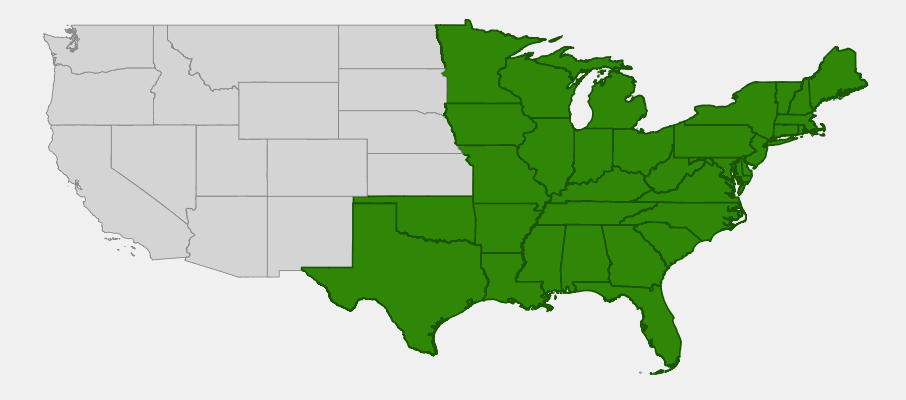
📋 Regional plant lists featuring Rough-leaved Goldenrod: North Carolina & South Carolina
Growing & Care Guide
Rough-leaved Goldenrod is one of the easiest native wildflowers to grow, requiring minimal care once established. Its adaptability to various growing conditions and natural pest resistance make it an excellent choice for beginning native plant gardeners and experienced naturalists alike.
Light
This goldenrod performs best in full sun to light shade, producing the most abundant flowers and strongest stems in sunny locations. It tolerates partial shade well, though plants may become taller and more open in habit, and flowering may be reduced. In deep shade, the plant will survive but flower production will be minimal.
Soil & Water
One of Rough-leaved Goldenrod’s greatest assets is its tolerance of diverse soil conditions. It grows well in everything from sandy, well-drained soils to clay and occasionally wet areas. The plant prefers moderate moisture but is quite drought-tolerant once established, making it suitable for xeriscaping and low-water gardens. It’s not particular about soil pH and will grow in slightly acidic to neutral soils. Poor soils are actually preferred over rich, fertile ground, which can cause the plants to become overly tall and require staking.
Planting Tips
Plant seeds in fall or early spring, or set out container plants in spring after the last frost. Seeds require light to germinate, so barely cover or simply press into the soil surface. Space plants 2–3 feet apart to allow for natural spreading. Rough-leaved Goldenrod is an excellent candidate for wildflower meadows, native plant borders, and naturalized areas where it can spread freely.
Pruning & Maintenance
This is a virtually maintenance-free plant. Cut stems back to 6–8 inches in late winter or early spring before new growth begins. For a more compact plant with potentially more flowers, you can cut the stems back by half in late May or early June. If self-seeding is not desired, deadhead flowers before seed formation, though this eliminates the valuable winter seed source for birds. The plant may spread by rhizomes and self-seeding, so site accordingly.
Landscape Uses
Rough-leaved Goldenrod excels in:
- Wildflower meadows and prairie restorations
- Pollinator gardens — outstanding late-season nectar source
- Naturalized areas along property edges and fence lines
- Rain gardens and bioswales (tolerates occasional flooding)
- Erosion control on slopes and disturbed soils
- Cut flower gardens — excellent fresh or dried flower
- Mixed perennial borders for autumn color and texture
Wildlife & Ecological Value
Rough-leaved Goldenrod is among the most ecologically valuable native plants, supporting an extraordinary diversity of wildlife throughout its range. As a late-season nectar source, it provides crucial resources when many other flowers have finished blooming.
For Birds
The seed heads provide abundant food for seed-eating birds throughout fall and winter. American Goldfinches are particularly fond of goldenrod seeds, and you’ll often see small flocks working the dried flower heads. Other frequent visitors include Pine Siskins, Common Redpolls, and various sparrow species. The dense growth also provides excellent cover and nesting sites for ground-nesting birds and small songbirds.
For Mammals
White-tailed deer and rabbits browse the foliage, particularly young shoots in spring. Small mammals like mice and voles eat the seeds and use the dense growth for cover. The plant’s rhizomatous growth habit creates thick patches that provide excellent thermal cover for overwintering wildlife.
For Pollinators
Rough-leaved Goldenrod is exceptional for pollinators, hosting over 100 species of native bees, wasps, butterflies, and beneficial insects. It’s a critical late-season nectar source, blooming when many other flowers have finished. Key visitors include monarch butterflies (during fall migration), native sweat bees, bumble bees, and numerous beneficial wasps and flies. The plant also serves as a host for several specialist moths and is browsed by various butterfly caterpillars.
Ecosystem Role
As a pioneer species, Rough-leaved Goldenrod plays an important role in ecological succession, helping stabilize disturbed soils and providing habitat structure in recovering landscapes. Its dense root system prevents erosion while its above-ground growth creates microhabitats for countless smaller organisms. The plant’s ability to grow in poor soils helps improve soil structure over time through organic matter deposition.
Cultural & Historical Uses
Like many goldenrods, Rough-leaved Goldenrod has a rich history of use by Indigenous peoples across its native range. Various tribal groups used different goldenrod species medicinally, and while specific traditional uses of Solidago rugosa are less well-documented than some species, it was likely used similarly to other goldenrods for treating kidney and urinary tract ailments, wounds, and respiratory issues.
The Algonquin peoples called goldenrods “sun medicine” and used various species in teas for kidney and bladder problems. Cherokee traditional medicine employed goldenrods for treating fever, and the Iroquois used them for sore throats and chest ailments. The leaves were sometimes chewed or made into poultices for treating wounds and skin conditions.
In early American folk medicine, goldenrods were collectively known as “woundwort” and were considered essential components of any herbalist’s garden. Despite their beneficial properties, goldenrods have been wrongly blamed for hay fever — a reputation that properly belongs to ragweed, which blooms at the same time but has much less conspicuous flowers. Goldenrod pollen is too heavy to be airborne and relies on insect pollination rather than wind dispersal.
Modern herbalists still value goldenrods for their anti-inflammatory and diuretic properties, though any medicinal use should be undertaken only with proper knowledge and guidance. The flowers also make excellent additions to dried flower arrangements, and the plant has been used historically as a source of yellow and gold dyes for textiles.
Frequently Asked Questions
Does Rough-leaved Goldenrod cause hay fever?
No. This is a common misconception. Goldenrods produce heavy, sticky pollen that’s designed for insect pollination, not wind dispersal. The real culprit behind fall hay fever is ragweed, which blooms at the same time but has inconspicuous flowers. Goldenrod is actually beneficial for allergy sufferers because it removes pollen from the air via insect pollination.
How can I tell Rough-leaved Goldenrod apart from other goldenrods?
The distinctive wrinkled, rough-textured leaves with prominent veining are the key identifying feature. Most other goldenrods have smooth, narrow leaves. The flower clusters also have a particularly dense, plume-like appearance that’s more compact than many other species.
Will Rough-leaved Goldenrod take over my garden?
It can spread by rhizomes and self-seeding, but it’s not aggressively invasive. In a maintained garden setting, it’s easy to control by deadheading to prevent seeding and by dividing clumps every few years. It’s best suited to naturalized areas where some spreading is acceptable.
When should I plant Rough-leaved Goldenrod seeds?
Seeds can be planted in fall or early spring. Fall planting allows for natural cold stratification over winter. If planting in spring, cold-moist stratify seeds in the refrigerator for 30 days before planting. Seeds need light to germinate, so barely cover them or simply press into the soil surface.
Can I grow Rough-leaved Goldenrod in containers?
Yes, but choose a large container (at least 18 inches wide and deep) as the plant develops an extensive root system. Container plants will need regular watering and may not reach full size. This is better suited to garden plantings where it can spread naturally.

Looking for a nursery that carries Rough-leaved Goldenrod?
Browse our native plant nursery directory: North Carolina · South Carolina