Rydberg’s Penstemon (Penstemon rydbergii)
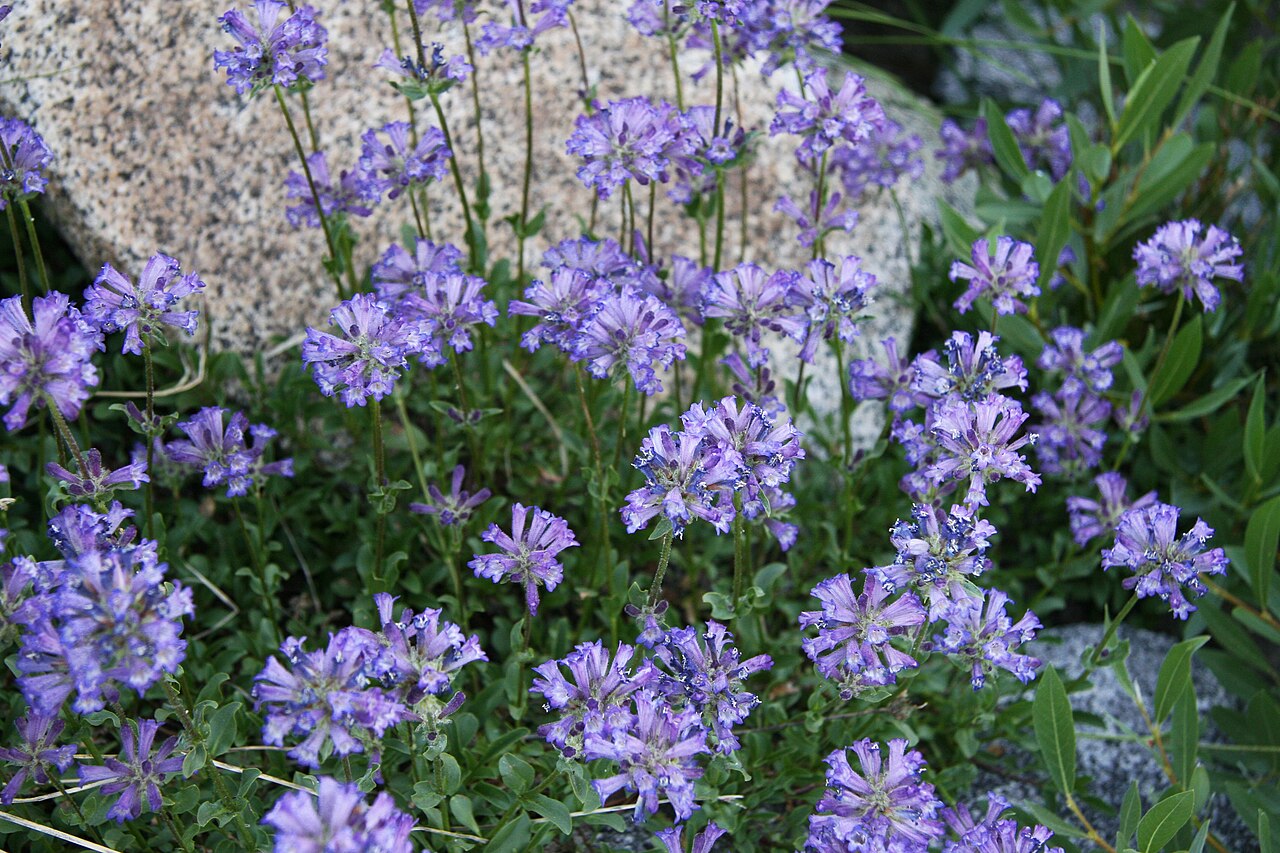
Rydberg’s penstemon is the beardtongue to consider when a western garden has a meadow-like pocket rather than a hot, bone-dry rock ledge. Its slender flower stems carry separated rings of small blue-purple blossoms above a leafy basal clump. The flowers are less oversized than those of royal penstemon, but their repeated tiers create a distinctive, airy rhythm among grasses. It belongs to the plantain family, Plantaginaceae, despite older books placing penstemons with the figworts.
The name meadow penstemon is useful, provided it is treated as a clue to habitat rather than an instruction to flood the plant. Natural populations occupy moist meadows and open slopes, with some extending onto seasonally drier ground. For an Idaho, eastern Oregon or eastern Washington planting, the combination of spring moisture, open light and an aerated root zone matters more than a generic label such as drought-tolerant native. A dry gravel garden that suits a desert penstemon can be the wrong setting for this species.
This guide covers Penstemon rydbergii at species level, including the variation among its recognized varieties. Buy nursery-propagated material with a scientific name and, where possible, a collection region. The regional table’s 8–28-inch height and full-sun-to-part-shade exposure are sensible summaries for ordinary plants; floras record a broader range. A map shaded across the West does not mean that every locality or every seed source has the same needs.
Identification
Stems and clump
The plant grows as a tuft from a persistent, somewhat woody underground base rather than as a freestanding woody shrub. Several slender flowering shoots rise through the basal leaves, generally to about 20–70 cm. Most visible surfaces are smooth, although fine hairs can occur, and exceptional plants described in floras can be taller. Look at several stems on a mature plant before deciding its stature; a grazed or newly established specimen may be unusually short.
Leaves
Basal leaves narrow toward their stalks and broaden toward rounded or pointed tips. They often form recognizable rosettes; stem leaves occur in opposite pairs and are fewer, with little or no stalk higher up. Leaf margins are entire rather than prominently toothed. This matters when comparing the plant with large-leaved, serrated species such as lovely penstemon. Photograph both the lower foliage and the flowering stem if you need an identification confirmed.
Flowers
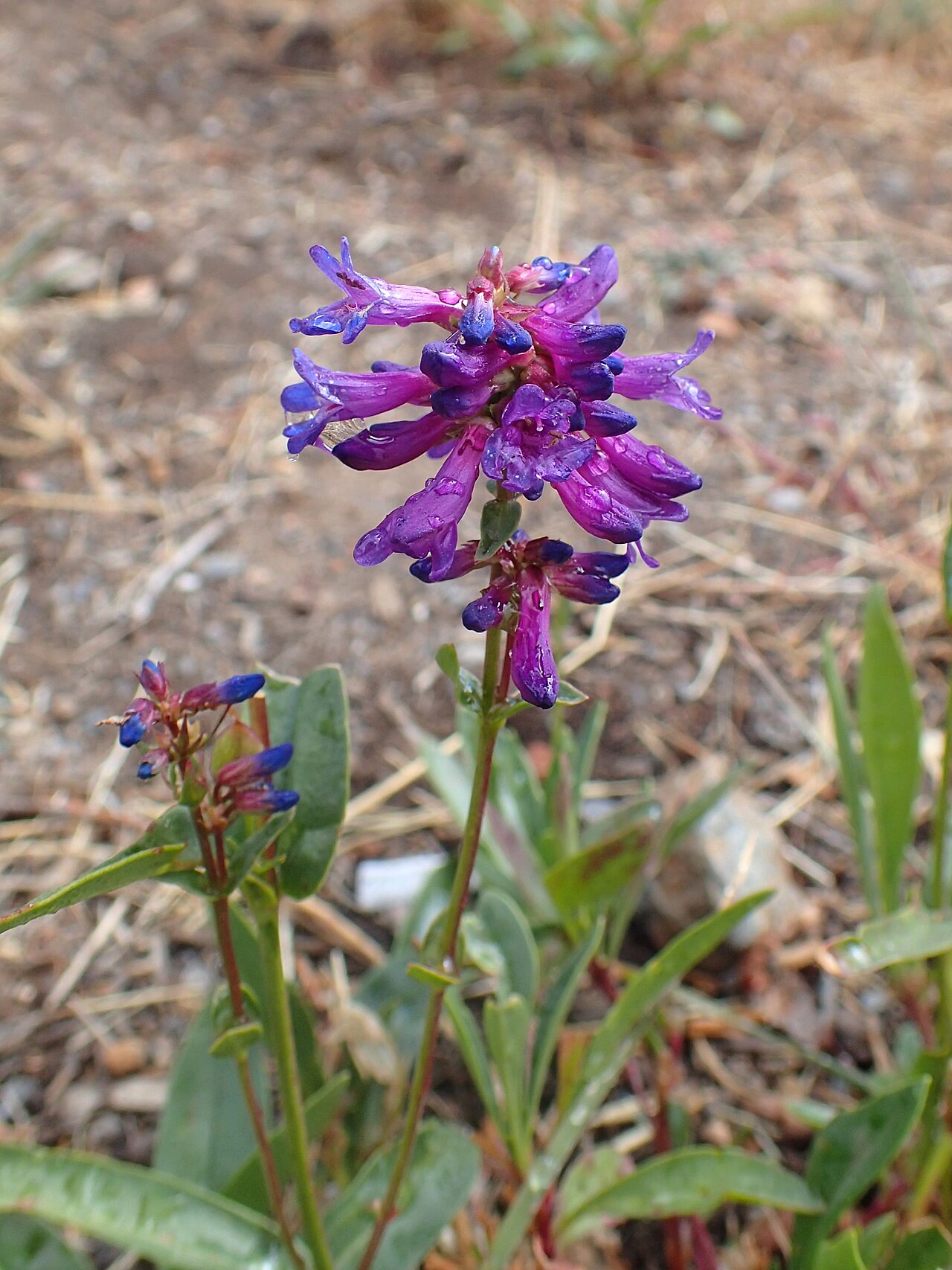
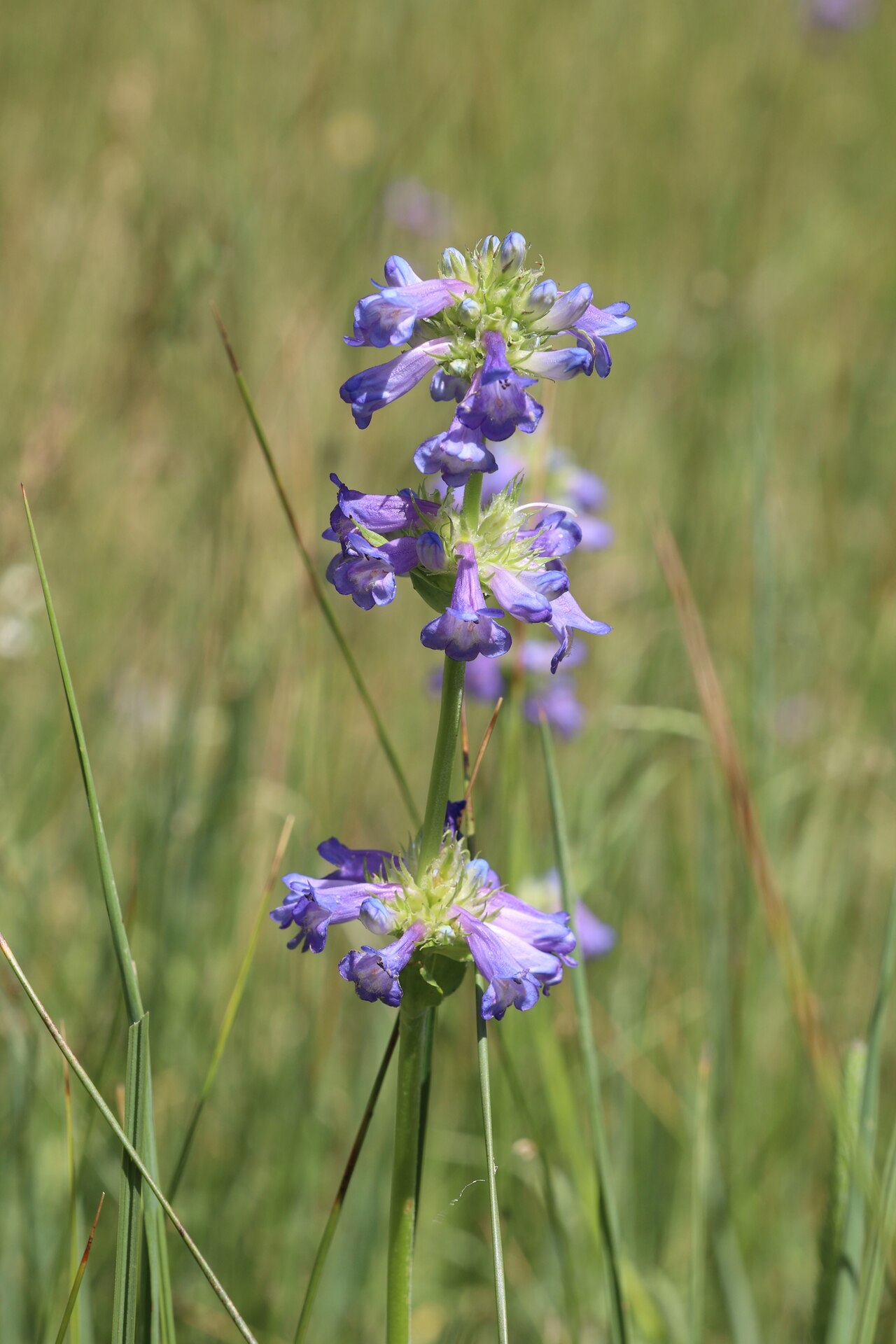
Short tubular blossoms project outward from dense clusters separated along the upper stem. In the Northwest description, the blue-purple tubes are commonly around 11–15 mm long. They have a two-lipped opening and hairs on the lower interior and sterile stamen. The repeated flower clusters can appear like whorls, but botanical descriptions explain their branching more precisely. Orientation, leaf form and the small flowers together are more informative than flower color alone.
Fruit, seeds and lookalikes
After flowering, small dry capsules develop where the corollas stood. They turn brown as they mature, providing a useful cue for seed collection. Small-flowered penstemons are difficult to separate from a single distant photograph: P. procerus and related plants deserve particular care. Use a regional key, mature leaves and close photographs of flowers; do not identify a sterile rosette solely from the word meadow on a nursery tag.
Quick Facts
| Scientific Name | Penstemon rydbergii |
| Family | Plantaginaceae |
| Plant Type | Herbaceous perennial; tufted, rhizomatous crown |
| Mature Height | Usually 8–28 inches (20–70 cm); occasional taller plants |
| Mature Spread | Clump size varies with age; allow room for a widening basal rosette |
| Growth Rate | Seasonal spring growth; establishment varies with seed source |
| Sun Exposure | Full sun to partial shade |
| Water Needs | Average to seasonally moist, freely draining soil; not permanent standing water |
| Soil Type | Meadow loam, gravelly loam or rocky soil with drainage |
| Soil pH | No single species-wide numerical optimum established; match local meadow soil |
| Bloom Time | May–July in the Pacific Northwest; later at high elevations |
| Flower Color | Blue, violet or purple |
| Fall Color | Primarily green foliage aging to brown; not selected for fall color |
| Fruit | Small dry capsules containing seeds |
| Deer Resistant | Not deer-proof; protect new plants where browsing occurs |
| USDA Hardiness Zones | Select a source adapted to your local winter climate; zone alone is insufficient |
Native Range
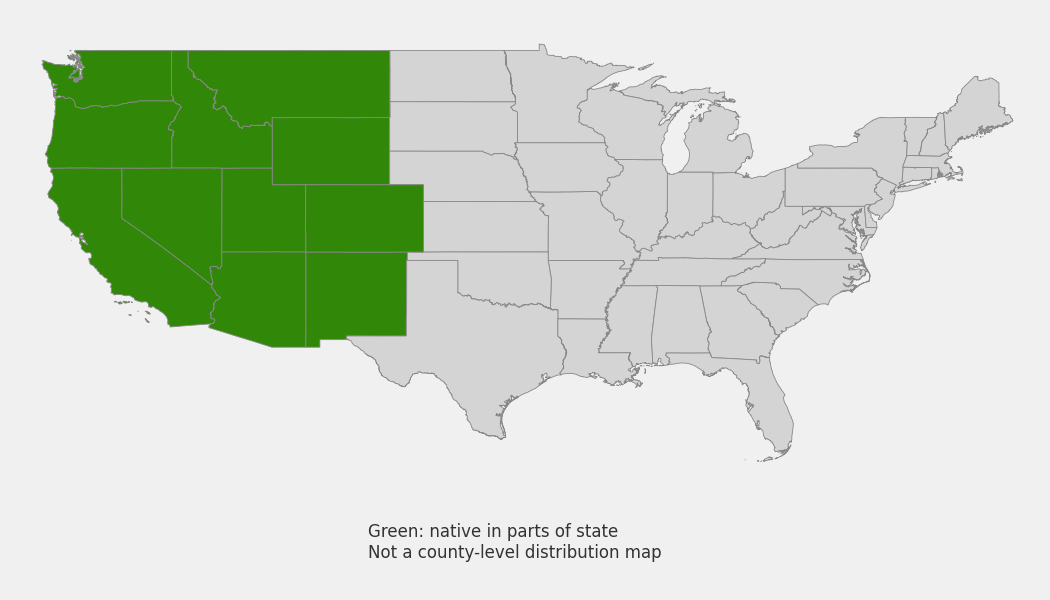
Kew’s Plants of the World Online records this species as native in Arizona, California, Colorado, Idaho, Montana, Nevada, New Mexico, Oregon, Utah, Washington and Wyoming. The United States map follows that native-state treatment. This is a western mountain and interior species, not an eastern meadow wildflower merely because its common name contains meadow.
Within Washington, the Burke Herbarium places it east of the Cascades, in meadows and moist open slopes, occasionally on drier sagebrush slopes. Elevation and local snowmelt strongly influence flowering and water availability. The same green state can contain wet mountain meadows, arid basins and irrigated cities; only a small subset will reproduce the plant’s natural conditions.
For regional restoration, confirm the variety and local occurrence with a herbarium or land manager. A garden planting can be successful outside a local native site without proving historical nativity there. The county-level USDA link and specimen resources in the sources section help refine the broad map. The three photographs show plants from California, Oregon and New Mexico, illustrating the species without implying all forms are interchangeable.
📋 Regional plant list: Idaho, Eastern Oregon and Eastern Washington
Growing & Care Guide
Light
Use an open site with full sun in a cool meadow-like garden or partial shade where afternoons are hotter. A little afternoon protection may help retain root-zone moisture, but deep shade is a poor substitute: shoots can lean toward light and flowering becomes sparse. Observe the site after nearby shrubs leaf out, not just when you plant in early spring. Keep a modest open gap around the crown rather than enclosing it under a dense canopy.
Soil and water
Supply a soil that holds some spring moisture while draining surplus water. This is not a reason to plant in a compacted sump or keep a saucer full beneath a pot. During establishment, wet the original root ball and adjacent soil, then check beneath the surface before watering again. Once rooted, let weather and soil condition determine the interval. In a dry summer, inspect the plant before applying a desert-style no-water regime; meadow ancestry is a meaningful distinction.
Planting tips
Plant a nursery plug at its original soil level, taking care not to bury the leafy crown. Choose a cool planting period when you can follow establishment rather than setting a small root system into peak heat. Remove surrounding turf or aggressive weeds before planting. Water thoroughly to settle soil around the roots and check after the first few days for shrinkage or exposed roots. A small trial group is wiser than committing a whole border before seeing how a seed source behaves.
Pruning and maintenance
Remove spent flower stalks if you want a tidier clump, or leave a portion to ripen for seed. Do not cut healthy basal foliage merely because blooming has ended. Clear dead material gently in spring when new growth is visible and avoid tugging on the crown. Dense encroaching grasses can overwhelm seedlings even if adult plants coexist with grasses in nature. Hand weed around young clumps and investigate sudden collapse for saturated soil rather than assuming thirst.
Propagation
Seed is the practical way to raise a genetically varied group. Ask the supplier for its lot-specific germination protocol, because cold treatment requirements can vary among species and origins. A labeled outdoor fall sowing in a protected, well-drained container is a reasonable small-scale trial in a cold-winter region. Protect the pot from rodents, record dates and keep ungerminated seed through another suitable season if the supplier advises it. Never promise a fixed percentage or instant first-year bloom.
Landscape Uses
- A seasonally moist western meadow border, with similar-sized native companions.
- An open mountain garden where small tiered flowers can be seen at close range.
- A pollinator planting in its native region, using locally appropriate seed.
- A test planting at the transition between a watered border and drier upland beds—not a permanent pond edge.
Wildlife & Ecological Value
For pollinators
The tubular flowers offer a floral resource to visiting insects, and the Burke Herbarium records several visitor groups for the species. A garden goal is repeated, accessible flowering rather than the claim that one plant supports every pollinator. Grow several separately sourced individuals if space permits and combine them with plants blooming earlier and later. Avoid spraying open flowers; observe visits before treating the presence of an insect as damage.
For birds
This small perennial is not a berry-producing bird shrub. Its more defensible contribution is structural variety and the insects associated with a living meadow planting. Leave some stems and surrounding vegetation where practical, but do not claim a particular bird depends on its capsules without local evidence. A mixture of shrubs, grasses and flowering plants supports more functions than a uniform bed of penstemons alone.
For mammals
A native plant is not automatically resistant to all browsers. Deer, rabbits or rodents may damage a new planting, especially when other food is limited. Use physical protection while plants establish if browsing is evident. Do not present the plant as forage or food for pets and livestock on the strength of its native status; horticultural selection and animal feeding are different decisions.
Ecosystem role
Rydberg’s penstemon adds a perennial flowering component to open western vegetation. Retaining locally adapted populations also retains variation in flowering time and environmental response. In a garden, reduce competition from invasive weeds and allow occasional recruitment where suitable. In wildlands, avoid moving garden seed into natural populations; conservation planting needs provenance records, appropriate permissions and a species list matched to the actual habitat.
Cultural & Historical Uses
The scientific epithet honors botanist Per Axel Rydberg, and Aven Nelson published the species name in 1898. Botanical names are useful here because common names such as meadow penstemon have been applied loosely. Record the full scientific name on seed packets and garden labels rather than shortening every small blue-flowered plant to beardtongue.
The species belongs to the diverse western penstemon flora that gardeners increasingly use to build regionally distinctive plantings. Its appeal is not simply unusual color: it demonstrates that native gardening includes moisture gradients and mountain meadows as well as dryland landscapes. Keeping that ecological context makes the plant more likely to survive than treating every western native as a desert specialist.
This guide does not assign an Indigenous medicinal or food use without species-specific evidence. Such claims cannot safely be borrowed from another penstemon. Nursery propagation, careful plant identification and observation of local populations are the relevant practical uses here; leave wild plants intact and use photographs and botanical keys to study them.
Frequently Asked Questions
Is Rydberg’s penstemon a dry rock-garden plant?
Not by default. It is associated with meadow and open-slope conditions, often with seasonal moisture. Give it drainage, but do not confuse drainage with a continuously parched root zone.
How tall will it get?
Most regional descriptions give roughly 8–28 inches. Site, variety and age matter, and botanical treatments include occasional taller plants. Use the typical range for placement and leave space for variation.
Why does my plant have no flowers?
Check age, light, crowding and establishment stress before adding fertilizer. Seedlings may need time to develop, and deep shade or vigorous neighboring plants can limit flowering.
Can I plant it throughout Washington?
It is native chiefly east of the Cascades within the state. A successful ornamental planting elsewhere does not make it locally native; use county and habitat evidence for restoration.
Should I cut it to the ground after bloom?
Remove flower stalks if desired, but retain sound basal foliage. If you want seed, leave some capsules to mature and collect only when dry, with permission for any wild collection.
Sources & Further Reading
- Burke Herbarium — Penstemon rydbergii
- Kew POWO — accepted name and native states
- Colorado State University Extension — Growing Penstemons
- USDA PLANTS — PERY
Find Native Plants
Ask growers about nursery propagation and regional provenance. Browse our ID native plant nurseries, OR native plant nurseries, WA native plant nurseries directory for suppliers. Explore the native nursery finder.