
Seaside Alder (Alnus maritima)
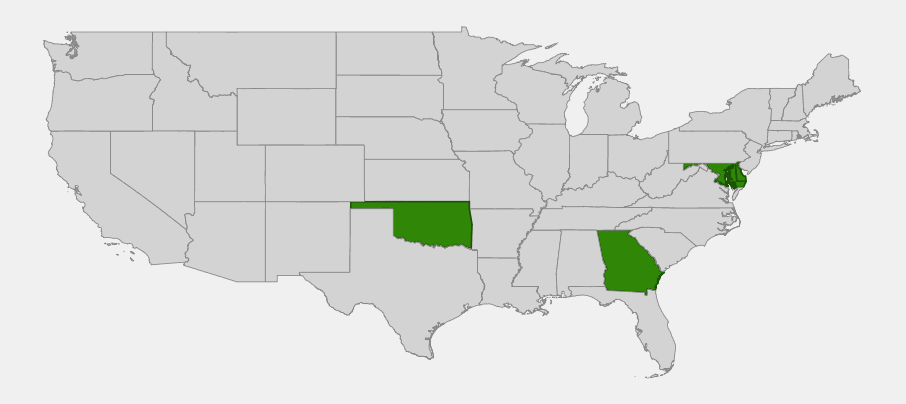
Alnus maritima, the Seaside Alder (also called Delmarva Alder or Brook Alder), is one of the rarest and most unusual native trees in North America. It is the continent’s only autumn-blooming alder — every other North American alder flowers in spring — and it survives today in just three small, widely separated native populations: the Delmarva Peninsula of Delaware and Maryland, a handful of counties in southwestern Georgia, and south-central Oklahoma. Botanists treat each population as its own subspecies, a living record of a once more continuous range that contracted over thousands of years.
This rarity, combined with real garden value, makes seaside alder a favorite of native-plant collectors and streambank restoration projects alike. It is a shrubby, multi-stemmed small tree that thrives with wet feet along streams and pond edges, has glossy, handsome foliage all summer, and then puts on a late, golden display of catkins in September and October when almost nothing else is blooming.
Because wild populations are so limited, the IUCN lists seaside alder as globally endangered. Planting nursery-propagated stock — never wild-collected material — in appropriate wet sites helps support a species whose entire future depends on a few small groves scattered across three states.
Identification
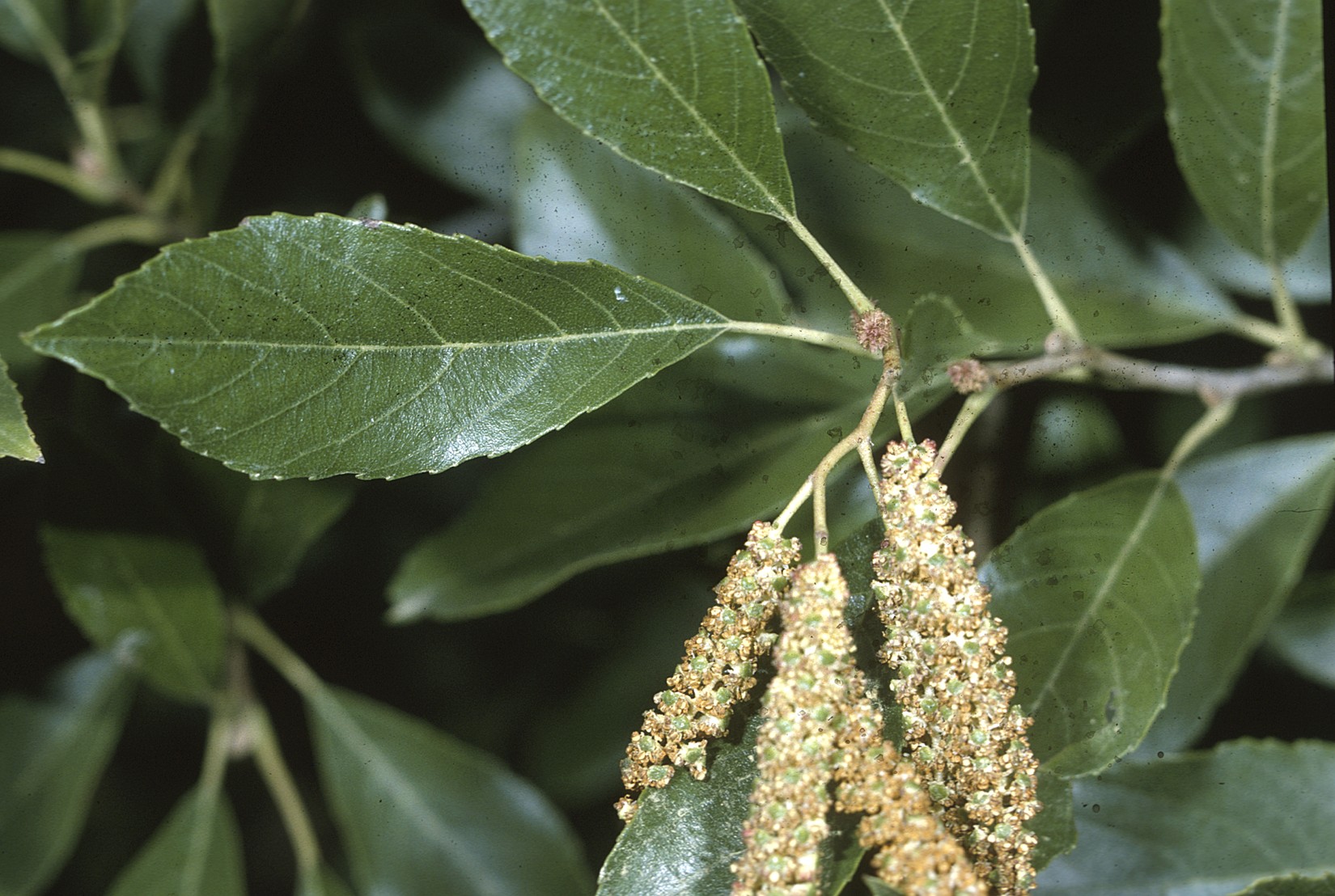
Seaside alder grows as a large, multi-stemmed shrub or small tree, typically 10 to 30 feet tall, often forming dense thickets along the water’s edge. Like other alders it carries both male and female flowers on the same plant (monoecious), with the long, drooping male catkins being the most conspicuous feature in bloom.
Bark & Stems
Young stems are smooth and gray-brown with pale lenticels, typical of the alder genus. Older bark remains relatively smooth compared to many trees, developing only shallow furrows with age. Multiple trunks commonly arise from the base, giving mature specimens a clumping, shrub-like form.
Leaves
Leaves are simple, alternate, glossy dark green, and elliptical to oblong, typically 2 to 4 inches long, with finely toothed margins and a somewhat leathery texture that distinguishes seaside alder from the duller-leaved alders of the eastern U.S. The foliage holds its rich green color late into the growing season.
Flowers & Fruit
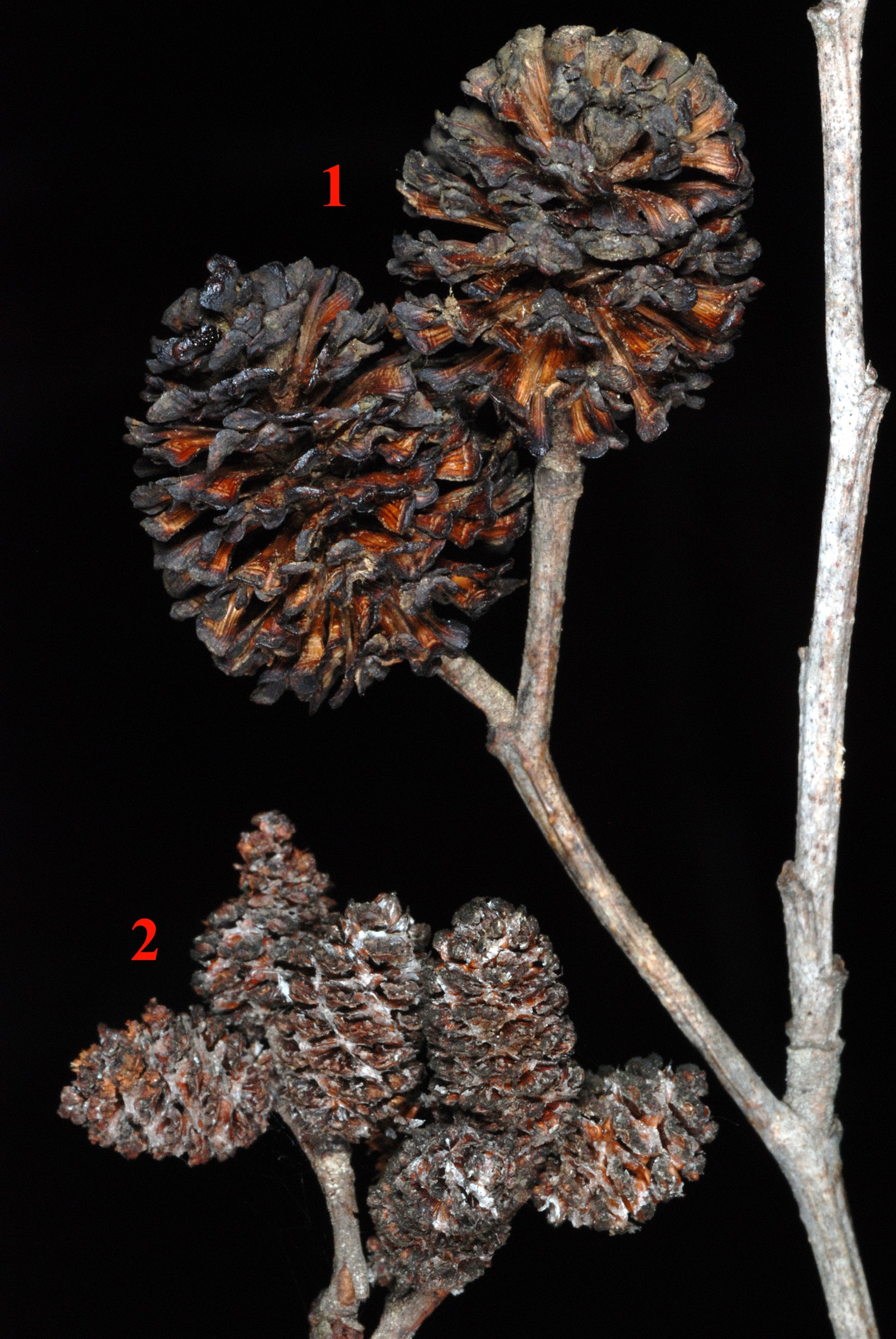
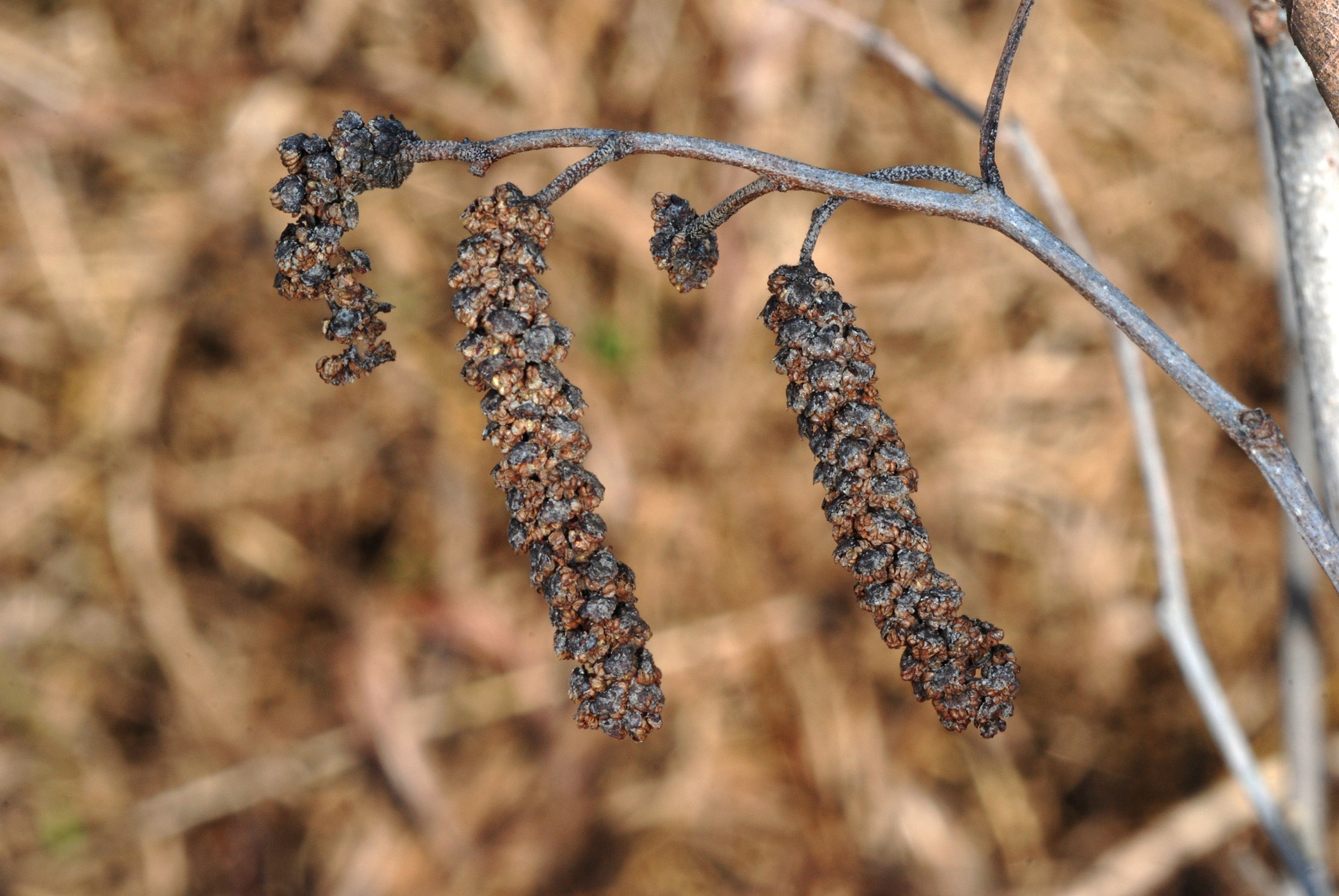
Seaside alder’s single most distinctive trait is its bloom time: it flowers in late summer and fall, from roughly September into October, rather than in early spring like every other North American alder. Slender, pendant male catkins turn golden-yellow and dangle conspicuously from the branches, while the smaller female catkins develop into woody, cone-like structures (strobiles) about ½ to ¾ inch long. These cones mature and persist through winter, eventually releasing small winged nutlets, and remain decorative on the bare branches well after leaf drop.
Quick Facts
| Scientific Name | Alnus maritima |
| Family | Betulaceae (Birch) |
| Plant Type | Deciduous multi-stemmed shrub / small tree |
| Mature Height | 10–30 ft |
| Growth Rate | Moderate to fast |
| Sun Exposure | Full Sun to Part Shade |
| Water Needs | High; needs consistently moist to wet soil |
| Soil Type | Wet, sandy to loamy streambank and pond-edge soils |
| Soil pH | Acidic to neutral |
| Bloom Time | September – October (unique among North American alders) |
| Flower Color | Golden-yellow male catkins |
| Fruit | Small woody cone-like strobiles, persisting through winter |
| Deer Resistant | Fairly resistant |
| Conservation Status | Endangered (IUCN); rare throughout its native range |
| USDA Hardiness Zones | 5–9 |
Native Range
Seaside alder has one of the most unusual native distributions of any North American tree: three small, widely disjunct populations separated by hundreds of miles. One occurs on the Delmarva Peninsula of Delaware and Maryland, where it grows along the sandy, blackwater streams of the coastal plain. A second is restricted to a few counties in southwestern Georgia, mainly along the Flint River system. The third and westernmost lies in south-central Oklahoma, along the Blue River and nearby streams. Each population is recognized as a distinct subspecies: Alnus maritima subsp. maritima on the Delmarva Peninsula, subsp. georgiensis in Georgia, and subsp. oklahomensis in Oklahoma.
In all three areas, seaside alder occupies the same basic niche: sandy or gravelly streambanks, pond margins, and seasonally wet bottomland soils, almost always in full sun to light shade directly at the water’s edge. This fragmented, highly specific habitat requirement — combined with its naturally small population sizes — is why the species is considered globally endangered despite being locally common within its few native groves.
📋 Regional plant lists featuring Seaside Alder: Delaware, Southern NJ & Long Island · Maryland, Virginia & West Virginia · Georgia, Alabama & Mississippi · Arkansas, Louisiana, Eastern Oklahoma & Eastern Texas
Growing & Care Guide
Seaside alder’s biggest requirement is simple: keep its roots wet. Give it that, and it is an adaptable, relatively fast-growing, low-maintenance native with few serious pest or disease problems.
Light
Full sun produces the densest growth and best catkin display, though seaside alder tolerates part shade, especially along wooded streambanks similar to its native habitat. It is not a plant for dry shade or exposed dry sites regardless of light level.
Soil & Water
This is a wet-site specialist. In the wild it grows directly along streambanks and pond edges in sandy to loamy soils that are consistently moist or seasonally flooded. In cultivation it needs regular water and performs best in rain gardens, pond margins, and low spots that collect runoff; it is not a good choice for average garden soil that dries out in summer. Like other alders, its roots host nitrogen-fixing bacteria, allowing it to thrive in otherwise low-fertility sandy soils.
Planting Tips
Plant container-grown, nursery-propagated stock in spring, choosing a site at or near the water’s edge — a streambank, pond margin, or the wettest part of a rain garden. Because the native populations are so small and vulnerable, never purchase or collect wild-dug plants; buy only from nurseries that propagate seaside alder from cultivated stock. Space multiple plants 6 to 10 feet apart if you want a naturalistic thicket.
Pruning & Maintenance
Seaside alder needs little pruning beyond removing dead or damaged stems. Because it is naturally multi-stemmed, periodic thinning of crowded shoots at the base can keep a planting tidier, but a looser, thicket-like form is also attractive and more true to how the species grows in the wild.
Landscape Uses
- Streambank and pond-edge plantings, where its roots help stabilize wet soil
- Rain gardens and bioswales that collect and hold stormwater
- Late-season interest — one of the only native trees blooming in September and October
- Native plant collections and conservation plantings supporting a globally rare species
- Wet-site screening, often combined with smooth alder on larger sites
Wildlife & Ecological Value
Seaside alder supports streamside wildlife in ways typical of alders generally, with the added bonus of a late-season nectar and pollen source when most native plants have already finished blooming.
For Pollinators
The autumn catkins provide pollen at a time of year when few other native woody plants are flowering, making seaside alder a valuable late-season resource for bees and other pollinating insects building up reserves before winter.
For Birds
Like other alders, seaside alder’s small winged seeds, released gradually from the persistent woody cones through winter, are eaten by seed-eating songbirds such as goldfinches and siskins. The dense, multi-stemmed growth along streambanks also provides nesting cover and protection near water.
Ecosystem Role
As a nitrogen-fixing tree, seaside alder enriches the sandy, often nutrient-poor soils of the streambanks where it grows, improving conditions for other plants nearby. Its root systems help stabilize stream and pond banks against erosion, an especially important function given how few other woody plants share its narrow habitat niche in each of its three native regions.
Cultural & Historical Uses
Seaside alder has no significant documented history of Indigenous or settler use for food, medicine, or materials, unlike some of its more widespread alder relatives. Its primary historical and modern significance is botanical and ecological: the species was long a subject of scientific interest because of its unusual disjunct distribution and its highly unusual autumn bloom time among North American alders, and it remains an important subject of conservation research and ex-situ propagation aimed at protecting its small wild populations.
Frequently Asked Questions
Why does seaside alder bloom in fall instead of spring?
Seaside alder is the only North American alder that flowers in autumn rather than early spring. The exact evolutionary reason isn’t fully settled, but it sets this species apart from every other alder on the continent and gives it a season of bloom entirely to itself.
Is seaside alder endangered?
Yes. The IUCN lists seaside alder as globally endangered because it survives only in three small, widely separated native populations in Delaware/Maryland, Georgia, and Oklahoma. Always buy nursery-propagated plants rather than wild-collected stock, and avoid disturbing any wild populations you encounter.
Does seaside alder need to grow right next to water?
It needs consistently moist to wet soil to thrive, which in practice usually means a streambank, pond edge, or a rain garden or low spot that stays damp. It is not a good choice for an average dry garden bed.
How is seaside alder different from other native alders?
Besides its unique fall bloom time, seaside alder has glossier, more leathery leaves than species like smooth alder (Alnus serrulata), and a far more restricted, disjunct native range rather than the broad distribution typical of most eastern alders.
How big does seaside alder get?
Most plants grow as multi-stemmed shrubs or small trees in the 10 to 30 foot range, often forming dense streamside thickets rather than a single-trunked tree form.

Looking for a nursery that carries Seaside Alder?
Browse our native plant nursery directory: Delaware & Georgia · Maryland · Oklahoma
Related reading: Rain Garden Plant Selection Guide · Privacy Trees That Do Well in Wet Soil

