
Seven-Year Apple (Casasia clusiifolia)
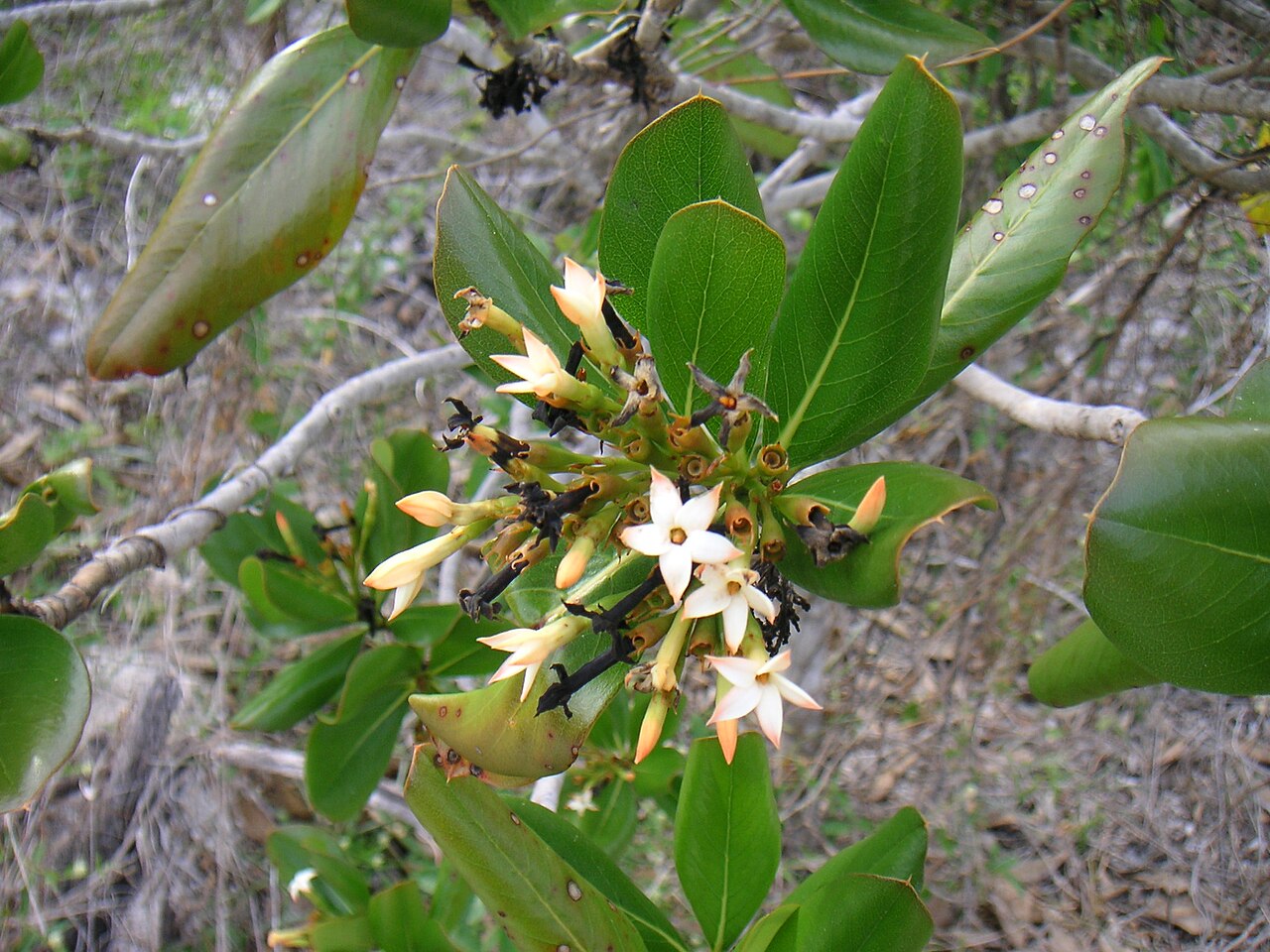
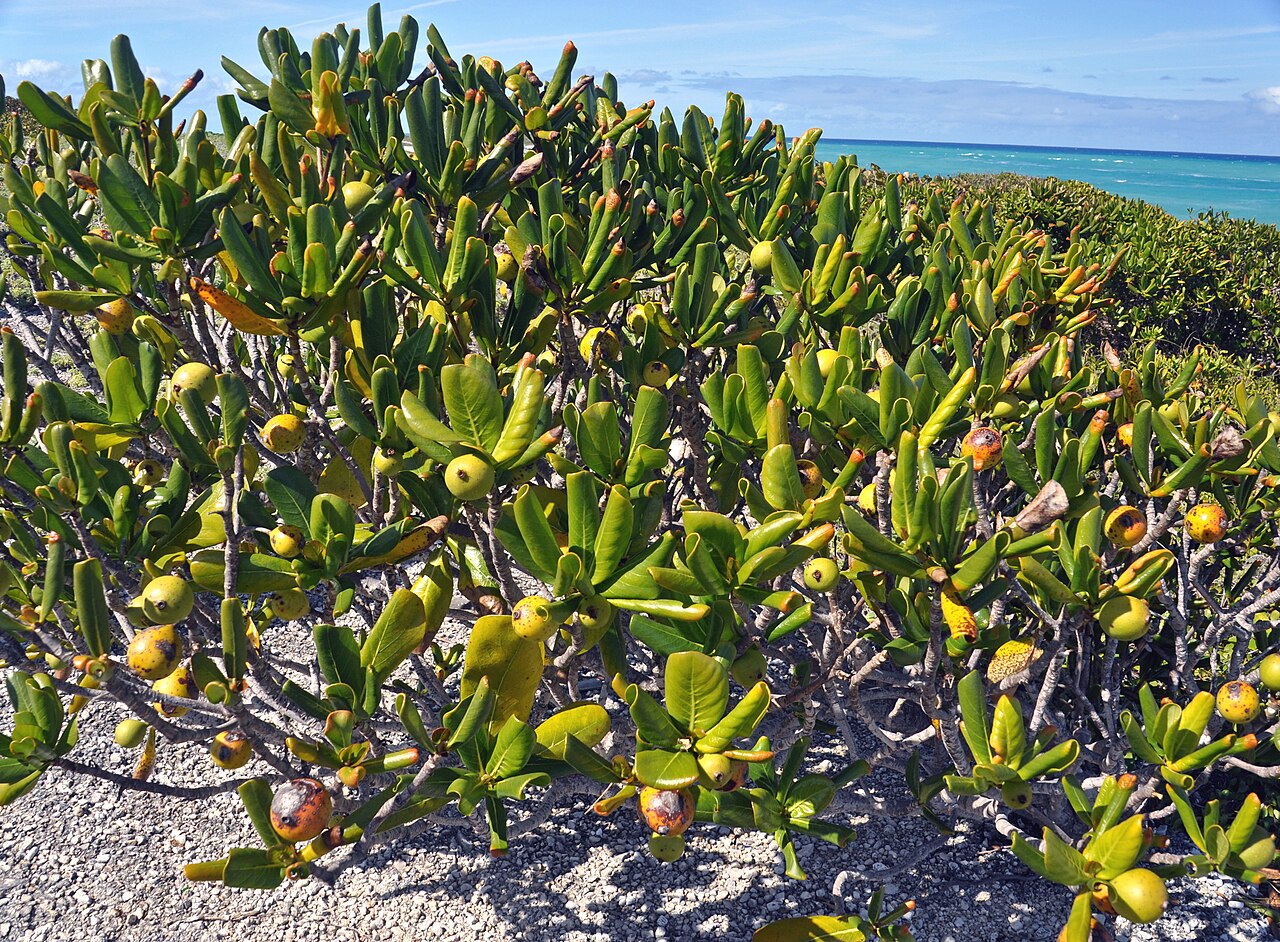
Casasia clusiifolia, the Seven-Year Apple (USDA PLANTS writes it “sevenyear apple”), is an evergreen coastal shrub or small tree of south Florida and the Caribbean. It belongs to the coffee family (Rubiaceae) and is known in older literature as Genipa clusiifolia and Randia clusiifolia. In Florida it grows in coastal hammocks, on the landward side of beach dunes, on rocky limestone shores and at the edges of mangrove swamps, mainly in the Florida Keys and along the coasts of the southern peninsula.
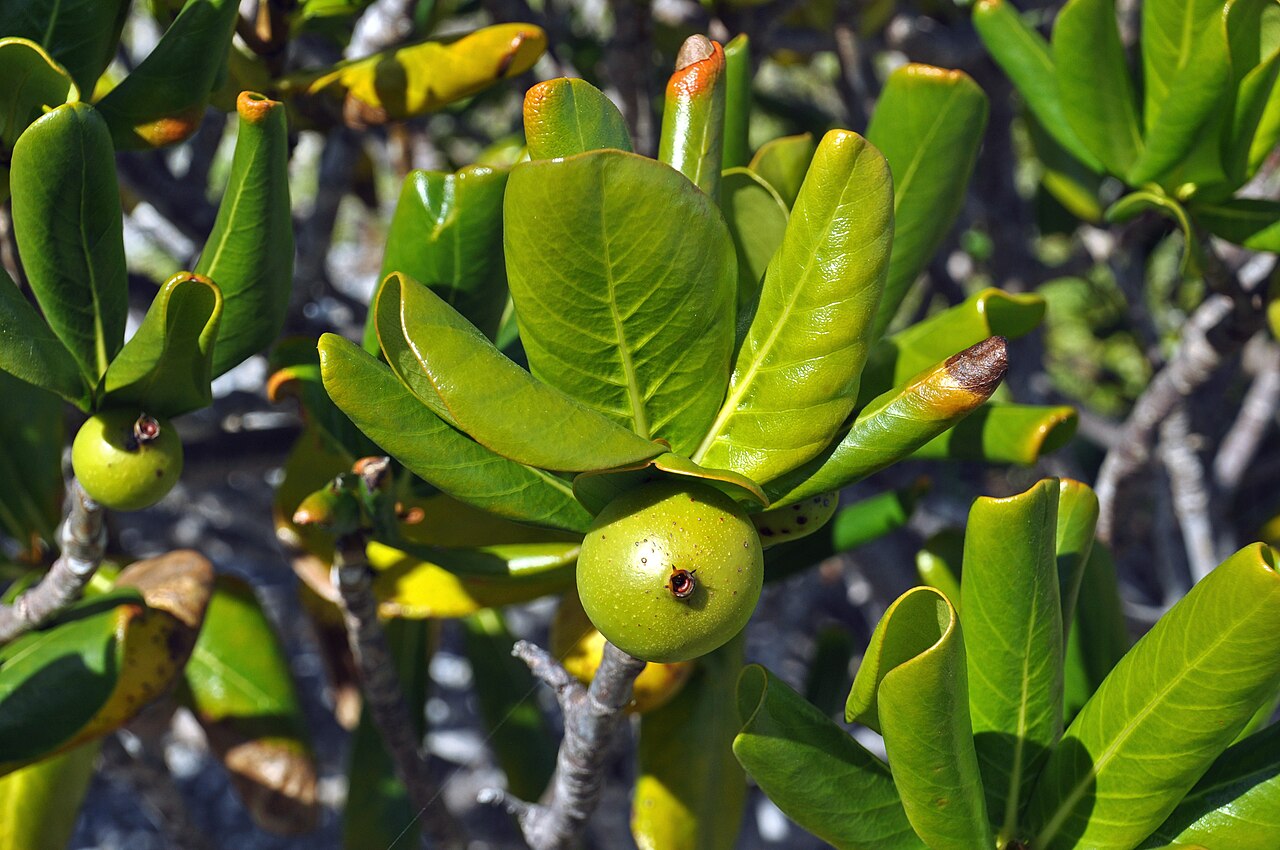
It has thick, glossy, paddle-shaped leaves clustered at the ends of the branches, much like those of the pitch apple (Clusia), which is where the species name clusiifolia (“Clusia-leaved”) comes from. In spring and early summer it opens clusters of fragrant, white, tubular flowers with a star of five to eight lobes. These ripen into egg-shaped fruits 2 to 3 inches long that stay green for months, turn yellow, and finally ripen black and wrinkled.
The common name refers to how long the fruit seems to take to ripen. It does not actually take seven years, but it can hang on the shrub for most of a year. Seven-year apple is a favorite of south Florida native landscapers because it is very salt tolerant, drought tolerant once established, and attractive year-round. This guide covers how to identify it, where it grows and how to use it in coastal gardens.
Identification
Seven-year apple is easy to recognize from its thick, almost succulent, glossy leaves crowded at the branch tips, its fragrant white tubular flowers, and its unusual egg-shaped fruits that turn from green to yellow to black.
Growth Habit & Bark
It is usually a rounded, multi-stemmed shrub 4 to 10 feet tall, but in protected hammocks it can become a small tree up to about 20 feet or more. On exposed shores the salt winds prune it into a low, dense thicket. The stems are stout and grayish, with leaf scars crowded toward the tips.
Leaves
The leaves are simple, thick and leathery, glossy dark to light green, broadly obovate (wider toward the tip), about 2 to 6 inches long, with smooth edges and a rounded or notched tip. They are clustered near the branch ends. Their thick, fleshy texture is an adaptation to salt spray and drought.
Flowers
The flowers are white, tubular, about an inch or more long, opening at the mouth into a star of five to eight spreading lobes. They are fragrant, especially toward evening, and are borne in small clusters among the leaves near the branch tips. Male and female flowers are often on different plants, so not every shrub produces fruit. Flowering is mostly in spring and early summer, roughly March to June, with occasional flowers at other times.
Fruit & Seeds
The fruit is an egg-shaped to oval berry, about 2 to 3 inches long, with a thick rind and a soft, dark pulp containing many flat seeds. It takes many months to mature, turning from green to yellow and finally to black, wrinkled and soft when ripe. The pulp is not generally recommended for eating; it has been described as having a bland to unpleasant taste.
Quick Facts
| Scientific Name | Casasia clusiifolia (Jacq.) Urb. (syn. Genipa clusiifolia, Randia clusiifolia) |
| Family | Rubiaceae (coffee family) |
| Plant Type | Evergreen shrub or small tree |
| Mature Height | 4–10 ft (occasionally 20 ft or more) |
| Mature Spread | 4–10 ft |
| Growth Rate | Slow to moderate |
| Sun Exposure | Full sun to partial shade |
| Water Needs | Low once established |
| Soil Type | Sand, coastal limestone or shell soil; well drained |
| Soil pH | About 6.5–8.5 (tolerates alkaline soils) |
| Bloom Time | March–June (sporadically other months) |
| Flower Color | White |
| Fall Color | None; evergreen |
| Fruit | Egg-shaped berry, green to yellow to black |
| Deer Resistant | Mostly; thick leaves are rarely browsed |
| USDA Hardiness Zones | 10–11 |
Native Range
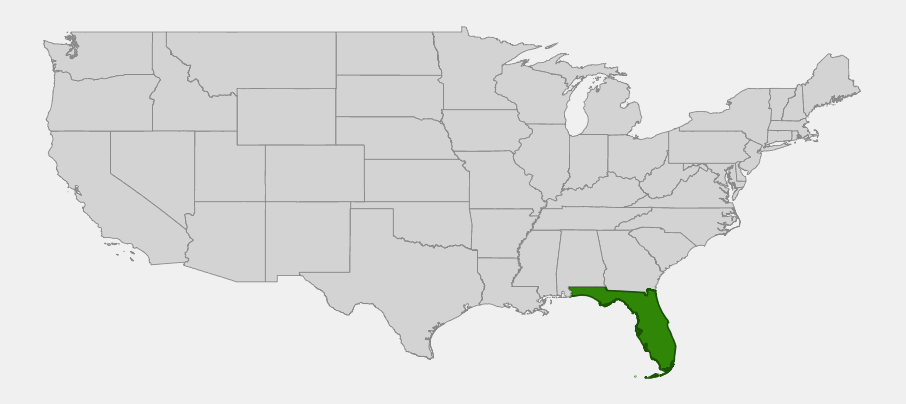
In the United States, seven-year apple grows only in Florida, where USDA PLANTS lists it as native. Its Florida range is coastal and tropical: the Florida Keys, from Key Largo to Key West, and the mainland coasts of southern Florida. Outside the U.S. it is native to the Bahamas, Bermuda and Cuba, and it is common on many Bahamian islands.
Its habitats are coastal: the back side of beach dunes, coastal strand, rocky limestone shores, coastal hammocks and the landward edges of mangrove swamps, often within reach of salt spray. It is frost-sensitive, which limits it to the warmest parts of the state. The U.S. Army Corps of Engineers wetland plant list rates it Facultative (FAC), meaning it grows in both wetland edges and uplands.
Much of its coastal habitat in south Florida has been lost to development, so many of the remaining wild populations are on protected land such as state parks in the Keys and on Biscayne Bay. It is not listed as endangered or threatened by the state of Florida, and it is widely grown by native plant nurseries.
📋 Regional plant lists featuring Seven-Year Apple: North & South Florida
Growing & Care Guide
Seven-year apple is one of the most reliable small shrubs for south Florida coastal gardens. It is available from many native plant nurseries in the region. Its main limits are cold and poor drainage: it needs a frost-free climate and a site that does not stay wet.
Light
It grows in full sun to partial shade. In full sun it stays denser and flowers more heavily; in shade it becomes more open and treelike.
Soil & Water
Plant in well-drained sand, shell or limestone-based soil. It tolerates alkaline soil, salt spray and occasional salty flooding, but not soil that stays soggy. Water regularly for the first few months after planting. Once established it is drought tolerant and usually needs no irrigation in the coastal zone. Fertilizer is not needed.
Planting Tips
Plant from containers at any time of year in frost-free areas, ideally at the start of the rainy season. Space plants 4 to 6 feet apart for a hedge or screen. Because male and female flowers tend to be on separate plants, plant several shrubs if you want fruit. It is suitable for the first line of shrubs behind a beach dune.
Pruning & Maintenance
It naturally forms a compact, rounded shrub and needs little pruning. It can be trimmed into an informal hedge, but heavy shearing removes the flowering tips. Protect young plants from frost in the colder parts of its range. Scale insects occasionally appear on stressed plants and can usually be controlled by improving growing conditions.
Propagation
It is grown from seed, which can be cleaned from fully ripe, black fruit and sown fresh in a well-drained mix. Germination may take several weeks. Cuttings are slower and less reliable. Seedlings grow slowly at first.
Landscape Uses
- Coastal landscapes: one of the most salt-tolerant flowering shrubs for south Florida beachfront properties
- Informal hedges and screens: dense, evergreen foliage that tolerates trimming
- Xeriscapes: drought tolerant once established on sand or limestone soils
- Container plants: grows slowly and adapts well to large patio pots in frost-free areas
- Wildlife gardens: a larval host for sphinx moths and a source of nectar and cover
Wildlife & Ecological Value
Seven-year apple is an important plant in south Florida coastal habitats, giving shelter in exposed sites and supporting a specialized group of insects.
For Pollinators
The fragrant, tubular white flowers are visited by moths and other long-tongued insects, especially in the evening. Seven-year apple is also a reported larval host plant for the tantalus sphinx moth (Aellopos tantalus), a day-flying hummingbird-like moth of the Caribbean and south Florida.
For Birds
The dense, evergreen shrubs give nesting and resting cover for songbirds and migrating birds along the coast. The fruits are not a major bird food.
For Mammals
Small mammals and raccoons may eat ripe fruits that fall to the ground and help spread the seeds. In the Keys, dense coastal thickets provide cover for small animals.
Ecosystem Role
Its deep roots and dense branches help stabilize the back side of dunes and rocky shorelines, and its salt tolerance lets it grow in exposed spots where few other shrubs survive. It is part of the coastal strand and hammock plant community that shelters the inland forest from wind and salt.
Cultural & Historical Uses
The species was first described by the Austrian botanist Nikolaus Joseph von Jacquin in the 18th century as Genipa clusiifolia, placing it with the genipap tree. It was later moved to Randia by Alvan Chapman, and the German botanist Ignatz Urban placed it in Casasia, the name accepted by USDA PLANTS and the Atlas of Florida Plants.
The name “seven-year apple” is folk exaggeration about how long the fruit hangs on the shrub before ripening. The plant is familiar on many Bahamian islands as well as in the Keys, and the same English name is used in both places. It has never been grown as a food plant.
Today seven-year apple is mainly known as a landscape plant. Native plant nurseries and coastal landscapers in south Florida recommend it as a tough, salt-tolerant alternative to non-native hedge shrubs, and it appears in many coastal landscaping and xeriscape plant lists for Miami-Dade and Monroe counties.
Frequently Asked Questions
Does seven-year apple really take seven years to fruit?
No. Young plants can begin flowering after a few years, and individual fruits take many months, not years, to ripen. The name is an exaggeration based on how long the fruits stay on the shrub.
Is the fruit edible?
The fruit is not known to be dangerous, but it has a bland to unpleasant taste and is not considered a good food plant. It is grown for its foliage, flowers and wildlife value.
How salt tolerant is it?
It is highly salt tolerant and grows naturally within reach of salt spray on beach dunes and rocky shores. It is one of the best flowering shrubs for oceanfront sites in south Florida.
Can it grow in central or north Florida?
Only in protected spots or containers. It is a tropical plant that is damaged by frost, so it is best suited to zones 10 and 11. Containers can be moved indoors during cold snaps.
Why does my seven-year apple not produce fruit?
Male and female flowers are often on separate plants, and only female plants set fruit. Plant several shrubs to increase the chance of having both, and give them sun for heavier flowering.

Looking for a nursery that carries Seven-Year Apple?
Browse our native plant nursery directory: Florida