Showy Goldeneye (Heliomeris multiflora)
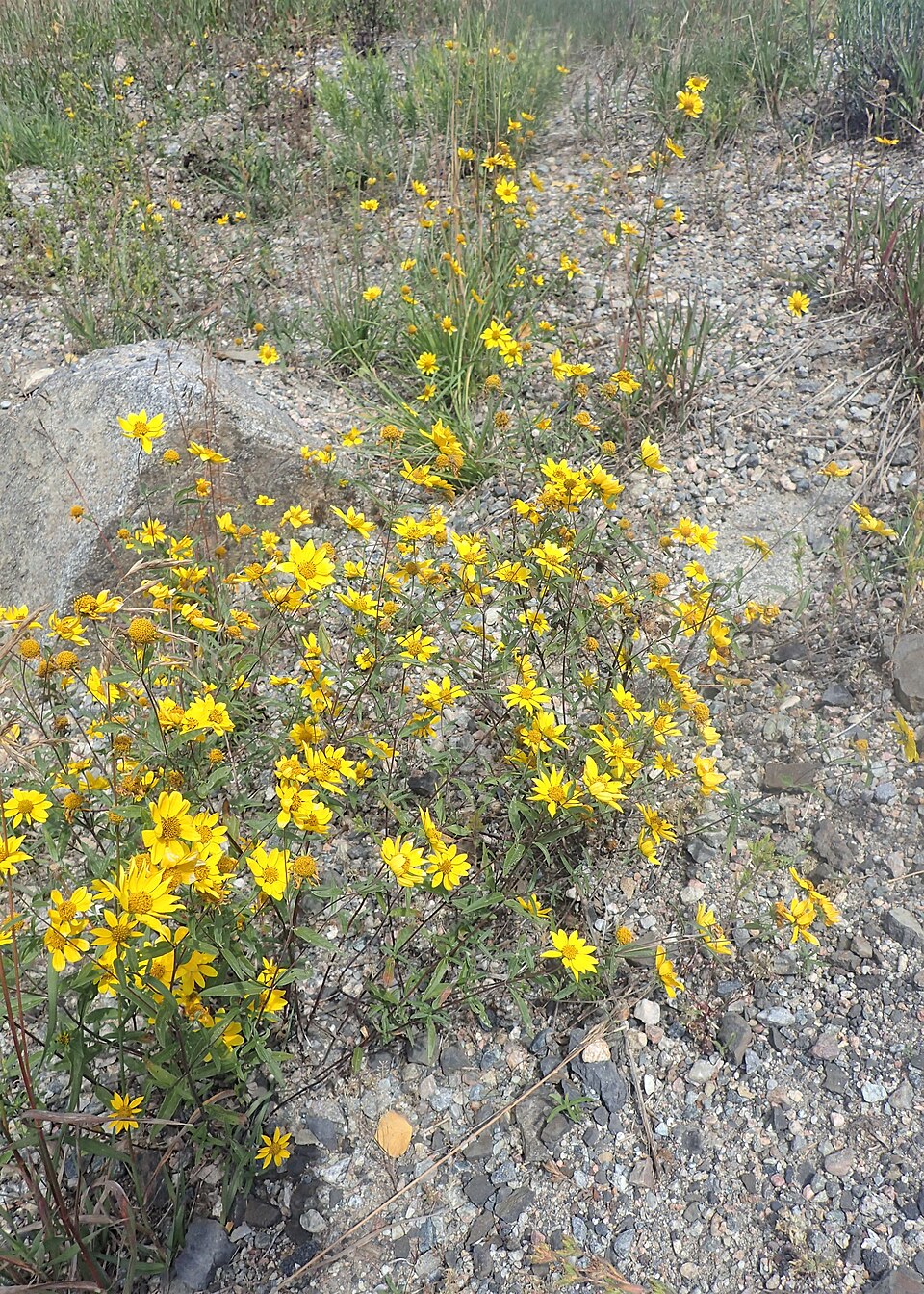
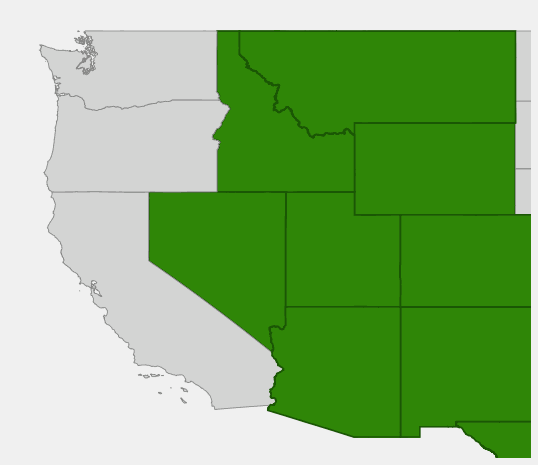
Heliomeris multiflora, commonly known as Showy Goldeneye, is a brilliant, sun-loving wildflower of the Rocky Mountain West that earns its name with clusters of vivid golden-yellow, daisy-like flowers produced in profusion from midsummer through fall. This sturdy perennial forb brightens open hillsides, dry meadows, and rocky mountain slopes across Montana, Wyoming, Colorado, Utah, Nevada, Arizona, New Mexico, and Texas, providing a spectacular display of yellow color at a time when many other wildflowers are fading.
The genus name Heliomeris is derived from the Greek words for “sun” (helios) and “part” (meris), reflecting the plant’s sun-loving nature and its place in the sunflower family (Asteraceae). The species name “multiflora” (many-flowered) is abundantly accurate — established plants can produce dozens to hundreds of flowerheads per season, creating a spectacular floral display that dominates the summer Rocky Mountain landscape. The common name “Goldeneye” refers to the prominent, dark central disc that gives each flower a striking “eye” contrasting with the bright yellow ray petals.
Showy Goldeneye is increasingly popular in native plant horticulture for its long blooming season (July through October), its excellent drought tolerance, its value to pollinators, and its adaptability to a range of Rocky Mountain garden conditions. In the wild, it is a characteristic species of pinyon-juniper woodland edges, open ponderosa pine forests, sagebrush grasslands, and rocky canyon slopes — habitats that correspond well to typical western garden conditions. Its combination of showy flowers, wildlife value, and minimal care requirements make it one of the most rewarding native plants for Montana and Wyoming gardens.
Identification
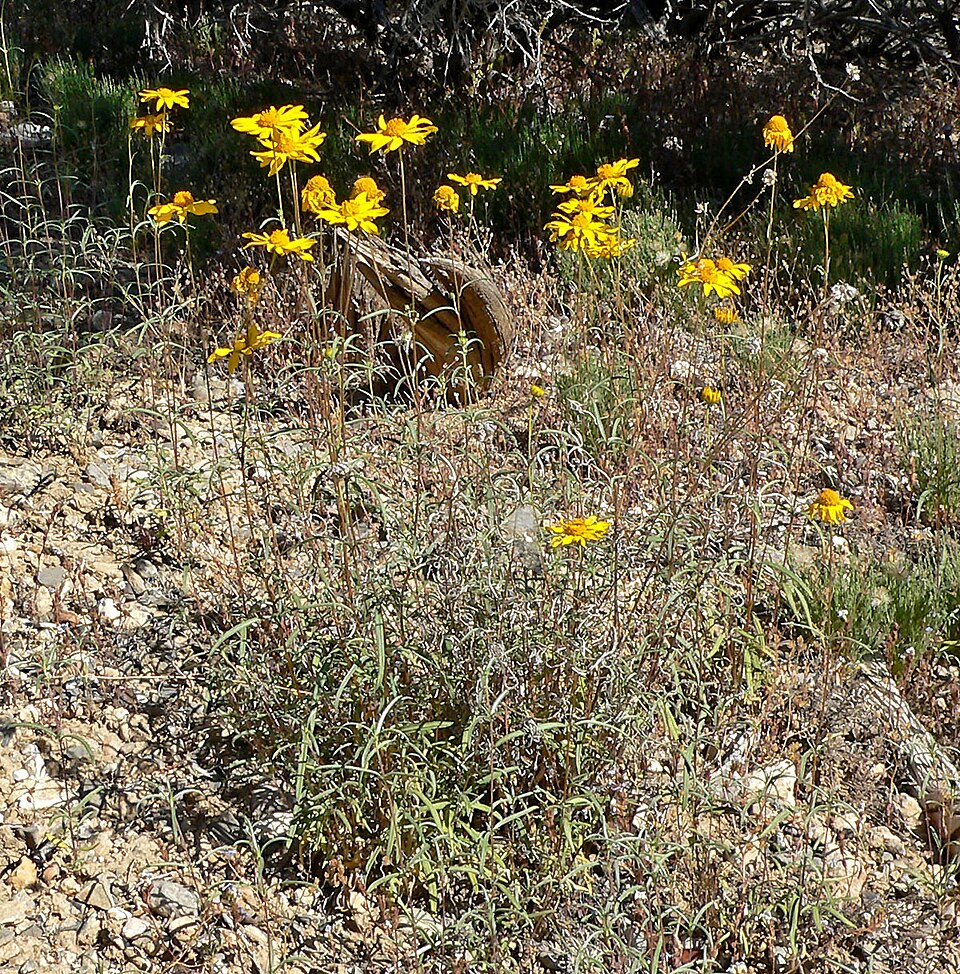
Showy Goldeneye grows as an erect to spreading perennial forb, reaching 2–4 feet (60–120 cm) tall, though garden plants often stay closer to 3 feet. The stems are numerous, branching extensively in the upper portions to produce many flowerheads. The plant has a somewhat bushy appearance at maturity. Stems and leaves are covered with short, stiff hairs, giving the plant a slightly rough texture. The root system includes a taproot and fibrous lateral roots.
Leaves
The leaves are simple, opposite (lower leaves) to alternate (upper leaves), and lanceolate to ovate-lanceolate in shape, typically 1–3 inches (2.5–7.5 cm) long and ½ to 1 inch wide. They are covered with short, stiff hairs on both surfaces, giving them a somewhat rough, sandpapery texture. The leaf margin is entire or with a few coarse teeth. Lower leaves have short petioles; upper leaves are often sessile (stalkless). The dark green leaves provide an excellent backdrop for the brilliant yellow flowers.
Flowers
The flowerheads are daisy-like, 1–1.5 inches (2.5–4 cm) in diameter, with 8–13 bright yellow ray florets (“petals”) surrounding a prominent, dark brown to nearly black central disc (composed of disc florets). The dark, button-like center disc is the “goldeneye” that gives the plant its common name, and it creates a striking visual contrast with the brilliant yellow rays. Flowers are produced in abundance on branching, leafy stems — a single established plant can carry 50–150 flowerheads simultaneously at peak bloom. The blooming period runs from July through October, one of the longest among Rocky Mountain native wildflowers.
Seeds and Fruit
The fruits are small, dry achenes (single-seeded fruits) produced in the central disc after flowering. They are dark, angular, and lightweight, dispersed by wind. The seeds are eagerly consumed by goldfinches, sparrows, and other seed-eating birds through fall and winter. Unlike some composite flowers, Showy Goldeneye does not produce highly fluffy, wind-dispersed seeds — most seeds fall near the parent plant, leading to dense local colonies over time.
Quick Facts
| Scientific Name | Heliomeris multiflora |
| Family | Asteraceae (Daisy/Composite family) |
| Plant Type | Perennial Wildflower / Forb |
| Mature Height | 3 ft (2–4 ft range) |
| Sun Exposure | Full Sun |
| Water Needs | Moderate |
| Bloom Time | July – October |
| Flower Color | Bright yellow with dark brown center disc |
| Soil Type | Sandy to loamy; well-drained; tolerates rocky soils |
| Wildlife Value | High — butterflies, native bees, finches |
| USDA Hardiness Zones | 4–9 |
Native Range
Showy Goldeneye is native to the Rocky Mountain West and adjacent high desert regions, with a range centered on the mountains and intermountain basins from Montana south to Mexico. Its core range includes Montana, Wyoming, Colorado, Utah, Nevada, Idaho, Arizona, New Mexico, and Texas. The species reaches its northwestern limit in Montana and Wyoming, where it is found in the southern and central portions of both states on rocky slopes, open hillsides, and in ponderosa pine parklands.
In Montana and Wyoming, Showy Goldeneye is most common in the western and southern portions of both states, growing on dry, rocky hillsides, in ponderosa pine woodlands and parklands, along canyon walls and talus slopes, and in sagebrush grasslands at moderate elevations. It tends to grow at elevations between 5,000 and 9,000 feet in Wyoming and at lower elevations in southern Montana. The plant is characteristic of the transition zone between sagebrush steppe and mountain meadow communities.
Throughout its range, Showy Goldeneye is typically found in well-drained, sunny sites where summer moisture is moderate but drainage is excellent. It avoids both waterlogged soils and extreme desert conditions, preferring sites with some summer precipitation — reflecting its Rocky Mountain affinity. It often grows on disturbed sites, roadsides, and rocky terrain where competition from taller grasses is reduced, allowing it to dominate visually with its abundant golden blooms in late summer.
📋 Regional plant lists featuring Showy Goldeneye: Montana & Wyoming
Growing & Care Guide
Showy Goldeneye is one of the most rewarding native plants for western gardens — easy to grow, long-blooming, and spectacular in flower. Its adaptability to a range of soils, its drought tolerance once established, and its long flowering season make it an ideal choice for gardeners in Montana, Wyoming, and throughout the Rocky Mountain region seeking low-maintenance, high-impact native plants.
Light
Full sun is essential for Showy Goldeneye — it requires at least 6–8 hours of direct sunlight per day for optimal blooming and plant health. It performs best in the hottest, most open sites in the garden, including south and west-facing slopes where reflected heat is intense. In partial shade, flowering is significantly reduced. The plant is perfectly adapted to the high-intensity, high-altitude sunlight of the Rocky Mountain West.
Soil & Water
Showy Goldeneye thrives in sandy, rocky, or loamy soils with good drainage. It is notably more tolerant of rocky, infertile soils than many other wildflowers — conditions where it actually shines by outcompeting weedy species that struggle in poor soil. Good drainage is critical: the plant will not tolerate waterlogged soil. Once established, Showy Goldeneye has moderate drought tolerance — more than many garden perennials but somewhat less than extreme desert-adapted species. In Montana and Wyoming gardens, it typically needs no supplemental irrigation after establishment in years with normal precipitation. During drought years or in the driest sites, monthly deep watering in summer will maintain plant health and flowering.
Planting Tips
Plant container-grown Showy Goldeneye in spring or early fall. Choose a sunny location with well-drained soil, and if planting in clay soil, incorporate grit or coarse sand to improve drainage. Showy Goldeneye can also be direct-seeded in fall (dormant seeding) or in early spring. Seeds germinate readily without stratification under normal spring conditions. Expect some flowering in the first season from container plants; from seed, expect blooming in the second year. Space plants 18–24 inches apart to allow for spreading.
Pruning & Maintenance
Showy Goldeneye benefits from light pruning or “pinching back” in early summer (June) to promote bushier growth and more abundant flowering later in the season. Cutting plants back by one-third in early summer can extend the blooming season and prevent the plant from becoming leggy. Leave seed heads through winter for bird food and visual interest. Cut plants back to the ground in early spring before new growth begins. Division of established clumps every 3–4 years keeps plants vigorous. Overall maintenance is minimal — the plant is naturally pest- and disease-resistant.
Landscape Uses
Showy Goldeneye is highly versatile in western garden settings:
- Rock gardens and dry slopes — thrives in rocky, challenging sites
- Native wildflower meadows — a standout late-season component
- Pollinator gardens — attracts butterflies, bees, and beneficial insects
- Mixed perennial borders — provides a long season of bright yellow color
- Wildlife habitat planting — seeds attract goldfinches and sparrows
- Roadside and slope stabilization — adaptable to disturbed, rocky conditions
- Xeriscape plantings — moderate water needs suit water-wise gardens
Wildlife & Ecological Value
Showy Goldeneye is an ecologically generous plant, providing food and habitat for a diverse array of wildlife through its long July–October blooming season. Its role as a late-season nectar source is particularly valuable in Rocky Mountain ecosystems, where many other wildflowers have finished blooming by August.
For Birds
The abundant seeds of Showy Goldeneye are consumed by American Goldfinches, Lesser Goldfinches, Pine Siskins, House Finches, and various native sparrows through fall and into winter. The plant’s bushy, multi-stemmed structure provides perching, cover, and nest support for small birds. During the flowering season, the flowerheads attract insectivorous birds hunting the abundant insect visitors — warblers, vireos, and flycatchers all forage around blooming goldeneye patches.
For Mammals
Mule Deer and White-tailed Deer browse Showy Goldeneye foliage occasionally, though it is not a preferred deer food. Pronghorn Antelope also occasionally graze the plant in its native range. The dense stems and foliage provide thermal cover for small mammals such as meadow mice, voles, and chipmunks. The seeds are also consumed by various rodents that forage on the ground beneath the plant in fall and winter.
For Pollinators
Showy Goldeneye’s long blooming season (July–October) makes it one of the most valuable late-season pollinator resources in Rocky Mountain gardens and natural areas. Many native bee species — including bumble bees, sweat bees, mining bees, and long-horned bees — visit the flowers for pollen and nectar. Monarch Butterflies, Painted Ladies, checkerspots, fritillaries, and many skipper species visit for nectar during their fall migration and late-season activity. The abundant flowers support pollinator populations at a time when other nectar sources are becoming scarce.
Ecosystem Role
As a native forb of rocky slopes and open woodlands, Showy Goldeneye contributes to the structural diversity and ecological function of Rocky Mountain plant communities. Its ability to thrive on disturbed, rocky sites makes it an important pioneer species that stabilizes soil and provides early plant cover on eroded hillsides and disturbed terrain. The plant’s abundant flowering and seed production make it a significant contributor to the local food web, supporting insects, birds, and mammals through the critical late-summer and fall period before winter sets in.
Cultural & Historical Uses
Showy Goldeneye has a more limited ethnobotanical record compared to some other Rocky Mountain wildflowers, largely because it is concentrated in the more arid western and southwestern portions of its range, where Indigenous populations were smaller and less intensively documented by early European botanists. Several Southwestern tribes, including various Pueblo peoples of New Mexico and Arizona, used Heliomeris species for ornamental purposes — the bright yellow flowers were used to decorate ceremonial objects and were appreciated for their beauty in the summer landscape.
The plant was collected and described by early botanical explorers of the American Southwest, including members of various U.S. Army survey expeditions in the 1850s–1870s that documented the flora of the Rocky Mountain and Southwest territories. Its abundance on rocky hillsides and canyon walls made it a notable component of the visual landscape described by expedition naturalists. John C. Frémont and John Torrey documented various Heliomeris-type composites during the Great Basin and Rocky Mountain explorations of the 1840s–1850s.
In contemporary ecology and restoration, Showy Goldeneye is recognized as a valuable component of native seed mixes for Rocky Mountain revegetation projects. Its adaptability to disturbed, rocky sites makes it particularly useful for mine reclamation, roadside revegetation, and post-fire recovery planting in the Rocky Mountain region. The plant is included in numerous native plant restoration projects across Montana, Wyoming, Colorado, and other Rocky Mountain states as part of efforts to restore native plant communities following disturbance.
Today, Showy Goldeneye is increasingly available through native plant nurseries specializing in Rocky Mountain plants. Its outstanding combination of showy flowers, long bloom period, wildlife value, and adaptability to western garden conditions is making it one of the most popular native plants for sustainable western landscaping — a well-deserved recognition for a wildflower that has brightened Rocky Mountain hillsides for thousands of years.
Frequently Asked Questions
How long does Showy Goldeneye bloom?
Showy Goldeneye has one of the longest blooming seasons of any Rocky Mountain native wildflower — typically July through October, or up to 4 months. In cooler mountain locations, it may start blooming in late July; in warmer, lower-elevation sites, it often begins in early July. Pinching plants back by one-third in early summer can further extend the bloom period by delaying peak flowering slightly.
Is Showy Goldeneye drought tolerant?
Showy Goldeneye has moderate drought tolerance — better than many garden perennials but somewhat less extreme than species like Dotted Gayfeather or Sulphur Buckwheat. In its native Rocky Mountain habitat, it typically receives 12–18 inches of annual precipitation. Once established in Montana and Wyoming gardens, it usually requires no supplemental irrigation in normal-precipitation years, but benefits from occasional deep watering during extended summer droughts.
Will Showy Goldeneye self-seed in my garden?
Yes, Showy Goldeneye can self-seed modestly when seed heads are left through fall. The seedlings are easily recognized by their characteristic rough, hairy leaves and can be thinned or transplanted as needed. The plant is not aggressive or weedy — self-seeding is gentle and creates naturalistic spreading rather than invasive takeover. Deadheading spent flowers will reduce self-seeding if you prefer to limit spread.
Can I grow Showy Goldeneye in a container?
Showy Goldeneye can be grown in large containers (15+ gallon) with excellent drainage. Use a well-draining native plant potting mix with added perlite or coarse sand. Place in full sun and water regularly (containers dry out faster than garden soil). Plants in containers may not achieve the same vigor as those in-ground, but can provide a season of beautiful blooms on patios, decks, and balconies in the Rocky Mountain region.
What plants pair well with Showy Goldeneye in a native garden?
Showy Goldeneye pairs beautifully with other Rocky Mountain natives that share its sunny, well-drained habitat preferences: Sulphur Buckwheat (Eriogonum umbellatum), Blue Grama (Bouteloua gracilis), Dotted Gayfeather (Liatris punctata), Prairie Coneflower (Ratibida columnifera), Rubber Rabbitbrush (Ericameria nauseosa), and Big Sagebrush (Artemisia tridentata). The combination of yellow (goldeneye), purple (gayfeather, coneflower), and silver-green (sagebrush, buckwheat) creates a spectacular and ecologically authentic Rocky Mountain garden.