Silvery Spleenwort (Deparia acrostichoides)
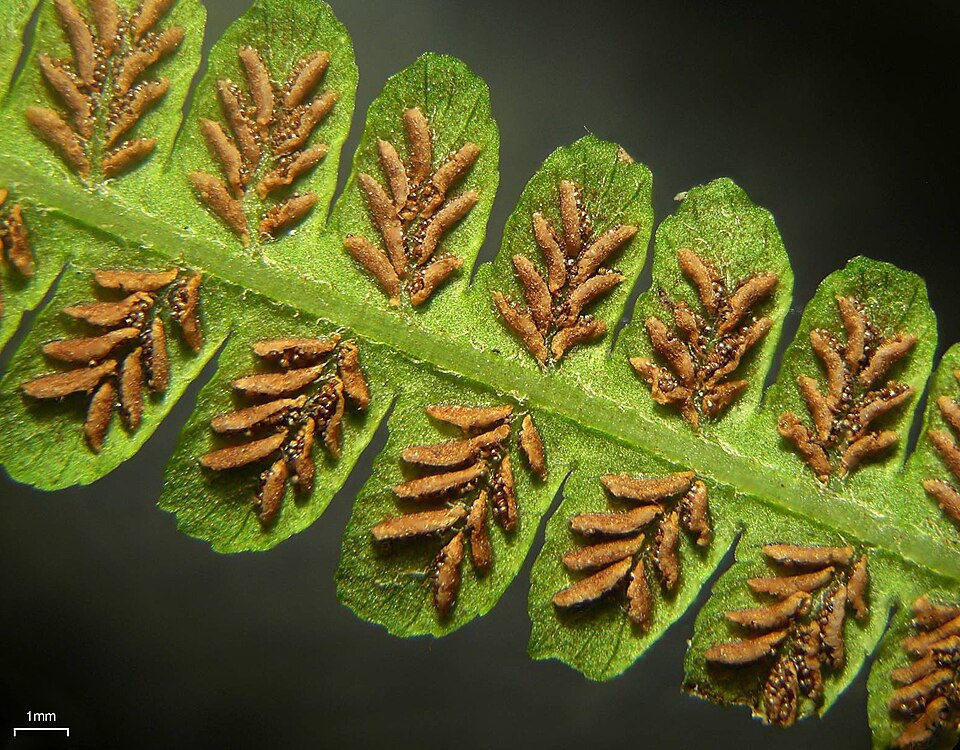
Deparia acrostichoides, commonly known as Silvery Spleenwort or Silvery Glade Fern, is a graceful native fern of rich, moist deciduous woodlands throughout the eastern United States. Its common name comes from one of its most distinctive features: the elongated sori (spore cases) on the undersides of the fronds are covered by silver-white indusia (protective coverings) that catch and reflect light, giving the fertile fronds a sparkling, silvery appearance when viewed from below. This silvery sheen, visible in late summer and fall, makes Silvery Spleenwort one of the more easily identified native ferns.
A member of the Athyriaceae family, Silvery Spleenwort grows 2–3 feet tall with long, once-pinnate-pinnatifid fronds that emerge in a graceful, vase-like cluster. The broad, light green fronds give the plant a lush, tropical appearance in the summer woodland garden. The batch notes correctly identify its requirement for constant moisture and its attractive straw-gold fall color — as temperatures drop in autumn, the fronds transition from green to a warm straw-yellow before dying back to the rhizome for winter.
Silvery Spleenwort occupies the middle ground between wet-site ferns like Cinnamon Fern and dry-site species like Christmas Fern. It thrives in the consistently moist but well-drained soils of rich hardwood slopes, ravine bottoms, and shaded stream margins — the kind of conditions found in the mesic forests of the mid-Atlantic region. For gardeners in Delaware, New Jersey, and New York with moist, shaded garden sites, Silvery Spleenwort offers a beautiful, large-scale native fern with distinctive ornamental features and reliable performance.
Identification
Silvery Spleenwort produces a vase-shaped cluster of long, arching fronds that are once-pinnate-pinnatifid — the frond is divided into pinnae (leaflets), which are in turn shallowly lobed. The fronds are typically 18–36 inches long and 6–12 inches wide, creating a bold, lush appearance in the woodland garden.
Fronds & Pinnae
The fronds are lance-shaped to oblong, widest near the middle, and narrowing toward both ends. The pinnae are somewhat elongated, with bluntly rounded or pointed lobes. The frond color is a fresh, medium to light green above, paler below. In fall, the fronds turn a warm straw-yellow color — distinctive among eastern ferns and helping confirm identification. The frond texture is soft and somewhat delicate compared to the leathery Christmas Fern.
Silvery Sori
The most distinctive feature of Silvery Spleenwort is its sori. On the undersides of fertile pinnae, the elongated sori are arranged in herringbone patterns along the veins. Each sorus is covered by a silver-white indusium (protective flap) that is slightly curved and hooked at one end, giving it a distinctive J-shape. When fresh in summer and fall, these silvery indusia catch the light and create the “silvery” effect that gives the fern its name. This feature is visible without magnification and is diagnostic.
Stipe & Rhizome
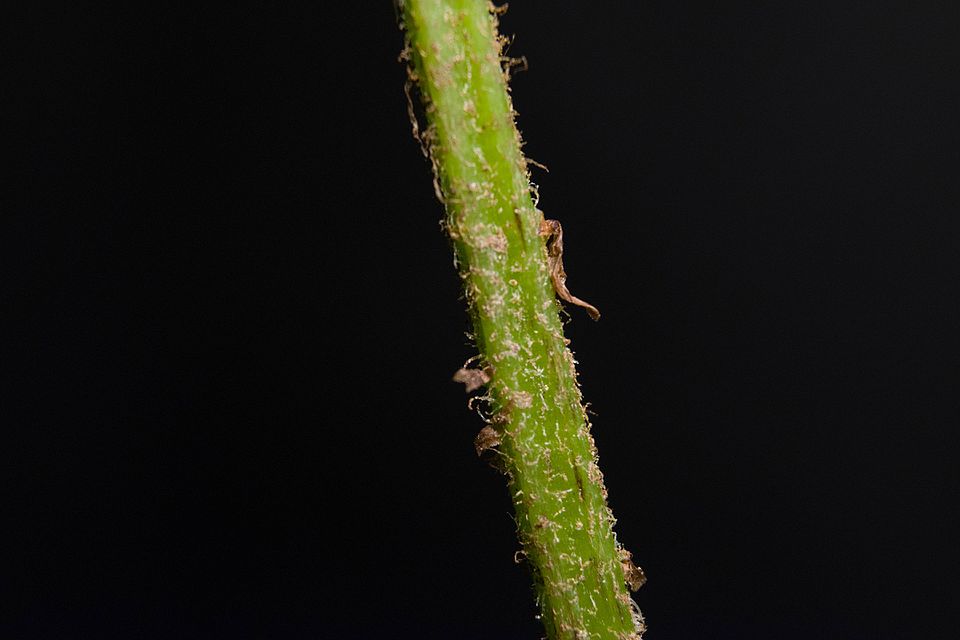
The stipe is relatively short (one-quarter to one-third of the frond length), green to straw-colored, and bears scattered brown scales. The rhizome is stout, short-creeping, and covered with narrow, dark brown scales. The plant grows in loose colonies as the rhizome branches slowly over time.
Quick Facts
| Scientific Name | Deparia acrostichoides |
| Family | Athyriaceae (Lady Fern) |
| Plant Type | Deciduous Fern (Perennial) |
| Mature Height | 2–3 ft |
| Sun Exposure | Full Sun to Full Shade |
| Water Needs | Moderate |
| Bloom Time | N/A (fern — reproduces by spores) |
| Spore Maturity | July – September |
| USDA Hardiness Zones | 4–8 |
Native Range
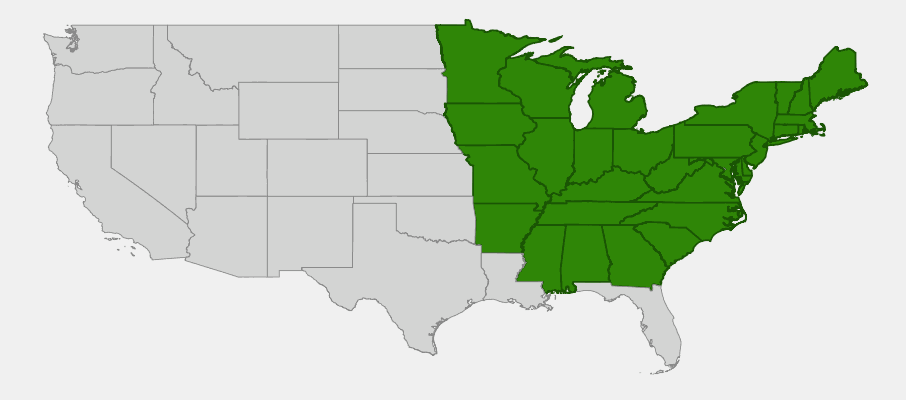
Silvery Spleenwort is native to the eastern United States and southern Canada, ranging from Nova Scotia south to Alabama, Georgia, and South Carolina, and west through the Midwest to Minnesota, Iowa, Missouri, and Arkansas. It is most abundant in the Appalachian region and the mixed mesophytic forests of the Ohio Valley and southern New England, where rich, moist forest conditions support dense populations.
In Delaware, New Jersey, and New York, Silvery Spleenwort occurs in mesic hardwood forests — particularly in shaded ravines, north-facing slopes, and stream corridors where consistent moisture and rich soils prevail. The batch notes that it “needs constant moisture” — in the field this is reflected in its absence from dry ridges and slopes, and its concentration in topographically sheltered, moisture-retaining sites.
Silvery Spleenwort often grows alongside other indicators of rich, moist forest: Wild Ginger, Bloodroot, Trout Lily, Blue Cohosh, and Maidenhair Fern. Its presence is a reliable indicator of undisturbed, high-quality mesic forest soil, and it is often found in the same habitats as Maidenhair Fern and Christmas Fern, creating diverse fern assemblages on suitable north-facing or stream-adjacent slopes.
📋 Regional plant lists featuring Silvery Spleenwort: Delaware, New Jersey & New York
Growing & Care Guide
Silvery Spleenwort requires consistent moisture and shade but is otherwise undemanding and easy to grow in appropriate garden conditions.
Light
Silvery Spleenwort tolerates a wide range of light conditions from full sun to full shade, but performs best in part to full shade with consistent moisture. In sunny locations, it requires wet soils or frequent irrigation to prevent wilting. In shade with adequate moisture, it produces its largest, most ornamental fronds.
Soil & Water
Constant moisture is essential — this is the most important requirement. Silvery Spleenwort does not tolerate drought. It prefers moist, well-drained, humus-rich soil with a slightly acidic pH (5.5–6.5). Amend with compost or leaf mold before planting. Mulch heavily with organic material to retain moisture. In drier sites, plant near a water source or irrigation system.
Planting Tips
Plant in spring or fall. Space plants 18–24 inches apart for naturalistic effect. They spread slowly by rhizome to form loose colonies. The crown should be at or just below soil level. Excellent as a mass planting beneath large shade trees where regular leaf litter keeps soil moist and enriched.
Pruning & Maintenance
Remove old fronds in late winter or early spring before new growth emerges. The warm straw-fall color is attractive and can be left through early winter. No serious pest or disease problems. Slugs may be a minor issue — address with copper barriers or diatomaceous earth if necessary.
Landscape Uses
- Woodland understory — excellent large-scale groundcover in shade
- Stream bank planting — thrives at moist, shaded water’s edge
- Shade garden feature — bold texture and silvery sori add interest
- Wildflower companion — pairs well with spring ephemerals
- Rain garden (shaded) — handles periodic wet conditions well
Wildlife & Ecological Value
Silvery Spleenwort contributes to the diverse fern layer of eastern deciduous forests and supports the woodland invertebrate community that underpins forest food webs.
For Birds
The large fronds of Silvery Spleenwort provide low ground cover for forest-floor birds including Wood Thrush, Hermit Thrush, Ovenbird, and various warblers. The moist soil beneath dense fern colonies supports earthworms, beetles, and other invertebrates that are critical food resources for ground-foraging songbirds.
For Mammals
Like other forest ferns, Silvery Spleenwort provides shelter for small mammals and amphibians. Salamanders — particularly Red-backed Salamanders — shelter beneath the fronds and in the moist leaf litter under fern colonies. The diverse invertebrate community supported by fern habitats provides food for shrews, moles, and other insectivorous mammals.
For Pollinators
As a fern, Silvery Spleenwort does not produce flowers or nectar. However, the moist, shaded microhabitat it creates supports moisture-dependent invertebrates that contribute to forest biodiversity.
Ecosystem Role
Silvery Spleenwort is a characteristic component of rich mesic forest communities. As an indicator species of high soil quality and consistent moisture, its presence signals ecologically valuable habitat. The fern contributes to soil building through its leaf litter, helps retain moisture on slopes, and participates in the complex mycorrhizal networks of the forest floor that connect and support the entire plant community.
Cultural & Historical Uses
The spleenworts as a group (historically including many fern genera now reclassified) were used medicinally in both Indigenous American and European herbal traditions for treating ailments thought to involve the spleen — a reflection of the ancient “doctrine of signatures” that held that plants with a certain shape, color, or location could treat the organ they resembled. The common name “spleenwort” thus derives from this historical medicinal association rather than from any proven efficacy.
Various Indigenous peoples of eastern North America used fern preparations from the Deparia/Athyrium group medicinally, though specific ethnobotanical records for Deparia acrostichoides are limited. The Cherokees and other Appalachian nations used related ferns to make hair washes and treatments for hair loss — a use similar to that documented for Maidenhair Fern. Some preparations were used as mild diuretics or to treat kidney and bladder complaints.
In contemporary native plant gardening, Silvery Spleenwort is appreciated for its distinctive silvery sori, its large, bold fronds that add texture to the shade garden, and its reliable performance in moist woodland conditions. It is increasingly available from native plant nurseries as interest in woodland ferns has grown. The fern was historically classified in the genus Athyrium (as Athyrium thelypterioides) and may still be found under that name in older references.
Frequently Asked Questions
What makes Silvery Spleenwort look “silvery”?
The silvery appearance comes from the sori (spore cases) on the undersides of fertile fronds. Each sorus is covered by a silver-white, elongated indusium (protective covering) that reflects light. When you turn a fertile frond over in late summer, the herringbone pattern of silvery indusia is one of the most beautiful and distinctive sights in native fern identification.
Is Silvery Spleenwort the same as Lady Fern?
No — while both are in the Athyriaceae family and somewhat similar in appearance, they are different species. Lady Fern (Athyrium filix-femina) has more finely divided, bipinnate-pinnatifid fronds, while Silvery Spleenwort has once-pinnate-pinnatifid fronds. Lady Fern also has curved sori (like a J or horseshoe), while Silvery Spleenwort’s are more elongated and straight.
How much moisture does Silvery Spleenwort need?
It needs consistent moisture — this is its primary cultural requirement. “Constant moisture” means the soil should never become completely dry. It is best suited to sites near streams, in low-lying areas, on north-facing slopes, or where regular irrigation is possible.
What is the fall color of Silvery Spleenwort?
Silvery Spleenwort turns a warm, attractive straw-yellow in fall before dying back for winter. This color is distinctive and can help confirm identification in autumn when identification can otherwise be challenging as fronds deteriorate.
How is it different from other spleenworts?
The “true” spleenworts (genus Asplenium) are mostly small, rock-dwelling ferns with simple or once-pinnate fronds. Silvery Spleenwort is a much larger, forest-floor fern that was formerly classified with the spleenworts but is now in genus Deparia. Its large size, moist habitat preference, and distinctive silvery sori set it apart from any Asplenium.

Looking for a nursery that carries Silvery Spleenwort?
Browse our native plant nursery directory: Delaware · New Jersey