Slender Hairgrass (Deschampsia elongata)
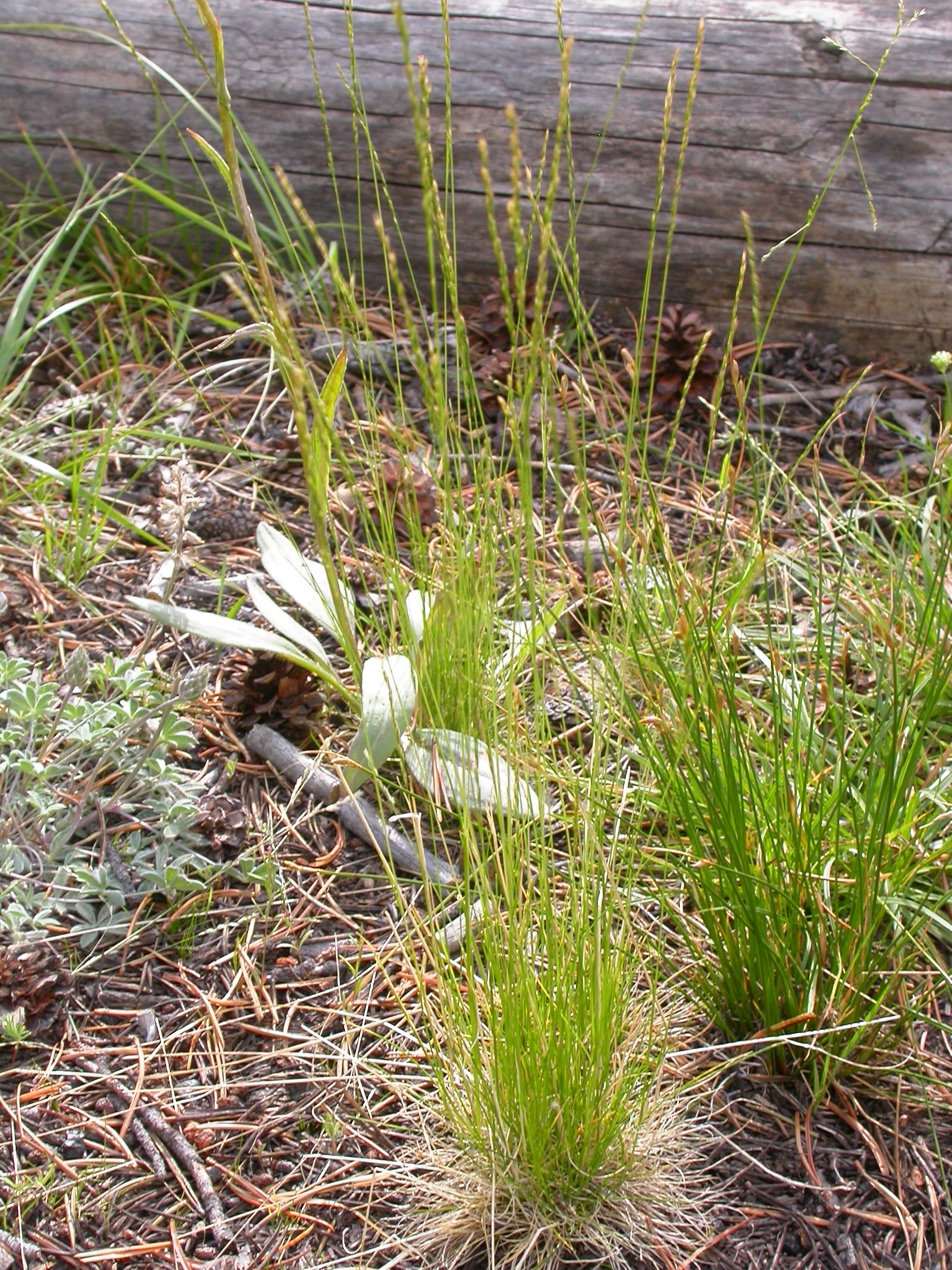
Deschampsia elongata, commonly known as Slender Hairgrass or Elongated Hairgrass, is a graceful, cool-season perennial bunchgrass native to the western United States, ranging from Arizona and New Mexico north through the Rocky Mountain states to the Pacific Coast and beyond. Unlike many grasses that are coarse and rigid, Slender Hairgrass is fine-textured and genuinely delicate, forming narrow, upright clumps of slender, bright green culms that terminate in loose, open, shimmering panicles of tiny flowers and seeds in fall. The overall effect is airy and gossamer — a grass that catches and scatters light rather than blocking it.
This species belongs to a broadly distributed genus that includes the widely cultivated Tufted Hairgrass (Deschampsia cespitosa), but Slender Hairgrass is distinctly narrower and more slender — its common name references both its form (narrow culms) and its taxonomic name (elongata = elongated). It favors moist to moderately moist sites in shade or partial shade, growing naturally in canyon bottoms, along stream margins, in moist meadow edges, and in the understory of riparian woodlands. Its fall blooming period, noted in the batch data, makes it one of the later-flowering native grasses in Arizona — providing texture, movement, and seed resources into the autumn months when other grasses have already gone dormant.
Slender Hairgrass is a valuable addition to native plant gardens throughout the western United States wherever conditions are not too hot and dry — it requires adequate moisture and appreciates some shade from the intense desert sun. It is particularly well-suited to rain garden edges, bioswales, moist slope plantings, and shaded courtyard gardens in the cooler sky island and mountain foothill regions of Arizona. Its fine texture contrasts beautifully with bold-leaved succulents and broad-leaved perennials, providing a naturalistic, soft counterpoint in native plantings.
Identification
Slender Hairgrass is a loosely tufted perennial bunchgrass forming small to medium clumps 18 to 30 inches tall. The individual culms (stems) are extremely slender and fine — almost hair-like, hence the common name — and stand more or less erect though often gently arching at the tip. The clumps are relatively narrow and upright compared to many other native grasses.
Leaves
The leaf blades are very narrow (1–2 mm wide), flat to involute (rolled inward), and bright to medium green. They are smooth or very slightly rough to the touch. The leaves emerge from the base of the plant and from the nodes of the culms, sheathing the stem for much of their length before the blade diverges. The texture of the foliage is fine and soft — more like hair than typical grass blades. The ligule (the membrane at the junction of leaf sheath and blade) is membranous and elongated — a useful technical identification character.
Flowers and Seeds
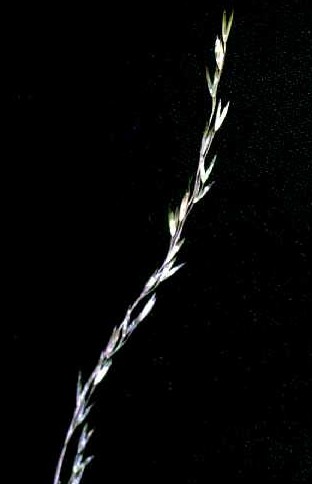
The most distinctive feature of Slender Hairgrass is its inflorescence: a loose, elongated panicle of small, shimmering spikelets borne on very fine, hair-like branches. Each spikelet contains two small florets, and each floret has a short, straight awn (bristle) projecting from the lemma. The panicle is 4 to 12 inches long, narrow, and somewhat drooping or nodding at the tip. When backlit, the panicles glow with a silver-bronze iridescence that is one of the most beautiful effects in the native grass palette. Flowering occurs in fall (August–October in Arizona), later than most other native grasses. The seeds are small and nutritious, eagerly consumed by small birds.
Quick Facts
| Scientific Name | Deschampsia elongata |
| Family | Poaceae (Grass) |
| Plant Type | Perennial Bunchgrass (cool-season) |
| Mature Height | 2.5 ft |
| Sun Exposure | Part Shade |
| Water Needs | Moderate |
| Bloom Time | Fall (August – October) |
| Flower/Seed Color | Silver-bronze panicles |
| USDA Hardiness Zones | 5–9 |
Native Range
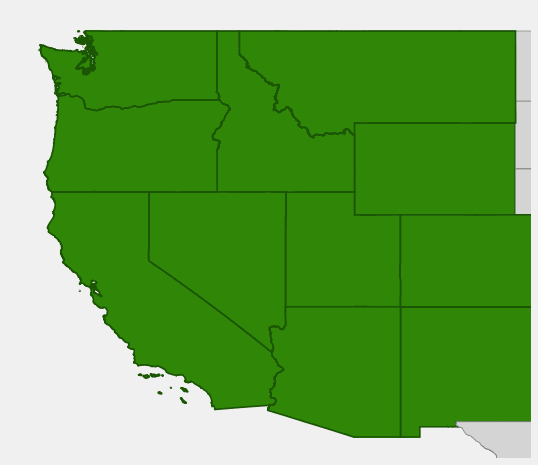
Slender Hairgrass is native to western North America, with a broad distribution from Alaska south to California and Arizona, extending east to the Rocky Mountain states of Colorado, Idaho, Montana, Nevada, New Mexico, Oregon, Utah, Washington, and Wyoming. In Arizona, it occurs primarily at middle to higher elevations in the mountain ranges — the sky islands of the southeast, the Mogollon Rim region, and the White Mountains — where adequate moisture and cooler temperatures prevail. It is uncommon in the low desert zones of the state.
Within its range, Slender Hairgrass favors moist, shaded to partially shaded habitats: canyon bottoms with seeps or springs, the margins of perennial and intermittent streams, moist meadow edges, and the sheltered north-facing slopes of mountain foothill zones. It often grows in association with riparian shrubs (willows, alders), moist-site perennials (rushes, sedges, monkeyflowers), and the understory of oak and sycamore woodlands. The species tolerates periodic flooding and saturated soils better than most grasses, making it a natural component of Arizona’s mountain stream communities.
Slender Hairgrass is adapted to the seasonally dry climate of the western US through its cool-season growth strategy — it remains relatively dormant or slow-growing during the hot, dry summer months, then blooms in fall when temperatures moderate and the summer monsoon brings additional moisture. This fall-flowering phenology distinguishes it from most warm-season native grasses of the Southwest, which flower in spring and summer.
📋 Regional plant lists featuring Slender Hairgrass: Arizona
Growing & Care Guide
Slender Hairgrass is an excellent choice for gardeners in cooler, moister parts of Arizona — the sky island foothills, the Mogollon Rim country, higher-elevation Tucson neighborhoods, and similar transitional climates. In the low desert, it is better suited to shaded, irrigated areas such as patios, courtyards with filtered shade, and rain gardens. The key to success is providing adequate moisture and protection from the most intense afternoon sun.
Light
Part shade to light shade is ideal. Slender Hairgrass evolved in the sheltered, partially shaded environments of canyon bottoms and stream margins, and it performs best with morning sun and afternoon shade in warm climates. In full sun, it may persist but growth is stunted and the foliage often bleaches or browns. In cooler mountain climates, it can tolerate more sun as long as soil moisture is adequate. An east-facing exposure or dappled shade under an oak or sycamore tree is ideal.
Soil & Water
Unlike most native grasses of the Southwest, Slender Hairgrass prefers consistently moist soil. It naturally grows in wet canyon habitats and tolerates periodic flooding. In garden settings, plant in average to moist, well-drained soil and water regularly during the establishment period and through the growing season. Once established, it tolerates moderate dry periods but will go dormant or look stressed if soil dries out completely for extended periods. It grows well in rain garden margins where periodic inundation is followed by good drainage.
Planting Tips
Plant in spring or fall. Space plants 18 to 24 inches apart for a natural, flowing effect, or closer together for a denser groundcover-like appearance. Mulch with organic material (leaf litter, wood chips) to retain soil moisture and moderate temperature. The cool-season growth habit means the plant will be most active and attractive in spring and fall, often looking tired in the hottest summer months — this is normal and the plant will recover with autumn temperatures.
Pruning & Maintenance
Slender Hairgrass requires minimal maintenance. Cut back the clumps to a few inches above the ground in late winter or very early spring before new growth begins. This removes spent flower stalks and old leaves, allowing fresh new growth to emerge cleanly. Divide clumps every 3–5 years in spring to prevent center die-out and rejuvenate the planting. The plant self-seeds moderately — seedlings can be transplanted or thinned as desired.
Landscape Uses
- Riparian garden edges and streamside plantings
- Rain garden and bioswale margins where periodic moisture is available
- Shaded courtyard garden and patio planting
- Native grass meadow in cooler, moister climate zones
- Understory planting beneath oaks, sycamores, and other native trees
- Erosion control on moist, shaded slopes
- Container gardening in partially shaded locations
Wildlife & Ecological Value
Slender Hairgrass contributes to the ecological health of riparian and moist woodland habitats through multiple pathways, benefiting birds, insects, and soil communities.
For Birds
The fall-ripening seeds of Slender Hairgrass are consumed by a variety of small seed-eating birds — sparrows, juncos, finches, and towhees are among the most likely consumers. The fall blooming period is strategically timed to provide seed resources during the autumn migration period, when many birds are building fat reserves for long-distance travel. The dense clumps also provide shelter and nesting cover for ground-nesting birds in moist riparian habitats.
For Insects
Native grasses generally provide larval habitat for a range of moth and butterfly caterpillars that are grass-feeders (skippers and certain moths). The dense foliage base provides shelter for ground-dwelling insects, spiders, and other invertebrates that are important food resources for insectivorous birds and amphibians in riparian habitats. The small flowers attract tiny native bees, midges, and other small pollinators.
Ecosystem Role
As a component of riparian and moist meadow plant communities, Slender Hairgrass contributes to the ecological stability of stream margins and canyon bottoms. Its root system helps stabilize stream banks and moist slopes against erosion, reducing sediment input into streams. The clumps create microhabitat for soil organisms and decomposers. In restored riparian plantings, native grasses like Slender Hairgrass help fill the herbaceous layer between shrubs and provide the ecological functions — seed production, ground cover, insect habitat — that support the overall food web of the riparian corridor.
Cultural & Historical Uses
Slender Hairgrass, like many native grasses of the western mountains, was known and used by Indigenous peoples of its range, though the specific documentation of uses for this particular species is less extensive than for more prominent food plants. Native grasses generally served as important food sources (seeds ground into flour or used whole in mush and cakes), basket weaving materials, thatching for shelters, and rough cordage for binding and weaving. The fine, silky culms of Deschampsia species were likely used in fine basketry and ornamental weaving where their delicate texture could be appreciated.
In the broader ecological context, native grasses were recognized by Indigenous land managers as indicators of healthy, well-watered land. The presence of moisture-loving grasses like Slender Hairgrass along canyon bottoms signaled reliable water sources for camps, agricultural water for irrigation, and productive habitat for game and edible plants. Indigenous management of riparian corridors — through selective burning, weeding of invasive plants, and careful harvesting — maintained the diverse native grass communities that supported both human populations and the wildlife they depended on.
Today, Slender Hairgrass is used primarily in native plant restoration projects targeting riparian zones and moist meadow habitats in the western United States. It is included in seed mixes for stream bank stabilization and riparian revegetation projects. Its delicate beauty is increasingly appreciated by gardeners who work in cooler, moister Arizona environments — the sky island foothills, Prescott region, Flagstaff area, and higher Tucson neighborhoods where its moisture requirements can be met more easily. Native grass enthusiasts prize it for its fine texture, fall interest, and its role in a diverse, ecologically rich native plant community.
Frequently Asked Questions
Can Slender Hairgrass survive in the low desert?
With careful management, yes — but it requires significant shade and regular irrigation, as the low desert is hotter and drier than its natural habitat. In shaded, irrigated courtyard gardens in Phoenix or Tucson, it can survive, but it will not thrive as it does at higher elevations. For low-desert sites, consider whether a native grass better adapted to low-desert conditions (such as Sacaton or Blue Grama) would be a more appropriate choice.
When does Slender Hairgrass bloom in Arizona?
In Arizona, Slender Hairgrass blooms in fall — typically August through October — which is later than most other native grasses. This fall-blooming phenology makes it a useful addition to the native garden for extending the season of interest. The shimmering silver-bronze panicles are at their most beautiful when backlit by the low autumn sun.
Is Slender Hairgrass the same as Tufted Hairgrass?
No — they are closely related but distinct species. Tufted Hairgrass (Deschampsia cespitosa) is much larger and more robust (2–4 feet tall), forms wider, denser clumps, and is more widely cultivated as an ornamental. Slender Hairgrass is notably narrower and more delicate in all its parts. Both are native to parts of western North America, but their habitat preferences differ — Tufted Hairgrass is more tolerant of wetter conditions and is common in mountain meadows and high-altitude wetlands.
How do I propagate Slender Hairgrass?
By seed or by division of established clumps. Seeds can be collected in fall when the panicles begin to shatter (individual florets detach easily) and sown immediately outdoors or cold-stratified and sown in spring. Division of established clumps is straightforward — dig the clump in spring, divide into sections of 5 or more culms, and replant immediately in moist soil. Divisions establish quickly with adequate water.
What other native grasses can I pair with Slender Hairgrass?
For a riparian or moist-site native grass garden in Arizona, Slender Hairgrass pairs beautifully with Arizona Muhly (Muhlenbergia arizonica), Spike Muhly (Muhlenbergia wrightii), Deer Grass (Muhlenbergia rigens), and Inland Saltgrass (Distichlis spicata). For a fine-textured, shaded groundcover effect, combine it with Wood Sorrel (Oxalis species), Maidenhair Fern, and native sedges.

Looking for a nursery that carries Slender Hairgrass?
Browse our native plant nursery directory: Arizona