Snakeweed (Gutierrezia sarothrae)
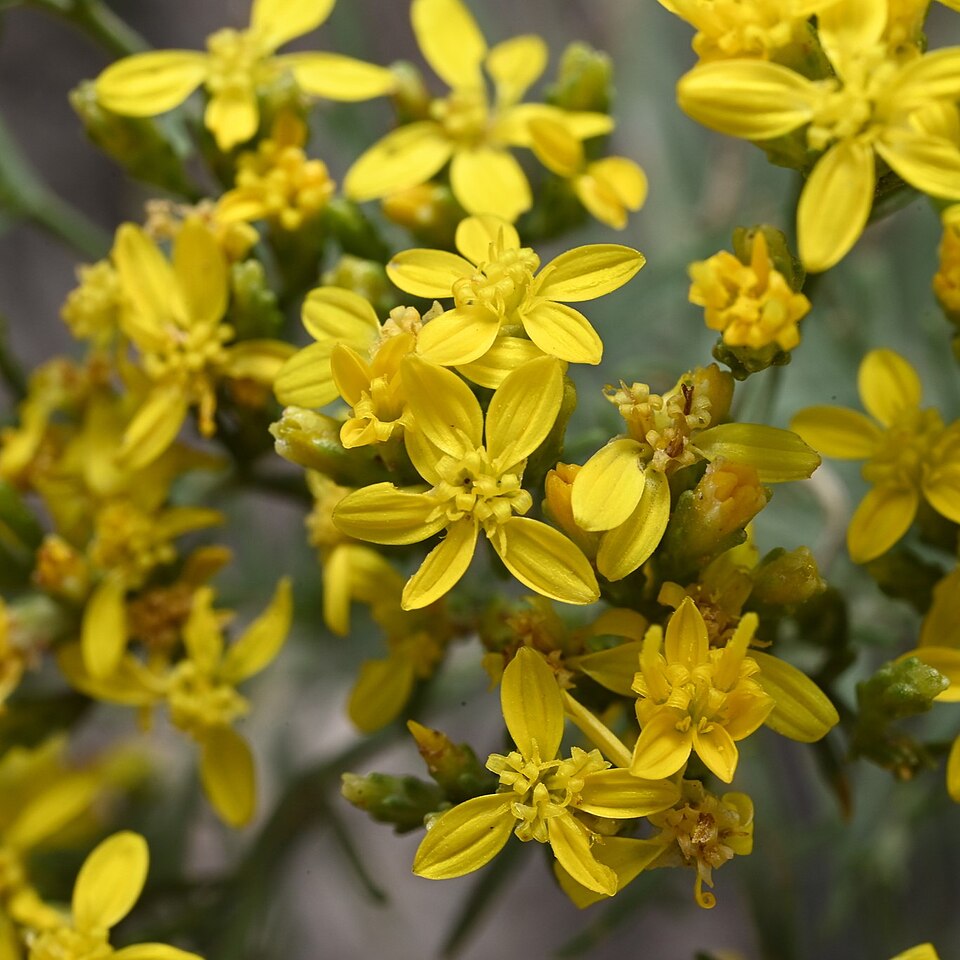
Gutierrezia sarothrae, commonly known as Snakeweed, Broom Snakeweed, or Broomweed, is a widespread and extremely tough native subshrub of the arid and semi-arid West that covers large areas of open rangeland, desert grassland, and desert scrub with a brilliant yellow bloom each fall. Growing just 1 to 2 feet tall but spreading by the millions across open landscapes, Snakeweed transforms the desert grassland into a sea of yellow each autumn — one of the most dramatic seasonal spectacles of the American Southwest, comparable in impact to the spring wildflower blooms of the California desert.
Native across an enormous geographic range from the Great Plains west to the Pacific Coast and from Canada south into Mexico, Snakeweed is one of the most abundant and widely distributed plants in the western United States. Its prevalence is closely linked to the condition of surrounding rangeland — heavy grazing that removes native perennial grasses creates conditions in which Snakeweed proliferates, sometimes to the point of near-monoculture dominance on heavily degraded lands. However, in balanced native plant communities, Snakeweed is an important component of the desert grassland flora, providing valuable fall nectar and pollen resources for pollinators and seeds for wildlife.
For gardeners, Snakeweed offers an unusual combination of extreme drought tolerance, bright fall color, and exceptional pollinator value. Its bright yellow fall bloom coincides with the monarch butterfly migration through the Southwest, making it a valuable late-season nectar source. The plant requires essentially no care once established and thrives on the most challenging desert soils, making it an excellent choice for erosion control, habitat restoration, and low-maintenance native ground cover in rocky, dry conditions.
Identification
Snakeweed is a low, rounded, woody-based subshrub with narrow, linear leaves and masses of tiny, bright yellow flower heads at the branch tips in fall. It has the overall appearance of a small broom or groundcover plant when not in bloom, becoming dramatically transformed when covered with yellow flowers from late summer through fall. The genus name Gutierrezia honors Pedro Gutérrez, an early 19th-century Spanish botanist.
Habit & Stems
Snakeweed forms a low, rounded mound 1 to 2 feet tall and equally wide. The base is woody and persistent; the upper stems are semi-herbaceous to herbaceous and die back partially in cold winters. The overall appearance is of a small, dense, many-branched subshrub or sub-shrub. Stems are green, slender, and resinous, with a distinctive sticky feel and a pleasant, resinous scent when handled. The plant can live for several decades as an individual but populations are dynamic — plants may die out in unfavorable years and reestablish from the seed bank.
Leaves
Leaves are very narrow, linear, 0.5 to 1.5 inches long and less than 1/8 inch wide, dark green, resinous, and alternately arranged. They are slightly sticky to the touch and aromatic when crushed, releasing a pungent, resinous scent. The leaves are essentially evergreen in mild climates, persisting year-round with some winter dieback in colder areas. The narrow form reduces water loss in the arid environments where Snakeweed thrives.
Flowers & Seeds
The flowers are the plant’s outstanding feature — from late summer through fall, the branch tips are covered with masses of tiny, composite flower heads, each about 1/4 inch across with 3 to 8 yellow ray florets and 2 to 6 yellow disc florets. Individual flower heads are small but produced in such profusion that the plant appears completely covered in yellow from a distance. The flowers produce a honey-like fragrance that is detectable from several feet away and is attractive to a wide range of pollinators. After flowering, the small achene seeds disperse by wind — each attached to a small pappus of scales that aids in dispersal. Seeds are tiny and produced in enormous quantities.
Quick Facts
| Scientific Name | Gutierrezia sarothrae |
| Family | Asteraceae (Aster / Composite) |
| Plant Type | Perennial Subshrub |
| Mature Height | 1.5 ft |
| Sun Exposure | Full Sun |
| Water Needs | Low (Drought Tolerant) |
| Bloom Time | August – October |
| Flower Color | Bright yellow |
| USDA Hardiness Zones | 4–10 |
Native Range
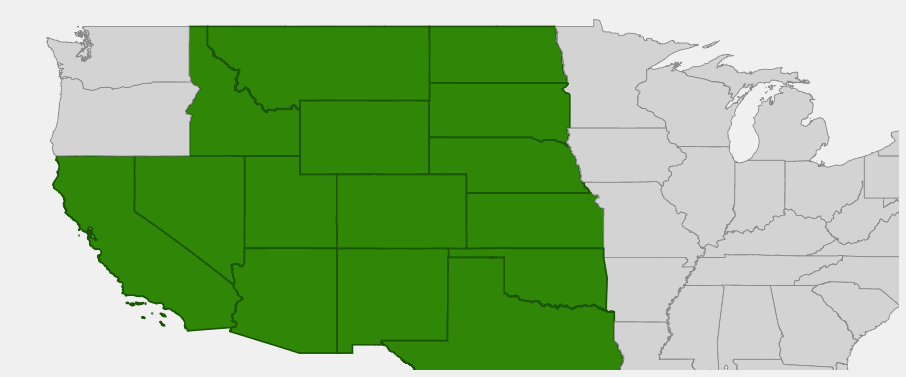
Snakeweed (Gutierrezia sarothrae) has one of the largest ranges of any native plant in the American West, occurring from British Columbia south through the entire western United States to Mexico, and east across the Great Plains to Minnesota and Texas. Within this vast range, it is most abundant in the semi-arid grassland, desert grassland, and shrubland communities of the intermountain West and Great Plains — roughly corresponding to the 8- to 20-inch annual precipitation zone. It is one of the most common and recognizable plants on Arizona’s open rangelands and desert grasslands.
Within Arizona, Snakeweed occurs throughout the state from about 1,500 to 7,000 feet elevation, on a wide variety of soil types from sandy desert plains to clay-rich mountain grassland soils. It is particularly abundant in grazed rangeland where the removal of competing perennial grasses allows it to expand. In undisturbed native plant communities, it is present but less dominant, coexisting with native grasses, desert shrubs, and wildflowers. It commonly occurs on rocky slopes, mesas, desert plains, roadsides, and disturbed areas throughout the state.
The abundance of Snakeweed on a given piece of rangeland is often used as an indicator of range condition — heavy Snakeweed dominance typically indicates overgrazing or other significant disturbance. This “increaser” status (increasing under disturbance) makes it ecologically important as a ground-covering pioneer on disturbed sites, but its dominance can also indicate that restoration efforts to rebuild native perennial grass communities are needed. In areas where grazing pressure is reduced and native grasses are given the opportunity to recover, Snakeweed populations typically decline as grass competition increases.
📋 Regional plant lists featuring Snakeweed: Arizona
Growing & Care Guide
Snakeweed is one of the toughest and most adaptable native plants for dry, rocky, disturbed soils in Arizona. It requires virtually no care once established, tolerates extreme drought and heat, and rewards with a spectacular fall yellow bloom that provides important pollinator support during the monarch butterfly migration season.
Light
Full sun is essential. Snakeweed is an open-habitat plant that requires maximum sun exposure. In shade, it becomes sparse and lanky and produces few flowers. Choose the sunniest, most exposed location in your garden. It handles intense reflected heat from walls and paving without difficulty.
Soil & Water
Snakeweed tolerates the widest range of soils of virtually any native plant — from pure sand to heavy clay, acidic to alkaline, rocky to compacted. Its primary requirement is reasonable drainage; standing water will kill it. Once established, it is extremely drought tolerant, surviving on as little as 8 inches of annual rainfall. Most established plants in Arizona need no supplemental irrigation. During the establishment period (first season), water every 2 to 4 weeks in summer. After that, rainfall-only is usually sufficient.
Planting Tips
Snakeweed is most economically established from seed. Broadcast seed in fall on bare or lightly scarified soil. Seeds germinate readily with fall moisture. Container plants are available from some native plant nurseries and establish quickly. Space plants 2 to 3 feet apart. The plant grows quickly and will begin blooming in the first or second year from seed.
Pruning & Maintenance
Minimal maintenance is needed. Old growth can be cut back in early spring to encourage compact, fresh new growth. The plant will resprout vigorously from the woody base. Light burning where safe mimics natural fire disturbance and stimulates vigorous regrowth. Snakeweed is essentially pest-free and extremely tolerant of drought and heat. It is a truly set-and-forget native plant.
Landscape Uses
Snakeweed is effective for:
- Slope and erosion control on dry, rocky ground
- Mass planting for dramatic fall yellow color
- Wildlife habitat — outstanding pollinator plant for fall butterflies and bees
- Xeriscape and rock gardens
- Disturbed site revegetation
- Desert grassland restoration mixes
- Monarch butterfly waystation gardens
Wildlife & Ecological Value
Snakeweed provides exceptional fall pollinator habitat and seed resources for a wide range of wildlife species, playing a critical ecological role during the late-season window when many other native plants have finished blooming.
For Butterflies
The fall bloom of Snakeweed coincides with the peak of monarch butterfly migration through the Southwest, and the abundant, accessible yellow flowers are readily visited by monarchs, queens, painted ladies, skippers, and many other migrating and resident butterfly species. The bright yellow color and honey-like fragrance make Snakeweed highly attractive to butterflies seeking late-season nectar to fuel migration or overwintering. In areas where Snakeweed is abundant, it can support dense concentrations of migrating butterflies during peak migration in September and October.
For Bees
Native bees — including Bumblebees, Sweat Bees, Alkali Bees, and various other species — visit the flowers extensively in fall, collecting pollen and nectar to provision late-season nests. Honeybees are also frequent visitors. The late-season bloom timing is particularly valuable for native bee populations that are rearing their final generation of the year and require abundant late-season nectar and pollen resources.
For Birds
The small achene seeds of Snakeweed are eaten by a variety of seed-eating birds including Horned Larks, Lark Buntings, and various sparrows. The low, spreading growth of Snakeweed provides ground-level cover for sparrows and other small birds foraging for seeds and insects in the grassland.
Ecosystem Role
In desert grassland ecosystems, Snakeweed plays a complex ecological role. On disturbed ground, it is an important pioneer species that provides rapid soil cover and prevents erosion while native grasses recover. On healthy rangeland, it contributes to plant community diversity and provides late-season nectar and pollen resources in the critical late summer and fall window. The resinous compounds in its stems and leaves (which give it a distinctive, pungent scent and make it distasteful to livestock) may play a role in allelopathy — suppressing the germination of competing plants in the immediate vicinity.
Cultural & Historical Uses
Snakeweed has a rich history of medicinal use by Indigenous peoples throughout the American West and Great Plains. The Navajo Nation has one of the most extensively documented relationships with this plant — various preparations of Snakeweed were used to treat snakebite (hence the common name), headaches, fever, diarrhea, and skin conditions. The plant was also used in ceremonial contexts, including as a component of purification rituals and as a fumigant. Navajo traditional medicine uses of Snakeweed are among the most detailed ethno-botanical records available for any native plant of the Southwest.
Various other Indigenous groups throughout the Southwest and Great Plains also recognized Snakeweed’s medicinal properties. The Zuni used an infusion of the plant to treat fever. The Hopi employed it for treating urinary problems. Pueblo peoples of New Mexico used the plant in various ceremonial and practical applications. The name “snakeweed” and its traditional use for snakebite reflects a widespread cultural recognition of this application across many different groups — though modern research does not support its efficacy against venom.
In the livestock ranching tradition of the American West, Snakeweed has a complex reputation. While it is unpalatable to most livestock (the resinous compounds are bitter and can cause illness if consumed in large quantities), its proliferation on heavily grazed rangeland is often taken as a sign of degraded range condition. Range scientists recognize Snakeweed as an important indicator species for tracking rangeland health. Modern research has also identified potential pharmaceutical applications for some of the resinous compounds found in Snakeweed, particularly as anti-inflammatory agents. The plant continues to be studied for its traditional medicinal applications with increasing scientific rigor.
Frequently Asked Questions
Why is there so much Snakeweed on my property?
High Snakeweed density is often an indicator of past or ongoing overgrazing or other disturbance that has reduced native perennial grass competition. Snakeweed is what ecologists call an “increaser” — it increases in abundance when disturbance reduces competing vegetation. To reduce Snakeweed dominance, focus on restoring native perennial grasses, which will naturally suppress Snakeweed through competition. Reducing or eliminating grazing pressure for several years often allows native grasses to recover.
Is Snakeweed toxic to livestock?
Yes — Snakeweed contains resinous compounds that can cause liver damage, abortions, and weight loss in livestock if consumed in sufficient quantities. However, most livestock avoid it due to its bitter, resinous taste and only consume significant amounts when other forage is very scarce. Heavy Snakeweed dominance on rangeland is a concern for livestock operators for this reason.
When does Snakeweed bloom?
Snakeweed blooms from late summer through fall, typically August through October in Arizona. The peak bloom is usually in September and October, coinciding with the end of the monsoon season. The bright yellow bloom is one of the most spectacular fall wildflower displays in the desert Southwest.
Does Snakeweed attract monarch butterflies?
Yes — Snakeweed is visited by monarch butterflies during their fall migration through the Southwest. The late-season bloom timing and abundant nectar make it a valuable nectar source for migrating monarchs, queens, and many other fall-migrating butterfly species. In areas with large Snakeweed populations, concentrated butterfly activity in September and October can be spectacular.
Can I use Snakeweed medicinally?
Snakeweed has a long history of Indigenous medicinal use, but most applications are not supported by modern clinical research, and some of the plant’s resinous compounds may cause liver toxicity in high doses. Do not use Snakeweed medicinally without consultation with a qualified healthcare provider and expert botanist. The plant is best appreciated in the landscape for its ornamental and ecological value.

Looking for a nursery that carries Snakeweed?
Browse our native plant nursery directory: Arizona