Sand Dropseed (Sporobolus cryptandrus)
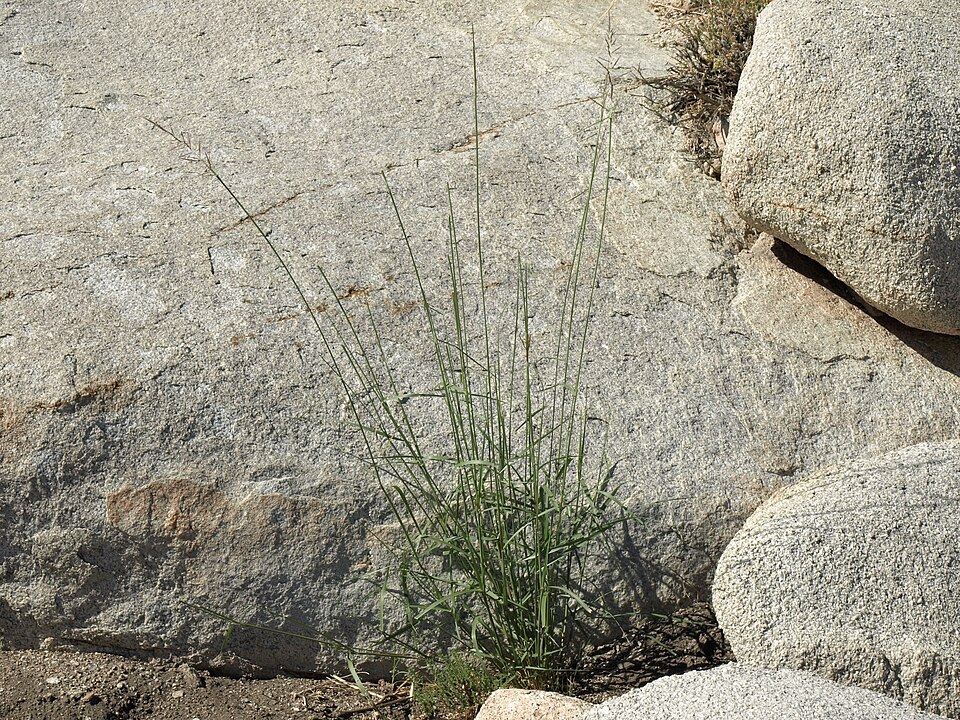
Sporobolus cryptandrus, commonly known as Sand Dropseed, is one of the most widespread and ecologically important native grasses in North America — a tough, adaptable perennial bunchgrass that thrives in open, sandy, and disturbed habitats across an enormous geographic range from the Pacific Coast to the eastern Great Plains and from Canada to Texas. Growing in dense tufts 2 to 5 feet tall with distinctive, pyramid-shaped flower panicles that release vast quantities of tiny, nutritious seeds, Sand Dropseed is a cornerstone plant of the native grassland ecosystem and an outstanding choice for low-maintenance, wildlife-friendly landscapes throughout the arid and semi-arid West.
Sand Dropseed’s adaptability is remarkable: it grows in sandy washes, open desert grasslands, roadsides, overgrazed rangeland, and disturbed ground with equal ease, spreading readily by seed and quickly establishing on bare, open soils. Its tolerance of drought, poor sandy or gravelly soils, and temperature extremes from Canadian winters to Sonoran summer heat makes it one of the most broadly adaptable native grasses available. In Arizona, it is a characteristic plant of desert grassland, desert scrub, and open sandy areas from the lowest desert floors to mid-elevation grasslands and is an important component of the vegetation along sandy desert washes and bajadas.
For birds and small mammals, Sand Dropseed is an invaluable food source — its abundant, tiny seeds are highly nutritious and are eaten by Gambel’s Quail, Mourning Doves, Lark Buntings, Horned Larks, and dozens of other ground-feeding birds. The plant’s dense, clumping growth provides cover and nesting material for ground-nesting birds and small mammals. Its rapid establishment from seed also makes it a top choice for erosion control and disturbed-site revegetation throughout the West.
Identification
Sand Dropseed is a perennial bunchgrass forming loose to dense tufts with stems (culms) 2 to 5 feet tall. It is distinguished from other grasses by its characteristic open, pyramid-shaped panicle (flower/seed cluster) that is partially enclosed in the upper leaf sheath when young, and the tiny, single-seeded florets that drop readily at maturity (the “dropseed” of its common name). Positive identification is confirmed by the tuft of white hairs at the junction of the leaf blade and sheath — a useful diagnostic character.
Leaves & Stems
The leaf blades are 4 to 12 inches long and 1/8 to 1/4 inch wide, flat to slightly rolled, somewhat stiff and tapering to a fine point. The leaf surface is smooth to slightly rough (scabrous). A distinctive tuft of silky white hairs marks the junction of the leaf blade and sheath (the ligule area) — this character is diagnostic for the species. Stems (culms) are slender, erect to slightly arching, and typically hollow between the nodes. The plant forms dense tufts from the base, with old leaf sheaths persisting around the base of the clump and turning pale tan to brown.
Inflorescence
The inflorescence is a large, open, pyramid-shaped panicle 8 to 18 inches long with spreading, ascending branches. The lower portion of the panicle is often enclosed within the upper leaf sheath when immature, exposing gradually as it matures — this “hidden” panicle characteristic is referenced in the species name cryptandrus (Greek for “hidden stamen”). Panicle branches spread widely in maturity, giving the plant a distinctively airy, feathery appearance. Individual spikelets are tiny — just 1/8 inch long — and single-flowered. The panicle color is pale green to purplish when young, aging to tan or light brown as seeds mature in late summer and fall.
Seeds
The seeds (caryopses) are extraordinarily small — less than 1/16 inch long — but produced in enormous quantities. A single plant can produce tens of thousands of seeds per season. The seeds are the plant’s most ecologically important feature: they are highly nutritious for wildlife and are eagerly consumed by a wide range of seed-eating birds and small mammals. The seeds drop readily when ripe (hence “dropseed”), scattering across the soil surface where they can germinate on bare sandy ground after rainfall.
Quick Facts
| Scientific Name | Sporobolus cryptandrus |
| Family | Poaceae (Grass) |
| Plant Type | Perennial Bunchgrass |
| Mature Height | 2–5 ft |
| Sun Exposure | Full Sun |
| Water Needs | Low (Drought Tolerant) |
| Bloom Time | July – October |
| Flower Color | Pale green to purplish (panicle) |
| USDA Hardiness Zones | 3–11 |
Native Range
Sand Dropseed is one of the most widespread native grasses in North America, occurring from British Columbia south through the western United States to Mexico, and east through the Great Plains to the Atlantic seaboard. In the western US, it is particularly common and often dominant on sandy or disturbed soils in the Great Basin, Colorado Plateau, Chihuahuan Desert, Sonoran Desert, and throughout the Great Plains grasslands. Its range in the eastern United States is more scattered, associated with sandy soils and disturbed areas.
Within Arizona, Sand Dropseed occurs throughout the state from the lowest desert floors to mid-elevation grasslands, particularly in open, sandy, or disturbed habitats. It is a common colonizer of roadsides, overgrazed rangeland, and disturbed ground, and it forms a significant component of the native desert grassland understory in the middle-elevation zones of southern and central Arizona. It is particularly abundant in sandy desert washes, on sandy bajada slopes, and in open desert grassland in the 3,000- to 5,500-foot elevation band across southern Arizona.
Sand Dropseed’s ecological success stems from several characteristics: its efficient C4 photosynthesis (which is highly productive in hot, sunny conditions), its abundant, rapidly germinating seeds, its drought tolerance, and its ability to grow on the poor, sandy soils that many other grasses avoid. These traits make it one of the most reliable native grass options for revegetating disturbed sandy sites across the arid West, and it is widely used in range seedings and highway revegetation projects.
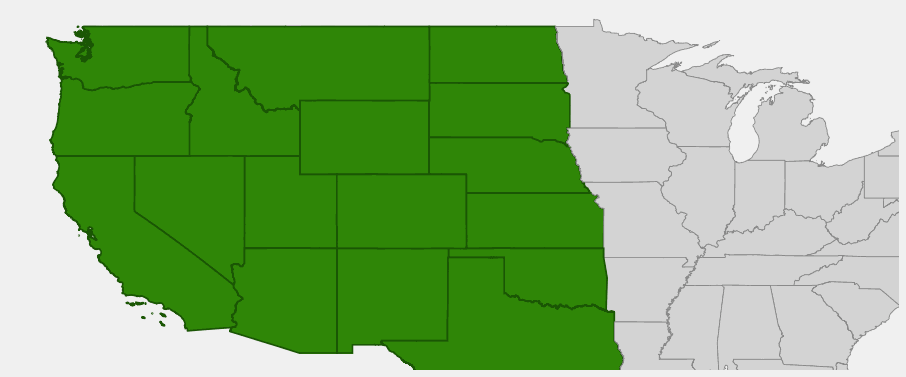
📋 Regional plant lists featuring Sand Dropseed: Arizona
Growing & Care Guide
Sand Dropseed is an excellent choice for difficult, dry, sandy sites where many other grasses struggle. It establishes quickly from seed, provides important wildlife food value, and offers attractive feathery panicles through late summer and fall. Low maintenance and high adaptability make it ideal for restoration plantings, erosion control, and naturalistic desert garden design.
Light
Full sun is ideal. Sand Dropseed is adapted to open, exposed habitats with maximum solar radiation. It performs best in open, unshaded locations and will decline in shade. Like most C4 grasses, it is most productive during the hot, bright growing season of summer and fall.
Soil & Water
Sand Dropseed thrives in poor, sandy, or gravelly soils with excellent drainage — conditions where many other grasses fail. It is one of the most drought-tolerant native perennial grasses available, growing in areas with as little as 8 to 12 inches of annual rainfall. Established plants need no supplemental irrigation in most Arizona locations where summer monsoons provide rainfall. During the establishment period, water every 2 to 4 weeks in summer. Avoid clay or waterlogged soils. The plant is very tolerant of alkaline soils.
Planting Tips
Sand Dropseed is most economically and effectively established from seed rather than container plants. Broadcast seed in fall (October through December) on prepared, bare, sandy soil, raking lightly to ensure good seed-soil contact. No cover is needed — the tiny seeds germinate best at the surface. Fall-seeded plants establish over winter and are ready to grow vigorously with the first summer rains. Container plants are also available from some native grass nurseries and establish quickly. Space container plants 2 to 3 feet apart for a naturalistic planting.
Pruning & Maintenance
Sand Dropseed is essentially maintenance-free once established. The dried panicles persist through winter and provide wildlife food; they can be left standing for natural interest or cut back in early spring to make way for fresh new growth. Light burning in late winter (where safe and legal) mimics natural fire disturbance and can rejuvenate dense established stands. Avoid herbicides near Sand Dropseed, as it may be sensitive to some broadleaf herbicides. The plant naturalizes and self-seeds readily in open, sandy areas.
Landscape Uses
Sand Dropseed works well for:
- Native grass gardens and prairie-style plantings
- Erosion control on sandy slopes and disturbed ground
- Wildlife habitat seed source for ground-feeding birds
- Dryland revegetation on road cuts, disturbed soils
- Desert grassland restoration mixes
- Naturalistic landscape textures among desert shrubs and wildflowers
- Quail habitat enhancement
Wildlife & Ecological Value
Sand Dropseed is a critical food plant for ground-feeding birds and small mammals throughout the arid West, producing vast quantities of highly nutritious seeds that sustain wildlife populations through late summer, fall, and winter.
For Birds
Sand Dropseed seeds are consumed by an enormous diversity of ground-feeding birds. Gambel’s Quail eat the seeds extensively, and the grass is a recommended planting for quail habitat improvement throughout Arizona. Mourning Doves, White-winged Doves, Lark Buntings, Horned Larks, Lark Sparrows, and many other open-country birds feed heavily on the seeds from late summer through winter. The dense clumps provide cover for ground-nesting birds including quail and meadowlarks, and the dead stems and leaf bases provide nesting material for cup-nesting birds.
For Mammals
Kangaroo Rats, Pocket Mice, and other small granivorous rodents collect and cache Sand Dropseed seeds in large quantities — often caching far more than they consume, inadvertently contributing to seed dispersal and plant establishment. Pronghorn, Mule Deer, and various other ungulates graze the grass. Rabbits and hares browse the leaves and stems, particularly during dry periods when other forage is scarce.
For Insects
Sand Dropseed flowers are wind-pollinated, but the grass supports specialized grassland invertebrates including grasshoppers, leafhoppers, and various beetles that in turn support insectivorous birds. The clump structure creates important microhabitat for ground-dwelling invertebrates including beetles, spiders, and ants that are important components of the grassland food web.
Ecosystem Role
Sand Dropseed plays an important role in arid grassland ecosystems as a rapid colonizer of bare, sandy, or disturbed soils — it often forms the initial vegetative cover that protects the soil surface from erosion and creates the conditions necessary for other species to establish. Its deep, fibrous root system binds sandy soils and reduces wind and water erosion significantly. In desert grassland ecosystems across the Southwest, Sand Dropseed is often the dominant grass on sandy soils and a critical component of the fire-driven grassland cycle.
Cultural & Historical Uses
Sand Dropseed seeds have been used as a food source by Indigenous peoples throughout the American West. The Navajo, Hopi, Western Apache, and various Great Plains groups collected Sand Dropseed seeds as part of their wild seed harvest, grinding the tiny seeds into flour for flatbreads and porridges. The seeds, while very small, are nutritious and were sometimes mixed with other seed flours to stretch available food resources. Indigenous peoples across the Great Plains used various dropseed species as emergency food during periods of poor hunting or failed crop harvests.
Sand Dropseed and related species have been used in land management and revegetation for decades. Range conservationists recognized early that Sand Dropseed’s ability to establish quickly on bare, sandy ground and provide rapid cover and soil stabilization made it valuable for erosion control on overgrazed or otherwise disturbed rangelands. It is included in many native grass seed mixes used for highway revegetation, mine reclamation, and conservation reserve program (CRP) plantings across the western United States. Its wide availability in native grass seed mixes has made it one of the most commonly planted native grasses in the region.
In the contemporary native plant restoration and gardening community, Sand Dropseed is valued as an authentic component of desert grassland plant communities. Restoration practitioners use it in seed mixes to revegetate degraded desert grassland habitats across the Southwest, where it helps establish the grass-dominated plant community that characterized the region before overgrazing and other disturbances altered the vegetation. Its extreme drought tolerance and wide adaptability make it one of the most reliable grasses for revegetation efforts in the arid West, even under unfavorable conditions.
Frequently Asked Questions
How do I grow Sand Dropseed from seed?
Sand Dropseed is best established by broadcast seeding in fall on lightly scarified (roughed-up), bare soil. The tiny seeds need good contact with the soil surface. Rake lightly after broadcasting and firm the soil with a roller or your boots. Do not bury the seed deeply — it germinates best near the surface. Fall planting allows seeds to germinate with winter moisture and establish roots before summer heat. Water lightly after seeding if rain doesn’t follow within a week.
Is Sand Dropseed invasive?
No — Sand Dropseed is a native grass that is naturally part of the desert grassland ecosystem of the American West. While it self-seeds freely and can spread into disturbed areas, it does not displace healthy native plant communities in undisturbed habitats. Its tendency to colonize disturbed ground is actually ecologically beneficial, as it protects bare soil from erosion and creates habitat for wildlife.
What’s the difference between Sand Dropseed and other dropseed grasses?
Several native dropseed grasses (Sporobolus spp.) occur in Arizona and the Southwest. Sand Dropseed (S. cryptandrus) is distinguished by its large, open, pyramidal panicle, the tuft of white hairs at the leaf-sheath junction, and its occurrence on sandy or disturbed soils in open habitats. Prairie Dropseed (S. heterolepis) is smaller, more mounded, and has a fragrant panicle. Sacaton (S. wrightii) is much larger (5-8 feet) and occurs in wet areas.
Does Sand Dropseed need to be mowed or cut back?
Sand Dropseed does not need to be cut back but can benefit from it. Leaving the plant standing through winter provides wildlife food and habitat. In spring, you can cut back the previous year’s growth to ground level to stimulate fresh, vigorous new growth. Alternatively, where appropriate and safe, light burning in late winter can clean up the old growth and encourage robust regrowth.
Is Sand Dropseed good for erosion control?
Yes — Sand Dropseed is excellent for erosion control on sandy, gravelly, or disturbed soils. Its deep, fibrous root system binds soil particles effectively, and its rapid establishment from seed means it can quickly cover bare ground. It is included in many commercial erosion control seed mixes for arid regions.

Looking for a nursery that carries Sand Dropseed?
Browse our native plant nursery directory: Arizona