Southern Bush Monkeyflower (Diplacus longiflorus)
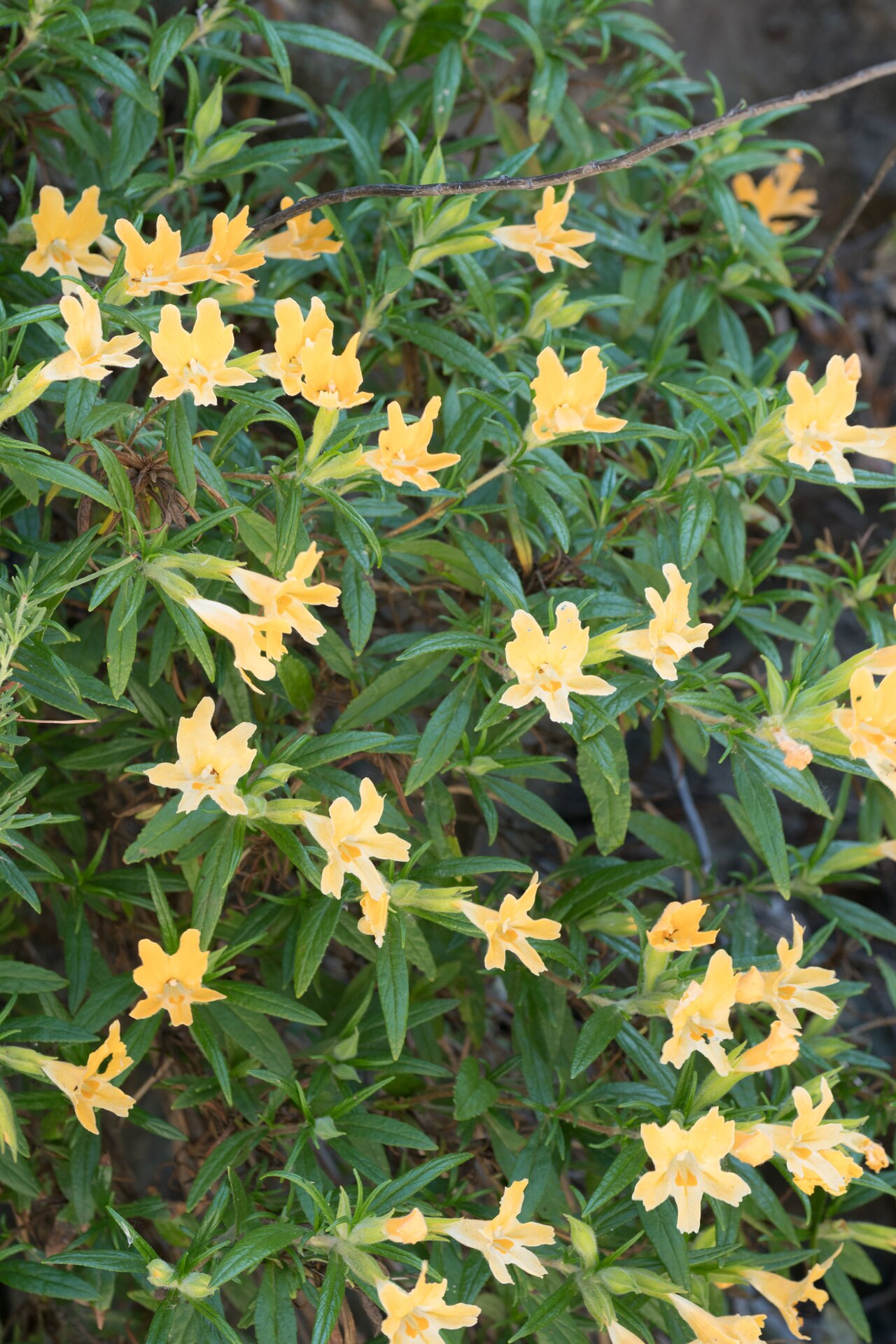
Diplacus longiflorus (long classified as Mimulus longiflorus, and sometimes still listed under that name), commonly known as Southern Bush Monkeyflower or Bush Monkeyflower, is a sticky-leaved evergreen shrub native to southern and central California and the northern Baja California peninsula. It is closely related to the more widely distributed Sticky Monkeyflower (Diplacus aurantiacus), and the two species intergrade where their ranges meet, but Southern Bush Monkeyflower tends to carry paler, more buff-yellow to cream-colored flowers with notably longer floral tubes.
Southern Bush Monkeyflower is a common and conspicuous shrub of California chaparral and coastal sage scrub, found from the South Coast Ranges through the Transverse and Peninsular Ranges into San Diego County and Baja California. It flowers over an unusually long season, often from late winter well into summer, and the pale, trumpet-shaped flowers are a familiar sight brightening dry hillsides after the main spring wildflower bloom has faded.
For California gardeners, Southern Bush Monkeyflower is a tough, low-water shrub suited to sunny, well-drained sites throughout its native range. It asks little beyond good drainage and full sun, tolerates poor soils, and rewards minimal care with months of pale, delicate-looking flowers that draw hummingbirds and native bees.
Identification
Southern Bush Monkeyflower is a rounded to somewhat sprawling evergreen shrub, typically 2 to 5 feet (60–150 cm) tall and similarly wide, occasionally taller on favorable sites. The foliage has a sticky, resinous feel and a faintly musky, aromatic scent when brushed or crushed, a trait shared across the bush monkeyflower group.
Stems
Young stems are green, four-angled, and distinctly sticky-glandular; older stems become woody and pale gray-brown. Growth is loosely branched, giving mature plants an open, slightly untidy form rather than a dense, formal outline.
Leaves
Leaves are opposite, narrowly lance-shaped to oblong, 1 to 3 inches (2.5–7.5 cm) long, dark green above and paler beneath, with margins that are smooth to shallowly toothed and often rolled under. The leaf surface is sticky-glandular, which helps the plant conserve moisture during California’s dry season and gives the foliage its characteristic resinous feel.
Flowers
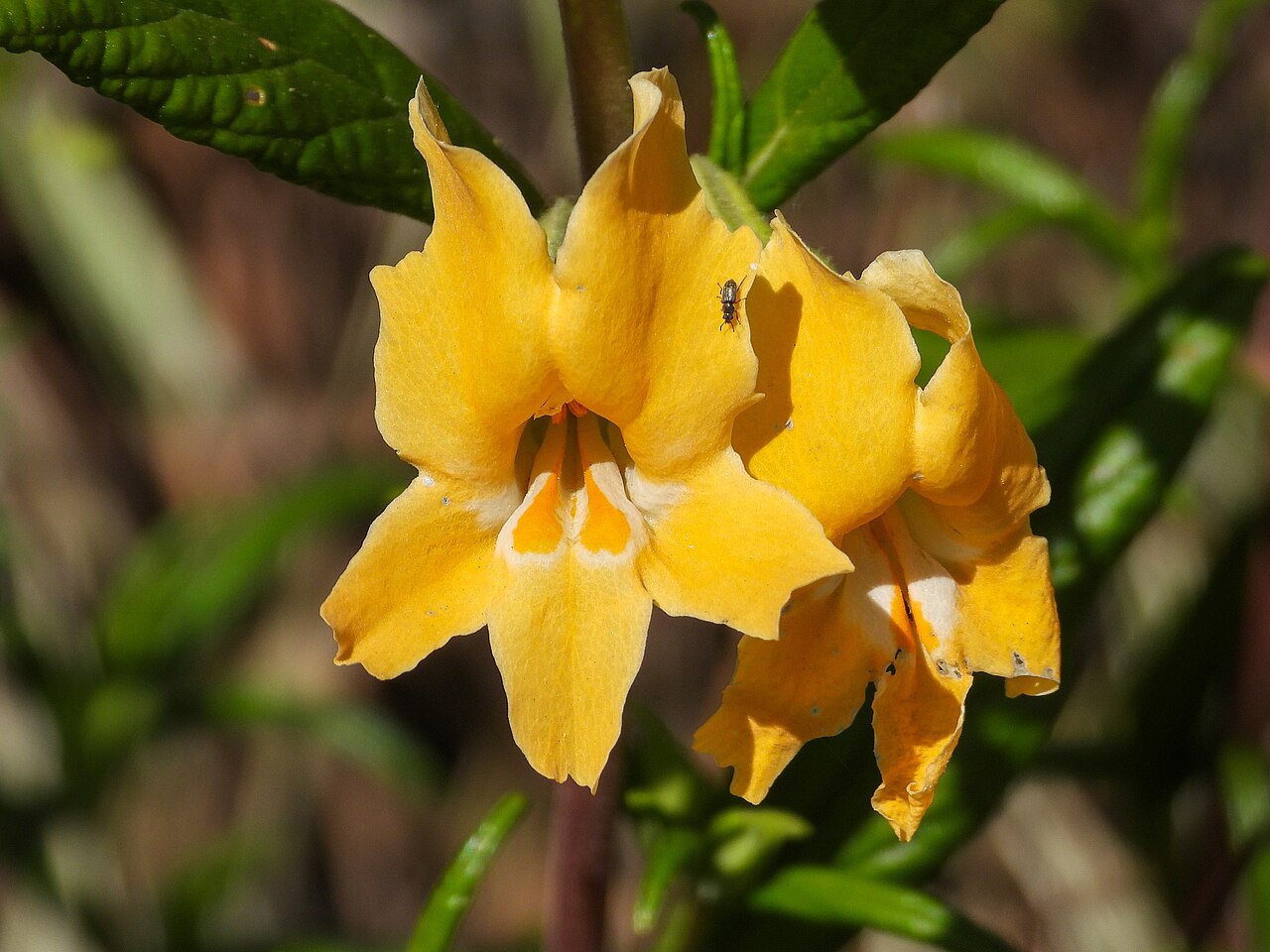
Flowers are borne singly or in loose clusters from the upper leaf axils, tubular with a flared, two-lipped face, and notably long for the genus — typically 1.5 to 2.5 inches (4–6 cm), sometimes longer. Color ranges from pale buff-yellow to cream or light salmon-orange, generally paler and more delicate than the richer orange of Sticky Monkeyflower. Bloom is heaviest from March through June but can continue sporadically into summer and fall, especially near the coast.
Fruit & Seeds
After flowering, the plant forms a small, narrow, two-chambered dry capsule that splits to release numerous tiny seeds. The capsules are inconspicuous and not ornamentally significant, but allow for easy self-sowing and seed collection.
Quick Facts
| Scientific Name | Diplacus longiflorus (syn. Mimulus longiflorus) |
| Family | Phrymaceae (Lopseed) |
| Plant Type | Evergreen Shrub |
| Mature Height | 2–5 ft (60–150 cm) |
| Mature Spread | 2–5 ft (60–150 cm) |
| Growth Rate | Moderate to Fast |
| Sun Exposure | Full Sun to Part Shade |
| Water Needs | Low once established |
| Soil Type | Well-drained; rocky, sandy, or clay-loam |
| Soil pH | 6.0–7.5 (slightly acidic to neutral) |
| Bloom Time | March – June, sporadic into fall near coast |
| Flower Color | Pale buff-yellow to cream or light salmon-orange |
| Fall Color | None (evergreen) |
| Fruit | Small dry capsule (not ornamental) |
| Deer Resistant | Moderately |
| USDA Hardiness Zones | 8–11 |
Native Range
Southern Bush Monkeyflower is native to southern and central California, roughly from the South Coast Ranges south through the Transverse Ranges, the Peninsular Ranges, and San Diego County, continuing into the mountains of northern Baja California, Mexico. It overlaps with and intergrades with the more northerly Sticky Monkeyflower in parts of central California, which is one reason the two have at times been treated as a single variable species.
Across this range, Southern Bush Monkeyflower grows in chaparral and coastal sage scrub on dry, often rocky slopes and canyon sides, from near sea level up to around 7,500 feet (2,300 m) in the Transverse and Peninsular Ranges. It is a frequent component of post-fire chaparral recovery and is commonly found alongside chamise, buckwheat, sages, and ceanothus.
The species is widespread and not considered rare, and it remains a common sight on dry Southern California hillsides even in areas with significant development pressure, though — as with all native chaparral shrubs — intact habitat continues to be lost to urbanization across much of its coastal range.
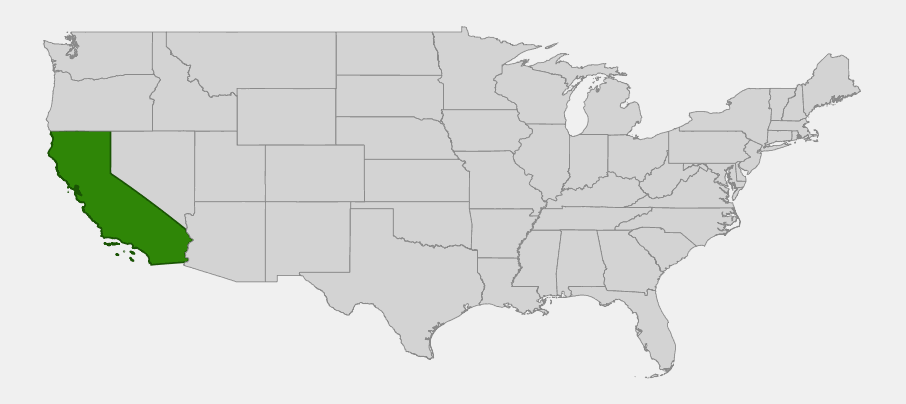
📋 Regional plant lists featuring Southern Bush Monkeyflower: California & Nevada
Growing & Care Guide
Southern Bush Monkeyflower is an easygoing, drought-tolerant shrub for California gardens within its native range, equally at home on a dry slope, in a mixed chaparral planting, or as part of a hummingbird and pollinator garden.
Light
Full sun produces the most compact growth and heaviest bloom. In hot inland gardens, light afternoon shade can help reduce stress and extend the flowering season, though the species tolerates full sun well throughout most of its native range.
Soil & Water
Good drainage is essential; Southern Bush Monkeyflower adapts to rocky, sandy, or clay-loam soils as long as they do not stay waterlogged. It is drought tolerant once established and generally needs no supplemental water in coastal and foothill gardens after the first year or two, though an occasional deep watering during extended dry periods helps maintain bloom and vigor, especially inland.
Planting Tips
Install container plants in fall to let root systems establish over the rainy season. Choose an open, sunny site with sharp drainage; raised beds or slopes work well on heavier soils. Space plants 3 to 5 feet apart to accommodate their mature spread.
Pruning & Maintenance
Light pruning after the main spring bloom keeps plants compact and encourages fresh growth and additional flowering later in the season. Cut back by up to a third in late summer if plants become leggy or woody. Like other bush monkeyflowers, this species can be relatively short-lived (often 5 to 10 years), so periodic replacement or allowing volunteer seedlings to take over is a normal part of maintaining a long-term planting.
Landscape Uses
Southern Bush Monkeyflower works well in a range of low-water garden settings:
- Chaparral and coastal sage scrub restoration plantings
- Dry slope and hillside plantings for erosion control and habitat value
- Hummingbird and pollinator gardens
- Mixed native shrub borders with sage, buckwheat, and ceanothus
- Low-water foundation plantings in sunny, well-drained spots
Wildlife & Ecological Value
Southern Bush Monkeyflower’s long tubular flowers and extended bloom season make it a valuable nectar source across much of the California chaparral and coastal sage scrub year.
For Pollinators
The long floral tube is well suited to hummingbird pollination, and Anna’s and Allen’s hummingbirds are frequent visitors, particularly valuable during the late-winter and early-spring period when few other chaparral shrubs are in bloom. Native bees, bumblebees, and some butterflies also visit for nectar and pollen.
For Birds
Beyond hummingbird nectar, the dense branching of mature shrubs offers nesting and foraging cover for small chaparral birds such as wrentits and California towhees, and the tiny seeds provide a minor supplemental food source for seed-eating species.
Ecosystem Role
As one of the more common and widespread shrubs in California chaparral, Southern Bush Monkeyflower contributes meaningfully to post-fire recovery, helping stabilize slopes and provide early nectar resources as burned habitat regenerates. Its tolerance of poor, rocky soils allows it to colonize sites that are marginal for many other shrubs.
Cultural & Historical Uses
Southern Bush Monkeyflower has long been recognized in California botanical literature, originally described under the name Mimulus longiflorus and widely documented in regional floras of the South Coast and Transverse Ranges throughout the nineteenth and twentieth centuries. Its close relationship — and frequent confusion — with Sticky Monkeyflower has made it a subject of ongoing taxonomic study as botanists work out the boundaries between the many forms in this variable species complex.
In California native plant horticulture, Southern Bush Monkeyflower has been grown for decades as a reliable, low-water chaparral shrub, valued particularly for its pale, delicate flower color, which offers a softer contrast to the brighter oranges and yellows of related species. It remains a common offering at California native plant nurseries, especially in Southern California.
There is no significant documented traditional food or medicinal use specific to this species; its historical significance has been primarily botanical and, in more recent decades, horticultural.
Frequently Asked Questions
How is Southern Bush Monkeyflower different from Sticky Monkeyflower?
Southern Bush Monkeyflower (Diplacus longiflorus) typically has paler, buff-yellow to cream flowers with a notably longer floral tube, and is restricted to central and southern California. Sticky Monkeyflower (Diplacus aurantiacus) usually has brighter orange flowers and a much broader range across California. The two overlap and intergrade in parts of central California.
How much water does this shrub need?
Very little once established — it is adapted to dry chaparral and needs good drainage above all else. Occasional deep watering during long dry spells, especially inland, helps sustain bloom, but regular irrigation can shorten its lifespan through root rot.
Does Southern Bush Monkeyflower attract hummingbirds?
Yes, its long tubular flowers are well suited to hummingbird pollination and are a reliable nectar source, especially valuable in late winter and early spring before many other chaparral shrubs begin flowering.
Why does my plant look leggy and sparse after a few years?
This is typical of the species, which tends to become woody and open with age and is relatively short-lived. Light pruning after bloom helps maintain a fuller shape, but eventually replacing older plants or allowing self-sown seedlings to take over is the normal long-term approach.
Is Southern Bush Monkeyflower toxic?
No significant toxicity is documented for people or pets, but it is not a food plant and should not be eaten; it is grown strictly as an ornamental and wildlife-support shrub.

Looking for a nursery that carries Southern Bush Monkeyflower?
Browse our native plant nursery directory: California