
Summer Azalea (Rhododendron serrulatum)
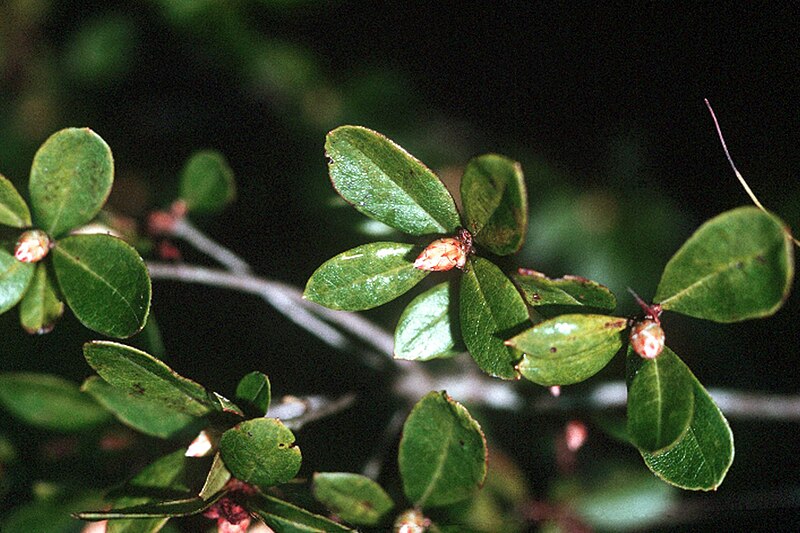
Rhododendron serrulatum, commonly known as Summer Azalea or Hammock Swamp Azalea, is a native deciduous azalea of the Gulf Coastal Plain, celebrated for producing some of the most intensely fragrant flowers of any native shrub in the American Southeast. Blooming from June through August — well after most other azaleas have finished flowering for the season — this medium-sized shrub fills humid summer air with a sweet, clove-like perfume that can be detected from considerable distances. The flowers are white to very pale pink, trumpet-shaped, and borne in showy clusters that appear at the tips of new growth just as the leaves begin to expand.
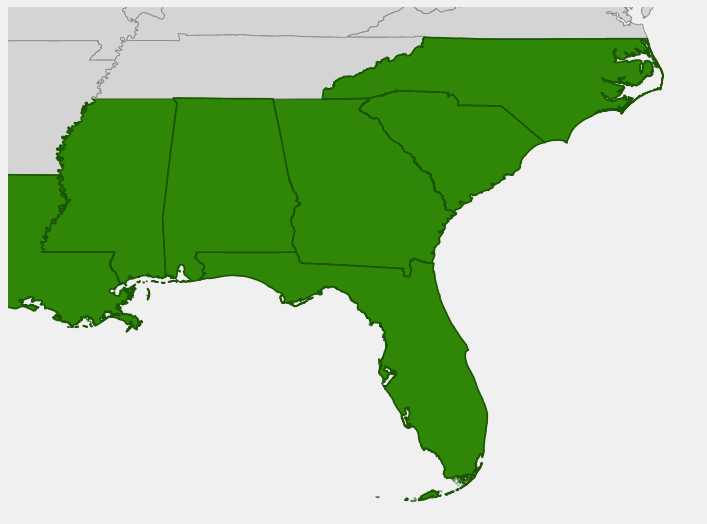
A member of the heath family (Ericaceae) and closely related to the Swamp Azalea (Rhododendron viscosum) — with which it was long confused and is sometimes treated as a subspecies — Summer Azalea grows naturally in the rich bottomland swamps, bayhead forests, and wet pine flatwoods of coastal Florida, Georgia, Alabama, Mississippi, Louisiana, and the Carolinas. It thrives in the wet, shaded, acidic conditions of these environments, often growing alongside Swamp Titi (Cyrilla racemiflora), Swamp Bay (Persea palustris), and various sedges and ferns in the dense, humid understory.
For gardeners seeking both exceptional fragrance and a native plant perfectly suited to wet, shaded garden sites, Summer Azalea is an outstanding choice. Its late bloom season fills a gap left by the earlier spring azaleas, and its white flowers pair beautifully with summer perennials in the moist shade garden. Growing 6 to 15 feet tall depending on conditions, it can be used as a specimen shrub, woodland garden focal point, or naturalistic hedge. Its value to late-season pollinators — particularly native swallowtail butterflies, which hover to sip nectar from the long tubular flowers — adds an additional layer of ecological significance to its already considerable ornamental merits.
Identification
Summer Azalea is a deciduous shrub, typically growing 6 to 15 feet tall with a spread of 5 to 10 feet. It has an upright to somewhat open and irregularly branched form, with multiple stems arising from the base. Like most native azaleas, it lacks the dense, layered habit of many Asian azalea hybrids and has a more natural, woodland character. The stems are grayish-brown and somewhat rough-textured, with small, raised lenticels visible on young bark.
Leaves
The leaves are simple, alternate, and deciduous, elliptic to obovate in shape, 1 to 3 inches long and ½ to 1½ inches wide. The upper surface is medium green and slightly shiny; the lower surface is paler. The margins are entire or very finely serrulate (minutely toothed) — a characteristic referenced in the species name serrulatum. The leaves are concentrated near the tips of the branches, giving the shrub a somewhat open, tiered appearance when viewed from a distance. In autumn, the foliage may turn yellow to orange before dropping, though fall color is less spectacular than that of some other deciduous azaleas.
Flowers
The flowers are the plant’s defining feature — they appear from June through August in terminal clusters (trusses) of 4 to 9 flowers, typically at the tips of new growth after the leaves have expanded. Each flower is tubular to funnel-shaped, about 1 to 1½ inches long, with 5 lobes that reflex slightly at the tips. The color is white to very pale pink or blush. The most striking characteristic is the extraordinary fragrance — intensely sweet, spicy, and clove-like, far more powerful than most spring-blooming azaleas. The stamens and pistil extend prominently beyond the petals, giving the flower cluster an airy, delicate appearance. The flowers are pollinated primarily by large butterflies (especially Eastern Tiger Swallowtail, Spicebush Swallowtail, and Black Swallowtail) and hummingbirds, which can reach the nectar at the base of the long tubes.
Fruit & Seeds
After pollination, the flowers give way to small (½ inch), elongated, dry capsules that split open in autumn to release masses of tiny, dust-like seeds. The seeds are wind-dispersed and germinate in moist, acidic organic soils — conditions readily found in the swamps and bayhead forests where the plant naturally grows. The seed capsules remain attached to the branches through winter, providing slight structural interest.
Quick Facts
| Scientific Name | Rhododendron serrulatum |
| Family | Ericaceae (Heath) |
| Plant Type | Deciduous Shrub |
| Mature Height | 15 ft |
| Sun Exposure | Part Shade to Full Shade |
| Water Needs | Moderate to High |
| Bloom Time | June – August (summer bloomer) |
| Flower Color | White to pale pink |
| Fragrance | Extremely fragrant (clove-like) |
| USDA Hardiness Zones | 7–9 |
Native Range
Summer Azalea is native to the Gulf and lower Atlantic Coastal Plain, ranging from the Florida panhandle east through coastal Georgia and north into the Carolinas, and west through Alabama, Mississippi, and Louisiana. The species is most abundant in the panhandle region of Florida and the adjacent coastal areas of Georgia and Alabama, where the wet pine flatwoods and bayhead swamps that form its primary habitat are most extensive. In South Carolina and North Carolina, it is less common and largely restricted to low, wet habitats near the coast.
Within its range, Summer Azalea is intimately associated with the wet, forested wetland communities of the lower Coastal Plain — particularly the bay forests (dominated by Sweetbay Magnolia, Loblolly Bay, and Swamp Titi), the bottomland hardwood forests along blackwater streams, and the wet margins of longleaf pine flatwoods. It is rarely found far from consistently moist or seasonally wet soils, and is most commonly encountered growing with its feet in or near standing water during the rainy season. This strong association with wetland conditions makes it one of the most moisture-demanding of the native azaleas.
Summer Azalea is closely related to and sometimes treated as a subspecies or variety of Swamp Azalea (Rhododendron viscosum), which has a broader range extending into New England. The two are distinguished primarily by geographic range, bloom time (Summer Azalea blooms later), and minor morphological differences in flower size and hairiness. Both are intensely fragrant, but Summer Azalea is generally considered to have a stronger, more pervasive fragrance, particularly in humid summer conditions.
📋 Regional plant lists featuring Summer Azalea: Alabama, Georgia & Mississippi
Growing & Care Guide
Summer Azalea rewards gardeners who can provide the specific conditions it requires with one of the finest fragrance experiences in the native plant world. The key requirements are consistent moisture, acidic soil, and partial shade — conditions readily replicated in rain gardens, woodland garden edges, and low-lying areas of the landscape.
Light
Summer Azalea thrives in partial to full shade, reflecting its natural habitat in the dense understory of bay forest and bottomland forest communities. In deep shade it grows more open and may flower less freely, but remains a healthy and attractive plant. In part shade (morning sun, afternoon shade is ideal), it develops the best combination of dense growth and abundant flowering. In the Deep South’s intense summer sun and heat, full shade protection during the hottest part of the day is important for plant health and longevity.
Soil & Water
Consistent moisture and high soil acidity are the two non-negotiable requirements. Summer Azalea requires pH 4.5 to 5.5 — it will not thrive in neutral or alkaline soils. It prefers consistently moist to wet soils and is one of the most water-tolerant of the native azaleas, tolerating brief flooding and thriving in rain garden conditions. Organically rich, humus-laden soils similar to those found in its natural swamp habitat are ideal. Do not plant in dry, sandy soils or in areas where summer drought stress is expected without supplemental irrigation. Mulch heavily (4 inches of pine straw or leaf mold) to maintain moisture and soil acidity.
Planting Tips
Plant Summer Azalea in fall or early spring. Choose a site protected from afternoon sun and harsh wind. Amend soil thoroughly with acidic compost, leaf mold, and pine bark before planting. Set the root ball slightly above grade and mulch extensively — Summer Azalea has a very shallow, fibrous root system that is highly sensitive to soil compaction, drought, and nutrient imbalances. Do not plant near concrete, driveways, or other alkaline materials that could leach lime into the root zone.
Pruning & Maintenance
Prune Summer Azalea immediately after flowering (late August or September) to avoid removing next year’s flower buds, which are set shortly after the current year’s blooms fade. Light shaping to maintain form is all that’s typically needed. The plant has a naturally graceful, somewhat open form that is best appreciated without heavy shearing. Fertilize in spring with an acid-specific fertilizer (sulfur-coated urea or ammonium sulfate) if growth is slow — avoid over-fertilization, which can cause salt burn on the sensitive roots.
Landscape Uses
- Fragrance garden anchor — summer fragrance is unrivaled among native shrubs
- Rain garden specimen — tolerates wet soils where most azaleas fail
- Shaded woodland garden — blooms in summer when few other shade plants flower
- Butterfly garden — essential for swallowtail butterflies in summer
- Coastal plain restoration — authentic to Gulf Coast wetland communities
- Hummingbird plant — tubular flowers attract Ruby-throated Hummingbirds
Wildlife & Ecological Value
Summer Azalea is most ecologically significant as a late-summer nectar source for large insects and hummingbirds at a time when the early floral season has passed and few other native shrubs are in bloom. Its value to butterflies and hummingbirds during the midsummer “nectar gap” is exceptional.
For Birds
Ruby-throated Hummingbirds are attracted to the tubular white flowers of Summer Azalea, particularly during the late summer pre-migration period when they are actively building fat reserves for the long flight south. The dense shrub structure also provides excellent nesting habitat for woodland birds, and the moist, shaded environment beneath its canopy supports invertebrate communities that insectivorous birds exploit for food.
For Mammals
White-tailed deer generally avoid browsing Summer Azalea due to mildly toxic compounds (grayanotoxins) in the foliage — the same compounds that make all rhododendrons and azaleas toxic to many mammals if consumed in quantity. This deer resistance is a significant practical advantage in landscapes with high deer pressure. Small mammals use the dense shrub thickets for shelter and cover.
For Pollinators
The long, tubular flowers of Summer Azalea are perfectly adapted for pollination by large butterflies with long proboscises. Eastern Tiger Swallowtail, Spicebush Swallowtail, Black Swallowtail, and Giant Swallowtail butterflies all visit the flowers enthusiastically, hovering or perching to insert their proboscises into the nectar-filled tubes. Sphinx moths (hawkmoths) are important nocturnal pollinators. In late summer when butterfly populations are at their annual peak, a Summer Azalea in bloom can attract dozens of individual butterflies per day.
Ecosystem Role
In its natural bayhead and bottomland forest habitat, Summer Azalea contributes to the dense shrub layer that characterizes these communities. Its root system helps stabilize the organic, muck soils of its wetland habitat. The plant provides cover for amphibians, reptiles, and invertebrates in the moist, shaded environment beneath its canopy. As a specialist of wet, acidic habitats, it is an indicator species of high-quality coastal plain wetlands and serves as a marker for ecologically intact communities that support high biodiversity.
Cultural & Historical Uses
Native azaleas as a group were noticed and collected by early European botanists exploring the southeastern United States, and Rhododendron serrulatum was among the species documented by William Bartram during his famous travels through the Southeast in the 1770s. Bartram noted the extraordinary fragrance of swamp azaleas in his “Travels,” describing them as among the most beautiful and fragrant plants he encountered on his journeys — praise that inspired generations of naturalists and gardeners to seek out these native beauties for cultivation.
Indigenous peoples of the Gulf Coast regarded the azalea-filled bay forests with a mix of practical caution and aesthetic appreciation. The Choctaw, Muscogee Creek, and Seminole nations all recognized the toxic properties of azalea foliage and bark — containing grayanotoxins — and avoided using them as food or medicine. The flowers, however, were sometimes used for their fragrance in ceremonial contexts. Traditional ecological knowledge documented an awareness that the plants produced a toxic nectar in certain conditions — “mad honey” produced by bees foraging on azalea nectar has been documented in various cultures worldwide and causes a distinctive syndrome of low blood pressure and bradycardia.
Today, Summer Azalea is experiencing growing appreciation among native plant enthusiasts and landscape designers in the Southeast. As gardeners increasingly recognize the superior ecological value of native plants over Asian horticultural azaleas, and as the extraordinary fragrance of native summer-blooming species becomes more widely known, demand for Summer Azalea has grown substantially. Native plant nurseries in the Gulf Coast region now regularly propagate and sell this species, which was previously available only from specialty growers. Its combination of fragrance, late bloom season, and wetland adaptability makes it one of the most valuable natives currently gaining new audiences in the native plant gardening community.
Frequently Asked Questions
How does Summer Azalea differ from other native azaleas?
The primary distinctions are its bloom time (June–August, later than all other southeastern azaleas), its extremely strong fragrance (often described as more intense than Swamp Azalea or Piedmont Azalea), its preference for wet to very wet habitats, and its restricted geographic range along the Gulf Coastal Plain. The white to pale pink flowers and prominent stamens are typical of the swamp azalea group. Its extremely late bloom season is its most important practical characteristic — filling a gap in the native garden when most other flowering shrubs are done for the year.
Is Summer Azalea toxic?
Yes — like all rhododendrons and azaleas, Summer Azalea contains grayanotoxins, which are toxic to most mammals including humans if consumed in significant quantities. The toxicity is primarily in the foliage, stems, and roots. The flowers contain lower concentrations but should not be eaten. Honey produced by bees foraging heavily on azalea flowers can also be toxic (“mad honey”). Despite this toxicity, the plant is not dangerous to have in a garden as long as children and pets are not encouraged to eat the leaves or flowers.
Can Summer Azalea grow in a rain garden?
Yes — Summer Azalea is an excellent rain garden plant, better suited to seasonally inundated conditions than most other azaleas. Its natural habitat in bayhead swamps and wet flatwoods means it is well-adapted to periods of standing water followed by dry spells. The critical requirement is that the standing water drains within a few days — prolonged anaerobic soil conditions will eventually damage the root system. A well-designed rain garden that fills and drains within 24–48 hours is ideal.
Why is my Summer Azalea not blooming?
Poor flowering in Summer Azalea is most commonly caused by: (1) too much shade — while it tolerates full shade, it blooms best in part shade; (2) pruning at the wrong time — pruning after August removes the following year’s flower buds set in late summer; (3) soil pH too high — neutral or alkaline soil causes iron chlorosis and poor flowering; or (4) drought stress during summer. Address these conditions systematically.
What other plants grow well with Summer Azalea?
Summer Azalea pairs beautifully with other moisture-loving, shade-adapted natives: Swamp Titi (Cyrilla racemiflora), Cinnamon Fern (Osmundastrum cinnamomeum), Royal Fern (Osmunda regalis), Virginia Sweetspire (Itea virginica), Louisiana Iris (Iris hybrids), Southern Blue Flag Iris (Iris virginica), and Swamp Rose (Rosa palustris). For a continuous summer show, plant with Blue Wild Indigo, Swamp Milkweed, and Buttonbush.

Looking for a nursery that carries Summer Azalea?
Browse our native plant nursery directory: Alabama · Georgia · Mississippi