Texas Red Yucca (Hesperaloe parviflora)
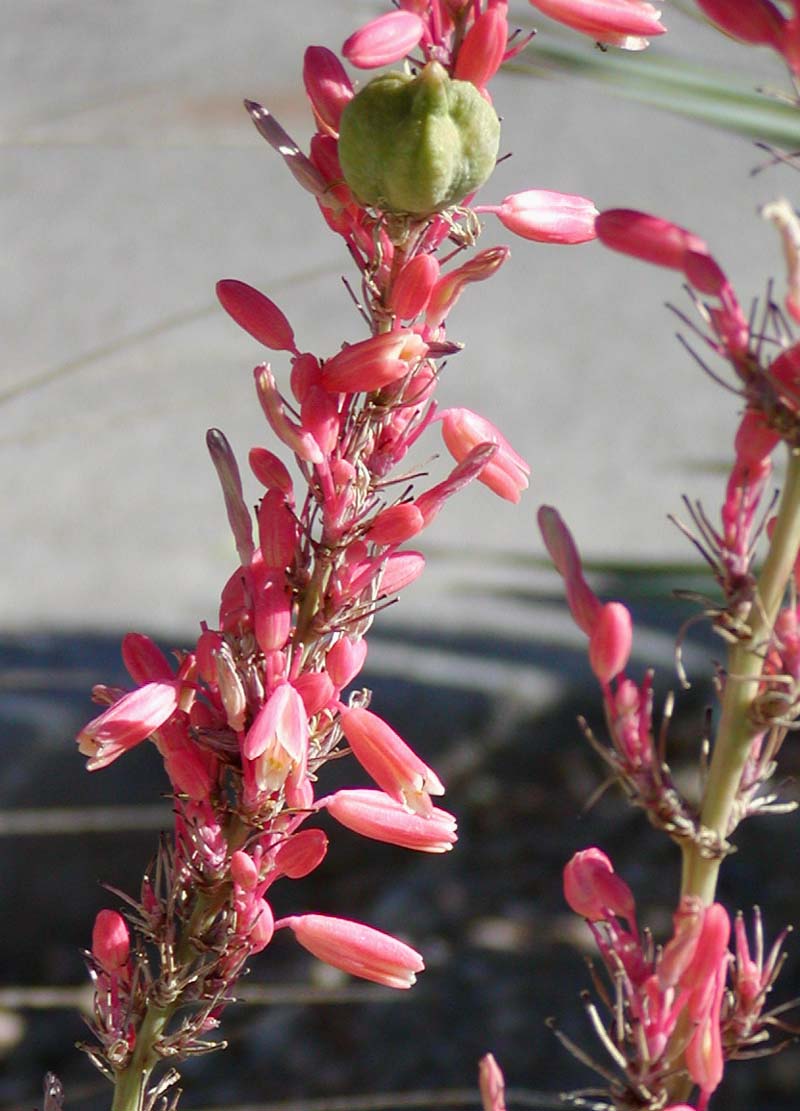
Hesperaloe parviflora, commonly known as Texas Red Yucca, Hummingbird Yucca, or Red Yucca, is one of the most spectacular and popular native succulents for hot, dry garden landscapes. Despite its common name, it is not a true yucca but rather a member of the Asparagaceae family more closely related to agaves. Native primarily to the Chihuahuan Desert of Texas and adjacent Mexico, Texas Red Yucca has become one of the most widely planted xeriscape plants in the American Southwest and West, valued for its stunning tall flower stalks bearing coral-red to salmon-pink tubular flowers that bloom from late spring through early fall, creating a continuous nectar bar for hummingbirds over many months.
The plant forms a rosette of long, narrow, arching, strap-like leaves 2 to 4 feet long and only ½ inch wide, with fine white thread-like fibers along the margins — similar in form to a yucca, hence the common name. The leaves are evergreen and maintain an attractive, fountain-like form year-round. From this basal clump emerge graceful, arching flower stalks in May, reaching 5 to 6 feet in height and covered in dozens of nodding, tubular flowers in vivid coral-red to rose-pink tones that hummingbirds visit with extraordinary regularity. The blooming season is remarkably long — in warm climates, flowers continue from May through September or even October.
Texas Red Yucca is one of the most drought-adapted ornamental plants available for western landscapes. Once established, it thrives with essentially no supplemental irrigation in most southwestern gardens, handling the full brunt of desert summer heat and periodic extreme drought. It has no significant pest or disease problems, requires almost no maintenance, and lives for decades. For gardeners in the Southwest and Intermountain West seeking a low-water, high-wildlife-value, four-season plant, Texas Red Yucca is unmatched.
Identification
Texas Red Yucca forms a dense basal rosette of leaves that slowly expands over many years, eventually reaching 3 to 4 feet tall and 4 to 6 feet across. The plant grows very slowly — typical garden specimens may take 5 to 10 years to reach full size. Individual rosettes persist for decades, and the plants reproduce vegetatively by producing offsets (pups) from the base that gradually create a small clump.
Leaves
The leaves are the most diagnostic feature distinguishing Texas Red Yucca from true yuccas: they are long (2–4 feet), very narrow (½–¾ inch wide), arching, semi-flexible, and green to blue-green with fine white thread-like marginal fibers that curl and detach as they age. Unlike true yuccas, the leaf tips are soft and flexible rather than sharply pointed — they will not injure skin on contact. The leaves have a distinctive twist, giving the clump a slightly spiraling appearance. Leaves are evergreen, providing year-round structure and texture.
Flowers
The flower stalks are the show-stopping feature: 1 to 3 graceful, arching stems emerge from the rosette in late spring, reaching 4 to 6 feet in length and bearing dozens of pendulous, tubular flowers 1 to 2 inches long in vivid coral-red to rose-salmon color. Flowers are arranged in a loose panicle along the upper two-thirds of the stalk. Each individual flower is tubular with 6 recurving tepals. The blooms open sequentially from base to tip over a very long season. In warm years, or in frost-free climates, flowering can continue almost without interruption from May through October. The plants produce prolific amounts of nectar attractive to hummingbirds, orioles, and long-tongued bees.
Fruit & Seeds
After pollination, the flowers develop into dry, three-chambered capsule fruits containing flat, black seeds. The seed capsules are 1 to 2 inches long, tan-colored, and persist on the stalk after drying. Seeds germinate readily under warm conditions and can be used to propagate new plants, though plants grown from seed take several years to flower.
Quick Facts
| Scientific Name | Hesperaloe parviflora |
| Family | Asparagaceae (Asparagus Family) |
| Plant Type | Evergreen Succulent Perennial |
| Mature Height (leaves) | 4 ft (flower stalks 5–6 ft) |
| Sun Exposure | Full Sun |
| Water Needs | Low (Drought Tolerant) |
| Bloom Time | May – September |
| Flower Color | Red to coral-pink |
| USDA Hardiness Zones | 5–11 |
Native Range
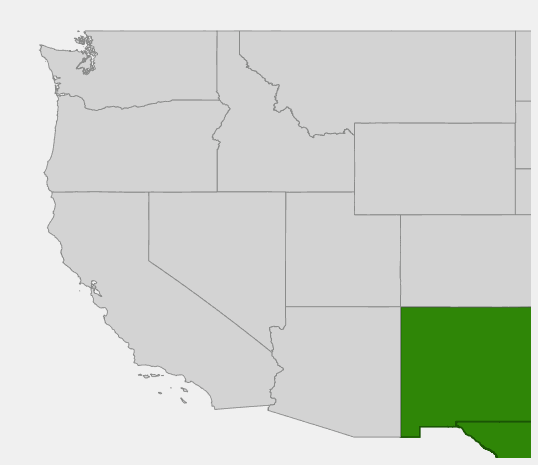
Texas Red Yucca is native primarily to the Chihuahuan Desert region — primarily in trans-Pecos Texas (the area of Texas west of the Pecos River) and adjacent northern Mexico (Chihuahua, Coahuila, and Tamaulipas). Its native U.S. range is quite limited compared to its extensive cultivation range, being essentially restricted to west Texas, with small populations in adjacent New Mexico and Oklahoma. It grows naturally on rocky slopes, limestone outcrops, and dry grasslands in the Chihuahuan Desert and adjacent desert grassland zones.
In its native Chihuahuan Desert habitat, Texas Red Yucca grows on rocky limestone hillsides and bajadas at elevations of 2,000 to 6,000 feet, in association with Lechuguilla (Agave lechuguilla), Sotol (Dasylirion wheeleri), various cacti, desert shrubs, and grama grasses. The climate is characterized by hot summers with monsoon rains in July and August, mild winters (with occasional cold snaps), and very low annual precipitation (8–16 inches).
While its native range is limited, Texas Red Yucca has been so widely cultivated throughout the American Southwest, West, and even Southeast (where it adapts to warm, dry conditions) that it is now familiar across a much wider geographic area than its wild occurrence would suggest. It has been reported as occasionally naturalized in areas outside its native range due to seed dispersal from cultivated plants.
📋 Regional plant lists featuring Texas Red Yucca: Intermountain West
Growing & Care Guide
Texas Red Yucca is one of the easiest low-water plants to grow in the Southwest and Intermountain West — it asks very little but gives much in return with its spectacular, long-lasting floral display.
Light
Full sun is essential for best flowering. Texas Red Yucca in partial shade will still survive and look attractive, but flowering will be significantly reduced. The rosette form may also become more open and less symmetrical without adequate sun. Place where it receives at least 8 hours of direct sun for maximum flower production.
Soil & Water
Like all Chihuahuan Desert natives, Texas Red Yucca demands excellent drainage — it will rot in heavy, wet, poorly-draining soil. It thrives in rocky, sandy, gravelly, or loamy soils with excellent drainage. Once established (typically 1–2 years), it is very drought-tolerant and thrives with minimal water — one deep watering per month in summer is often more than sufficient, and in many Intermountain West climates, established plants need no supplemental irrigation at all. The slow growth rate means the plant is not heavy feeder — no fertilizer is needed or recommended.
Planting Tips
Plant in spring or fall from container stock in well-drained soil. If your soil is heavy clay, raise the bed or amend extensively with coarse grit and sand. Plant at the same depth as the container — do not bury the crown. A gravel mulch around the base is beneficial, keeping the crown dry and reducing weed competition. Space 4–6 feet apart; plants expand slowly but eventually spread to 4–6 feet across through offsetting.
Pruning & Maintenance
Texas Red Yucca requires almost no maintenance once established. Remove spent flower stalks at the base after blooming is complete (usually in fall). Remove dead outer leaves as needed by cutting them off cleanly at the base. The plant produces offsets (pups) that can be separated in spring and replanted. Do not cut off green leaves unnecessarily — the plant needs them for photosynthesis and energy storage.
Landscape Uses
- Xeriscape specimen — year-round structure with spectacular seasonal flowers
- Hummingbird garden essential — one of the longest-blooming native hummingbird plants
- Rock garden — perfect accent in rocky, desert-style gardens
- Poolside planting — the heat reflection and drought tolerance near hard surfaces are ideal
- Container specimen — dramatic in large pots in full sun with excellent drainage
- Low-maintenance residential landscape — thrives with essentially no care once established
- Highway median planting — used extensively in Texas, Arizona, and New Mexico
Wildlife & Ecological Value
Texas Red Yucca is most notable for its extraordinary value to hummingbirds, making it one of the premier hummingbird plants for western gardens.
For Birds
Broad-tailed Hummingbirds, Rufous Hummingbirds, Black-chinned Hummingbirds, and Anna’s Hummingbirds are the primary pollinators and visitors. The long, tubular red flowers are perfectly adapted for hummingbird pollination, with nectar produced at the base of the tube that only long-billed visitors can access effectively. Blooming from May through September (or longer), Texas Red Yucca provides a sustained nectar source across the entire peak hummingbird activity season, including the fall southward migration.
For Mammals
Unlike many succulents, Texas Red Yucca is not a significant food source for most mammals — the leaves contain saponins that make them unpalatable. However, javelinas (collared peccaries) in Texas do occasionally dig up and eat the base of plants. In the Intermountain West landscape, the plant is largely left alone by deer and rabbits, making it an excellent low-maintenance choice where deer browsing is a problem.
For Pollinators
Beyond hummingbirds, the flowers are visited by large, long-tongued native bees including carpenter bees (Xylocopa spp.) and various large bumblebees. Sphinx moths (hawk moths) are important nighttime pollinators, hovering at the flowers after dark. The long blooming season makes Texas Red Yucca an outstanding sustained nectar source through the entire summer and fall pollinator season.
Ecosystem Role
In its native Chihuahuan Desert habitat, Texas Red Yucca is an important component of the desert succulent shrubland, providing tall flowering structures that rise above the general low shrub layer and are visible to pollinators from considerable distance. The dead flower stalks provide perching sites for birds. Seeds in the dry capsules feed small rodents and birds. The evergreen foliage provides permanent shelter for lizards and small invertebrates at the base of the rosette.
Cultural & Historical Uses
Texas Red Yucca has been used by Indigenous peoples of the Chihuahuan Desert for thousands of years. The Apache people — particularly the Mescalero Apache of the Chihuahuan Desert region — used the flexible, fibrous leaves for weaving baskets, mats, and sandals. The leaf fibers were also twisted into rope and twine. The flowers and flower stalks were eaten when tender, providing a sweet, slightly mucilaginous food source in early summer. The roots contain saponins that lather in water and were used as soap.
In broader regional Indigenous practice, various Hesperaloe and Agave relatives played important roles in material culture. The needle-like leaf tips with their attached marginal fibers were used as natural needles with attached thread for sewing. The dry seed capsules were used as rattles in some ceremonial traditions. The fleshy base of flowering stalks was roasted and eaten when young, similar to preparations of agave hearts (mezcal).
In modern horticulture, Texas Red Yucca has become one of the most important and widely-used native plants for water-efficient landscaping across the Sun Belt and West. It is a staple of water-wise gardening programs in Texas, Arizona, California, Nevada, and New Mexico, and is increasingly planted in Utah, Colorado, and other Intermountain West states where xeric gardening has gained popularity. Multiple cultivars exist, including ‘Brakelights’ (compact, intense red flowers) and yellow-flowered variants.
Frequently Asked Questions
Is Texas Red Yucca a true yucca?
No — despite the common name, Texas Red Yucca (Hesperaloe parviflora) is not in the genus Yucca. It is in the genus Hesperaloe, which is more closely related to agaves. The common name comes from the yucca-like form of its basal leaf rosette. True yuccas have stiff, sharply-pointed leaves; Hesperaloe leaves are soft-tipped and flexible.
How long does Texas Red Yucca bloom?
Texas Red Yucca has one of the longest bloom seasons of any native perennial — in warm climates, it can bloom continuously from May through September or even October, a period of 4 to 6 months. This makes it exceptionally valuable for sustaining hummingbirds through the summer and fall migration season.
How big will my Texas Red Yucca get?
The leaf rosette typically reaches 3–4 feet tall and 4–6 feet wide over many years. Growth is slow — adding perhaps 2–4 inches per year to the rosette diameter. The flower stalks reach 5–6 feet in height when blooming. The plant eventually produces offsets (pups) that enlarge the overall clump, but it never becomes aggressively spreading.
Can Texas Red Yucca survive in Utah or Colorado?
Yes, with good drainage. Texas Red Yucca is hardy to USDA Zone 5 (some sources say Zone 6), meaning it can handle temperatures down to approximately -10°F to -20°F. In Utah and Colorado at lower elevations (below 6,000 feet), it typically survives winters well. The key requirement is excellent drainage — wet soil combined with winter cold will kill the plant even if temperatures alone would not.
Why isn’t my Texas Red Yucca blooming?
Young plants (1–3 years old from small container stock) may not bloom until they are larger and more established. Ensure the plant has full sun — partial shade significantly reduces flowering. Overwatering can also reduce blooming by promoting vegetative growth over flowering. Established plants in full sun with low water typically bloom reliably every year.