Torrent Sedge (Carex nudata)
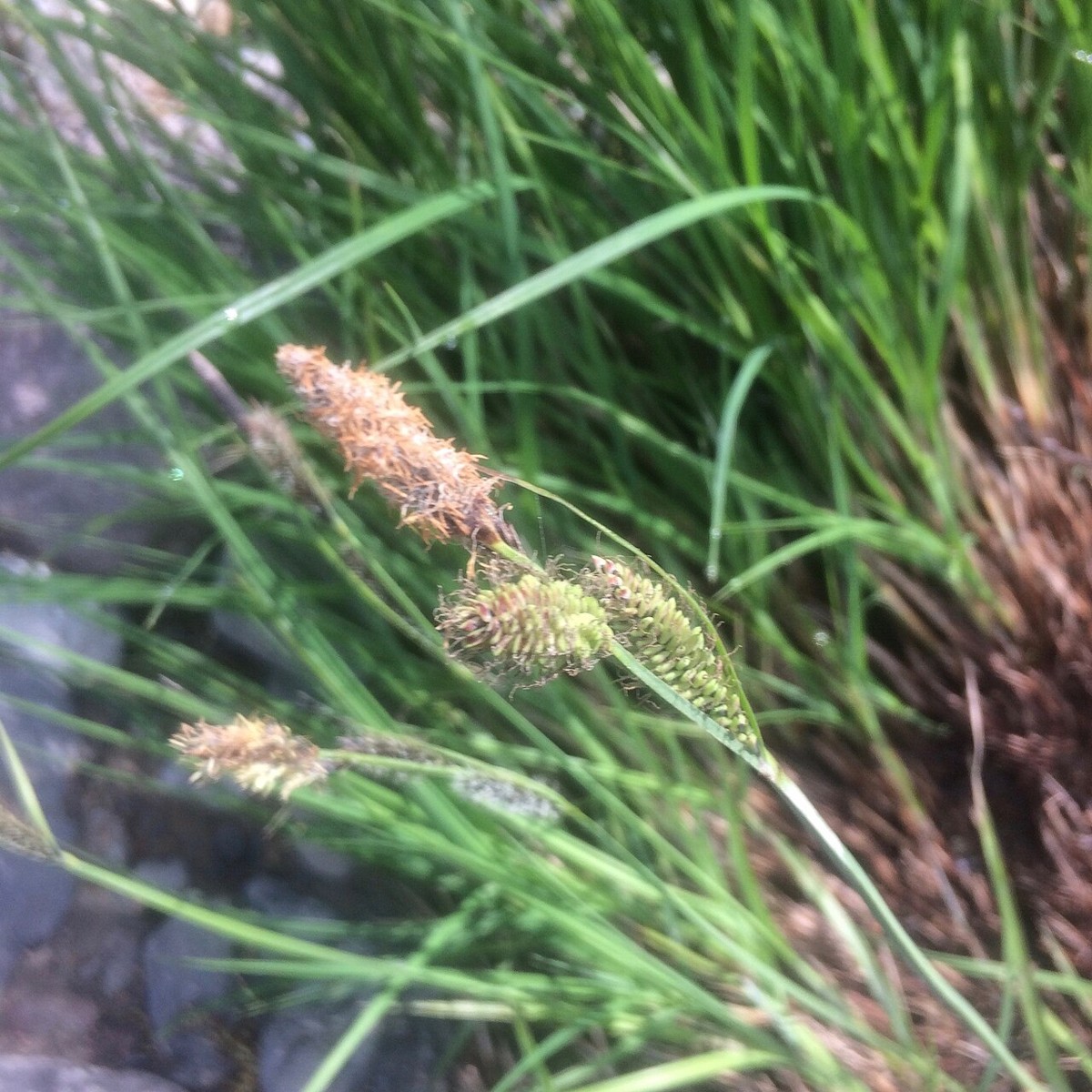
Carex nudata, commonly known as Torrent Sedge, is a tough, water-loving perennial sedge of the Pacific Coast that makes its home in one of the most demanding habitats a plant can choose: the rocky beds of fast-flowing streams and rivers. Where most perennials would be scoured away by winter floods, Torrent Sedge thrives, anchoring itself directly to boulders and cobbles with a dense, fibrous root mass and growing into substantial tussocks that can persist for decades in the same spot. This member of the Cyperaceae (sedge family) is unmistakable once you know to look for it — a coarse, rounded mound of arching grass-like leaves wedged into a crack between rocks, often partly submerged during high water and fully exposed by late summer.
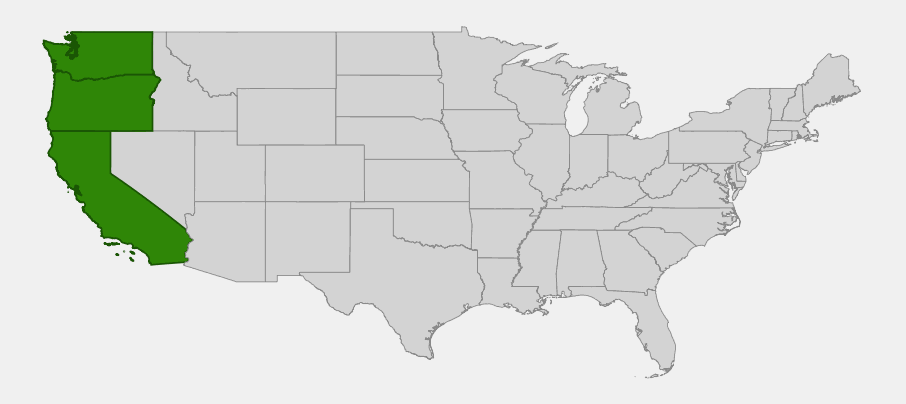
Torrent Sedge is found along the length of the West Coast, from the Cascade foothills of Washington south through Oregon’s Coast Range and Cascades into California’s Coast Ranges and the western slope of the Sierra Nevada. It is a true riparian specialist, rarely found far from a permanent or seasonal watercourse, and it is one of the defining plants of the “torrent” habitat — the churning, boulder-strewn channels of coastal and foothill creeks and rivers. The tussocks it forms are more than a curiosity; they are small but important pieces of stream engineering, slowing floodwaters, trapping sediment, and creating pockets of calm water that shelter aquatic insects and young fish.
For gardeners working on a stream restoration project, a rain garden, or a pond margin with rock or boulder features, Torrent Sedge is a strikingly authentic choice. It is rarely offered at general nurseries but is increasingly available from native plant and restoration specialists in California, Oregon, and Washington, where its reputation as a durable, low-maintenance anchor for wet, rocky sites continues to grow.
Identification
Torrent Sedge is a coarse, clump-forming (caespitose) perennial that builds large, rounded tussocks over time rather than spreading by long rhizomes. A mature tussock can reach 1 to 3 feet across and nearly as tall, with older plants forming substantial mounds 2 feet or more in height once you include the arching foliage. The base of the tussock is often packed with old leaf bases and fine roots that bind tightly to rock surfaces, which is exactly what allows the plant to hold its ground through winter high flows.
Leaves & Stems
The leaves are narrow, firm, and strongly keeled, typically ⅛ to ¼ inch (3–6 mm) wide and 1 to 3 feet long, arching gracefully outward and downward from the tussock center in a fountain-like habit. Leaf color is a deep, slightly glaucous green, fading to tan and persisting through winter rather than collapsing completely. Leaf bases are often stained reddish-brown to purplish, a helpful field mark when sorting Torrent Sedge from other streamside sedges. Flowering stems (culms) are sharply triangular in cross-section, as in all true sedges, and rise well above the leaves, often 2 to 3 feet tall.
Flowers
Like other sedges, Torrent Sedge has no petals; its flowers are reduced to tiny structures packed into dense spikes. Each flowering culm carries one or two terminal male (staminate) spikes, slender and rusty reddish-brown with papery scales, positioned above several lower female (pistillate) spikes. The female spikes are thick, cylindrical, and greenish, 1 to 3 inches long, densely packed with perigynia (the sedge’s characteristic bladder-like fruit coverings) that give the spike a bristly, bottlebrush texture. Bloom occurs from March into June, with the exact timing tracking snowmelt and stream flow at a given site.
Fruit & Seeds
The fruit is a small, three-sided achene enclosed in a beaked, papery perigynium; dozens are packed into each female spike. Spikes mature from green to straw-brown through summer, and the tightly packed clusters of ripening perigynia are a reliable identification feature even outside the main bloom window. Seed is an important late-summer food source for seed-eating birds that forage along stream corridors.
Quick Facts
| Scientific Name | Carex nudata W. Boott |
| Family | Cyperaceae (Sedge) |
| Plant Type | Clump-Forming Perennial Sedge |
| Mature Height | 1–3 ft (30–100 cm) |
| Mature Spread | 1–3 ft tussocks, expanding slowly over decades |
| Growth Rate | Moderate |
| Sun Exposure | Full Sun to Partial Shade |
| Water Needs | High; tolerates seasonal submergence |
| Soil Type | Rocky, gravelly, or sandy stream substrates |
| Soil pH | 6.0–7.5 (neutral) |
| Bloom Time | March – June |
| Flower Color | Rusty reddish-brown (male) and green (female) |
| Fall Color | Foliage fades to tan; persists through winter |
| Fruit | Small achenes in bristly cylindrical spikes |
| Deer Resistant | Yes |
| USDA Hardiness Zones | 7–9 |
Native Range
Torrent Sedge occupies a narrow but continuous band along the Pacific Coast, from the western Cascade foothills of Washington south through the Oregon Coast Range and Cascades into the Coast Ranges of California and the lower western slope of the Sierra Nevada. Throughout this range it is tied tightly to flowing water, occurring along perennial and seasonal streams, creeks, and rivers from near sea level up into the lower montane zone.
Within that range, Torrent Sedge is a specialist of the stream channel itself rather than the surrounding floodplain. It is most often found rooted directly in cracks and crevices of exposed bedrock, boulders, and large cobbles within or at the very edge of the active channel — sites that are periodically scoured by high flows and that few other perennials can colonize. This is the origin of both its common and scientific epithets: it grows in the “torrent,” often appearing almost bare (nudata) of surrounding soil, rooted straight into rock.
Because it depends on reliable stream flow, Torrent Sedge is a useful indicator of healthy, functioning riparian corridors. Its tussocks are frequently used in stream and wetland restoration work precisely because the species already does, for free, much of the bank-stabilizing and sediment-trapping work that restoration projects are trying to achieve.
📋 Regional plant lists featuring Torrent Sedge: California & Nevada · Western Oregon & Western Washington
Growing & Care Guide
Torrent Sedge is not a plant for the average flower bed — it is built for permanently wet, rocky conditions and will struggle anywhere that dries out for extended periods. Given the right site, though, it needs almost no attention once established and will outlast most other perennials in the garden.
Light
Torrent Sedge tolerates full sun along open stream channels and also performs well in the partial shade cast by streamside alders and maples. In the wild it is found in both exposures, with the deciding factor being water availability rather than light. Gardeners can plant it in anything from full sun to fairly shaded stream margins as long as moisture is consistent.
Soil & Water
This species wants rocky, gravelly, or coarse sandy substrates with excellent drainage between saturation events, mimicking the cobble bars and boulder crevices it occupies naturally. It tolerates — and in the wild experiences — periodic submergence during high flows, but it is not a true bog or pond plant; it needs oxygenated, moving or well-aerated water rather than stagnant conditions. In the garden, the best results come from planting directly among rocks at a stream, pond inlet, or bioswale where water moves through regularly. Established tussocks can handle brief dry spells but decline if soil dries out for more than a few weeks at a time.
Planting Tips
Plant container-grown Torrent Sedge in fall or early spring, wedging the root mass into gaps between rocks or cobbles much as it would root naturally. Firm soil or fine gravel around the roots to hold the plant in place until it anchors itself. Because it is a specialist rather than a generalist, it is best reserved for stream, pond, or constructed wetland edges rather than ordinary garden beds.
Pruning & Maintenance
Maintenance is minimal. Old, tattered foliage can be combed out or cut back in late winter before new growth begins, but this is purely cosmetic — the plant does not require it to stay healthy. Established tussocks are extremely tough and generally need no supplemental care beyond ensuring the water source they depend on remains intact.
Landscape Uses
Torrent Sedge earns its keep in a handful of specific, demanding settings:
- Stream and creek restoration — anchoring cobble bars and bank toes against erosion
- Rain gardens and bioswales with rocky, high-flow sections
- Pond and water-feature margins where boulders are already part of the design
- Naturalistic rock gardens built around a water source
- Habitat plantings for stream-associated birds and insects
Wildlife & Ecological Value
Despite its modest flowers, Torrent Sedge is a quietly important piece of the riparian food web and physical habitat structure along the streams it occupies.
For Birds
Seed-eating songbirds and sparrows that forage along stream corridors take advantage of the ripening perigynia in late summer, and the dense tussocks themselves provide low cover and foraging perches close to the water’s edge. Dippers and other streamside birds use the tussocks as secure footing while hunting aquatic insects along rocky banks.
For Aquatic Life
The root masses that anchor Torrent Sedge to rock surfaces also create small eddies and sheltered pockets in the current, offering refuge for aquatic insect larvae, and in turn the fish that feed on them. Juvenile fish often use the slack water behind established tussocks as resting and hiding habitat during high flows.
For Pollinators
Like other sedges, Torrent Sedge is wind-pollinated and does not rely on insect pollinators, but its early-season flowering provides incidental pollen that some generalist insects will use when little else is blooming along the stream.
Ecosystem Role
Torrent Sedge functions as a kind of living riprap. Its dense root systems bind directly to rock surfaces and trap fine sediment, slowing floodwaters and reducing erosion at exactly the points in a stream channel most exposed to scour. Over time, a healthy population of Torrent Sedge contributes meaningfully to channel stability, which is why restoration practitioners prize it for projects on rocky, high-energy streams.
Cultural & Historical Uses
Torrent Sedge has a much lower profile in the ethnobotanical record than many of its sedge relatives, largely because its rooted-to-bedrock growth habit in the middle of active stream channels makes it impractical to harvest compared with the long, pliable rhizomes of species such as basketry sedges found on nearby floodplains. It is best understood as an ecological specialist rather than a plant with a documented history of material use by Indigenous peoples of the Pacific Coast.
Its modern significance is almost entirely ecological and restorative. As stream and watershed restoration has matured as a field along the West Coast, practitioners have increasingly recognized Torrent Sedge as a reference species — a plant whose presence signals a healthy, naturally functioning rocky stream channel, and whose reintroduction can help stabilize degraded reaches.
Because it is so tightly tied to intact streamflow, Torrent Sedge also serves an informal indicator role for naturalists and hydrologists: a cobble bar still supporting robust tussocks of this sedge is generally a cobble bar that has not been drastically altered by channelization, dewatering, or heavy sedimentation.
Frequently Asked Questions
Can I grow Torrent Sedge in a regular garden bed?
Not successfully in most cases. Torrent Sedge needs consistently wet, rocky, well-aerated conditions that mimic a stream channel. It is best suited to pond edges, bioswales, or constructed stream features rather than ordinary garden soil.
Does Torrent Sedge need to be submerged in water?
No, but it does tolerate periodic submergence during high flows in the wild. It needs consistent moisture and does best with moving or well-oxygenated water rather than being permanently waterlogged in stagnant conditions.
Is Torrent Sedge the same as basketry sedges used by California tribes?
No. Basketry sedges typically used historically, such as Carex barbarae, grow long underground rhizomes on floodplains and were harvested for their roots. Torrent Sedge grows in tight tussocks anchored directly to rocks in active stream channels and does not have the same documented history of material use.
How is Torrent Sedge used in restoration projects?
Its dense, rock-gripping root systems make it valuable for stabilizing cobble bars and stream banks on rocky, high-energy creeks, where it slows erosion and creates shelter for aquatic insects and small fish.
Is Torrent Sedge deer resistant?
Yes. Like most sedges, its tough, fibrous foliage is not a preferred browse for deer, making it a reliable, low-conflict choice in areas with heavy deer pressure.

Looking for a nursery that carries Torrent Sedge?
Browse our native plant nursery directory: California · Oregon · Washington