Vasey’s Coyote Thistle (Eryngium vaseyi)
Eryngium vaseyi, commonly known as Vasey’s Coyote Thistle or simply coyote thistle, is a California endemic wildflower restricted to one of the state’s most imperiled plant communities: vernal pools and the seasonal wet meadows and swales that mimic them. Despite the common name, it is not a true thistle at all — it belongs to the carrot family, Apiaceae, alongside parsley and Queen Anne’s lace, and its spiny appearance comes from deeply cut, sharp-lobed leaves rather than any relation to the thistle tribe of the sunflower family.
The species was first collected along the San Antonio River in Monterey County in 1880 by the botanist George Richard Vasey, for whom it is named, and it remains known today from a comparatively narrow swath of California: the Central Valley, parts of the Central Coast Ranges, and scattered sites along the southern California coast. Within these regions it is a true specialist, found almost exclusively where winter and spring water collects in shallow basins and then evaporates away by early summer — the boom-and-bust hydrology that defines vernal pool ecosystems.
Vasey’s coyote thistle is a sprawling, low-growing perennial herb, its spreading branches reaching up to half a meter in length as they radiate out across damp ground. Its blue-green, deeply lobed leaves and rounded, spiny-bracted flower heads give it a distinctive silhouette among the grasses and low wildflowers that share its vernal pool habitat, and its presence is often one of the clearest signs that a California wetland is behaving exactly as its native flora expects it to.
Identification
Vasey’s coyote thistle has a decumbent to loosely upright growth habit, with branches sprawling outward from the base rather than growing as a single upright stem, giving established plants a low, spreading rosette-like presence across wet ground.
Leaves
The leaves are lance-shaped to oblong, growing up to about 9 inches (24 cm) long, with edges deeply and sharply cut into narrow, pointed lobes that give the foliage a spiky, almost holly-like texture. This thistle-like foliage — grayish to blue-green in color — is the main reason the plant earned a common name borrowed from an entirely unrelated family of spiny plants.
Flowers
The inflorescence consists of small, rounded flower heads clustered toward the ends of the branching stems, each head surrounded by a ring of narrow, spine-tipped bracts in the manner typical of the genus Eryngium. Individual flowers within each head are tiny and whitish, opening in late spring to early summer as the vernal pools that sustain the plant begin to dry. The spiny, geometric flower heads are the clearest identifying feature for anyone trying to distinguish this species from the grasses, downingias, and other wildflowers that often share the same pool margins.
Fruit & Seed
Like other eryngiums, the fruit is a small, dry schizocarp covered in short scales or bristles, splitting into two seed-like segments at maturity. Seeds typically remain in the dried soil of the pool basin through the dry summer and fall, germinating with the return of winter rains.
Quick Facts
| Scientific Name | Eryngium vaseyi |
| Family | Apiaceae (Carrot) |
| Plant Type | Perennial Herb (Vernal Pool Specialist) |
| Mature Height | 6–12 in (15–30 cm) |
| Mature Spread | Branches to 20 in (50 cm) |
| Growth Rate | Moderate; tied to the seasonal pool cycle |
| Sun Exposure | Full Sun to Light Shade |
| Water Needs | Seasonally wet, then dry; drought-dormant in summer |
| Soil Type | Heavy clay or hardpan with poor drainage |
| Soil pH | 6.0–7.5 |
| Bloom Time | May – July, as pools dry |
| Flower Color | Whitish |
| Fall Color | Tan/dormant as pools dry completely |
| Fruit | Small bristly schizocarp |
| Deer Resistant | Yes; spiny foliage deters browsing |
| USDA Hardiness Zones | 8–10 |
Native Range
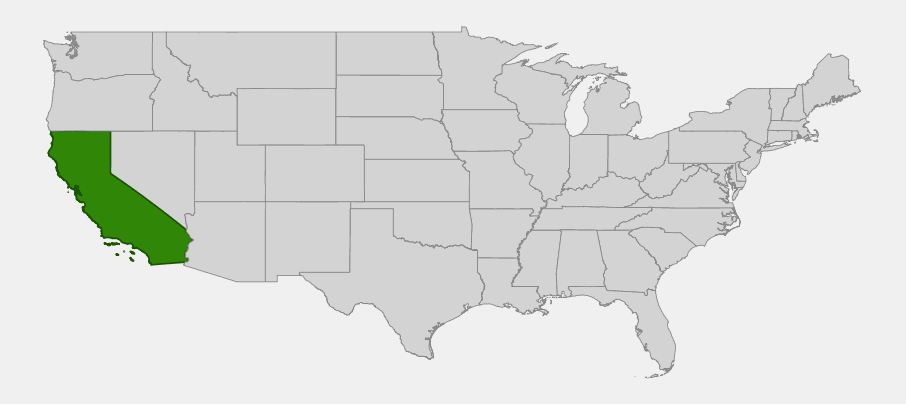
Vasey’s coyote thistle is endemic to California — found nowhere else in the world. Its range is centered on the Central Valley, with additional populations scattered through parts of the Central Coast Ranges and in vernal pool complexes along the southern California coast. It is a classic example of a vernal pool indicator species: a plant so tightly tied to one particular, disappearing wetland type that its presence effectively maps the remaining fragments of California’s historic vernal pool landscape.
Within this range, the species occurs specifically in vernal pools, swales, and seasonally wet meadows and depressions that fill with water during the winter rainy season and then dry down completely by early to mid-summer. These habitats typically sit over a hardpan, claypan, or other impermeable soil layer that prevents water from draining away quickly, creating the alternating flood-and-drought cycle that few other plants can tolerate but that Vasey’s coyote thistle and its vernal pool neighbors depend on.
NatureServe currently ranks the species G5, “Secure,” at the global level, reflecting that it remains reasonably numerous where its habitat survives. That overall security, however, obscures a sharper regional concern: California’s vernal pools themselves have been reduced by an estimated 90 percent or more from their historic extent through agricultural conversion and urban development, and remaining populations of vernal pool specialists like Vasey’s coyote thistle are increasingly confined to isolated, fragmented pool complexes.
📋 Regional plant lists featuring Vasey’s Coyote Thistle: California & Nevada
Growing & Care Guide
Vasey’s coyote thistle is a plant for a very specific garden niche: it is not a general-purpose wildflower for a typical border, but a specialist suited to gardeners or restoration projects recreating authentic vernal pool or seasonal wetland conditions.
Light
Full sun to lightly filtered shade suits this species best, matching the open, unshaded character of natural vernal pool basins, which are rarely found under tree canopy.
Soil & Water
The single most important factor in growing Vasey’s coyote thistle successfully is replicating its seasonal hydrology: standing or saturated water through winter and spring, followed by a complete, prolonged dry-down through summer and fall. It needs heavy clay, hardpan, or other slow-draining soil that can hold water at the surface during the rainy season — ordinary well-drained garden soil will not reproduce the conditions this species requires, and it will not persist long-term in a conventionally irrigated bed. Gardens with a constructed vernal pool basin, a naturally occurring claypan low spot, or a dedicated seasonal wetland feature are the only realistic settings for this plant outside of habitat restoration work.
Planting Tips
Sow seed directly into the basin of a seasonal wetland feature in fall, ahead of the winter rains, rather than attempting to transplant container stock into standard garden beds. Because the species is uncommon in nursery trade and tied to a narrow set of growing conditions, it is best attempted only as part of a dedicated vernal pool restoration or native plant demonstration project, ideally using locally sourced, regionally appropriate seed.
Maintenance
Once established in appropriate conditions, Vasey’s coyote thistle requires little active maintenance beyond protecting the basin’s natural wet-dry cycle from disruption — avoid supplemental summer irrigation, which can prevent the dry-down this species needs to complete its life cycle and can favor weedy, non-native competitors instead.
Landscape Uses
Given its narrow habitat requirements, this species is suited to a limited set of settings:
- Vernal pool restoration projects on appropriate hardpan or claypan soils
- Constructed seasonal wetland features in native plant demonstration gardens
- Conservation plantings aimed at supporting vernal pool ecosystems
- Educational native plant gardens illustrating California’s vernal pool flora
Wildlife & Ecological Value
As a core member of the vernal pool plant community, Vasey’s coyote thistle contributes to one of California’s most distinctive and threatened ecosystems, one whose wildlife value extends well beyond the plants themselves.
For Pollinators
The small, clustered flower heads typical of Eryngium attract a range of native bees and flies, which are drawn to the shallow, accessible flowers of umbellifers generally. Because the bloom period coincides with the final drying of the pool, these flowers provide an important late-season nectar source after many of the showier spring vernal pool wildflowers, like downingia and goldfields, have already finished blooming.
Ecosystem Role
Vernal pools support an entire assemblage of specialized, often rare organisms, including fairy shrimp and other invertebrates that complete their life cycles within the brief wet season, as well as waterfowl and shorebirds that use the pools during migration. Vasey’s coyote thistle, as one of the structural plant species defining pool margins, helps stabilize pool-edge soils and contributes to the characteristic zonation of vegetation — from open water at the pool’s center to increasingly dry-adapted plants toward the margins — that gives vernal pool ecosystems their remarkable biodiversity packed into a small area.
Cultural & Historical Uses
Vasey’s coyote thistle has no significant documented history of use by Indigenous peoples or early settlers as a food, fiber, or medicinal plant, and it has never entered commercial or agricultural use. Its story is instead primarily a botanical and conservation one: first collected and described by nineteenth-century plant explorers documenting California’s then little-known flora, it has become, in the twentieth and twenty-first centuries, a symbol of the vernal pool habitat type itself — one of the clearest indicators botanists and land managers use to identify intact, functioning vernal pool ecosystems worth protecting.
Today the species is primarily of interest to native plant enthusiasts, conservation biologists, and restoration practitioners working to protect or recreate California’s remaining vernal pools, a habitat type that has become a focal point of state and federal wetland conservation efforts precisely because of the unique, specialized plants and animals — Vasey’s coyote thistle among them — that depend on it and exist nowhere else.
Frequently Asked Questions
Is Vasey’s coyote thistle actually a thistle?
No. Despite its spiny, thistle-like leaves, it belongs to the carrot family (Apiaceae), not the sunflower family that contains true thistles. The common name reflects its appearance rather than its actual botanical relationships.
Can I grow Vasey’s coyote thistle in a regular garden bed?
Not successfully long-term. This species requires the specific wet-winter, dry-summer hydrology of a vernal pool or seasonal wetland over slow-draining soil. Ordinary irrigated garden beds do not replicate these conditions and the plant will not persist in them.
Is Vasey’s coyote thistle endangered?
It is not currently federally or state-listed as threatened or endangered, and NatureServe ranks it globally “Secure.” However, it depends entirely on vernal pool habitat, which has been dramatically reduced across California, so its long-term outlook is closely tied to vernal pool conservation.
Where in California can I see Vasey’s coyote thistle in the wild?
It occurs in remaining vernal pool complexes across the Central Valley, parts of the Central Coast Ranges, and scattered sites along the southern California coast, typically blooming from May into July as pools dry.
What other plants grow alongside Vasey’s coyote thistle?
Common vernal pool neighbors include downingia, goldfields, popcornflower, and various native grasses adapted to the same alternating flood-and-drought cycle.

Looking for a nursery that carries Vasey’s Coyote Thistle?
Browse our native plant nursery directory: California