Western Sandcherry (Prunus pumila var. besseyi)
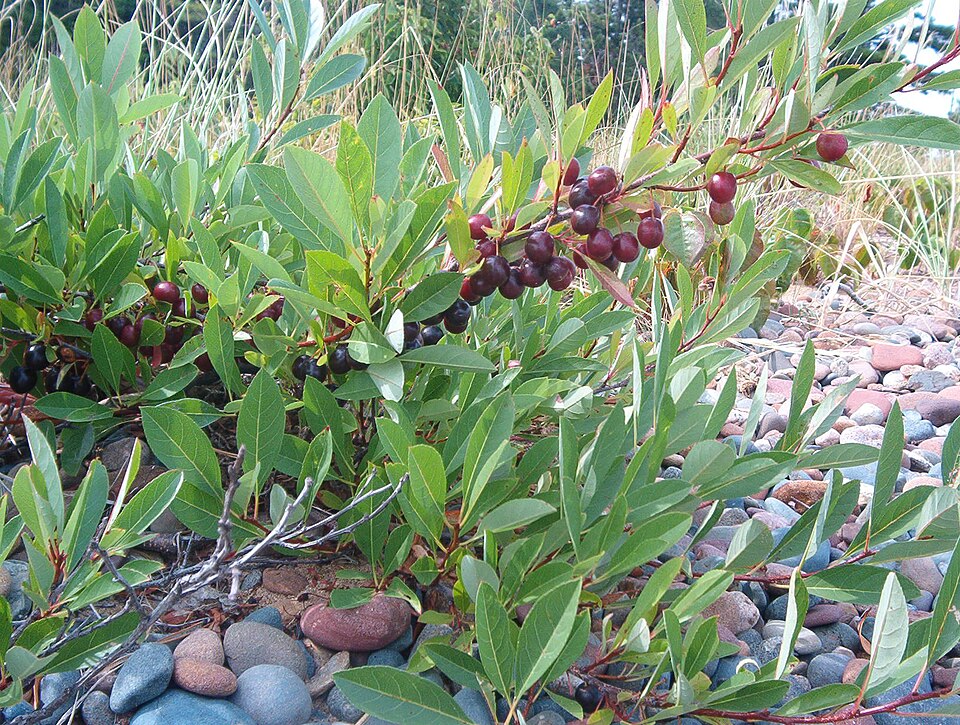
Prunus pumila var. besseyi, commonly known as Western Sandcherry or Bessey’s Cherry, is a compact, low-growing native shrub that has earned an important place in both natural prairie ecosystems and practical horticultural use across the Great Plains and northern Rocky Mountain states. This tough, drought-tolerant shrub rarely exceeds 3 to 5 feet in height but produces an abundance of small, dark purple-black cherries that are highly valued by wildlife and were a significant food source for Indigenous peoples of the region.
Western Sandcherry is a plant of the sandy soils, rocky hillsides, and dry plains that characterize much of Montana and Wyoming’s prairie and foothill landscapes. It thrives where larger shrubs struggle — on windswept ridges, sandy knolls, and well-drained slopes that bake in summer and freeze hard in winter. The plant’s compact, spreading form allows it to shed snow loads, its deep root system accesses moisture below the surface, and its modest stature keeps it out of the wind zone where dessication is most severe. The result is a shrub that can be found persisting on some of the harshest sites in the region.
In spring, Western Sandcherry is spectacular. The branches are densely covered with white flowers before the leaves emerge fully, creating a frothy, snow-white display that is one of the earliest signs of spring on the northern prairie. This makes it an exceptional plant for early pollinators — native bumblebees, mining bees, and other early-emerging insects depend on its flowers at a time when few other shrubs are in bloom. The cherries that follow are important food for birds and mammals through late summer and fall.
Identification
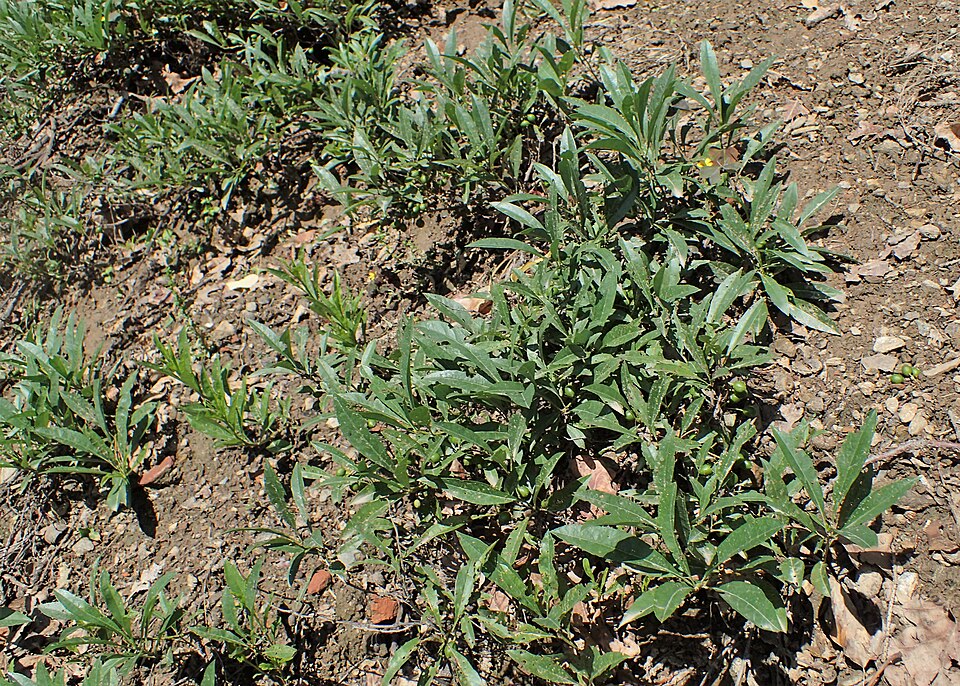
Western Sandcherry grows as a low, spreading or upright deciduous shrub, typically 1 to 4 feet tall (occasionally to 5 feet in favorable conditions) and 3 to 6 feet wide, often forming spreading colonies from root sprouts. The overall form is compact and dense, with multiple stems arising from the base and a twiggy, somewhat open canopy. Bark is reddish-brown on young stems, becoming grayer and rougher with age.
Leaves
Leaves are simple, alternate, narrowly elliptic to obovate, 1 to 2.5 inches long and 1/2 to 1 inch wide. The leaf surface is dark green above, slightly paler below, with a smooth to slightly hairy texture. Margins are finely serrated (toothed). The leaves emerge with the flowers in spring, turning yellow-orange in fall before dropping. Leaf petioles (stalks) are short, 3 to 8 mm long, often with small glands where the leaf blade meets the stalk — a typical feature of the genus Prunus.
Flowers & Fruit
The flowers are small, approximately 1/2 inch across, with 5 white petals and many stamens (15 to 20) creating a fluffy, brush-like appearance. They are borne singly or in clusters of 2 to 4 from lateral buds along the previous year’s wood. Flowering occurs in late April to early May at lower elevations and May to June in the mountains — among the earliest blooming native shrubs in its range.
The fruit is a small drupe (cherry), approximately 1/2 to 3/4 inch in diameter, that ripens from green through red to dark purple-black in late July and August. The cherries have a thin skin, juicy purple-black flesh, and a single round pit. Flavor ranges from pleasantly sweet to somewhat astringent depending on growing conditions — plants in moist, fertile sites typically produce sweeter fruit. The cherries are highly nutritious, rich in antioxidants, and have been extensively used in breeding programs to create hardy ornamental and fruiting cherry varieties for northern climates.
Quick Facts
| Scientific Name | Prunus pumila var. besseyi (syn. Prunus besseyi) |
| Family | Rosaceae (Rose) |
| Plant Type | Deciduous Native Shrub |
| Mature Height | 3–5 ft |
| Sun Exposure | Full Sun |
| Water Needs | Moderate |
| Bloom Time | April – June (early spring) |
| Flower Color | White |
| Fruit | Dark purple-black cherries (July – August) |
| Soil Type | Sandy, gravelly, or loamy; well-drained; tolerates dry, rocky soils |
| USDA Hardiness Zones | 3–6 |
Native Range
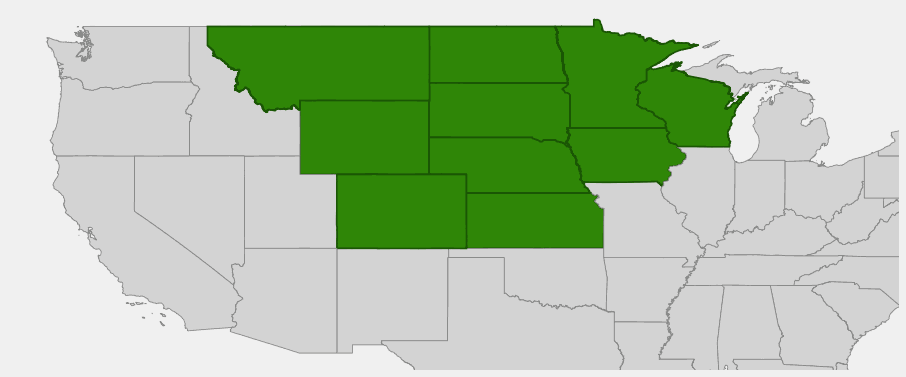
Western Sandcherry is native to the central Great Plains and northern Rocky Mountain foothills, with its core range extending from Montana and Wyoming east through the Dakotas, Nebraska, Kansas, and south into Colorado. It extends east into Minnesota, Iowa, and Wisconsin along the western edge of the eastern forest biome. Its range closely tracks the distribution of sandy soils and dry prairie habitats across the northern interior of the continent.
In Montana and Wyoming, Western Sandcherry is found primarily in the eastern and central portions of both states, where the prairie grasslands and foothills provide the dry, well-drained sandy or rocky soils it prefers. It often grows along dry stream terraces, on exposed rocky hillsides, and in open sagebrush-grassland communities. Elevations range from 1,500 feet in the eastern Montana plains to over 6,000 feet in the Wyoming mountain foothills. At higher elevations, the plant tends to be more compact and lower-growing, hugging the ground for protection from wind and cold.
Western Sandcherry commonly associates with big sagebrush (Artemisia tridentata), native grasses including needle-and-thread (Hesperostipa comata), blue grama (Bouteloua gracilis), and buffalograss (Buchloe dactyloides), and other low shrubs including rabbitbrush (Ericameria nauseosa), greasewood (Sarcobatus vermiculatus), and winterfat (Krascheninnikovia lanata). It often forms the shrub layer in otherwise grass-dominated communities, providing structural diversity that supports a range of wildlife not found in pure grassland.
📋 Regional plant lists featuring Western Sandcherry: Montana & Wyoming
Growing & Care Guide
Western Sandcherry is an excellent choice for low-maintenance native landscapes in the northern Great Plains and Rocky Mountain states. It is remarkably cold-hardy (Zone 3), drought-tolerant once established, and provides exceptional three-season interest — spring flowers, summer fruit, and fall foliage color — with minimal care requirements.
Light
Western Sandcherry requires full sun to perform optimally. It will grow in part shade but becomes open, leggy, and flowers poorly without adequate sunlight. Plant it in the sunniest available location for maximum flowering, fruit production, and overall plant health. In its natural habitat, it grows on open, exposed terrain where it receives full sun throughout the day.
Soil & Water
Well-drained soil is the most critical requirement for Western Sandcherry. It grows well in sandy, gravelly, loamy, or rocky soils but will not tolerate waterlogged or heavy clay conditions. Once established (typically one to two growing seasons), it is moderately drought-tolerant, though fruit production is better with some irrigation during the driest summer periods. In its first growing season, water regularly to encourage deep root establishment. Avoid fertilizing — like most native prairie shrubs, Western Sandcherry does not benefit from high-nitrogen fertilizer, which promotes excessive vegetative growth at the expense of flowering and fruiting.
Planting Tips
Plant in early spring or fall for best establishment. Container-grown plants transplant readily. Space plants 4 to 6 feet apart for a naturalistic hedgerow or windbreak planting; 6 to 8 feet for isolated specimens. Western Sandcherry spreads slowly by root sprouting, so allow adequate space for the colony to expand over time. If using as a single ornamental specimen, remove root sprouts as they appear to maintain a compact form. Planting two or more plants of different genetic origins improves cross-pollination and fruit production.
Pruning & Maintenance
Pruning needs are minimal. Remove dead wood in late winter. Thin out crowded interior stems every 3 to 5 years to maintain good air circulation and light penetration, which reduces disease pressure and improves fruit quality. Western Sandcherry can be rejuvenated by cutting the entire shrub back to 6 to 8 inches above the ground in early spring — it will resprout vigorously from the root crown. The plant is relatively pest-resistant; occasional issues include black cherry aphid, tent caterpillars, and black knot fungus — the same pests that affect other native Prunus species.
Landscape Uses
- Hedgerows and windbreaks — low, dense growth blocks wind and creates habitat corridors
- Wildlife plantings — outstanding bird food plant; excellent for bluebird and waxwing habitat
- Prairie restorations — appropriate shrub layer component in dry prairie communities
- Edible landscaping — cherries are edible and historically important; good for jams, jellies
- Erosion control on dry slopes and sandy banks
- Foundation plantings — compact size suitable for near-building placements in appropriate climates
- Pollinator gardens — critical early spring nectar source
Wildlife & Ecological Value
Western Sandcherry is one of the highest-value native shrubs for wildlife in the northern Great Plains, providing food and cover across multiple seasons for a wide variety of species.
For Birds
The cherries are eagerly consumed by many bird species including American Robins, Cedar Waxwings, Brown Thrashers, Gray Catbirds, Swainson’s Thrushes, Eastern Bluebirds, Western Bluebirds, and various species of native sparrows. In the Great Plains context, the shrub is especially valuable because it provides fruiting resources in an otherwise largely treeless landscape. Sharp-tailed Grouse eat both the cherries and the buds in winter. The dense, thorny structure of older plants provides excellent nesting habitat for small birds including Yellow Warblers and Song Sparrows.
For Mammals
Mule deer and white-tailed deer browse the foliage and twigs, particularly in winter when other browse is scarce. Black bears and coyotes eat the cherries in late summer. Small mammals including ground squirrels, chipmunks, and mice consume fallen fruit. Pronghorn antelope browse the shrubs in open prairie settings. The dense growth creates important cover habitat for small mammals throughout the year, particularly in winter when the shrub’s persistent structure above snow provides shelter.
For Pollinators
Western Sandcherry is one of the most important early spring nectar sources for native bees in the northern Great Plains. Flowering coincides with the emergence of overwintering native bumblebee queens (especially Bombus ternarius and B. pensylvanicus), which desperately need early nectar sources after emerging from winter dormancy. Mining bees (Andrenidae), mason bees (Osmia spp.), and various sweat bees (Halictidae) also visit the flowers. Several native bee species that specialize on Rosaceae family flowers depend heavily on Prunus species including Western Sandcherry for their spring foraging.
Ecosystem Role
In the primarily grass-dominated prairie landscapes of Montana and Wyoming, shrubs like Western Sandcherry provide critical structural diversity that supports species unable to live in pure grassland. Dense shrub patches create thermal refuges for wildlife in winter, nest sites for shrubland birds, and fruiting resources in mid-summer when grassland food sources are sparse. The plant’s root sprouting behavior creates multi-stemmed thickets over time, increasing habitat complexity and providing edge habitat that many wildlife species prefer.
Cultural & Historical Uses
Western Sandcherry holds special significance in the Great Plains as both a food plant and a horticultural resource. The cherries were harvested in large quantities by the Lakota (Sioux), Arikara, Mandan, Hidatsa, and other Plains nations, who ate them fresh, dried them for winter storage, and ground them with fat and dried meat to make pemmican — the high-calorie travel food that was the staple of both Indigenous peoples and, later, Euro-American traders and explorers in the northern Plains. The pit was typically included in dried preparations, as the dried pit reportedly has a pleasant almond-like flavor.
The Lakota name for the plant is “čhaŋpȟá pȟahli” (roughly “sand cherry”), reflecting its habitat association. The cherries were traded widely among Plains nations and were considered a delicacy, much sought after for their sweet-tart flavor. Chokecherry (Prunus virginiana) was more abundant and widely used, but Western Sandcherry was specifically sought for its sweeter taste in areas where it grew. Both species were central to the annual fruit harvest cycle of Plains peoples.
In the late 19th century, Charles Bessey — the Nebraska botanist for whom the variety is named — recognized Western Sandcherry’s horticultural potential. Bessey worked with the Soil Conservation Service and U.S. Forest Service to develop hardy fruiting trees and shrubs for the treeless Plains, and Western Sandcherry became the foundation for an entire branch of cold-climate fruit breeding. Today, numerous named cultivars of Prunus × cistena (Sand Cherry hybrids), Nanking Cherry, and other ornamental cherries trace their heritage to Western Sandcherry crosses. It remains commercially grown as both an ornamental and a minor fruit crop in northern climates where most other cherries are too tender to survive.
Frequently Asked Questions
Can you eat Western Sandcherry?
Yes — the cherries are edible and were historically an important food source for Plains Indigenous peoples. They can be eaten fresh, though they vary from sweet to astringent depending on growing conditions. They are excellent for jams, jellies, syrups, and wine. The cherries are small but abundant, and harvesting a productive shrub yields a significant quantity of fruit. Note: Like all cherry pits, the seeds contain cyanogenic compounds and should not be consumed in large quantities.
What is the difference between Western Sandcherry and Chokecherry?
Chokecherry (Prunus virginiana) is a much taller shrub or small tree, typically 10 to 25 feet tall, with longer, more cylindrical flower clusters (racemes) and a much wider range. Western Sandcherry is much shorter (3–5 ft), with smaller flower clusters and a narrower distribution centered on the Great Plains. The cherries of Western Sandcherry are generally sweeter and less astringent than chokecherries.
Is Western Sandcherry the same as Hansen’s Bush Cherry?
Not exactly. Hansen’s Bush Cherry refers to cultivated selections derived from Western Sandcherry or its hybrids, developed by Niels Hansen of the South Dakota Agricultural Experiment Station in the early 20th century. These cultivars were bred for larger, sweeter fruit and improved ornamental qualities. True wild Prunus pumila var. besseyi is the native species from which these cultivars were developed.
How do I get Western Sandcherry to fruit well?
Western Sandcherry fruits best in full sun with good air circulation. Cross-pollination between two or more plants significantly increases fruit set, so plant at least two individuals. Adequate moisture during fruit development (June–July) improves fruit size and sweetness. Avoid over-fertilizing, which promotes leafy growth at the expense of fruit production.
Does Western Sandcherry tolerate cold winters?
Western Sandcherry is extremely cold-hardy — rated to USDA Zone 3 and reported to survive temperatures below -40°F (-40°C) in Montana and the Dakotas. It is one of the most cold-tolerant native fruiting shrubs available for northern gardens. Its low, compact form also helps it survive under snow cover, which provides insulation against extreme cold.