White Fawn Lily (Erythronium oregonum)
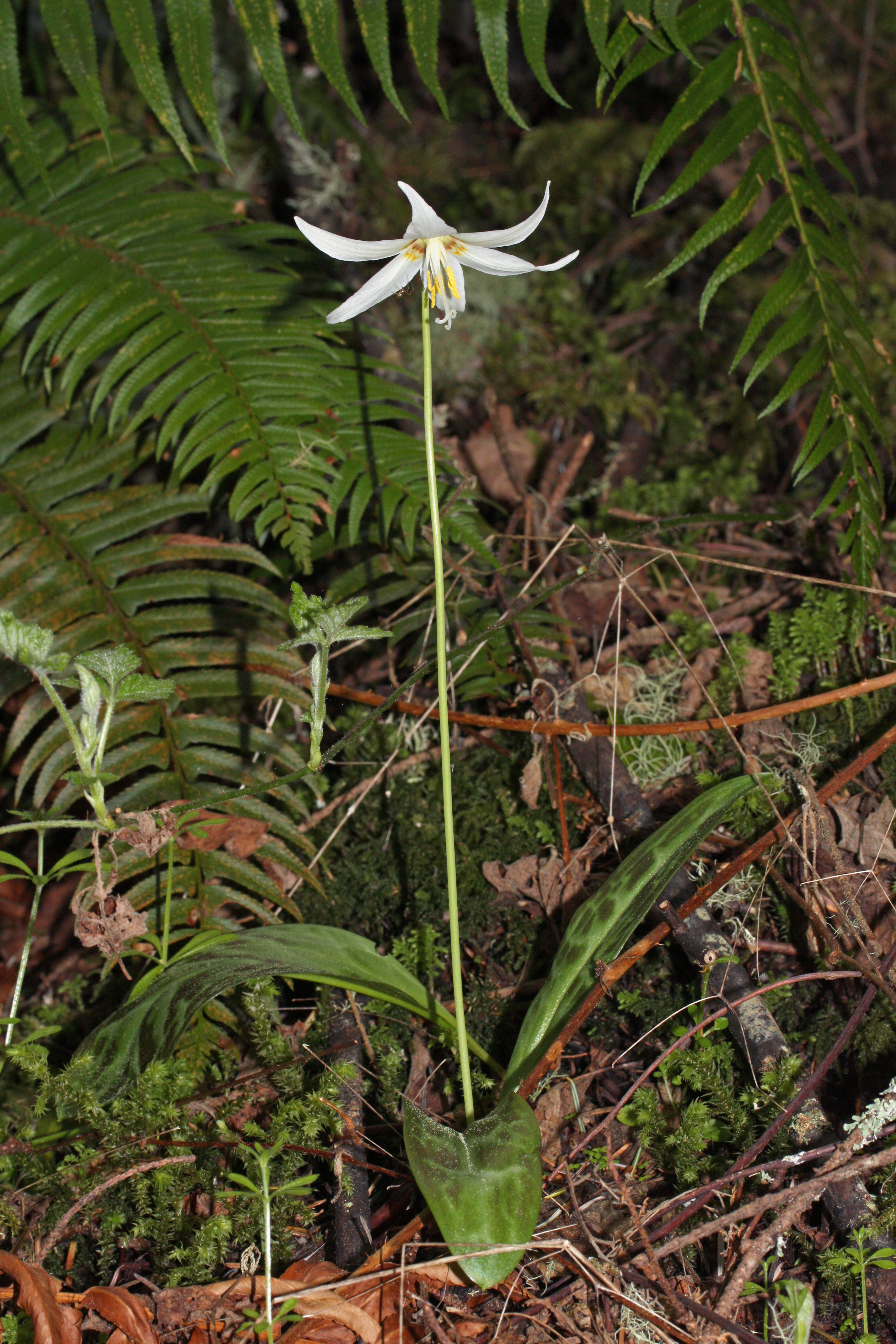
Erythronium oregonum, commonly known as White Fawn Lily or Giant White Fawn Lily, is a delicate spring ephemeral wildflower native to the Pacific Northwest. This charming member of the lily family produces solitary white flowers that nod gracefully above distinctive mottled leaves, creating one of the most elegant displays in the early spring woodland garden.
Named for the fawn-like appearance of its mottled leaves—which some say resemble the pricked ears of a young deer—White Fawn Lily emerges from a deep bulb to herald the end of winter with its pristine blooms. The flowers feature recurved petals that sweep upward like a turk’s cap, revealing bright yellow stamens and creating an unmistakable woodland jewel.
Quick Facts
| Scientific Name | Erythronium oregonum |
| Family | Liliaceae (Lily) |
| Plant Type | Perennial Bulb / Spring Ephemeral |
| Mature Height | 4–16 inches |
| Spread | 2–6 inches |
| Growth Rate | Slow (bulb increases gradually) |
| Sun Exposure | Full Sun to Full Shade |
| Water Needs | Moderate |
| Soil Type | Well-drained, organic-rich |
| Soil pH | 5.5–7.0 (slightly acidic to neutral) |
| Bloom Time | March – May |
| Flower Color | White with yellow centers |
| Dormancy | Summer dormant (dies back) |
| USDA Hardiness Zones | 4–8 |
Identification
White Fawn Lily is unmistakable when in bloom, with its distinctive nodding white flowers and mottled foliage creating a unique combination in the spring woodland.
Additional identification details for White Fawn Lily include seasonal variations in appearance, distinguishing features from similar species, and characteristics that make it unique in its habitat. Field guides and botanical keys can help with positive identification, especially when comparing to closely related species in the same genus or family.
Leaves
Leaves
The leaves of White Fawn Lily are among its most distinctive features and serve as reliable identification markers even when the plant is not in bloom. Each bulb typically produces one or two basal leaves that emerge directly from the ground in early to mid-spring. The leaves are elliptic to broadly lanceolate in shape, measuring 3 to 8 inches (8-20 cm) long and 1 to 3 inches (2.5-8 cm) wide, with smooth, entire margins and a distinctive pointed tip.
What makes these leaves particularly striking is their beautiful mottled coloration. The deep green base color is overlaid with irregular patches and streaks of pale green, cream, white, and sometimes purple-brown, creating an attractive marbled or tessellated pattern that resembles the dappled light of a forest floor. This mottling pattern is unique to each leaf and varies considerably between individual plants. The leaves have prominent parallel veins and a somewhat succulent texture, helping them retain moisture in their woodland habitat.
The leaves are positioned flat against the ground or at slightly ascending angles, forming an elegant rosette around the base of the flowering stem. They persist through the growing season but typically begin to yellow and wither by midsummer as the plant enters dormancy. In optimal growing conditions with consistent moisture, the leaves may remain green longer, but they invariably disappear completely by late summer, leaving no trace of the plant above ground until the following spring.
Flowers
The flowers of White Fawn Lily are truly spectacular and represent one of the most elegant displays in the Pacific Northwest spring flora. Each plant produces a single flower (occasionally two) atop a slender, leafless stem that rises 4 to 12 inches (10-30 cm) above the basal leaves. The flower is nodding or drooping, hanging gracefully downward like a delicate bell or lantern.
The six petals are pure white to creamy white, occasionally with a pale pink or lavender tinge, particularly on the outer surfaces. Each petal is 1 to 1.5 inches (2.5-4 cm) long, with a characteristically recurved or strongly curved-back shape that gives the flower its distinctive “swept-back” appearance. The petals are often marked with yellow or greenish-yellow at the base near the center of the flower, and may show faint pink or purple lines or dots on the outer surfaces.
The flower’s center contains six prominent stamens with bright yellow or orange anthers that dangle conspicuously from the flower’s opening, and a single pistil with a three-lobed stigma. The overall effect is remarkably graceful and sophisticated, earning the plant its reputation as one of the most beautiful native wildflowers of the region. Individual flowers typically last 1-2 weeks in cool, moist conditions, though hot weather can significantly shorten their lifespan.
Fruit & Seeds
After successful pollination, White Fawn Lily develops a three-chambered capsule fruit that is initially green and upright on the flower stalk. As it matures over several weeks, the capsule becomes dry and papery, eventually splitting open along three sutures to release the seeds. The capsule is roughly triangular when viewed from above, measuring about ½ inch (1.2 cm) in length.
The seeds are relatively large for a wildflower, measuring about ¼ inch (6 mm) long, and are dark brown to black with a smooth, somewhat glossy surface. Each capsule typically contains 12-30 seeds, though production varies greatly depending on growing conditions and pollinator activity. The seeds lack any specialized dispersal structures and rely primarily on gravity and occasional transport by ants or small mammals for distribution.
Seed production is often irregular in White Fawn Lily populations, with some years producing abundant seed crops and others yielding very little. This variability appears to be related to spring weather conditions during the critical pollination period, as cold, wet weather can significantly reduce pollinator activity and subsequent fruit set.
Native Range
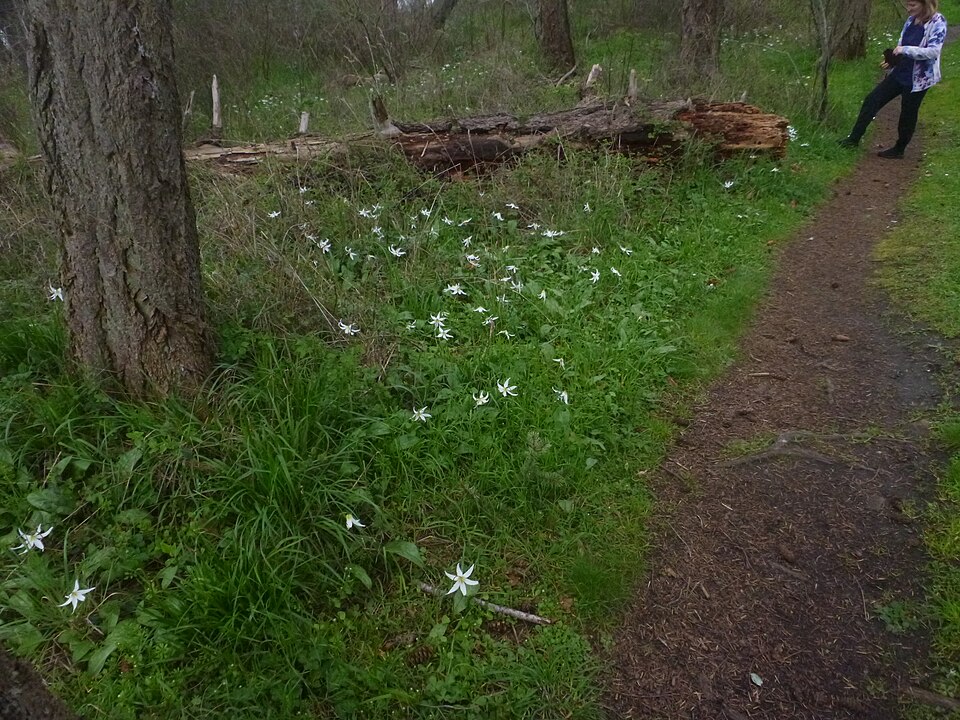
White Fawn Lily is native to the coastal regions of the Pacific Northwest, ranging from southwestern British Columbia south to northern California. It grows primarily west of the Cascade Range crest in the moist forests typical of the region’s temperate rainforest climate.
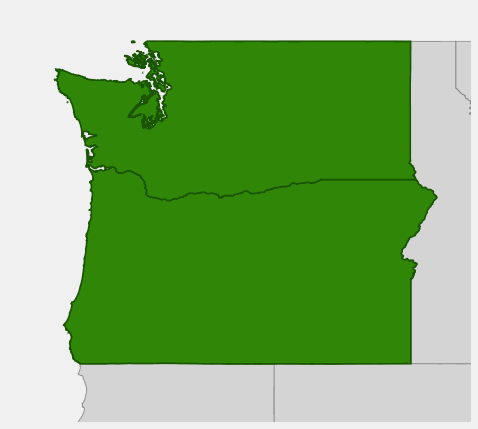
📋 Regional plant lists featuring White Fawn Lily: Western Oregon & Western Washington
Growing & Care Guide
White Fawn Lily requires patience but rewards gardeners with one of the most elegant spring displays among native wildflowers. Success depends on understanding its unique life cycle and habitat needs.
Advanced growing tips for White Fawn Lily include understanding its natural growth patterns, seasonal care requirements, and long-term maintenance needs. Successful cultivation often depends on mimicking the plant’s native habitat conditions as closely as possible in the garden setting.
Light Requirements
Plant in locations that receive bright light in spring (before deciduous trees leaf out) but shade during summer dormancy. Ideal spots include under deciduous trees or on north-facing slopes that get filtered light.
Soil & Drainage
Requires excellent drainage to prevent bulb rot, yet needs consistent moisture during the active growing season (late winter through early summer). Plant in organic-rich, loose soil that drains well but doesn’t dry out completely.
Planting Bulbs
Plant bulbs 4–6 inches deep in fall (October–November). Source bulbs only from reputable native plant nurseries—never collect from wild populations. Bulbs may take several years to establish and reach blooming size.
Summer Dormancy
Allow the plant to go completely dormant in summer—leaves will yellow and disappear by June. Mark locations to avoid disturbing dormant bulbs. Do not water dormant plants during the dry season.
Companion Plants
Pairs beautifully with other spring ephemerals and shade plants including trillium, wild ginger, ferns, and heuchera. Plant with summer-active perennials to fill the space after dormancy.
Wildlife & Ecological Value
While small in stature, White Fawn Lily plays important ecological roles in Pacific Northwest forest ecosystems, particularly during the critical early spring period.
For Pollinators
The early spring blooms provide crucial nectar for early-emerging native bees, beetles, and flies when few other flowers are available. The flowers are specifically adapted for pollination by beetles and small flies that can access the downward-facing blooms.
For Wildlife
Bears occasionally dig up and eat the entire plant, including the nutritious bulb. The foliage provides early spring food for some insects and small herbivores. Indigenous peoples traditionally harvested the bulbs for food, eating them both raw and cooked.
Ecosystem Services
As a spring ephemeral, White Fawn Lily helps stabilize forest soil during the wet spring months before other vegetation fully emerges. The plant contributes to the complex layered structure of old-growth forest understories.
Cultural & Historical Uses
White Fawn Lily holds cultural significance for Indigenous peoples of the Pacific Northwest, who traditionally harvested the bulbs as a nutritious food source. The bulbs were eaten fresh or dried for winter storage, providing important carbohydrates and nutrients.
The common name “fawn lily” was coined by naturalist John Burroughs, who thought the two mottled leaves resembled the pricked ears of a young deer. However, the mottled coloring—which inspired the name—is more likely the true source of the “fawn” reference.
Garden Applications
White Fawn Lily is ideal for:
- Woodland gardens: Perfect for naturalizing under deciduous trees
- Rock gardens: Excellent for well-drained rocky areas with spring moisture
- Native plant collections: A must-have for Pacific Northwest native gardens
- Spring interest: Provides early season color when little else is blooming
- Shaded areas: Thrives where many other flowering plants struggle
Frequently Asked Questions
How fast does White Fawn Lily grow?
Growth rate varies by species and growing conditions. Most native plants have moderate growth rates of 1-2 feet per year once established.
Is White Fawn Lily deer resistant?
Native plants vary in deer resistance. Check the Quick Facts table above for specific deer resistance information for this species.
When is the best time to plant White Fawn Lily?
Plant in fall or early spring for best establishment. Fall planting allows roots to develop over winter before summer stress.
Where can I buy White Fawn Lily?
Check our native plant nursery directories for Oregon and Washington (links below) to find nurseries that carry this species.
What growing conditions does White Fawn Lily need?
See the Growing & Care Guide section above for detailed light, soil, and water requirements specific to this species.

Looking for a nursery that carries White Fawn Lily?
Browse our native plant nursery directory: Oregon · Washington