
Yellow Birch (Betula alleghaniensis)
Betula alleghaniensis, commonly known as Yellow Birch, is a magnificent deciduous tree native to the cool, moist forests of eastern North America. This member of the Betulaceae (birch) family is renowned for its striking golden-bronze bark that peels in thin, papery layers, creating one of the most beautiful and distinctive bark patterns among North American trees. The species gets its common name from its historical abundance in the Appalachian Mountains, though it ranges much further north into Canada.
Reaching heights of 60 to 75 feet (and occasionally up to 100 feet) with a trunk diameter of 2 to 3 feet, Yellow Birch is among the largest of the birches and can live for several centuries under ideal conditions. Does best in cool soil; beautiful bark The tree’s distinctive bark begins as dark reddish-brown on young stems, gradually developing the characteristic metallic bronze-yellow coloration with horizontal lenticels that make it instantly recognizable.
Yellow Birch plays a crucial ecological role in northern hardwood forests, often growing alongside Sugar Maple, American Beech, and Eastern Hemlock. Its seeds feed numerous bird species, while the tree provides nesting habitat and the inner bark serves as emergency food for wildlife during harsh winters. For gardeners and landscapers in its native range, Yellow Birch offers exceptional ornamental value, particularly in naturalistic settings where its architectural form and gorgeous bark can be fully appreciated.
Identification
Yellow Birch is a large deciduous tree that typically reaches 60 to 75 feet in height with a trunk diameter of 2 to 3 feet, though exceptional specimens can exceed 100 feet tall and 4 feet in diameter. Young trees have a pyramidal crown that becomes more oval or rounded with age. The tree develops a strong central leader and a well-balanced branch structure that makes it an excellent landscape specimen.
Bark
The bark is Yellow Birch’s most distinctive feature and the key to identification. Young twigs and branches have smooth, shiny, bronze-yellow bark with prominent horizontal lenticels (breathing pores) that create distinctive stripes. As the tree matures, the bark develops the characteristic metallic bronze-yellow color with papery layers that curl and peel, though not as dramatically as Paper Birch. The bark often has a slight wintergreen fragrance when scratched or crushed.
Leaves
The leaves are alternate, simple, and oval to egg-shaped, measuring 3 to 5 inches long and 2 to 3 inches wide. They have doubly serrated (toothed) margins and prominent parallel veins. The upper surface is dark green and somewhat glossy, while the underside is paler with fine hairs along the veins. The leaves turn a brilliant golden-yellow in fall, creating one of the most spectacular autumn displays among native trees.
Flowers & Fruit
Yellow Birch is monoecious, bearing both male and female flowers on the same tree. The male catkins are 3 to 4 inches long, pendulous, and yellowish, appearing in early spring before the leaves emerge. Female catkins are smaller, upright, and develop into cone-like structures called strobili that contain numerous small, winged seeds. These “birch cones” mature in fall and gradually release seeds throughout winter.
Quick Facts
| Scientific Name | Betula alleghaniensis |
| Family | Betulaceae (Birch) |
| Plant Type | Deciduous Tree |
| Mature Height | 60–75 ft |
| Sun Exposure | Full Sun to Part Shade |
| Water Needs | Moderate |
| Bloom Time | April – May |
| Flower Color | Yellowish catkins |
| USDA Hardiness Zones | 3–7 |
Native Range
Yellow Birch is native to the cool, moist forests of eastern North America, with a range extending from southeastern Manitoba east to the Maritime Provinces of Canada, and south through the Great Lakes states to northern Georgia and western North Carolina in the Appalachian Mountains. The species reaches its greatest abundance in the northern hardwood forests of New England, New York, and southeastern Canada, where it can be a dominant canopy species.
This northern tree thrives in cool, humid climates and is typically found at elevations from sea level to about 3,000 feet in the mountains. Yellow Birch prefers rich, moist, well-drained soils and often grows in association with Sugar Maple, American Beech, Eastern Hemlock, and Red Spruce. In the southern portions of its range, it is largely restricted to cooler mountain sites and north-facing slopes.
The species’ distribution closely follows the limits of the northern hardwood forest ecosystem, and it serves as an indicator species for this important forest type. Climate change is expected to shift the species’ range northward over time, making conservation of existing populations particularly important in the southern portions of its current range.
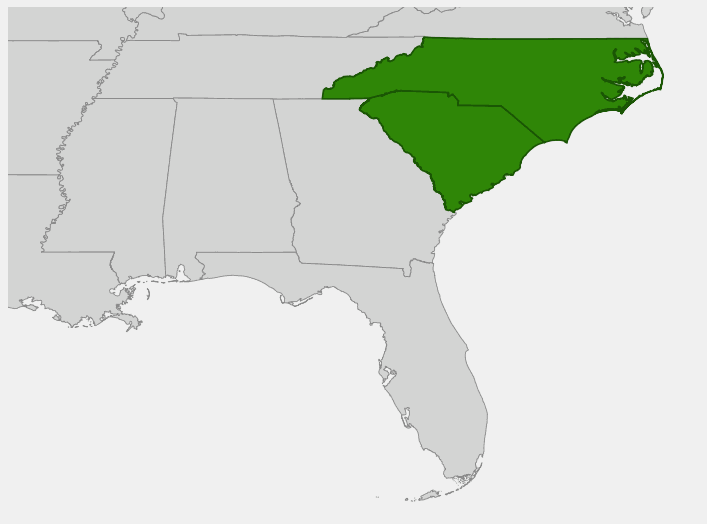
📋 Regional plant lists featuring Yellow Birch: North Carolina & South Carolina
Growing & Care Guide
Yellow Birch is a magnificent native tree that rewards patience with exceptional beauty and longevity. While it grows slowly compared to some trees, its stunning bark, excellent fall color, and ecological value make it worth the wait. Success with Yellow Birch depends on providing the cool, moist conditions it prefers in its natural forest habitat.
Light
Yellow Birch performs best in full sun to partial shade, though it can tolerate more shade when young. In its natural habitat, saplings often grow in understory conditions before eventually reaching the canopy. For landscape use, a site with morning sun and some afternoon shade is ideal, especially in warmer climates or the southern portions of its range.
Soil & Water
This tree requires cool, moist, well-drained soil and will struggle in hot, dry conditions. Yellow Birch prefers rich, slightly acidic soils (pH 5.5-6.5) with high organic content. Consistent moisture is crucial, especially during establishment and hot summer periods. Mulching around the base helps keep roots cool and retain moisture, mimicking forest floor conditions.
Planting Tips
Plant in early spring or fall when temperatures are cool. Choose a protected site away from hot, drying winds. Yellow Birch has a shallow root system, so avoid areas with heavy foot traffic or soil compaction. Plant at the same depth as in the container and water thoroughly during the first growing season.
Maintenance
Young trees benefit from regular watering during dry spells and protection from mechanical damage. Prune only when necessary, as birches can “bleed” sap heavily if pruned during active growth. The best time for any pruning is late summer to early winter. Maintain mulch around the base to keep roots cool and preserve soil moisture.
Landscape Uses
Yellow Birch is excellent as a specimen tree in large landscapes, naturalized areas, and woodland gardens. Its architectural form makes it suitable for more formal settings where space allows. Group plantings create stunning groves, and the species works well in rain gardens and bioswales in cooler climates.
Wildlife & Ecological Value
Yellow Birch is a keystone species in northern hardwood forests, supporting an incredible diversity of wildlife throughout all seasons and providing critical habitat structure in forest ecosystems.
For Birds
Over 40 species of birds utilize Yellow Birch seeds, including American Goldfinch, Pine Siskin, Common Redpoll, and various sparrows. Ruffed Grouse consume both seeds and buds, while woodpeckers excavate nesting cavities in older trees and feed on the insects attracted to the bark. The tree’s structure provides nesting sites for numerous songbirds, and the seeds are a critical winter food source.
For Mammals
White-tailed deer browse young shoots and leaves, while moose and snowshoe hares consume twigs and bark during winter. Squirrels and chipmunks gather the winged seeds, and beavers occasionally use the wood for dam construction. The inner bark has historically served as emergency food for both wildlife and humans during harsh winters.
For Insects
Yellow Birch supports over 400 species of moths and butterflies in their larval stages, making it one of the most valuable native trees for supporting insects. The bark provides habitat for numerous beneficial insects, while the leaves feed caterpillars that become food for nesting songbirds.
Ecosystem Role
As a dominant canopy species in northern hardwood forests, Yellow Birch creates the structural foundation for entire forest communities. Its leaf litter enriches soil and supports complex decomposer communities. The species’ longevity (up to 300+ years) provides stable habitat over multiple generations of wildlife, while its deep taproot helps cycle nutrients from deep soil layers.
Cultural & Historical Uses
Yellow Birch has played a significant role in North American culture for thousands of years, serving Indigenous peoples as a source of food, medicine, tools, and materials for daily life. The inner bark was historically consumed as emergency food during harsh winters, and the tree’s sap can be tapped and boiled down to make syrup, though it requires much more sap than maple to produce significant amounts of syrup.
Many Native American tribes, including the Ojibwe, Potawatomi, and various northeastern tribes, utilized Yellow Birch extensively. The papery outer bark was used for containers, canoes (though Paper Birch was preferred), and fire-starting material. The inner bark was sometimes eaten fresh in spring or dried and ground into flour for winter use. Medicinally, bark preparations were used to treat fever, stomach ailments, and respiratory conditions.
European settlers quickly adopted many of these uses and discovered additional applications for Yellow Birch wood. The timber became highly prized for furniture making, flooring, and woodworking due to its fine grain, hardness, and beautiful golden color. Yellow Birch wood was particularly valued for making furniture, cabinets, and decorative items. The wood’s density and working properties made it excellent for tools, particularly wooden planes and other woodworking implements.
During the 19th and early 20th centuries, Yellow Birch was commercially important in the timber industry throughout its range. The species was also the source of wintergreen flavoring (methyl salicylate) before synthetic alternatives became available. Oil of wintergreen was distilled from the bark and used in medicines, candies, and other products. Today, while commercial harvesting has decreased, Yellow Birch remains valued for high-quality lumber, and the species has gained recognition as an important component of sustainable forestry and ecosystem restoration efforts.
Frequently Asked Questions
How can I tell Yellow Birch apart from other birches?
Yellow Birch is distinguished by its bronze-yellow bark with horizontal lenticels, doubly-serrated leaves, and larger size compared to most other birches. Paper Birch has bright white bark, while River Birch has darker, more exfoliating bark. The slight wintergreen scent when bark is scratched is also characteristic.
How fast does Yellow Birch grow?
Yellow Birch is a slow to moderate grower, typically adding 12-18 inches per year under good conditions. Young trees may grow faster initially but slow down as they mature. The species is long-lived, potentially reaching 200-300 years, so patience is required but rewarded with a magnificent mature tree.
Is Yellow Birch susceptible to bronze birch borer?
Yellow Birch can be affected by bronze birch borer, but it is generally more resistant than some other birch species, particularly when grown in suitable cool, moist conditions. Stressed trees are most vulnerable, so maintaining proper growing conditions is the best prevention.
Can I tap Yellow Birch for syrup like maple trees?
Yes, Yellow Birch sap can be tapped and made into syrup, though it requires about 100-110 gallons of sap to make one gallon of syrup (compared to 40 gallons for maple). The syrup has a unique, slightly wintergreen flavor. Tap only mature, healthy trees and follow sustainable tapping practices.
Why are the leaves on my Yellow Birch turning yellow in summer?
Summer yellowing usually indicates stress from heat, drought, or poor soil drainage. Yellow Birch requires cool, moist conditions and may struggle in hot, dry sites. Ensure adequate watering during dry spells and consider improving soil moisture retention with mulch.

Looking for a nursery that carries Yellow Birch?
Browse our native plant nursery directory: North Carolina · South Carolina