
Organic Pest Control for Cilantro: Effective Methods to Protect Your Herb Garden
Last updated: August 19, 2026
Cilantro attracts pests like aphids, whiteflies, and spider mites. These little troublemakers can mess up your plants and cut down your harvest.
Using organic pest control methods keeps cilantro safe without dumping chemicals all over your food. It’s honestly the best way to keep your crop edible and healthy. Stuff like natural predators, neem oil, and insecticidal soaps actually work. They tackle pests but don’t wreck your soil or harm your plants.
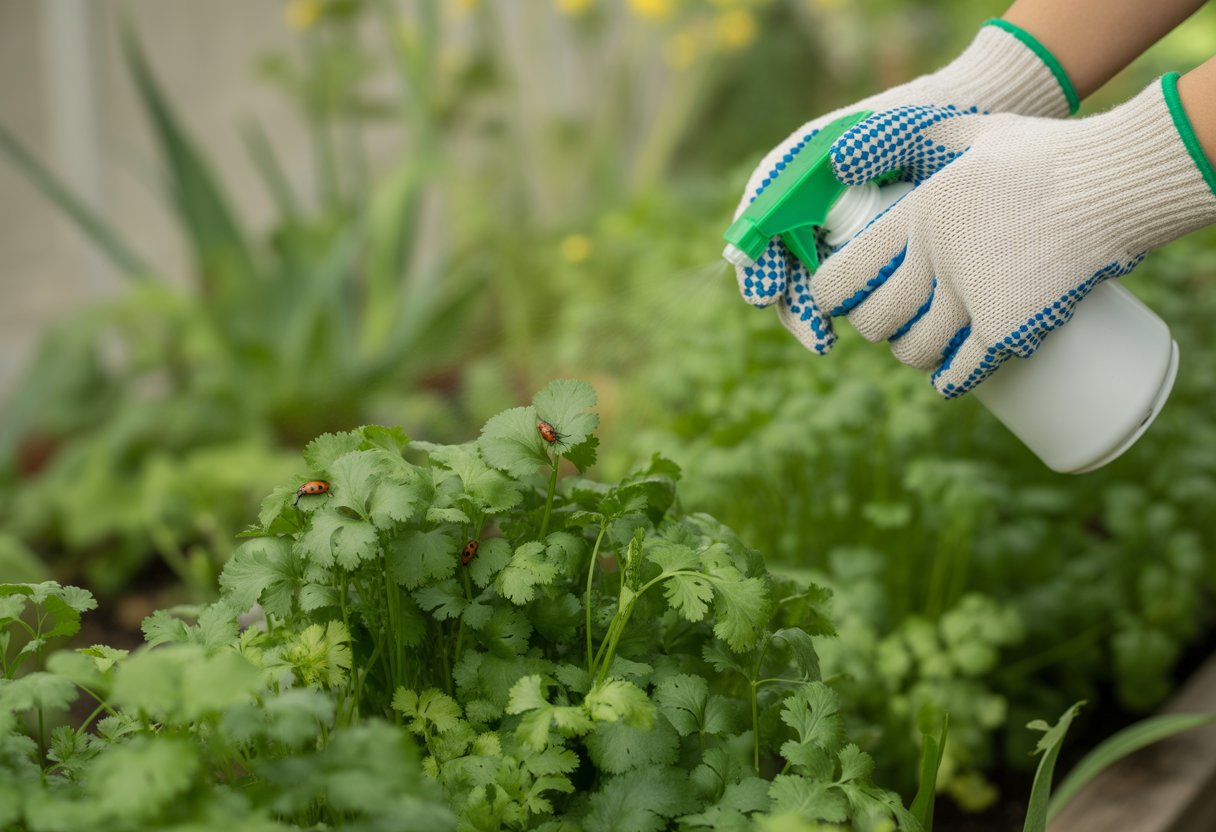
Lots of gardeners who care about organics stick with these methods. Synthetic pesticides might zap pests, but they also hurt the good bugs and pollute everything else.
If you keep an eye on your plants and act fast, organic pest control works way better. This approach just feels right if you want a sustainable garden and cilantro that’s actually worth eating.
Common Cilantro Pests and Diseases
Cilantro faces a bunch of issues from pests and diseases that can really stunt its growth. Aphids and cutworms chew on leaves and stems, while some nasty fungi and bacteria go after the plant’s health.
Aphids
Aphids are tiny, soft bugs that suck sap out of cilantro. They like to crowd together under leaves and along stems, which makes leaves curl, yellow, and twist in weird ways.
Their feeding stunts growth and lowers your yield. Aphids also leave behind sticky honeydew, which leads to sooty mold on the leaves.
That mold blocks sunlight and drags the plant down even more. Luckily, ladybugs and lacewings love eating aphids, so they’re a real asset in organic gardens.
You can blast aphids off with a strong spray of water or use neem oil. Both options avoid harming the good bugs.
Check your plants often. If you spot aphids early, you can stop them before they do much harm.
Cutworms and Slugs
Cutworms, those sneaky caterpillars, hide in the soil by day and munch on cilantro stems at night. They’ll chop down seedlings at the base, which is just brutal.
Wrap paper collars around seedlings to keep cutworms away from the stems. Slugs, on the other hand, chew holes in leaves and leave gross slime trails.
They love moist conditions and can strip a plant overnight. Picking slugs by hand and using iron phosphate baits works well if you want to avoid chemicals.
Keep the garden tidy and don’t let debris pile up. Turning the soil now and then also messes with their breeding spots.
Powdery Mildew and Fungal Issues
Powdery mildew shows up as a white, dusty layer on leaves and stems. It blocks sunlight and weakens the plant.
This fungus usually pops up when things get humid and plants are packed too close together. Skip the overhead watering and space your cilantro out to keep mildew away.
If mildew does show up, organic fungicides like sulfur or potassium bicarbonate can help. Some other fungi, like damping off, target seedlings and make them collapse at the soil line.
Start with clean, sterile soil and make sure your beds drain well. That way, you can avoid these early diseases.
Bacterial Leaf Spot
Bacterial leaf spot leaves dark, wet-looking spots on cilantro leaves. As the spots get bigger and dry out, leaves turn yellow and fall off.
The disease spreads through splashing water and infected seeds. Rotating crops and skipping overhead irrigation help keep it from spreading.
Pull out sick plants before they infect the rest. Using clean, certified seeds and keeping the growing area healthy can lower the risk of bacterial leaf spot.
Organic Pest Control Solutions
If you want to keep cilantro healthy without chemicals, you’ll need a mix of strategies. Physical barriers, helpful bugs, and natural sprays all play a part.
Physical Barriers and Manual Removal
Row covers or fine mesh keep flying insects and cutworms away from your cilantro. Sprinkling diatomaceous earth around the plants creates a sharp, gritty barrier that slugs and other soft pests really hate.
When pest numbers are low, picking them off by hand works. Check leaves often and squish eggs or larvae before they multiply.
Staying on top of things early means you’ll need fewer sprays and can keep infestations from blowing up.
Natural Predators and Companion Planting
Bringing in ladybugs, lacewings, and parasitic wasps can knock back aphids and similar bugs. Planting herbs like basil, dill, or thyme nearby draws in these good bugs.
Some folks plant cilantro next to tomatoes to mess with pest behavior. Companion planting can make the garden less attractive to harmful insects and boost your organic defenses.
Organic Sprays and Treatments
Neem oil, insecticidal soap, or a homemade garlic-chili spray target soft-bodied pests and mildew. These treatments interrupt feeding and fungus growth but leave helpful insects alone.
Spray early in the morning or late in the day for best results. Consistency matters—stick with it to keep pest numbers down and cilantro thriving.
Prevention and Maintenance Tips
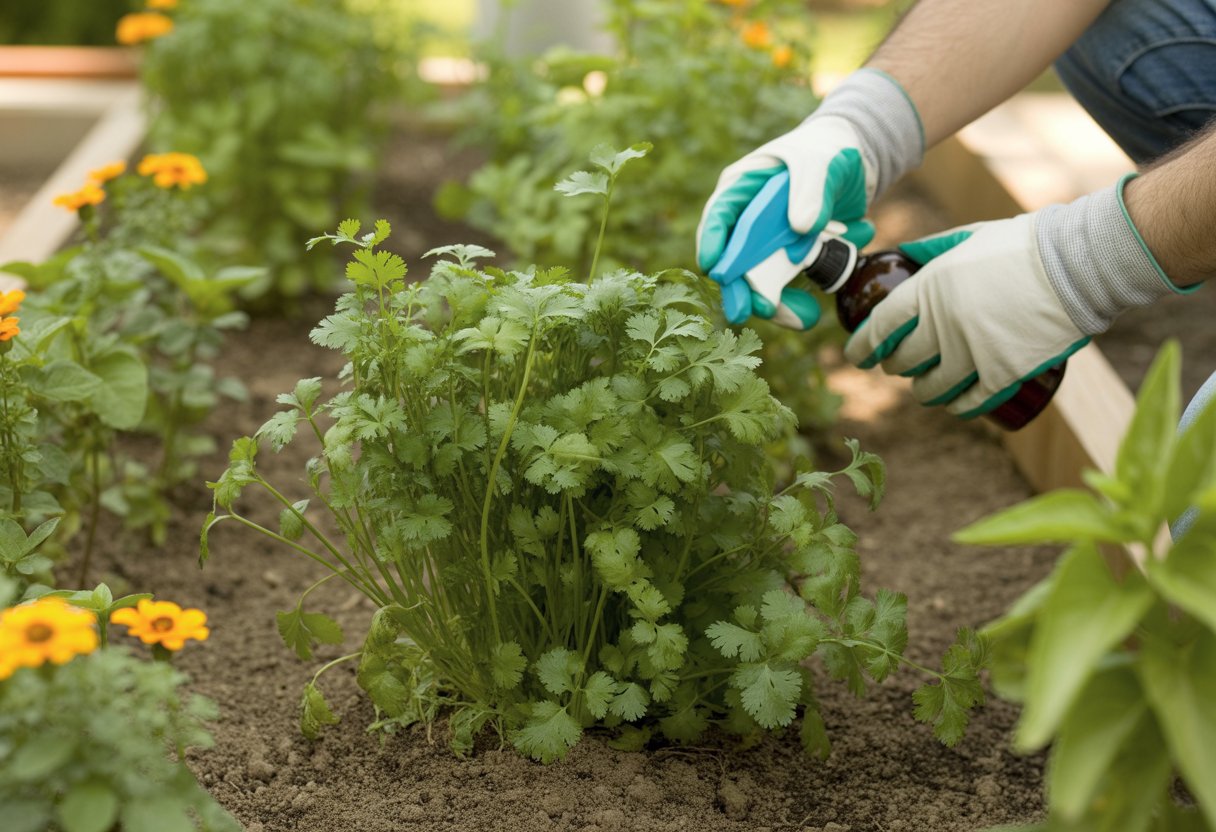
Healthy cilantro doesn’t just happen. You’ve got to pay attention to its needs, keep things clean, and watch for problems.
Proper Growing Conditions
Cilantro likes well-draining soil with a pH between 6.2 and 6.8. Give it full sun, but if your summers get brutal, some afternoon shade helps.
Space plants 6 to 8 inches apart so air can move around. That cuts down on fungal problems and diseases like damping off.
Water at the base and don’t soak the leaves. Mulch with organic stuff to keep the soil cool and moist.
In cooler places, raised beds or containers help prevent soggy roots and rot.
Sanitation and Crop Rotation
Clear out dead leaves and old plants. Pests and diseases love hiding in garden debris.
Trim cilantro often to encourage new growth and limit hiding spots for bugs. Rotate crops—don’t plant cilantro or parsley in the same spot every year.
This breaks up the cycles of soil-borne diseases. Clean your tools and use sterile soil, especially when starting seeds.
Labeling and Monitoring for Early Detection
Label your cilantro varieties and planting dates. It’s easy to forget what’s what, and this helps you spot patterns if problems pop up.
Check plants often for yellow spots, wilting, or weird bugs. Jot down notes in a garden journal if you’re into that sort of thing.
Sticky traps and other simple tools help spot pests before they get out of hand. Catching issues early is a real game changer.
Protecting Cilantro from Animal Pests

Animals can be just as annoying as bugs. Rabbits and other small critters love to snack on cilantro and dig up your hard work.
Managing Rabbits in the Garden
Rabbits can’t resist fresh cilantro leaves. They’ll mow down a patch if you let them.
Keep them out with wire mesh fences at least two feet high. That usually does the trick.
Spraying natural repellents made from garlic or peppermint around the garden helps too. Some gardeners swear by planting rosemary or thyme near cilantro to chase rabbits off.
Cut back brush and clear hiding spots so rabbits don’t move in. If you need to trap and relocate them, make sure you follow local rules.
Safeguarding Against Other Pests
Squirrels, chipmunks, and even some birds sometimes go after cilantro or nearby fruits and veggies. Row covers or netting work well as physical barriers and keep critters out without chemicals.
Try mulching around cilantro—it often keeps insects and small mammals at bay. Some folks swear by companion planting with marigolds or nasturtiums to naturally repel pests.
Organic insecticidal soaps can help knock back bugs without hurting the good guys. If you keep the soil healthy and water just right, cilantro tends to hold up better against pests.
Keep an eye out for early pest activity. Spotting problems sooner usually means you won’t need to scramble with bigger fixes later.
 Looking for a nursery that carries native herbs?
Browse our native plant nursery directory

This is useful, thanks.
Thanks, Eric! We love hearing from fellow gardeners. Hope it helps with your next project!
OK so I’ve tried about half of these. Some worked, some didn’t. Depends a lot on your specific conditions.
OK so I’ve tried about half of these. Some worked, some didn’t. Depends a lot on your specific conditions.