Pruning Techniques for Fruit Trees: Essential Methods for Healthy Growth and Better Yield
Last updated: August 29, 2026
Pruning fruit trees matters if you want to keep them healthy, improve the quality of your fruit, and control their size. Effective pruning removes dead or crowded branches, letting sunlight and air reach the tree’s center, which can really boost fruit production.
This practice shapes the tree and helps prevent damage from heavy crops. It’s not just about looks—it’s about the long-term health of your trees.
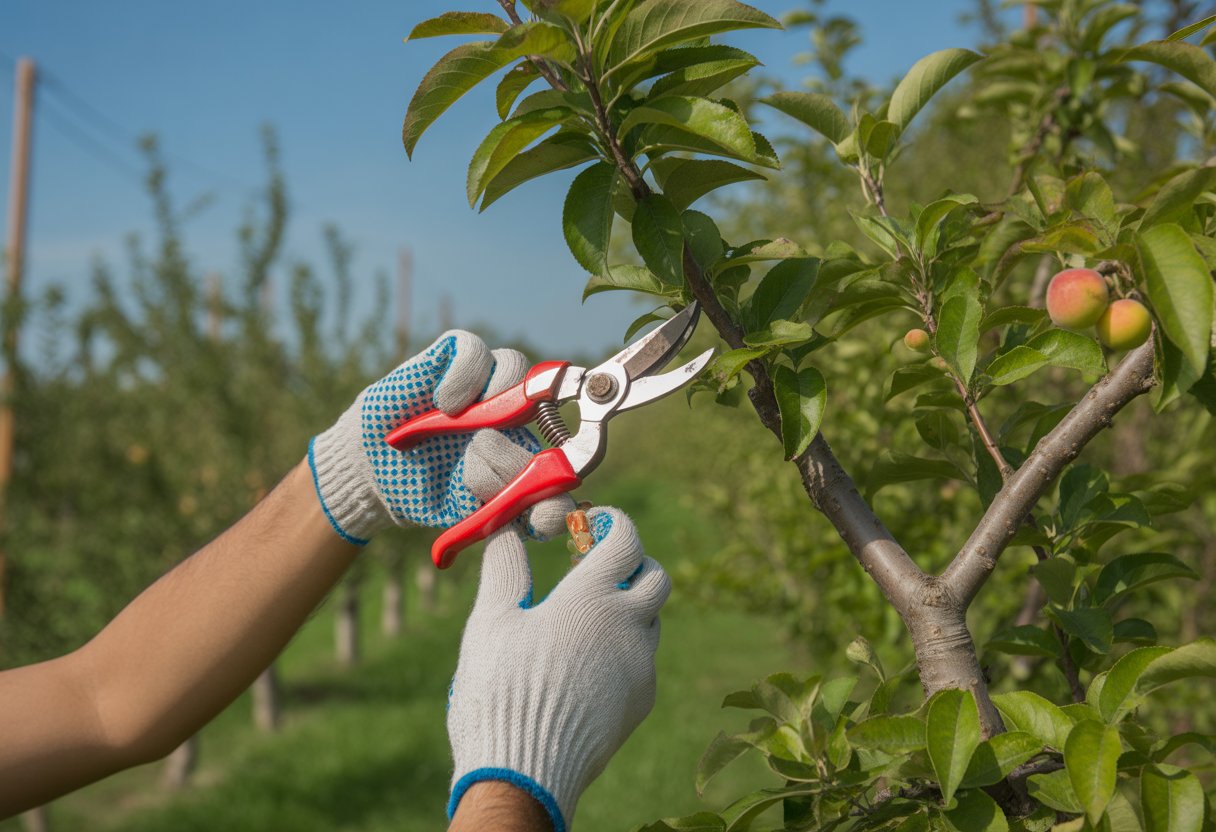
Different fruit trees need their own pruning techniques because their growth habits and fruiting patterns can be pretty different. If you know when and how to prune, you’ll see a big difference in how much fruit you get and how long your tree lasts.
Pruning the right way encourages strong branches and helps keep pests and diseases at bay. It’s less complicated than it sounds, and even beginners can get the hang of it.
Here are some techniques that’ll help you prune different types of fruit trees with confidence.
Fundamentals of Pruning Fruit Trees
Pruning fruit trees starts with understanding their structure and how they grow. The way you cut really does impact how much fruit you’ll get.
When you prune properly, you improve light and air flow, and you encourage branches that actually produce fruit.
Benefits of Pruning
Pruning boosts fruit yield by focusing the tree’s energy on the branches that matter. Getting rid of dead, diseased, or crowded limbs cuts down on competition and helps keep pests and diseases away.
It also shapes the tree, making it easier to pick fruit and reducing the chance of branches breaking under heavy loads. Pruning the right way wakes up buds that’ll become next year’s fruit.
Regular pruning keeps the balance between leafy growth and flowering. Too much foliage? That blocks sunlight and shrinks your fruit.
Anatomy of Fruit Trees
Fruit trees have roots, a trunk, scaffold branches, and fruiting wood. Knowing these parts helps you decide where to make your cuts.
Scaffold branches build the main structure, holding up the smaller, fruit-bearing branches. Fruiting wood includes spurs and shoots where you’ll actually see flowers and fruit.
The cambium layer, hiding just under the bark, helps heal cuts. If you cut too close or leave awkward stubs, you might set the tree back.
Roots keep the tree anchored and soak up water and nutrients. If you prune too much and cut down the leaf area, you’ll weaken the whole tree.
Tree Growth and Fruiting Patterns
Fruit trees go through cycles, flipping between leafy growth and flowering. Most fruit grows on wood that’s a year old, or sometimes on older spurs.
Every species has its own fruiting habits. Apples mostly fruit on spurs, for example, but peaches rely on last year’s shoots.
If you’re not careful, you could prune off next season’s fruiting branches. Timing matters—a lot. Late winter or early spring is usually safest, since you won’t hurt new growth.
By pruning smart, you help the tree put energy into flowers and fruit development instead of a tangle of shoots.
Types and Timing of Pruning Techniques
How you prune—and when—depends on the season and what you want from your tree. Knowing which method to use keeps your trees healthy and productive.
Dormant Pruning
Dormant pruning happens in winter, after the leaves have dropped but before the buds break. At this point, you can really see the tree’s structure.
Focus on taking out dead, diseased, or crossing branches to open things up for air and light. Pruning while the tree is dormant helps it bounce back with strong new growth in spring.
This is especially true for woody plants, since it cuts down on sap loss and stress. Use thinning cuts to remove whole branches and heading cuts to shorten others.
Most fruit trees respond best to dormant pruning. It sets them up for a good growing season ahead.
Summer Pruning
Summer pruning happens while the tree’s actively growing, usually late spring or early summer. This method reins in wild growth without hurting fruit development.
You’ll want to remove water sprouts and suckers—those fast-growing shoots that sap energy from the fruit. Summer pruning also lets more light into the canopy, which can really help with fruit color and flavor.
The cuts are lighter than dormant pruning and focus on keeping the shape tidy. It’s a balancing act between growth and fruiting.
Annual Pruning Practices
Annual pruning is a mix of dormant and summer pruning, done every year to keep your tree in top shape. It’s really about sticking to a routine.
In winter, you do the heavier shaping and remove problem branches. Summer is for touch-ups and keeping the tree’s size in check.
Keeping up with annual pruning stops problems like overcrowding and weak limbs before they start. It also helps your tree stay productive and healthy for years.
Key Pruning Methods and Best Practices
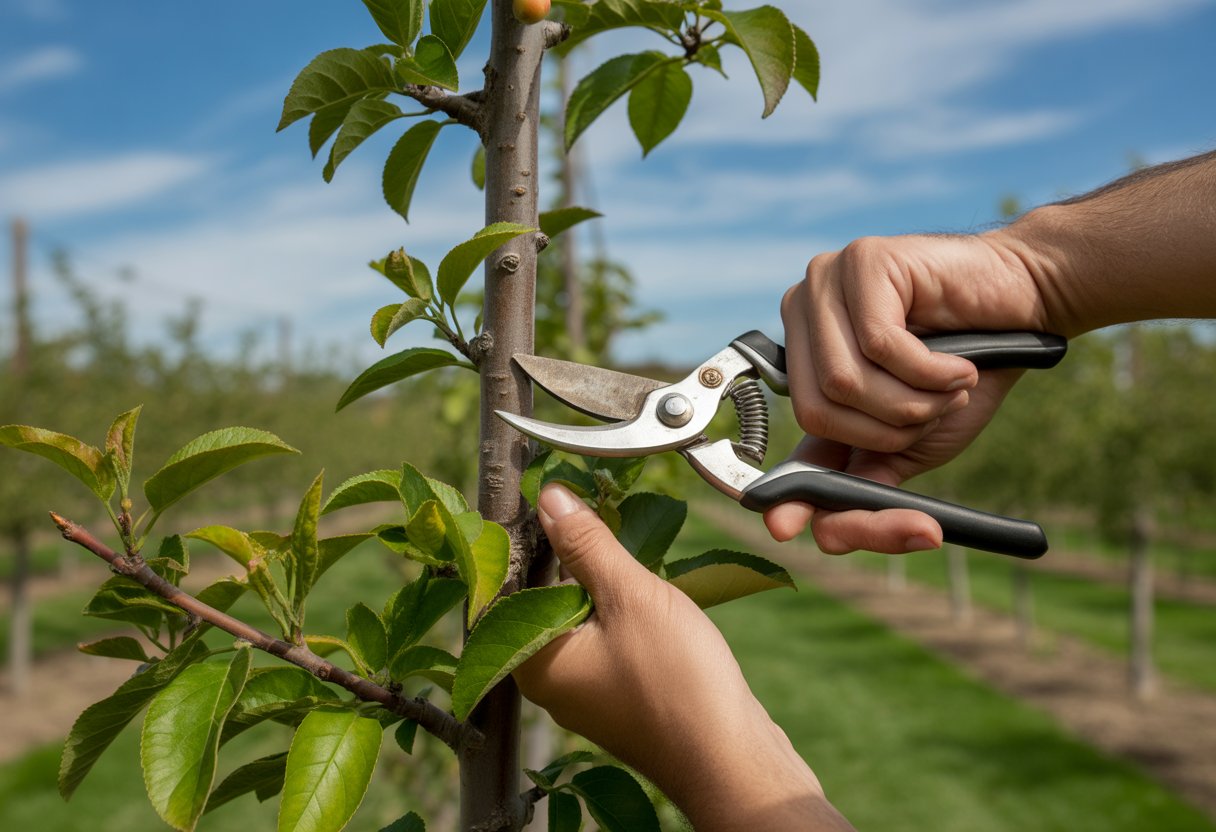
Good pruning means finding the balance between a healthy tree, a strong structure, and plenty of fruit. You’ll use different cuts to manage growth, let in light, and get rid of branches you don’t want.
It’s important to know the difference between heading cuts and thinning cuts, how to train young trees, and when to step in with corrective measures.
Heading Cuts and Thinning Cuts
Heading cuts chop off part of a branch just above a bud or side branch, which makes new growth pop up right near the cut. It’s good for controlling size and encouraging more fruiting spots.
But don’t go overboard—too much heading can create a mess of weak shoots. Thinning cuts, on the other hand, remove entire branches at their base.
Thinning opens up the canopy, boosts airflow, and stops branches from rubbing or breaking. Use both types of cuts, but don’t let the tree get too dense or too bare.
Formative Training and Tree Structure
Formative training means shaping young trees right from the start. Pick strong, well-spaced branches that come off the trunk at wide angles, and take out any that compete or grow in awkward spots.
Training early sets up a sturdy form that can handle heavy fruit and lets light reach all the branches. Some trees do best with an open center, while others prefer a central leader.
When you’re training, use heading cuts to encourage branching and thinning cuts to get rid of weak or crowded shoots. If you set the tree up well early, you’ll avoid major fixes later.
Corrective and Renewal Pruning
Corrective pruning is all about fixing issues—crossed branches, broken limbs, or water sprouts. Watersprouts and suckers suck up energy but rarely give you good fruit, so get rid of them.
Renewal pruning helps old trees by cutting back aging branches to stubs just above healthy buds. This encourages new, productive growth on older wood.
Be careful with the branch collar when you cut, since that’s where healing happens. Thinning the canopy keeps air moving and helps your fruit grow bigger and healthier.
Special Considerations for Different Fruit Trees
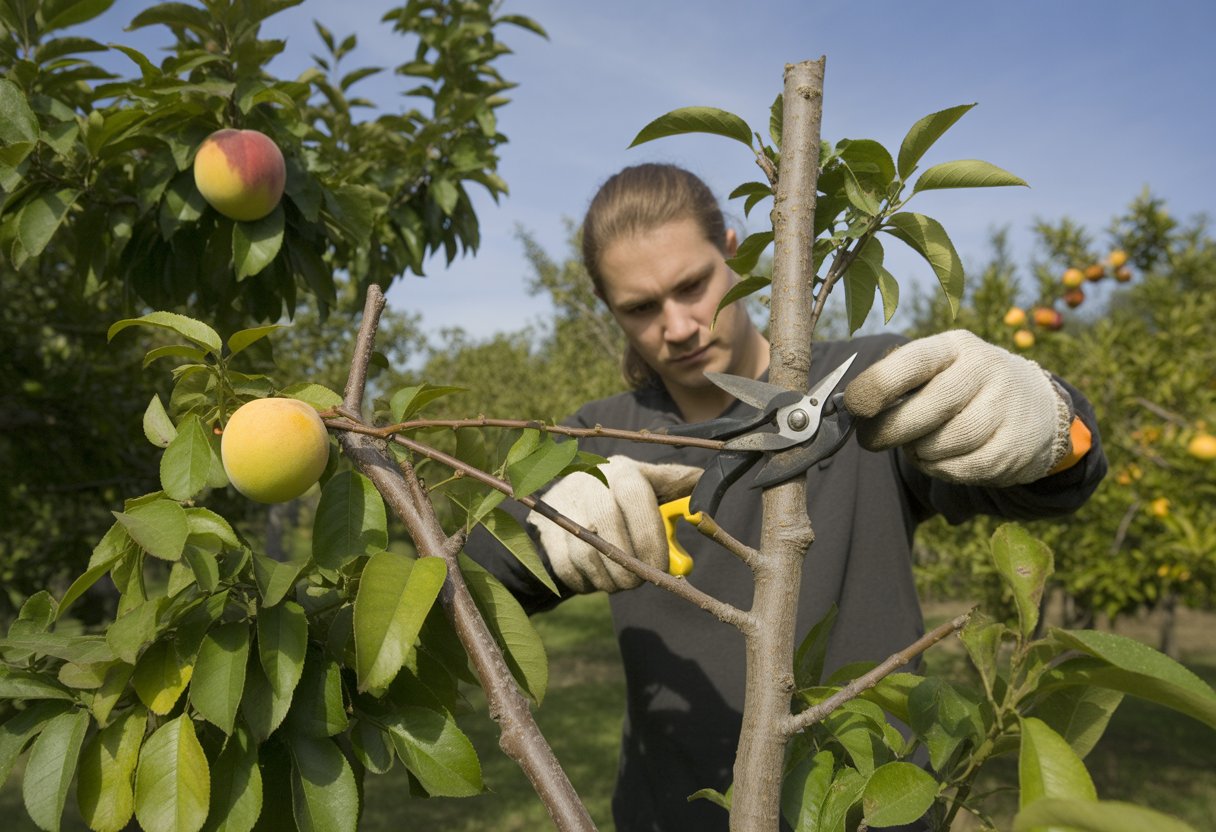
Every fruit tree has its quirks. Their growth habits, when they fruit, and how easily they pick up diseases all affect how you should prune.
Even the rootstock and how the tree was grafted can change the best approach. If you want better fruit and a long-lived tree, it pays to know what each type needs.
Pruning Apples and Pears
Apple and pear trees do well with open-center or central leader shapes, which help air and light reach every branch. They usually respond better to moderate thinning than to heavy heading cuts.
Always take out crossing branches and suckers—they just weaken the tree. Winter is the best time to prune apples and pears, since they’re dormant and less likely to get sick.
If you use dwarfing rootstocks, you’ll find it easier to prune and pick fruit. Regular pruning helps these trees set fruit spurs and keeps the harvest coming year after year.
Pruning Stone Fruits: Peaches, Plums, and Cherries
Stone fruits like peaches and plums need more aggressive, yearly pruning to balance their wild growth with fruit production. Peaches and nectarines only fruit on last year’s wood, so you have to cut back older growth to get new, fruiting shoots.
Prune plums and cherries in late winter or early spring to avoid problems like silver leaf or bacterial canker. A vase shape works well, letting sunlight hit all the branches.
Don’t prune heavily in late summer, though—it’ll cut down on next year’s fruit. It’s a bit of a dance, but once you get the hang of it, you’ll see the payoff in your harvest.
Nectarines, Apricot, Persimmon, Quince, and Figs
Nectarines need pruning a lot like peaches, but you really have to thin them out carefully. That helps cut down on disease.
Apricots feel pretty delicate, so I’d only prune them lightly. That way, you avoid damage and help those fruiting spurs form.
Persimmons honestly don’t mind a light touch—just focus on clearing out dead or crossing branches.
Quince trees look better if you shape them and keep their centers open. Better air flow means fewer problems down the line.
Figs don’t need much fussing. Just take out the old wood so new shoots can pop up and actually bear fruit.
Most folks do all this pruning in late winter. It just seems to help keep disease away and lets the trees live longer.