Wildflower Meadow Planting South Dakota Best Practices for Sustainable Growth
Last updated: August 28, 2026
Creating a wildflower meadow in South Dakota is a practical way to support local ecosystems and enhance your landscape. The region’s climate and soil really suit native wildflowers, which tend to thrive with barely any fuss.
If you want a wildflower meadow in South Dakota, you’ll need to pick species that can handle the area’s wild temperature swings and quirky soils. Do that, and you’ll set yourself up for long-term growth and some nice ecological perks.
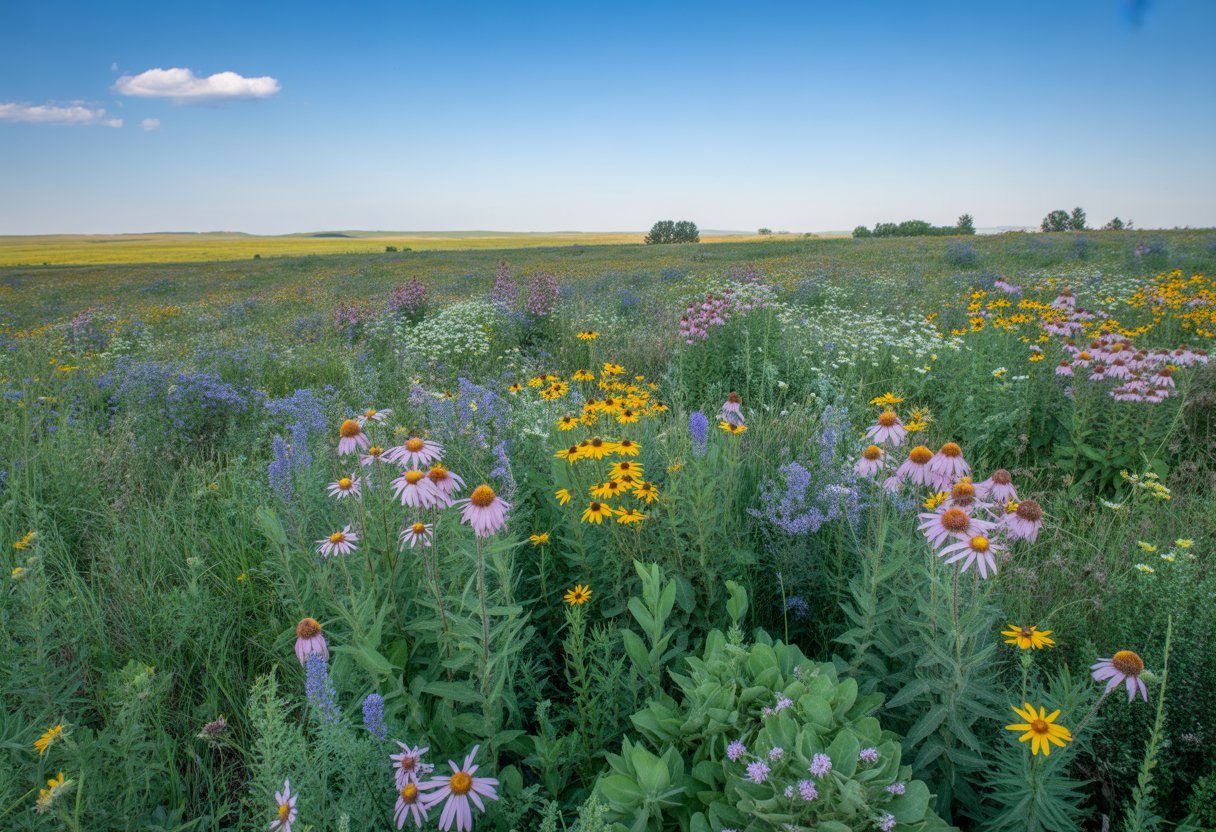
Wildflower meadows bring in pollinators like bees and butterflies—those little guys are crucial for biodiversity. When you go with native flowers, you cut down on irrigation and fertilizer needs, which makes the whole thing more sustainable.
If you prep your site and pick seeds thoughtfully, you’ll probably see your meadow take off during the growing season. South Dakota’s natural environment gives wildflower meadows a solid base, helping with soil health and stopping erosion.
Whether you’re after a splash of color or restoring a bit of prairie, wildflower meadows are a laid-back way to liven up open spaces.
Benefits of Planting Wildflower Meadows in South Dakota
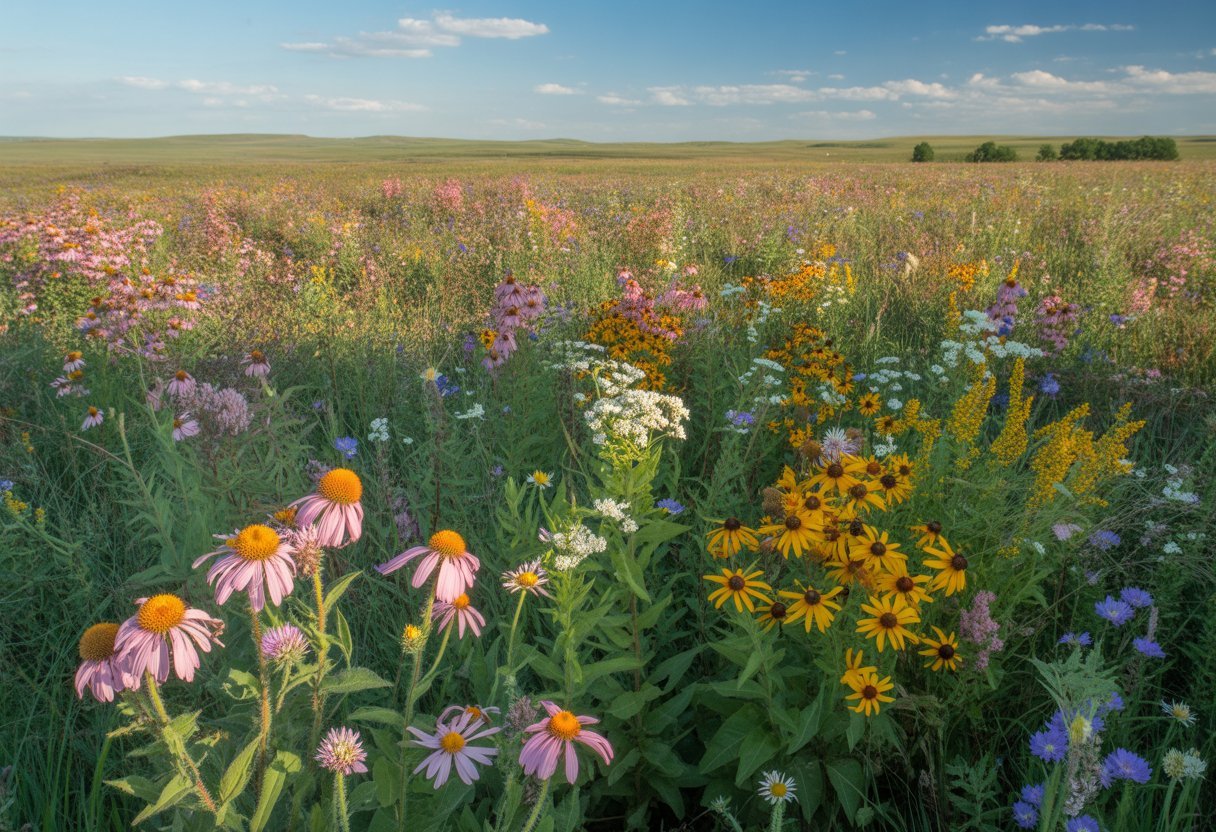
Planting wildflower meadows in South Dakota boosts local ecosystems and helps out with biodiversity. They thrive in full sun, using native plant species that love prairie conditions.
These meadows provide essential habitat and help with conservation. The benefits go beyond just looking pretty.
Supporting Native Wildlife Habitat
Wildflower meadows offer real support for South Dakota’s native wildlife—pollinators like bees and butterflies, and even birds. Native wildflowers give nectar and pollen when it’s needed most, especially in spring and summer.
Grasslands and prairies used to be everywhere here, but now they’re rare. Meadows create shelter and food, giving small mammals and insects a fighting chance.
If you stick with native species, the habitat fits local wildlife a lot better than if you go with something exotic.
Biodiversity and Conservation
Diverse native wildflowers ramp up biodiversity by supporting lots of different species. That variety makes the ecosystem tougher against pests, diseases, and our ever-changing weather.
South Dakota’s native plants handle local soil and weather like champs, so they keep things balanced. Wildflower meadows also help restore rough patches of land and protect native gene pools.
They stop soil erosion and you won’t have to lean on fertilizers or pesticides much. By focusing on native plants, you help keep the regional prairie ecosystem hanging on.
Enhancing Landscape Sustainability
Wildflower meadows don’t need as much water or maintenance as traditional lawns or imported gardens. Native plants are used to South Dakota’s climate, so they’re happy with full sun and barely any extra irrigation.
That saves water and helps the local groundwater stick around. Meadows boost soil health by adding organic matter and feeding good microbes.
Their deep roots improve soil structure and help prevent erosion. You’ll find yourself mowing less and skipping the chemicals, which is a win for long-term sustainability.
Selecting Wildflower Species and Seed Mixes
Picking the right wildflower species and seed mixes is key if you want your meadow to last in South Dakota. You’ll want to focus on native plants that can handle the local climate and prairie soil.
It’s just as important to understand seed mix composition and to source species that are a good fit for your region.
Choosing Native Wildflowers and Grasses
Native wildflowers and grasses make the best base for a South Dakota meadow. Plants like Geum triflorum (prairie smoke), wild geranium, and spiderwort (Tradescantia bracteata) handle the local soil and weather without much trouble.
Perennials such as purple coneflower and leadplant add some staying power to your planting. Native grasses like little bluestem or switchgrass keep the soil healthy and the habitat diverse.
These choices work well with what you’d find in Minnesota, Nebraska, and Iowa, too. Avoid non-native species—they just mean more work and fewer pollinators.
Understanding Wildflower Mixes for South Dakota
Seed mixes for South Dakota usually blend forbs from the Asteraceae and Ranunculaceae families with native grasses. A good mix has both annuals and perennials, so you get flowers all season.
Some commercial mixes focus on prairie-specific selections like Delphinium carolinianum and bracted spiderwort. Others are more generic, so read the label.
Knowing the difference between “seedlings” and mature plants helps you time your planting for better results. Using mixes tailored to your region really helps with biodiversity and resilience.
Some mixes even add shrubs like wild plum and snowberry for extra structure and wildlife appeal.
Sourcing Regionally Appropriate Species
Buy seeds locally or from nearby states like North Dakota, Montana, or Kansas. That way, you get plants that already know how to handle the weather.
Regional wildflower seed suppliers usually offer collections grown from native stock, which boosts germination and survival. The source of your seeds matters—a local aster or leadplant will probably perform better than one shipped in from far away.
This approach also keeps South Dakota’s prairie gene pool healthy. When buying, double-check that your seed mix has the right native grasses and perennials for the area.
You can start with seedlings or direct seeding, depending on your project’s size and timing.
Meadow Establishment: Planning and Preparation
Getting a wildflower meadow going in South Dakota comes down to picking the right spot, prepping the soil, and timing things right. The planting methods and tools you use also make a real difference in how things turn out.
Site Selection and Soil Preparation
Find a spot with full sun and well-drained soil—wildflowers and prairie grasses really need that. If you’re dealing with heavy clay, adding compost can help the soil breathe and drain better.
You’ll need to clear out whatever’s growing there now. Mowing, herbicide, or tilling can all work, depending on what you’re up against.
Work the soil until it’s fine and smooth so seeds can make good contact. That boosts germination rates.
A soil test is a good idea to check pH and nutrients. Wildflowers usually like a slightly acidic to neutral pH (6.0–7.0).
Skip spots with loads of nutrients—those just let aggressive grasses take over.
Optimal Timing: When to Plant in South Dakota
Aim to plant in spring or early fall. In spring, you can start once the soil hits 50°F, which is usually late April or early May around here.
Fall planting—between September and mid-October—lets seeds get a natural cold treatment, which can boost germination. Just make sure the ground isn’t frozen or a muddy mess.
Try to avoid midsummer. The heat and drought then can wipe out seedlings before they get started.
If you line up your planting time with the local weather, you’ll have a much better shot at a healthy meadow.
Planting Techniques and Equipment
Broadcast spreading is the go-to for wildflower seeds. Use a seed spreader and calibrate it for your mix—usually 2 to 6 pounds per 1,000 square feet, depending on how thick you want it.
Mixing seeds with sand or vermiculite helps you spread them more evenly. After you spread, a light rake or roll helps press seeds into the soil—just don’t bury them more than about ¼ inch.
If you want to skip disturbing the soil, no-till methods work well on a prepped site. For small plots, handheld or push spreaders do the trick; for big projects, you might need tractor-mounted gear.
Ongoing Care and Management of Wildflower Meadows
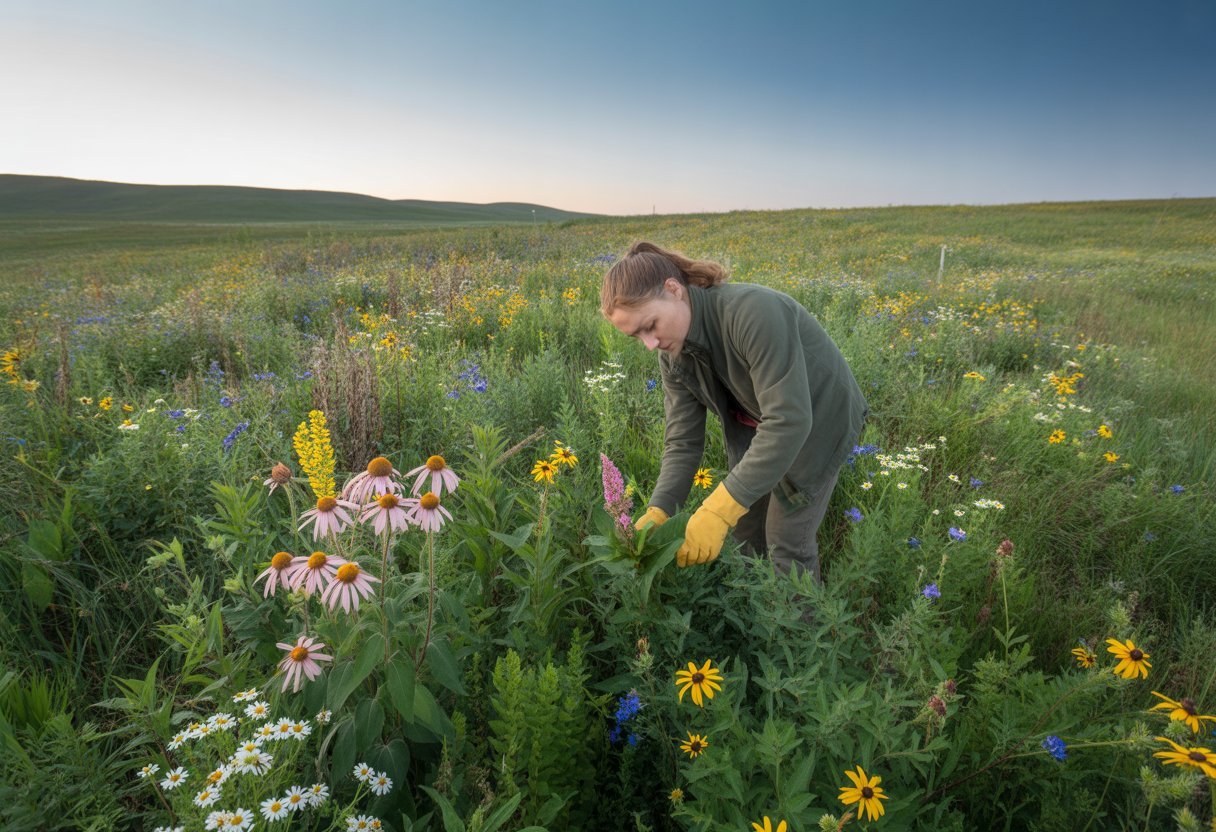
Keeping a wildflower meadow going in South Dakota means watching the watering, keeping invasives in check, and rolling with the seasons. A little attention up front helps native plants put down strong roots and thrive in all that sun.
Irrigation and Early Establishment
Wildflower seedlings in South Dakota need steady moisture for the first 6 to 8 weeks. Try to keep the soil damp but not soggy, usually with a light watering every 2 or 3 days if it doesn’t rain.
Once rhizomes and stolons get established, they do better with less frequent, deeper watering. That encourages roots to dig down.
Don’t overdo it, though—too much water can cause fungus and weaken your seedlings. With all the sun here, evaporation ramps up, so you might have to tweak your watering during hot, dry spells.
Long-Term Maintenance Practices
After your meadow gets established, you can mostly rely on rainfall. Mow once a year in late fall or early spring to keep woody plants from taking over.
Cut at about 6 inches high so you don’t damage native wildflowers and to help rhizomes bounce back. If you see invasive grasses or weeds, pull them carefully so you don’t mess with native roots.
Rotational mowing or careful spot treatments with herbicide can help keep things balanced without hurting your wildflower diversity.
Meadow Adaptation to South Dakota Climate
Wildflower meadows in South Dakota deal with wild temperature swings, drought, and the occasional flood. Native plants here have found ways to survive, using dormancy and growing tough root systems like rhizomes and stolons.
Picking species that already call South Dakota home makes your meadow a lot tougher. Full sun matters—a lot. Shady spots just seem to invite weeds nobody wants.
If you take the time to prep your soil well before planting and then leave things mostly alone, the meadow can handle whatever the seasons throw at it.