Western Wheatgrass (Agropyron smithii)
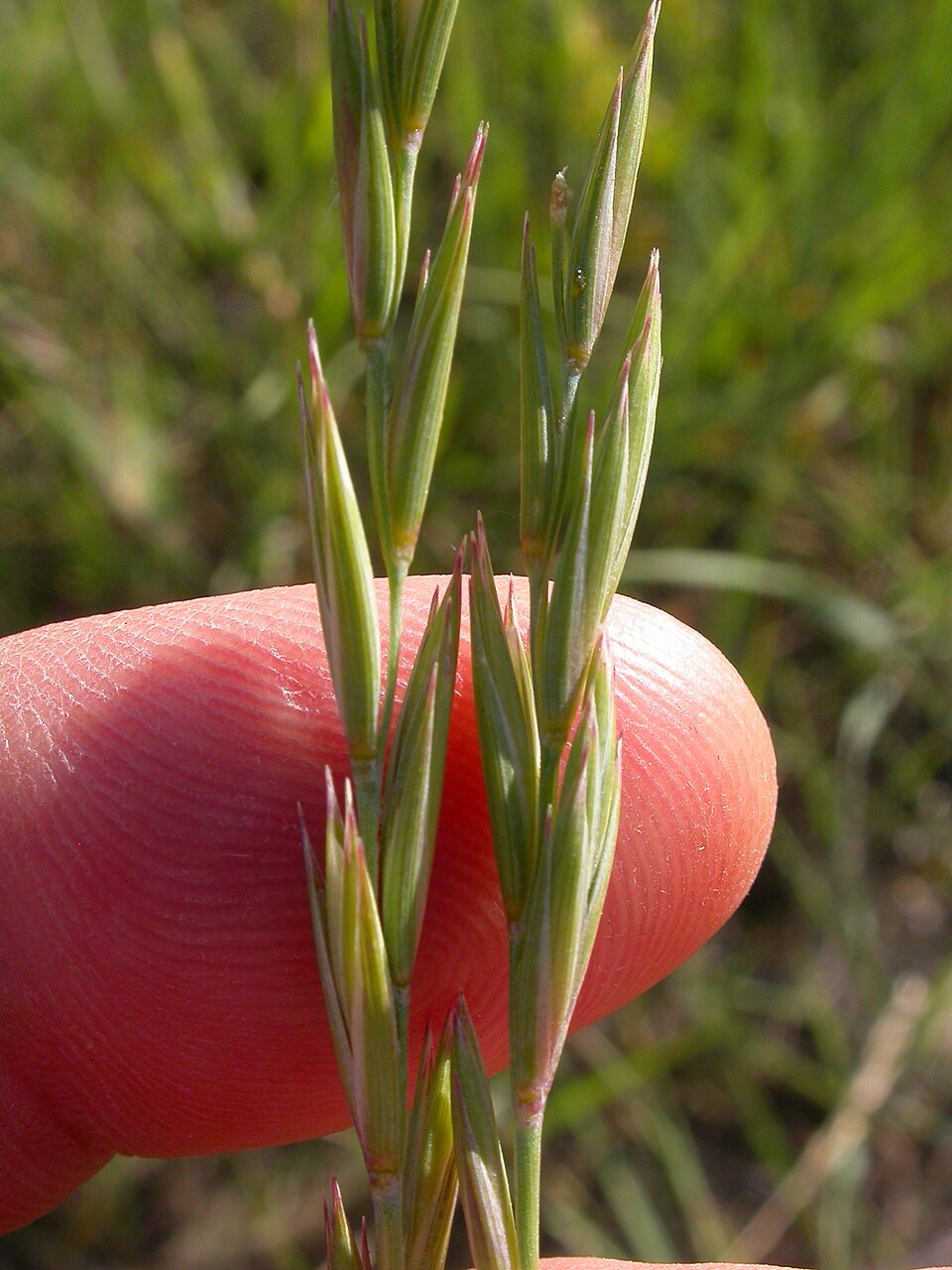
Agropyron smithii, commonly known as Western Wheatgrass, is one of the most important and widely distributed cool-season grasses of the North American Great Plains. This hardy perennial grass serves as a cornerstone species for both natural prairie ecosystems and human land use, providing exceptional value for erosion control, reclamation projects, and as a crucial food source for elk, deer, cattle, and numerous other wildlife species. With its distinctive blue-green foliage and wheat-like seed spikes, Western Wheatgrass forms dense, persistent stands that have helped stabilize millions of acres of prairie soil for thousands of years.
Growing typically 1 to 2.5 feet tall, this robust rhizomatous grass creates extensive underground networks that spread both vertically and horizontally, making it uniquely effective at preventing soil erosion and establishing on difficult sites. The species exhibits remarkable drought tolerance and cold hardiness, thriving in the challenging climate extremes of the northern Great Plains where temperatures can range from -40°F in winter to over 100°F in summer. Its ability to remain green and productive during cool periods when warm-season grasses are dormant makes it particularly valuable for wildlife forage and livestock grazing operations.
Native across much of western North America from Canada to Mexico and from the Great Plains to the Pacific Coast, Western Wheatgrass demonstrates exceptional adaptability to diverse soil types and climatic conditions. The species has been extensively used in conservation programs, mine reclamation, roadside stabilization, and prairie restoration efforts throughout its range. Its combination of ecological value, practical utility, and remarkable resilience makes Western Wheatgrass an indispensable component of sustainable land management and habitat restoration across the western United States and Canada.
Identification
Western Wheatgrass is a medium-height perennial grass that typically grows 1 to 2.5 feet tall, occasionally reaching 3 feet in favorable conditions. The plant forms dense colonies through vigorous underground rhizomes, creating substantial stands that can persist for decades. The overall appearance is distinctive, with blue-green to gray-green foliage and characteristic wheat-like seed spikes that give the grass its common name.
Culms & Leaves
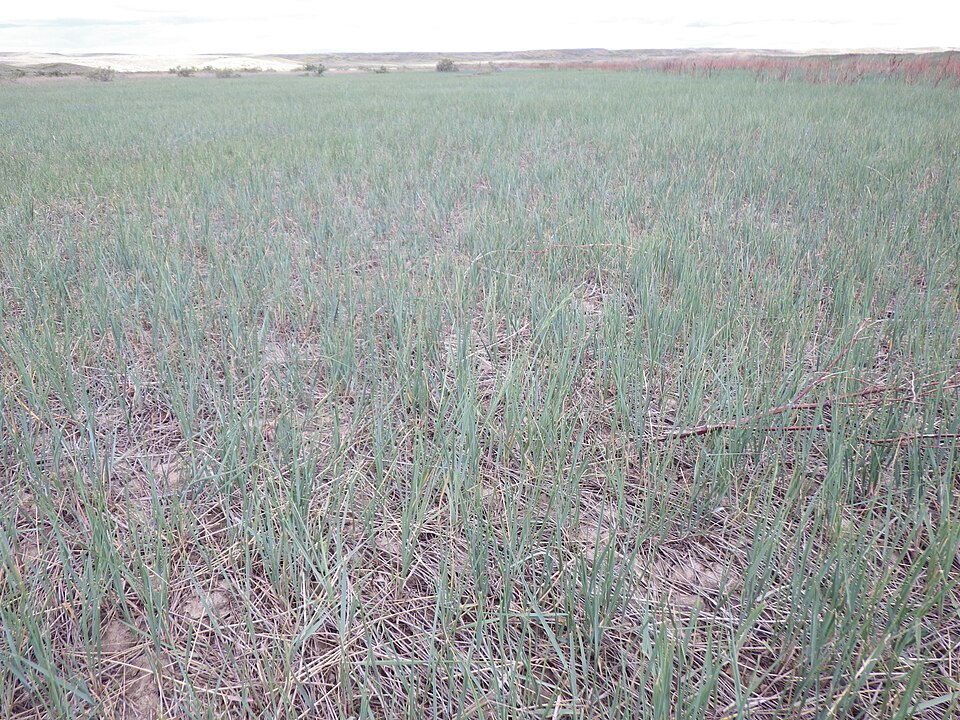
The stems (culms) are erect, sturdy, and typically unbranched, arising from creeping rhizomes that can extend several feet underground. The leaves are flat or slightly rolled, 4 to 10 inches long and ¼ to ½ inch wide, with a distinctive blue-green to gray-green color that helps distinguish it from other prairie grasses. The leaf surfaces are smooth or slightly rough, and the prominent leaf sheaths often overlap, giving the base of the plant a somewhat thick appearance.
Inflorescence
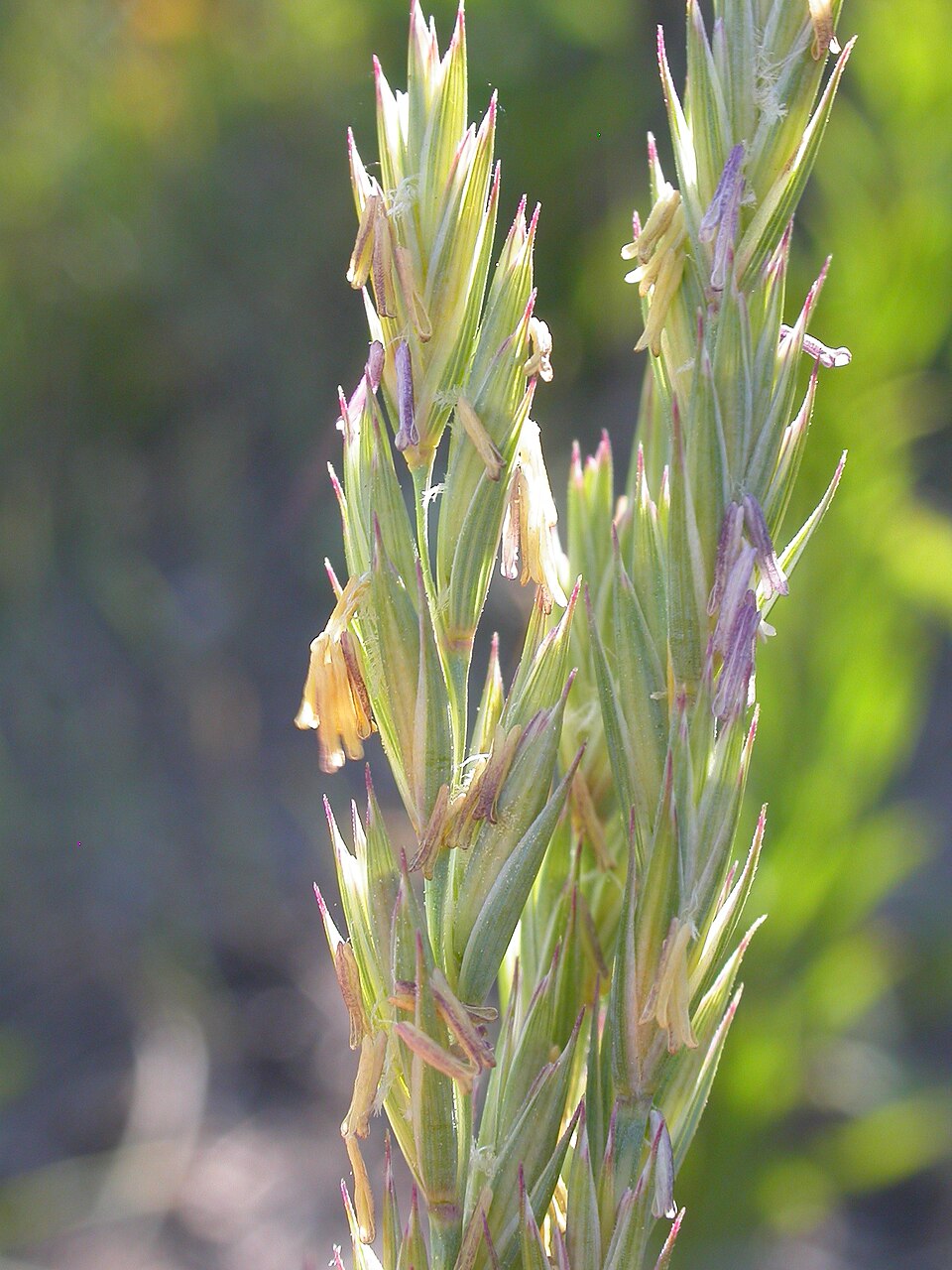
The flower head is a dense, erect spike 3 to 8 inches long, resembling a slender wheat head. Individual spikelets are arranged alternately along the spike, each containing 4 to 8 flowers. The spikes are initially green, maturing to golden-tan or light brown. Unlike true wheat, the awns (bristle-like appendages) are either absent or very short, giving the seed head a cleaner, less bristly appearance than many related grasses.
Seeds
The seeds are relatively large for a native grass, about ¼ inch long, and somewhat flattened. They mature in mid to late summer and are an important food source for numerous bird species and small mammals. The seeds have good longevity and germinate readily when conditions are favorable, contributing to the species’ success in restoration projects.
Root System
Western Wheatgrass develops an extensive rhizome system that is both its most distinctive feature and the key to its ecological success. The rhizomes are thick, creeping, and can extend 2 to 6 feet horizontally before producing new shoots. This underground network creates dense sod that effectively prevents soil erosion while storing substantial amounts of carbon. The fibrous root system can extend 4 to 6 feet deep, allowing the plant to access deep soil moisture during dry periods.
Quick Facts
| Scientific Name | Agropyron smithii |
| Family | Poaceae (Grass) |
| Plant Type | Cool-Season Perennial Grass |
| Mature Height | 1–2.5 ft |
| Sun Exposure | Full Sun |
| Water Needs | Low to Moderate |
| Bloom Time | June – August |
| Flower Color | Green to tan |
| USDA Hardiness Zones | 3–8 |
Native Range
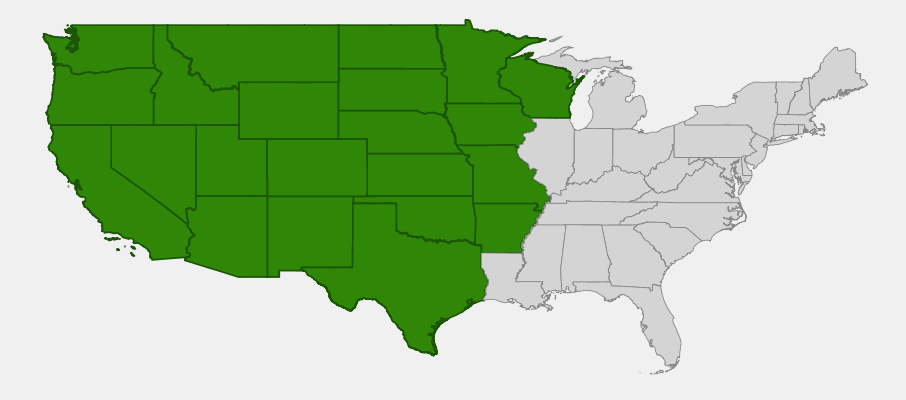
Western Wheatgrass possesses one of the most extensive native ranges of any North American grass, stretching from southern Canada to northern Mexico and from the Great Plains westward to the Pacific Coast. This enormous distribution — spanning virtually the entire western half of the continent — reflects the species’ remarkable adaptability to diverse climatic conditions, soil types, and elevations. The grass occurs naturally from sea level to elevations exceeding 8,000 feet in mountainous regions.
The species reaches its greatest abundance in the northern Great Plains, where it serves as a dominant component of mixed-grass prairie communities. Throughout North Dakota, South Dakota, Montana, Wyoming, and adjacent areas, Western Wheatgrass often forms extensive stands covering thousands of acres. The species extends eastward into Minnesota, Wisconsin, and Iowa, where it typically occurs in drier prairie sites and disturbed areas rather than as a dominant grassland species.
Western Wheatgrass demonstrates remarkable genetic diversity across its vast range, with populations showing local adaptations to specific climatic and soil conditions. Northern populations tend to be more cold-hardy and have different flowering times than southern ecotypes. This variation has important implications for restoration and reclamation projects, as using locally-adapted seed sources generally produces better establishment and long-term success than using seed from distant populations.
📋 Regional plant lists featuring Western Wheatgrass: North Dakota, South Dakota & Western Minnesota
Growing & Care Guide
Western Wheatgrass is among the most reliable and low-maintenance native grasses available for challenging sites. Its exceptional drought tolerance, cold hardiness, and ability to establish on poor soils make it ideal for areas where other plants struggle to survive.
Light
Western Wheatgrass performs best in full sun, where it develops its most vigorous growth and heaviest seed production. While it can tolerate some light shade, full sun exposure is essential for optimal development and the dense sod formation that makes this species so valuable for erosion control. In shadier conditions, plants tend to be weaker and less persistent.
Soil & Water
One of Western Wheatgrass’s greatest assets is its tolerance of diverse and difficult soil conditions. The species thrives in everything from sandy soils to heavy clays, from slightly acidic to strongly alkaline conditions (pH 6.0–9.0). It shows remarkable tolerance of saline and alkaline soils that would kill most other plants, making it invaluable for reclamation of disturbed sites. Once established, Western Wheatgrass is extremely drought-tolerant, capable of surviving on as little as 10 inches of annual precipitation.
Planting Tips
Western Wheatgrass can be established from seed or transplants, though seeding is more common for large areas. Plant seed in early spring (March-May) or fall (September-October) when soil moisture is adequate. Seeds should be planted ¼ to ½ inch deep and require good seed-to-soil contact for optimal germination. For erosion control applications, seeding rates of 10-15 pounds per acre are typical. The species establishes slowly, often taking 2-3 years to reach full potential.
Pruning & Maintenance
Western Wheatgrass requires minimal maintenance once established. The grass can be grazed or mowed if desired, though it’s naturally low-growing and doesn’t require regular cutting for appearance. The species responds well to prescribed burning in spring, which removes accumulated dead material and stimulates new growth. Avoid disturbing established stands unnecessarily, as the rhizome network can take time to fully redevelop if severely damaged.
Landscape Uses
Western Wheatgrass excels in numerous applications:
- Erosion control — exceptional for stabilizing slopes, banks, and disturbed areas
- Reclamation projects — standard species for mine reclamation and site rehabilitation
- Wildlife habitat — provides cover and food for numerous species
- Livestock forage — nutritious and palatable when young
- Prairie restoration — important component of authentic grassland plantings
- Drought-tolerant landscaping — excellent for xeriscape and water-wise gardens
- Roadside plantings — widely used for highway and infrastructure projects
- Conservation plantings — CRP, CREP, and other conservation programs
Wildlife & Ecological Value
Western Wheatgrass provides exceptional wildlife value across multiple seasons and for diverse species groups, serving as both a crucial food source and important habitat component throughout its range.
For Birds
The nutritious seeds of Western Wheatgrass are consumed by numerous bird species, including Sharp-tailed Grouse, Greater Prairie-Chickens, various sparrows, juncos, and finches. The dense growth provides excellent nesting habitat for ground-nesting species, while the persistent winter structure offers shelter and protection. Grassland birds particularly dependent on this species include Baird’s Sparrows, Sprague’s Pipits, and Chestnut-collared Longspurs in the northern Great Plains.
For Mammals
Western Wheatgrass serves as a primary food source for elk, mule deer, white-tailed deer, and numerous other large mammals throughout its range. The high-quality forage is particularly valuable in spring when the young growth is most nutritious and digestible. Small mammals including ground squirrels, prairie dogs, and various rodents consume both the seeds and young shoots. The extensive rhizome system provides cover and nesting sites for various burrowing mammals.
For Pollinators
While Western Wheatgrass is wind-pollinated and doesn’t attract pollinators with showy flowers, the diverse plant community it helps support includes numerous flowering plants that benefit bees, butterflies, and other pollinating insects. The grass’s role in soil stabilization and habitat structure indirectly benefits pollinator populations by maintaining the integrity of prairie ecosystems.
Ecosystem Role
As a dominant cool-season grass, Western Wheatgrass plays crucial ecosystem roles including soil stabilization, carbon sequestration, and hydrological regulation. The extensive rhizome system binds soil particles and prevents erosion while the deep roots improve water infiltration and soil structure. The species’ ability to remain active during cool periods when warm-season grasses are dormant provides year-round protection and productivity in mixed-grass prairie systems.
Cultural & Historical Uses
Western Wheatgrass has been intimately connected with human activities on the Great Plains for thousands of years. Indigenous peoples of the region, including the Lakota, Dakota, Crow, and Blackfeet nations, recognized this grass as one of the most important forage species for the vast bison herds that sustained their cultures and economies. The timing of Western Wheatgrass growth provided important phenological markers for seasonal activities, with the emergence of new shoots signaling spring movements and the maturation of seed heads indicating summer’s peak.
Some Plains tribes used the seeds of Western Wheatgrass as food during times of scarcity, grinding them into meal or parching them for storage. The tough rhizomes were occasionally used in basketry and cordage making, though other plants were generally preferred for these purposes. More commonly, the grass was valued for its role in maintaining the prairie ecosystem that supported bison and other game animals essential to indigenous life ways.
European settlers and ranchers quickly recognized Western Wheatgrass as one of the most valuable forage grasses of the West. Historical accounts describe cattle and sheep thriving on ranges dominated by this species, and early ranching operations were often located specifically to take advantage of Western Wheatgrass abundance. The species became a standard in the developing science of range management, with researchers studying its response to grazing pressure and seasonal use patterns.
In modern times, Western Wheatgrass has become a cornerstone species for land reclamation and restoration efforts throughout the West. The species was one of the first native grasses to be widely commercialized for erosion control, mine reclamation, and habitat restoration. Thousands of acres of disturbed lands — from strip-mined areas to highway corridors — have been stabilized using Western Wheatgrass-based seed mixtures. The grass has also played an important role in conservation programs like the Conservation Reserve Program (CRP), helping to restore millions of acres of former farmland to grassland habitat.
Frequently Asked Questions
How long does it take Western Wheatgrass to establish?
Western Wheatgrass is relatively slow to establish, typically taking 2-3 years to develop its full rhizome system and reach peak production. First-year growth may be limited as the plant focuses energy on root development. Be patient — established stands can persist for decades with minimal management.
Will Western Wheatgrass spread aggressively in my garden?
Yes, Western Wheatgrass can spread fairly aggressively through rhizomes once established. It’s best suited for naturalized areas, erosion control applications, or situations where you want ground coverage rather than contained plantings. It can be controlled by mowing or cultivation at the edges if needed.
Can I graze livestock on Western Wheatgrass?
Absolutely! Western Wheatgrass is excellent livestock forage, particularly in spring and early summer when it’s most nutritious. The species is tolerant of moderate grazing pressure and actually benefits from periodic defoliation. However, avoid overgrazing, especially during establishment or drought periods.
Why is my Western Wheatgrass not producing seed heads?
Young stands (under 3 years) may not flower heavily as they establish. Other factors affecting seed production include insufficient sunlight, excessive moisture, or very poor soil conditions. The species typically produces its best seed crops during years with moderate spring moisture followed by drier summer conditions.
Is Western Wheatgrass good for erosion control?
Yes, Western Wheatgrass is outstanding for erosion control due to its extensive rhizome system and tolerance of difficult conditions. It’s widely used for stabilizing slopes, stream banks, disturbed areas, and construction sites. The dense sod formation prevents both water and wind erosion once established.

Looking for a nursery that carries Western Wheatgrass?
Browse our native plant nursery directory: North Dakota · South Dakota · Minnesota