June Grass (Koeleria macrantha)
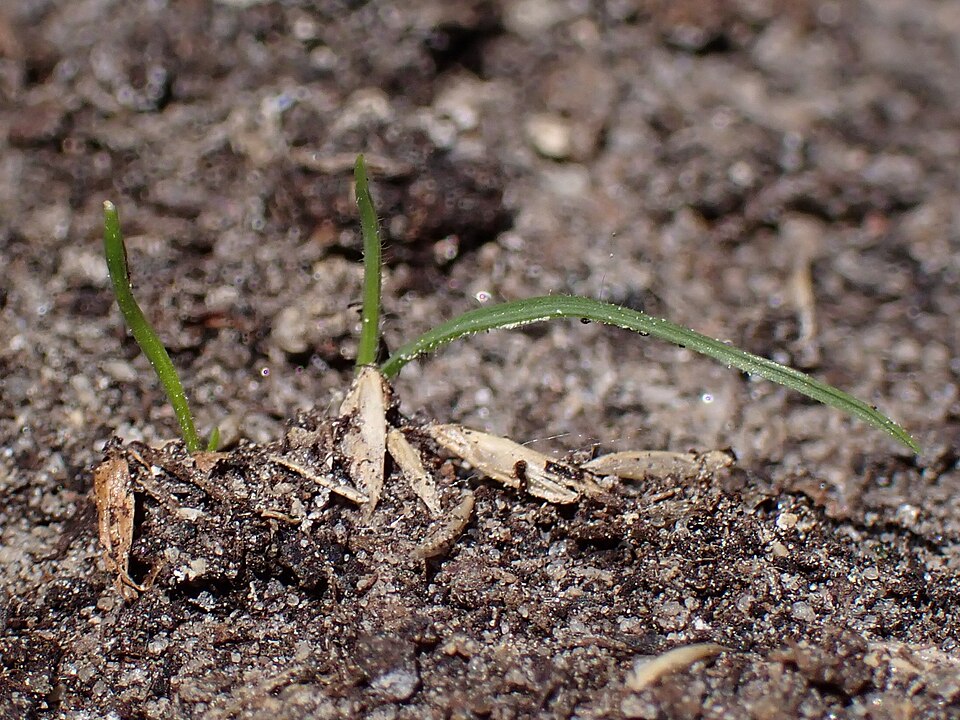
Koeleria macrantha, commonly known as June Grass or Prairie June Grass, is an elegant native cool-season bunchgrass that exemplifies the subtle beauty and ecological importance of North America’s grassland heritage. This delicate yet hardy member of the Poaceae (grass) family forms neat, compact tufts of fine-textured blue-green foliage crowned by shimmering, silvery flower heads that dance in prairie breezes from late spring through early summer. Despite its modest stature — rarely exceeding 1 to 2 feet in height — June Grass plays an outsized role in prairie ecosystems and represents an exceptional choice for naturalistic landscaping and grassland restoration projects.
June Grass is named for its early flowering period, when its distinctive pyramidal panicles emerge in late May and June, creating clouds of delicate, silvery-white inflorescences that catch and reflect light beautifully. The species exhibits classic bunch grass growth habits, forming discrete clumps rather than spreading by runners, making it an ideal component in mixed prairie plantings where it provides fine texture contrast to broader-leaved grasses and wildflowers. Its cool-season growth pattern means it begins growing early in spring when temperatures are still cool, reaches peak growth in late spring and early summer, then remains relatively dormant during hot summer months before resuming modest growth in fall.
What makes June Grass particularly valuable is its exceptional drought tolerance combined with its ability to thrive in poor, alkaline soils that challenge many other plants. This resilience, paired with its refined appearance and excellent wildlife value for birds and small mammals, has earned it recognition as both an important ecological species and an outstanding ornamental grass for sustainable landscaping. In prairie restorations and naturalistic gardens, June Grass serves as a backbone species that provides structure, erosion control, and habitat while creating beautiful textural compositions throughout the growing season.
Identification
June Grass is easily recognized by its distinctive combination of fine-textured foliage, compact bunchgrass growth habit, and characteristic early-summer flowering display. The plant forms neat, symmetrical tufts that maintain their shape throughout the growing season.
Growth Habit
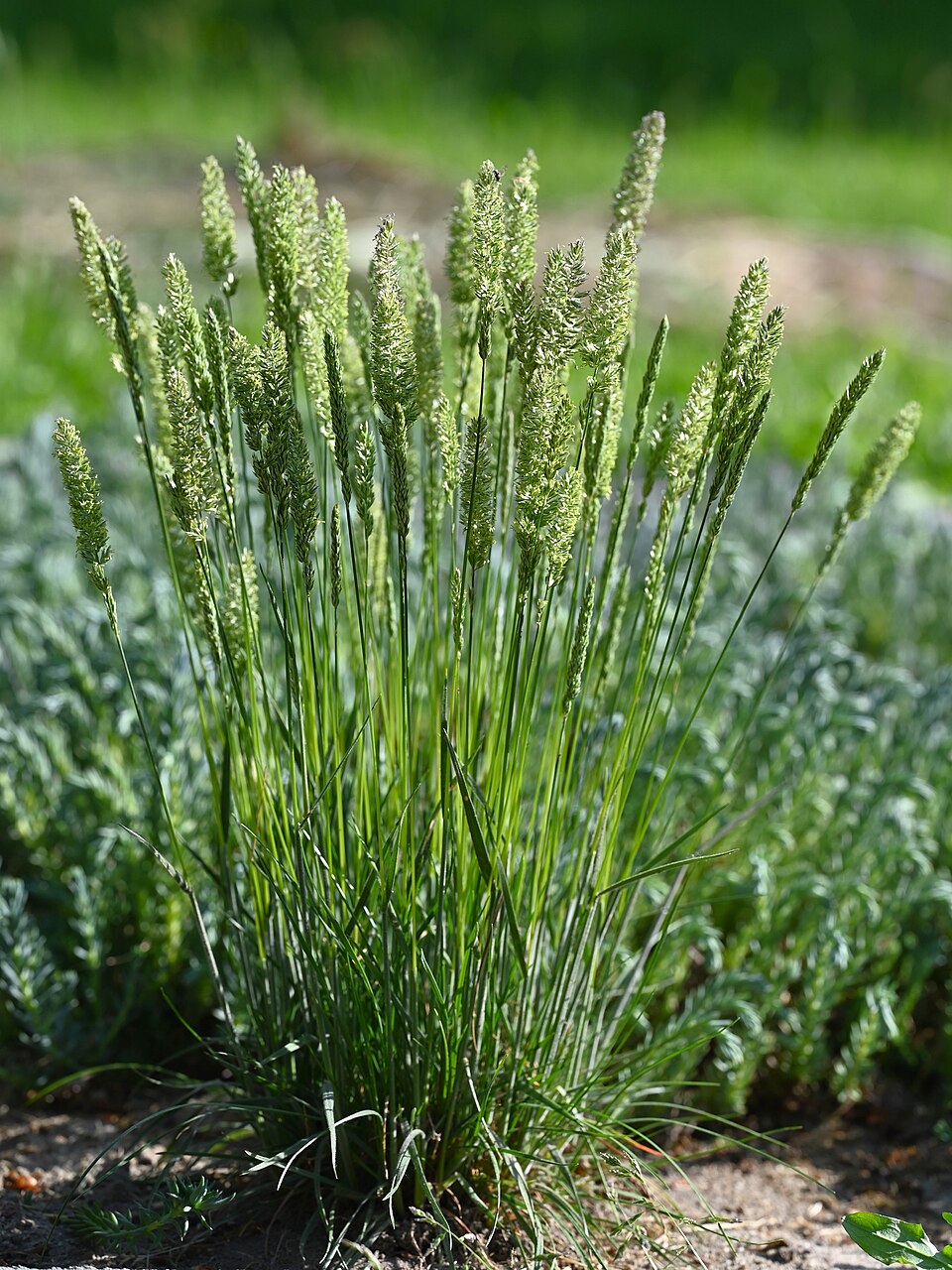
June Grass exhibits typical bunchgrass morphology, forming discrete circular clumps 8 to 16 inches in diameter. Unlike rhizomatous grasses that spread by underground runners, June Grass expands slowly by tillering from the crown, creating dense but well-defined tufts. Individual clumps may persist for many years, gradually increasing in size but maintaining their characteristic mounded form.
Foliage
The leaves are narrow (1-3 mm wide), flat to slightly folded, and typically 4 to 8 inches long. The leaf color ranges from blue-green to gray-green, often with a slight silvery cast that becomes more pronounced during drought stress. The leaf surfaces are smooth to slightly rough, and the tips taper to fine points. The foliage has a distinctly fine texture that provides excellent contrast to broader-leaved grasses and forbs in mixed plantings.
During winter, the foliage typically turns an attractive tawny gold color, persisting through much of the dormant season before new green growth emerges in spring. This winter color adds valuable seasonal interest to prairie landscapes and ornamental plantings.
Flowers & Seeds
The flowering heads (inflorescences) are June Grass’s most distinctive feature. They emerge in late May to June as narrow, pyramidal panicles 2 to 6 inches long and 1 to 2 inches wide at the base. When first emerging, the flower heads are often purplish or bronze-tinted, quickly maturing to silvery-white or pale golden color that shimmers in sunlight and breeze.
Individual spikelets are small and densely packed, giving the inflorescence a soft, cloud-like appearance. The flowers are wind-pollinated and typically shed pollen for 1-2 weeks in early summer. After pollination, the seed heads gradually turn golden-brown and may persist into fall, providing continued ornamental value and important wildlife food.
Quick Facts
| Scientific Name | Koeleria macrantha |
| Family | Poaceae (Grass) |
| Plant Type | Cool-Season Bunchgrass |
| Mature Height | 1–2 ft |
| Sun Exposure | Full Sun |
| Water Needs | Low (Drought Tolerant) |
| Bloom Time | May – July |
| Flower Color | Silvery-white to pale gold |
| USDA Hardiness Zones | 3–8 |
Native Range
June Grass enjoys a broad distribution across the northern Great Plains and western prairies of North America, extending from the Canadian prairies south through the northern United States and into the mountains of the western states. This extensive range reflects the species’ adaptability to continental climates characterized by cold winters, warm summers, and limited precipitation.
Throughout its native range, June Grass typically occurs on well-drained sites including upland prairies, dry slopes, and rocky outcrops. It shows particular affinity for calcareous soils and areas with neutral to alkaline pH, though it can adapt to mildly acidic conditions. The species is often found on sites that are too dry or nutrient-poor for taller prairie grasses, filling an important ecological niche in challenging habitats.
In mixed-grass prairie ecosystems, June Grass serves as an important mid-height component, growing alongside other bunch grasses like Blue Grama and Buffalo Grass, as well as numerous wildflowers adapted to similar conditions. Its early growth and flowering period help extend the seasonal interest and resource availability of prairie communities.
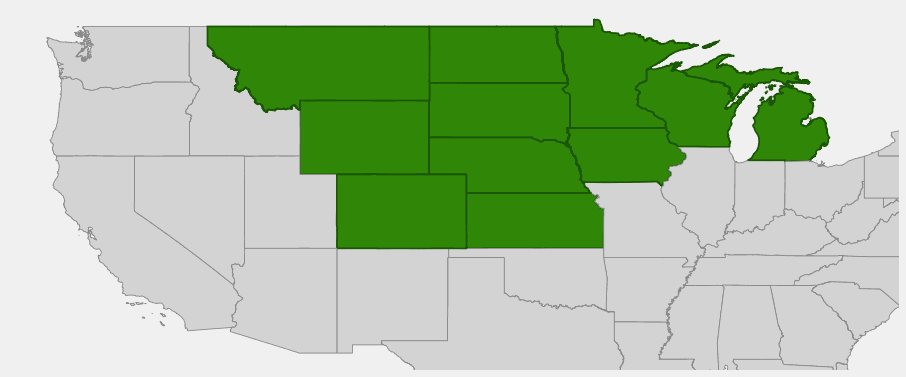
📋 Regional plant lists featuring June Grass: North Dakota, South Dakota & Western Minnesota
Growing & Care Guide
June Grass is among the most low-maintenance and adaptable native grasses available for cultivation, requiring minimal inputs while providing maximum ecological and ornamental value. Understanding its cool-season growth pattern and preference for well-drained conditions will ensure success in both prairie restorations and ornamental applications.
Light
June Grass performs best in full sun, where it develops its most compact growth habit and abundant flowering. While it can tolerate very light shade, plants grown in shadier conditions become more open and may not flower as prolifically.
Soil & Water
One of June Grass’s greatest strengths is its ability to thrive in poor, well-drained soils. The plant actually prefers lean, sandy, or gravelly soils with low fertility and excellent drainage. It tolerates alkaline conditions particularly well, making it ideal for challenging sites where pH levels limit other plant options.
June Grass is exceptionally drought-tolerant once established, requiring no supplemental irrigation in most climates. In fact, excessive moisture can lead to soft growth and increased susceptibility to fungal problems. The plant’s deep fibrous root system allows it to access moisture from lower soil layers while providing excellent erosion control.
Planting Tips
June Grass is typically grown from seed, which should be planted in fall or early spring. Seeds require a cold stratification period and may benefit from fall planting to receive natural winter chilling. Spring plantings should be done early while soil temperatures are still cool.
For ornamental applications, space plants 12 to 18 inches apart to allow for mature clump development. In prairie seedings, include June Grass at 1-2 pounds per acre as part of a diverse seed mix.
Maintenance
June Grass requires virtually no maintenance once established. The plant may be mowed or burned in late winter to remove old growth, but this is optional in most situations. In ornamental settings, the attractive winter foliage may be left standing for seasonal interest.
The plant is naturally pest- and disease-free, with no significant problems reported. Its cool-season growth pattern means it remains relatively dormant during hot summer months, requiring no summer care.
Landscape Uses
- Prairie restoration and grassland reconstruction
- Erosion control on slopes and disturbed sites
- Ornamental grass gardens and naturalistic landscapes
- Rock gardens and xeriscaping
- Wildlife habitat plantings
- Green roofs and extensive growing systems
Wildlife & Ecological Value
June Grass provides important wildlife habitat and food resources, particularly for grassland bird species and small mammals that depend on native prairie ecosystems.
For Birds
The seeds are consumed by numerous grassland birds including various sparrows, finches, and buntings. The compact growth habit provides nesting sites and cover for ground-nesting species, while the early flowering period offers resources when few other grasses are in bloom.
For Small Mammals
Small mammals including voles, mice, and ground squirrels consume both the seeds and young shoots. The dense tufts provide important cover and nesting material for these species.
Ecosystem Role
As a bunch grass, June Grass helps create the structural diversity essential to healthy prairie ecosystems. Its fibrous root system contributes to soil stability and carbon sequestration, while its growth pattern creates microhabitats for other plants and small animals.
Cultural & Historical Uses
Indigenous peoples of the Great Plains recognized June Grass as an important component of prairie ecosystems, though it was less prominently featured in traditional uses than some taller grasses. The seeds were occasionally gathered and ground into meal during times of abundance, and the fine foliage was sometimes used for basketry and other crafts requiring delicate materials.
Early settlers valued June Grass as an indicator of good grazing land, recognizing that its presence often signaled healthy prairie conditions. The grass provided early-season forage for livestock when taller grasses were not yet available.
Frequently Asked Questions
When does June Grass bloom?
Despite its name, June Grass typically begins flowering in late May in most locations, with peak bloom occurring in June. The exact timing varies with latitude and local climate conditions, but the early summer flowering period is consistent throughout its range.
Will June Grass spread and take over my garden?
No, June Grass is a clumping bunch grass that expands very slowly by tillering from the crown. Individual clumps may gradually increase in size over many years, but the plant does not spread by runners or aggressive self-seeding.
How do I establish June Grass from seed?
June Grass seeds require cold stratification and should be planted in fall or early spring. Rake the soil lightly, broadcast seeds, and cover with a thin layer of soil. Keep moist until germination, which may be slow and irregular during the first season.
Is June Grass the same as other “June grasses”?
There are several grasses commonly called “June grass,” but Koeleria macrantha is the species most commonly referred to by this name in North America. Be sure to use the scientific name when ordering seeds or plants to ensure you get the correct species.

Looking for a nursery that carries June Grass?
Browse our native plant nursery directory: North Dakota · South Dakota · Minnesota