
Whorled Milkweed (Asclepias verticillata): Native Plant Guide
Last updated: August 21, 2026
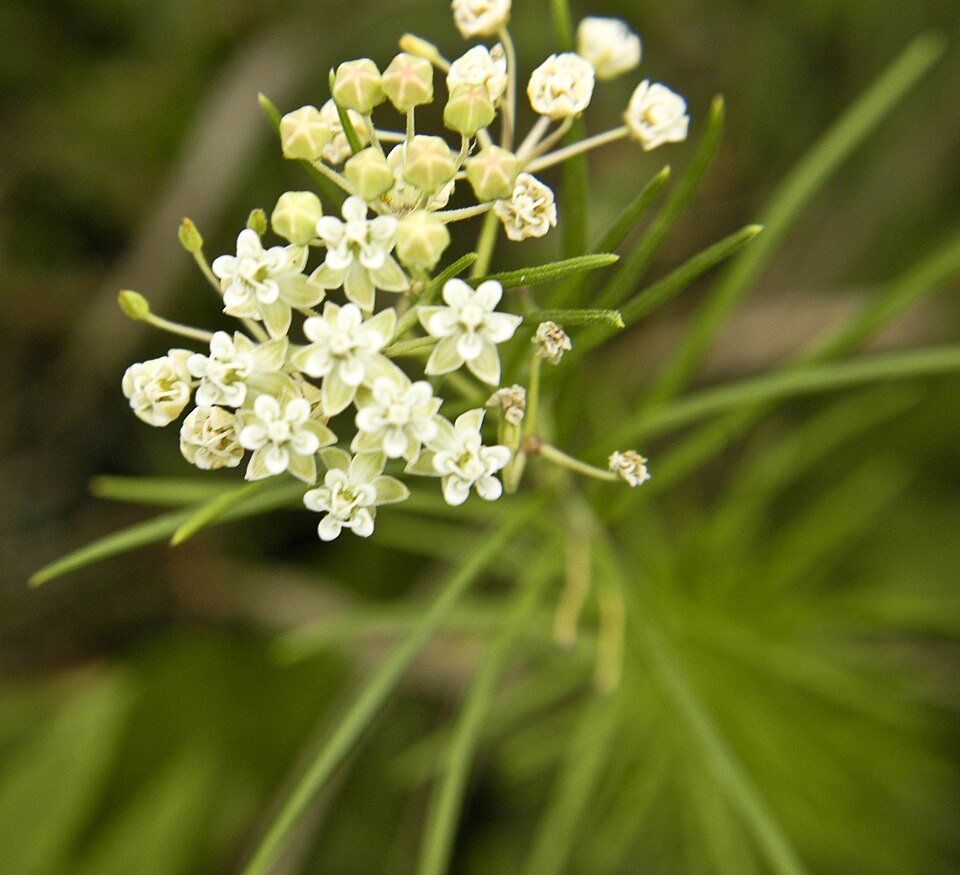
Asclepias verticillata, commonly known as Whorled Milkweed or Horsetail Milkweed, is a distinctive native perennial that stands apart from its more robust milkweed relatives with its delicate, fine-textured appearance and compact growth habit. This member of the Apocynaceae (dogbane) family grows just 1–3 feet tall, but what it lacks in stature it makes up for in unique beauty and ecological importance. Its narrow, needle-like leaves are arranged in whorls around the stem — a characteristic that gives the plant its common name and creates an almost ethereal, feathery appearance that sets it apart in the garden landscape.
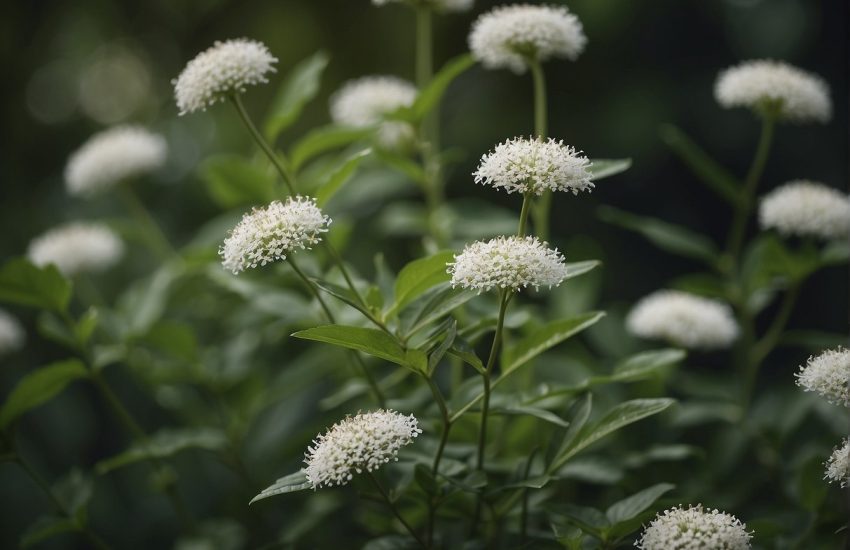
During midsummer through early fall, Whorled Milkweed produces clusters of small, white flowers that may appear modest at first glance but reveal intricate beauty upon closer inspection. These blooms follow the classic milkweed flower structure with their distinctive corona and complex pollination mechanism, making them essential stops for monarchs and other specialized milkweed-dependent insects. The plant’s fine-textured foliage and delicate white flowers create an elegant contrast to the bold, broad-leaved milkweeds, offering garden designers a more refined option for native plant compositions while maintaining the critical ecological functions that make all milkweeds indispensable.
Native to much of central and eastern North America, Whorled Milkweed has earned a reputation as one of the most drought-tolerant and deer-resistant members of the milkweed family. Its deep taproot and narrow leaves help it thrive in dry, sandy, or rocky soils where other plants struggle, making it invaluable for challenging garden sites, prairie restorations, and xeriscaping projects. Despite its delicate appearance, this tough little milkweed is remarkably resilient and provides the same critical habitat support for monarch butterflies and other pollinators as its larger relatives, proving that in the native plant world, small can indeed be mighty.
Identification
Whorled Milkweed is easily distinguished from other milkweed species by its unique leaf arrangement and fine-textured appearance. The plant typically grows 1 to 3 feet tall, with a slender, upright growth habit that often appears more delicate and refined than other members of the genus. Multiple stems may arise from the base, creating small clumps over time as the plant spreads slowly by underground rhizomes.
Stems
The stems are slender, smooth, and typically unbranched below the flower clusters. They are green to light green in color and contain the characteristic milky white sap (latex) found in all milkweed species. This sap is toxic and serves as a defense mechanism against herbivores. The stems are generally 1/8 to 1/4 inch in diameter and maintain an upright, rather rigid posture even in windy conditions.
Leaves
The leaves are the plant’s most distinctive feature — extremely narrow, linear, and needle-like, measuring typically 1 to 4 inches long but only 1/8 to 1/4 inch wide. They are arranged in whorls of 3 to 6 around the stem, creating the characteristic appearance that gives the plant its name. The leaves are pale to medium green, smooth-textured, and often appear almost grass-like from a distance. This fine-textured foliage creates a soft, feathery appearance that is unique among milkweeds and provides an excellent textural contrast in garden plantings.
The narrow leaf shape is an adaptation to drought conditions, reducing surface area and water loss while the deep taproot seeks moisture from below. In very dry conditions, the leaves may curl slightly to further reduce moisture loss, and in severe drought, lower leaves may drop while the plant conserves energy for flowering and seed production.
Flowers
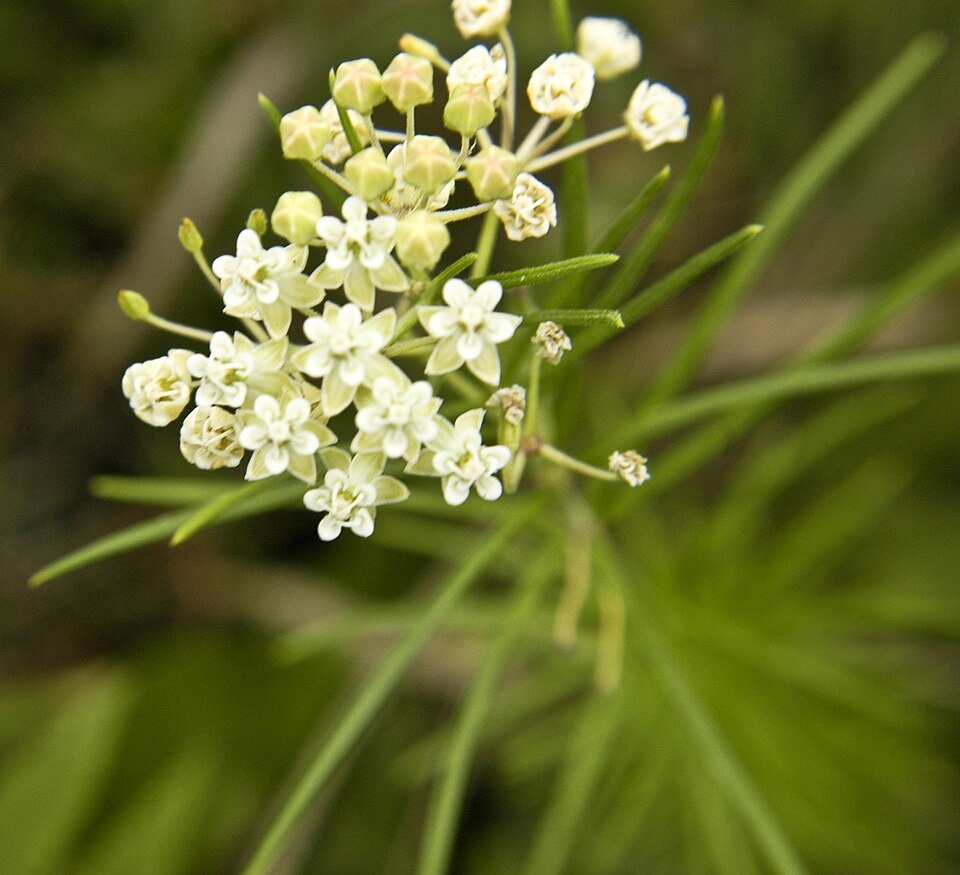
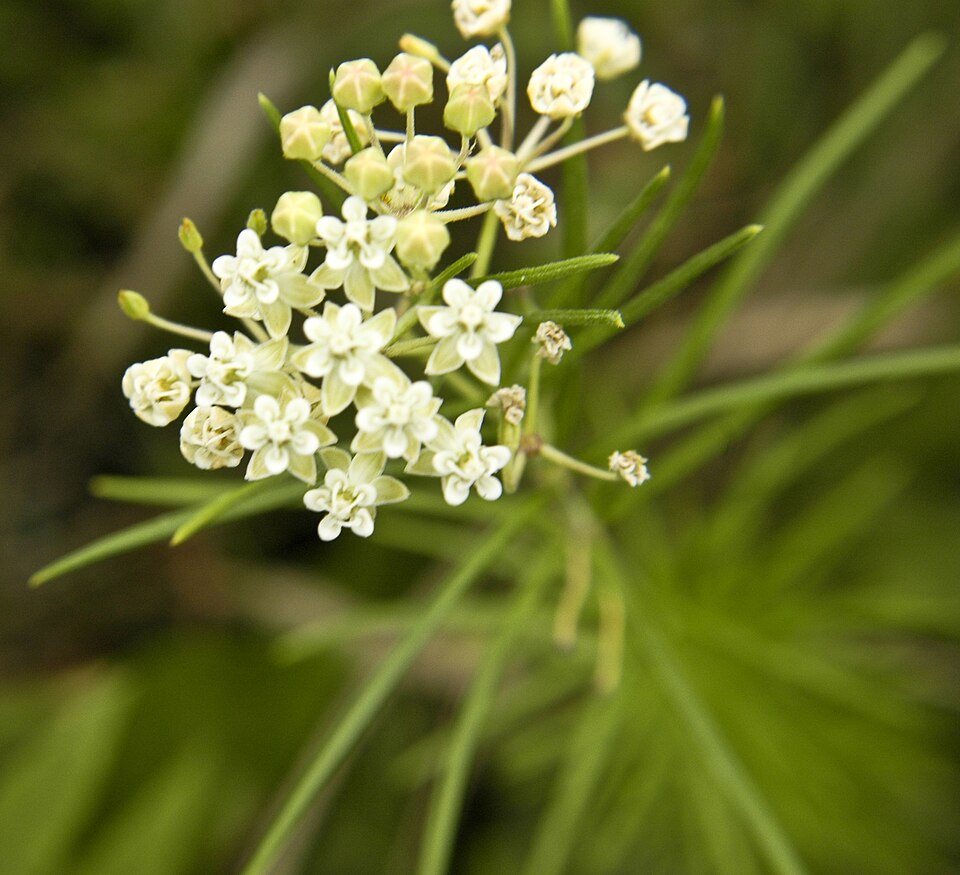
The flowers are small, white, and arranged in small, compact umbels (flat-topped clusters) typically containing 8 to 20 individual flowers. Each flower is about 1/4 inch across and follows the classic milkweed structure with five reflexed petals and a complex corona (crown) structure in the center. The corona is typically white to pale green, sometimes with a slight purplish tinge. While individual flowers are small, the overall effect of multiple flower clusters can be quite striking, especially when plants are grown in groups.
Flowering typically occurs from June through September, with peak blooming in July and August. The flowers have a subtle, sweet fragrance that attracts a variety of pollinators. Like all milkweeds, the flowers have specialized pollinia (pollen packets) that attach to visiting insects, making pollination highly dependent on insect visitors, particularly bees, wasps, and butterflies.
Fruit & Seeds
Following successful pollination, the flowers develop into the characteristic milkweed pods (follicles) that split along one side to release seeds. The pods of Whorled Milkweed are relatively small and slender, typically 3 to 5 inches long and about 1/4 inch wide. They are initially green, turning brown as they mature in late summer and fall. Each pod contains numerous small, brown seeds topped with long, silky white hairs (coma) that enable wind dispersal — a key adaptation that allows milkweeds to colonize new habitats.
Quick Facts
| Scientific Name | Asclepias verticillata |
| Family | Apocynaceae (Dogbane) |
| Plant Type | Perennial Herb |
| Mature Height | 1–3 ft (0.3–0.9 m) |
| Sun Exposure | Full Sun |
| Water Needs | Low to Moderate |
| Bloom Time | June–September |
| Flower Color | White |
| USDA Hardiness Zones | 3–9 |
Native Range
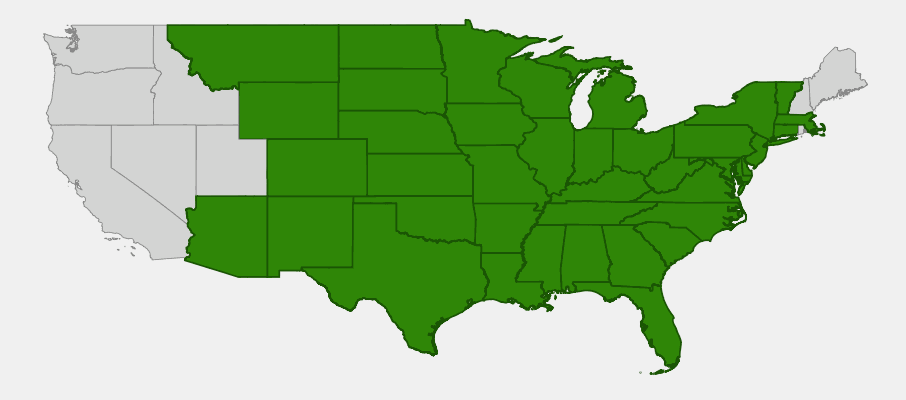
Whorled Milkweed has an extensive native range spanning much of the central and eastern United States, from southern Canada south to northern Mexico and from the Atlantic coast west to the Rocky Mountains. This broad distribution reflects the species’ remarkable adaptability to various climate conditions and soil types, though it shows a particular preference for well-drained, sandy, or rocky soils and areas with good sun exposure.
The species is most abundant in the Great Plains and prairie regions, where it is often found growing in native grasslands, prairie openings, and along roadsides and railroad rights-of-way. In the eastern portions of its range, it typically occurs in dry, open woodlands, forest clearings, and disturbed areas. Unlike some milkweed species that prefer rich, moist soils, Whorled Milkweed thrives in poor, well-drained soils and is often found on sandy hills, rocky outcrops, and other sites that challenge many other plants.
The plant’s extensive range and ecological flexibility have made it an important species in prairie reconstruction efforts across the Midwest and Great Plains. It serves as both an indicator species for high-quality prairie remnants and a valuable addition to restored grasslands, where its drought tolerance and wildlife benefits make it a particularly valuable component of the plant community.
📋 Regional plant lists featuring Whorled Milkweed: North Dakota, South Dakota & Western Minnesota
Growing & Care Guide
Whorled Milkweed is among the most low-maintenance and adaptable native plants you can grow, thriving in conditions that challenge many garden plants and requiring minimal care once established. Its drought tolerance, deer resistance, and compact size make it particularly valuable for challenging garden sites, xeriscaping, and sustainable landscape design. Understanding its prairie origins and natural habitat preferences is key to successful cultivation.
Light & Location
Full sun is essential for Whorled Milkweed to reach its full potential. The plant requires at least 6-8 hours of direct sunlight daily and performs best in the most open, sunny locations available. In partial shade, the plant becomes weak and straggly, produces fewer flowers, and may be more susceptible to fungal issues. Choose the sunniest, most well-drained location in your garden, and avoid areas near trees or large shrubs that might shade the plant or compete for water and nutrients.
Soil Requirements
One of Whorled Milkweed’s greatest assets is its tolerance for poor, well-drained soils. The plant actually prefers lean, sandy, or rocky soils and can struggle in rich, heavily amended garden soil, which may cause excessive vegetative growth at the expense of flowering. Excellent drainage is crucial — the plant will not tolerate waterlogged conditions and may develop root rot in heavy, poorly drained soils. It tolerates a wide pH range from slightly acidic to alkaline (6.0-8.0) and shows remarkable tolerance for shallow, rocky, or otherwise challenging soils.
Water Management
Exceptional drought tolerance is one of Whorled Milkweed’s defining characteristics. Once established (typically after the first growing season), the plant requires no supplemental watering in most climates and actually performs better under moderate drought stress than with regular irrigation. The deep taproot, which can extend 6 feet or more into the soil, allows the plant to access water sources unavailable to shallow-rooted plants. During establishment, provide moderate water during extended dry periods, but avoid overwatering, which can lead to root problems and reduced flowering.
Planting & Establishment
Whorled Milkweed can be grown from seed or transplants, though seed is often the most economical approach for larger plantings. Seeds require cold stratification (3-4 months of cold, moist conditions) and are best direct-seeded in fall for spring germination. Plant seeds 1/4 inch deep and space plants or thin seedlings to 12-18 inches apart. Transplants should be planted in spring after the last frost or in fall at least 6 weeks before hard freeze. Be careful not to disturb the deep taproot when transplanting, as damage can severely set back the plant.
Maintenance & Management
Minimal maintenance is required and often beneficial for Whorled Milkweed. The plant may self-seed moderately in suitable conditions, and seedlings can be easily transplanted or removed as desired. Deadheading spent flowers will extend the blooming period but prevents seed formation that feeds birds and ensures natural reproduction. Many gardeners prefer to leave seed pods for wildlife value and winter interest, then clean up the garden in late winter or early spring.
Cut plants back to 4-6 inches in late fall or early spring. In naturalized settings, no maintenance is typically needed beyond occasional monitoring for invasive weeds. The plant spreads slowly by rhizomes but is not aggressive and is easily controlled if it spreads beyond desired boundaries.
Wildlife & Ecological Value
Despite its small stature and delicate appearance, Whorled Milkweed provides exceptional ecological value and supports many of the same wildlife species as its larger milkweed relatives. Its extended blooming period and specialized flower structure make it particularly valuable for late-season pollinators, while its seeds and foliage support various wildlife throughout the year.
For Monarch Butterflies
Whorled Milkweed is a critical host plant for monarch butterflies, supporting the complete life cycle from egg to adult. Female monarchs lay their eggs on the foliage, and the caterpillars feed exclusively on milkweed plants, obtaining the toxic compounds that make both the caterpillars and adult butterflies unpalatable to predators. While Whorled Milkweed’s narrow leaves provide less surface area per plant than broader-leaved species, the plant’s long blooming period and drought tolerance make it particularly valuable in areas where other milkweeds may struggle.
The flowers provide nectar for adult monarchs and other butterflies throughout the summer and fall, including during the critical fall migration period when monarchs need abundant nectar sources to fuel their journey to overwintering sites in Mexico.
For Other Pollinators
The flowers attract a diverse array of native pollinators, including native bees, butterflies, moths, and beneficial wasps. The specialized milkweed flower structure is particularly well-suited to larger pollinators that can successfully remove and transfer the pollinia, including bumble bees, carpenter bees, and various long-tongued bees. Many smaller beneficial insects also visit the flowers for nectar, even if they don’t effectively pollinate the plants.
The extended blooming period, from early summer through fall, makes Whorled Milkweed particularly valuable for supporting pollinators during the late-season period when many other plants have finished flowering. This timing is critical for pollinators preparing for winter or completing late-season reproductive cycles.
For Birds & Other Wildlife
The seeds provide food for various birds, particularly American Goldfinches and other small seed-eating species. Birds also use the fluffy seed fiber (coma) as nesting material. The plant’s low, spreading growth habit provides some cover for ground-nesting birds and small mammals, though this is less significant than with taller milkweed species.
The foliage supports various moth caterpillars and other insects, creating a food web that ultimately benefits insectivorous birds. While deer typically avoid milkweeds due to their toxic sap, the plant’s bitter taste and chemical defenses make it naturally deer resistant, which is valuable in areas with significant deer pressure.
Ecosystem Services
Whorled Milkweed’s deep taproot helps improve soil structure and water infiltration while accessing nutrients from deep soil layers. The plant is valuable for erosion control on slopes and disturbed sites, particularly in dry or sandy soils where few other plants establish easily. In prairie ecosystems, it helps stabilize soil and provides structural diversity that supports various insects and other small animals.
The plant’s ability to thrive in poor soils and disturbed areas makes it valuable for restoration projects and for stabilizing sites after construction or other disturbances.
Cultural & Historical Uses
Like other members of the milkweed family, Whorled Milkweed has a history of use by Indigenous peoples of North America, though it was generally less important than some of the larger milkweed species due to its smaller size and lower fiber production. However, various tribes found uses for the plant that took advantage of its unique properties.
Indigenous Uses
Several Plains Indian tribes used Whorled Milkweed medicinally, though always with great caution due to the plant’s toxic properties. The Lakota and Dakota peoples used very dilute root preparations for treating certain stomach ailments, though this use required extensive knowledge and careful preparation. Some tribes used the milky sap externally for treating warts and other skin conditions, taking advantage of the latex’s caustic properties.
The silky seed fibers were occasionally used for stuffing and insulation, though the plant’s small size limited the practical quantities that could be harvested. Some tribes mixed the seed fibers with other materials to create tinder for fire-starting, as the fluffy fibers catch flame easily when dry.
The plant’s bitter taste and toxic properties also made it useful as a natural deer and rabbit repellent around more vulnerable crops and medicines, earning it a place in the complex ecological management systems developed by Indigenous peoples.
Pioneer and Settlement Era
European settlers learned about various milkweed uses from Indigenous peoples, though Whorled Milkweed was generally less important than Common Milkweed for fiber and medicinal uses. However, pioneers valued the plant’s ability to grow in poor soils and its resistance to grazing animals, recognizing it as an indicator of land that might be suitable for certain types of agriculture or grazing.
During the Civil War and World War II, when natural fiber sources were scarce, there was renewed interest in milkweed seed fibers for insulation and flotation devices, though Whorled Milkweed’s small size made it less valuable for these purposes than larger species.
Modern Conservation
Today, Whorled Milkweed is recognized as a key species in monarch butterfly conservation efforts. As monarch populations have declined due to habitat loss and herbicide use, there has been increasing emphasis on planting diverse milkweed species to support monarch reproduction and migration. Whorled Milkweed’s drought tolerance and ability to grow in challenging conditions make it particularly valuable for restoration projects in arid and semi-arid regions.
The plant is increasingly used in sustainable landscaping and xeriscaping projects, where its low water requirements, wildlife value, and unique texture make it valuable for creating attractive, environmentally responsible landscapes. It has also gained recognition in pollinator garden design, where its extended blooming period and specialized flower structure contribute to supporting diverse pollinator communities.
Frequently Asked Questions
Is Whorled Milkweed really deer resistant?
Yes, Whorled Milkweed is highly deer resistant due to its toxic milky sap and bitter taste. The plant contains cardiac glycosides that make it unpalatable and potentially harmful to deer and most other mammals. However, in areas with extreme deer pressure or during severe drought when other food sources are scarce, deer may occasionally browse the plants.
Can I grow Whorled Milkweed in a formal garden setting?
Absolutely! Whorled Milkweed’s fine-textured foliage and compact growth habit make it excellent for formal and informal garden designs. Its delicate appearance provides wonderful textural contrast to broad-leaved plants, and its white flowers complement virtually any color scheme. The plant works well in perennial borders, rock gardens, and as an edging plant.
How does Whorled Milkweed compare to other milkweed species for monarchs?
While individual Whorled Milkweed plants provide less leaf surface area for monarch caterpillars than larger milkweed species, they are equally valuable as host plants. The narrow leaves are perfectly adequate for monarch reproduction, and the plant’s drought tolerance and extended blooming period can make it more reliable than other species in challenging conditions. For maximum monarch support, plant multiple milkweed species to provide diverse habitat.
Will Whorled Milkweed spread and take over my garden?
Whorled Milkweed spreads slowly by underground rhizomes and may self-seed moderately in suitable conditions, but it’s not aggressive or invasive in garden settings. The spreading is typically beneficial, creating attractive colonies over time. Any unwanted spreading can be easily controlled by dividing clumps every few years or removing unwanted seedlings.
Can I collect and plant seeds from my Whorled Milkweed?
Yes, collecting and planting seeds is an excellent way to propagate Whorled Milkweed and expand habitat for monarchs. Collect seeds when the pods begin to split and the seeds are fully developed but before they disperse naturally. Seeds require 3-4 months of cold stratification for good germination, so either direct-seed in fall or artificially stratify seeds in the refrigerator before starting indoors in late winter.
What companion plants work well with Whorled Milkweed?
Whorled Milkweed combines beautifully with other drought-tolerant native plants, particularly those with contrasting textures and forms. Excellent companions include Little Bluestem grass, Purple Coneflower, Black-eyed Susan, Wild Bergamot, and Side-oats Grama. The fine texture of Whorled Milkweed provides excellent contrast to broader-leaved plants and helps create layered, naturalistic plant communities.

Looking for a nursery that carries Whorled Milkweed?
Browse our native plant nursery directory: North Dakota · South Dakota · Minnesota

What about watering? I always seem to overdo it or not do enough.
Good question! Spacing depends on the variety but a general rule is to give them room to breathe. Check the tag or seed packet for specifics. -Plant Native Team