
Shrubby Cinquefoil (Potentilla fruticosa)
Last updated: August 21, 2026
Potentilla fruticosa (syn. Dasiphora fruticosa), commonly known as Shrubby Cinquefoil, is one of North America’s most versatile and resilient native shrubs. This compact member of the Rosaceae (rose) family brings a perfect combination of ornamental appeal and ecological value to landscapes from sea level to alpine heights. Growing 2–4 feet tall and wide, Shrubby Cinquefoil forms dense, rounded mounds covered in small, dark green compound leaves that provide an excellent backdrop for its cheerful display of bright yellow, buttercup-like flowers that bloom continuously from late spring through fall.
What makes Shrubby Cinquefoil truly exceptional is its remarkable adaptability and extreme hardiness. This tough native thrives in conditions that challenge many other plants — from the frigid tundra of Alaska to the high mountain meadows of Colorado, from acidic bogs to alkaline prairies. Its ability to flourish in poor soils, withstand harsh weather extremes, and provide months of reliable color makes it invaluable for challenging landscape situations. The bright yellow flowers, typically ¾ to 1 inch across with five rounded petals, create a sunny, cheerful presence that attracts numerous pollinators while requiring minimal care from gardeners.
Beyond its ornamental qualities, Shrubby Cinquefoil serves important ecological functions as a soil stabilizer, wildlife shelter, and pollinator magnet. Its dense, twiggy structure provides nesting sites for small birds, while the extended flowering period supplies crucial nectar for butterflies, bees, and beneficial insects throughout the growing season. For gardeners seeking a truly low-maintenance native shrub that combines four-season structure, continuous summer blooms, and exceptional hardiness, Shrubby Cinquefoil stands as one of the finest choices available — a testament to the beauty and resilience that characterizes the best of our native flora.
Identification
Shrubby Cinquefoil is easily recognized by its distinctive combination of small compound leaves, bright yellow flowers, and compact, densely branched growth habit. Once familiar with this species, it becomes unmistakable in the landscape.
Growth Form & Structure
This deciduous shrub typically grows 2–4 feet tall and equally wide, forming a neat, rounded mound with a dense, twiggy branching pattern. The branches are slender but sturdy, with reddish-brown to gray bark that often peels in thin strips on older stems. Young twigs are initially green to reddish, becoming brown with age. The overall growth habit is naturally compact and tidy, requiring minimal pruning to maintain an attractive shape.
Distinctive Foliage
The leaves are pinnately compound, typically consisting of 3–7 leaflets (most commonly 5, hence “cinquefoil” meaning “five-leaf”). Each leaflet is small — usually ½ to ¾ inch long — oval to oblong in shape, and has a distinctive blue-green to gray-green color with a somewhat silky texture due to fine hairs on the undersides. The leaflets are arranged like fingers on a hand, creating an elegant, fine-textured appearance. Leaves are alternate along the stems and persist well into fall before dropping.
Cheerful Flowers
The flowers are the plant’s crowning glory — bright golden-yellow, buttercup-like blooms that are ¾ to 1 inch across. Each flower has five rounded petals surrounding a cluster of numerous yellow stamens, giving them a distinctly rose-like appearance (appropriate for a member of the rose family). The flowers are borne singly or in small clusters at the tips of branches and continue blooming from late spring through the first hard frost, providing one of the longest flowering seasons of any native shrub.
Fruits & Seeds
The flowers are followed by small, dry, brown seed heads (achenes) that are not particularly ornamental but provide food for birds. The seeds are small and numerous, arranged in small clusters that persist into winter. While not showy, the seed heads add subtle textural interest to the winter landscape.
Seasonal Changes
Shrubby Cinquefoil offers excellent seasonal interest. Spring brings fresh green growth and the first flush of flowers. Summer showcases continuous blooming with peak flower production during warm weather. Fall brings subtle foliage color — usually yellow to bronze — before leaf drop reveals the attractive branching structure. Winter displays the shrub’s handsome form and interesting bark texture, along with persistent seed heads that provide wildlife food.
Similar Species
Shrubby Cinquefoil could potentially be confused with other small-leafed shrubs, but the combination of compound leaves with 5 leaflets, bright yellow five-petaled flowers, and compact growth habit makes it distinctive. The extended flowering period and buttercup-like flower form are particularly diagnostic features.
Quick Facts
| Scientific Name | Potentilla fruticosa (syn. Dasiphora fruticosa) |
| Family | Rosaceae (Rose) |
| Plant Type | Deciduous Shrub |
| Mature Height | 4 ft |
| Mature Width | 3–4 ft |
| Growth Rate | Slow to moderate |
| Sun Exposure | Full Sun |
| Water Needs | Moderate |
| Soil Type | Well-drained; tolerates poor, rocky soils |
| Soil pH | 5.0–8.0 (acidic to alkaline) |
| Bloom Time | June – September |
| Flower Color | Bright yellow |
| Fall Color | Yellow to bronze |
| Deer Resistant | Yes |
| USDA Hardiness Zones | 2–7 |
Native Range
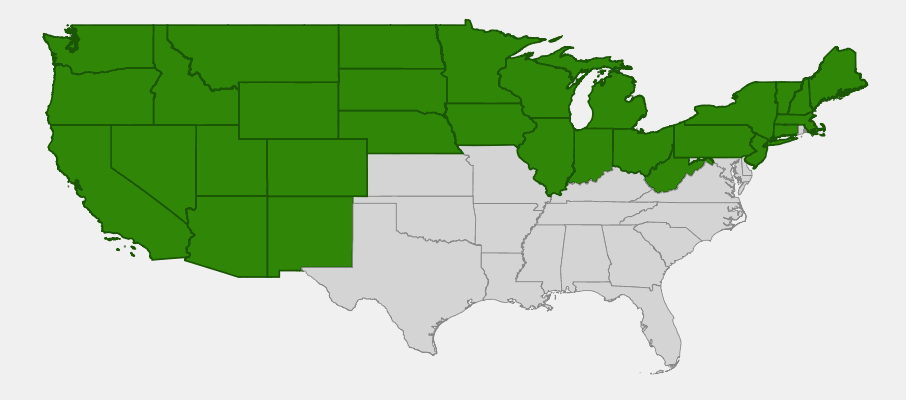
Shrubby Cinquefoil boasts one of the most extensive native ranges of any North American shrub, stretching across virtually the entire northern tier of the continent from coast to coast. This remarkable distribution — from Alaska to Newfoundland and south through the western mountains to California and New Mexico — reflects the species’ extraordinary adaptability to diverse climatic conditions and its evolutionary success across varied habitats.
In western North America, Shrubby Cinquefoil occurs throughout the Rocky Mountains, Cascade Range, and Sierra Nevada, typically at moderate to high elevations where it inhabits mountain meadows, streamside areas, and forest openings. It’s particularly common in subalpine and montane zones, where it often forms extensive colonies on moist slopes and in meadow systems. The species also extends into the northern Great Plains and Canadian Prairie Provinces, where it occurs in native grasslands, coulees, and riparian areas.
Eastern populations are more scattered but significant, occurring primarily in northern regions from Minnesota and Wisconsin east through the Great Lakes states to northern New England and the Maritime Provinces. In these areas, Shrubby Cinquefoil typically inhabits wetland edges, calcareous fens, and rocky shores, often in association with other northern plant species. The species also occurs disjunctly in scattered mountain locations further south, including the Appalachians.
This vast native range encompasses an remarkable diversity of habitat types, from arctic and subarctic tundra to temperate mountain meadows, from alkaline prairie sloughs to acidic bog margins. Such broad ecological tolerance has made Shrubby Cinquefoil valuable for restoration projects and challenging landscape situations throughout much of northern North America, where few other shrubs can match its adaptability and resilience.
📋 Regional plant lists featuring Shrubby Cinquefoil: North Dakota, South Dakota & Western Minnesota
Growing & Care Guide
Shrubby Cinquefoil ranks among the most dependable and low-maintenance native shrubs, making it an excellent choice for gardeners seeking reliable performance in challenging conditions. Its exceptional cold hardiness and adaptability make it particularly valuable for northern gardens and difficult sites.
Light Requirements
Shrubby Cinquefoil performs best in full sun conditions, requiring at least 6 hours of direct sunlight daily for optimal flowering. While it can tolerate light shade, plants grown in shadier locations tend to become more open in habit and produce fewer flowers. In areas with intense summer heat, some afternoon shade can be beneficial, but morning sun is essential for good performance.
Soil Adaptability
One of this shrub’s greatest assets is its remarkable soil adaptability. Shrubby Cinquefoil thrives in a wide range of soil types, from sandy to clay, and tolerates both acidic and alkaline conditions (pH 5.0–8.0). It actually prefers somewhat lean soils and can struggle in overly rich conditions that promote excessive vegetative growth at the expense of flowers. Most importantly, it tolerates poor, rocky, or disturbed soils where many other shrubs fail to establish.
Water Requirements
While Shrubby Cinquefoil prefers consistent moisture, it demonstrates good drought tolerance once established. The species naturally occurs in areas with reliable moisture — mountain meadows, wetland edges, and streamside habitats — but can adapt to drier conditions in cultivation. During establishment, provide regular water during dry spells, but avoid overwatering or waterlogged conditions which can lead to root problems.
Planting & Establishment
Plant Shrubby Cinquefoil in spring after the last hard frost or in early fall. Choose a site with good drainage and full sun exposure. Space plants 3–4 feet apart for informal hedges, or use as specimen plantings. Dig holes twice as wide as the root ball but no deeper. Water thoroughly after planting and maintain consistent moisture during the first growing season. Mulch lightly to retain moisture and suppress weeds, keeping mulch away from the stem base.
Pruning & Maintenance
Shrubby Cinquefoil requires minimal pruning to maintain its naturally compact form. Light pruning can be done in late winter or early spring before new growth begins, removing any dead, damaged, or crossing branches. The shrub tolerates heavier pruning if needed for size control, and can be cut back by up to one-third without harm. Avoid late-season pruning, which can remove flower buds for the following year.
Fertilization
Fertilization is rarely necessary and can actually be detrimental, promoting excessive foliage growth and reducing flowering. This native shrub has evolved to thrive in nutrient-poor conditions and performs best when grown lean. If soils are extremely poor, a light application of compost or balanced organic fertilizer in spring may be beneficial.
Landscape Applications
- Foundation plantings — compact size suits areas near buildings
- Low hedges or borders — naturally uniform growth habit
- Rock gardens — tolerates rocky, well-drained conditions
- Slope stabilization — extensive root system prevents erosion
- Rain gardens — tolerates moisture fluctuations
- Wildlife gardens — extended bloom feeds pollinators
- Alpine gardens — authentic high-elevation native
- Difficult sites — thrives where other shrubs struggle
Wildlife & Ecological Value
Despite its modest size, Shrubby Cinquefoil provides exceptional ecological value through its extended flowering period, structural habitat, and ability to thrive in sensitive environments where disturbance-sensitive species might struggle.
For Pollinators
The continuous flowering from late spring through fall makes Shrubby Cinquefoil one of the most valuable native shrubs for pollinators. The bright yellow flowers attract a remarkable diversity of beneficial insects including native bees, butterflies, beneficial wasps, and hoverflies. The simple, open flower structure makes nectar and pollen easily accessible to insects of all sizes, from tiny sweat bees to large bumblebees. In mountain and northern ecosystems where the growing season is short, this extended bloom period is particularly crucial for supporting pollinator populations.
For Birds & Small Wildlife
The dense, twiggy branching structure of Shrubby Cinquefoil provides excellent nesting sites for small songbirds, particularly species that prefer low, shrubby cover. The small seeds produced after flowering are consumed by finches, sparrows, and other granivorous birds throughout fall and winter. The shrub’s low, spreading habit also creates important cover and foraging habitat for small mammals and ground-dwelling birds.
Soil Stabilization & Erosion Control
Shrubby Cinquefoil’s extensive, fibrous root system makes it exceptionally valuable for soil stabilization and erosion control, particularly on slopes, streambanks, and other erosion-prone sites. In its native mountain habitats, it often plays a crucial role in preventing soil loss on steep meadow slopes and along waterways. The shrub’s ability to establish quickly on disturbed soils also makes it valuable for revegetation projects in challenging environments.
Habitat Creation
In many of its native habitats, Shrubby Cinquefoil serves as a “nurse plant,” creating microclimates that facilitate the establishment of other species. The shrub’s presence can moderate soil temperature extremes, provide wind protection for smaller plants, and create the slightly modified growing conditions that many associated plant species require. This makes it particularly valuable in restoration projects where the goal is to reestablish diverse plant communities.
Cultural & Historical Uses
Shrubby Cinquefoil has a rich history of use among Indigenous peoples throughout its extensive range, and its hardy nature made it notable to early explorers and settlers as well. The plant’s widespread distribution meant that many different cultures encountered and utilized this resilient shrub.
Among northern Indigenous peoples, including various Inuit, First Nations, and Native Alaskan groups, Shrubby Cinquefoil served multiple purposes. The leaves were traditionally brewed into teas used to treat various ailments including stomach problems and diarrhea — the plant contains tannins with astringent properties that may provide some medicinal benefit. Some groups also used the plant externally as a wash for skin conditions or wounds.
The tough, flexible stems found use in basketry and small craft projects among some northern tribes. While not as commonly used as willows for this purpose, the durable twigs could serve as binding material or be woven into small containers. The plant’s reliability and abundance in suitable habitats made it a dependable resource in harsh northern environments where such materials were valuable.
Early European explorers and botanists were impressed by Shrubby Cinquefoil’s ability to thrive in extreme conditions, and it was among the plants collected and described by various Arctic expeditions. The species’ wide distribution and hardiness made it a landmark plant for understanding the flora of northern regions, and it appears in many early botanical accounts of North American exploration.
In modern times, Shrubby Cinquefoil has gained recognition far beyond its native range as an exceptionally hardy ornamental shrub. It has been extensively used in landscaping throughout northern regions where few other flowering shrubs can survive, and numerous cultivars have been selected for enhanced flowering, compact growth, or other desirable traits. The species has also proven valuable in habitat restoration and erosion control projects, where its toughness and adaptability make it ideal for reestablishing vegetation in damaged or challenging environments.
Frequently Asked Questions
Is Shrubby Cinquefoil the same as the garden cinquefoils?
While Shrubby Cinquefoil shares the Potentilla genus with many herbaceous garden plants commonly called cinquefoils, it’s quite different as a woody shrub. The garden cinquefoils are typically low, spreading perennial herbs, while Shrubby Cinquefoil forms a substantial, upright shrub. However, they share similar five-petaled yellow flowers and compound leaves.
How long does it take Shrubby Cinquefoil to reach mature size?
Shrubby Cinquefoil is relatively slow-growing, typically taking 5–8 years to reach mature size. However, it begins flowering when quite young, often in the second or third year after planting. The slow growth rate is actually an advantage, as it means the shrub won’t quickly outgrow its intended space and requires minimal pruning to maintain size.
Can Shrubby Cinquefoil handle salt exposure?
Yes, Shrubby Cinquefoil shows good tolerance for salt exposure, both from winter road salt and coastal salt spray. This makes it valuable for roadside plantings and coastal gardens where salt tolerance is important. However, like most plants, it performs best when not subjected to excessive salt levels.
Why are the flowers sometimes pale or white instead of bright yellow?
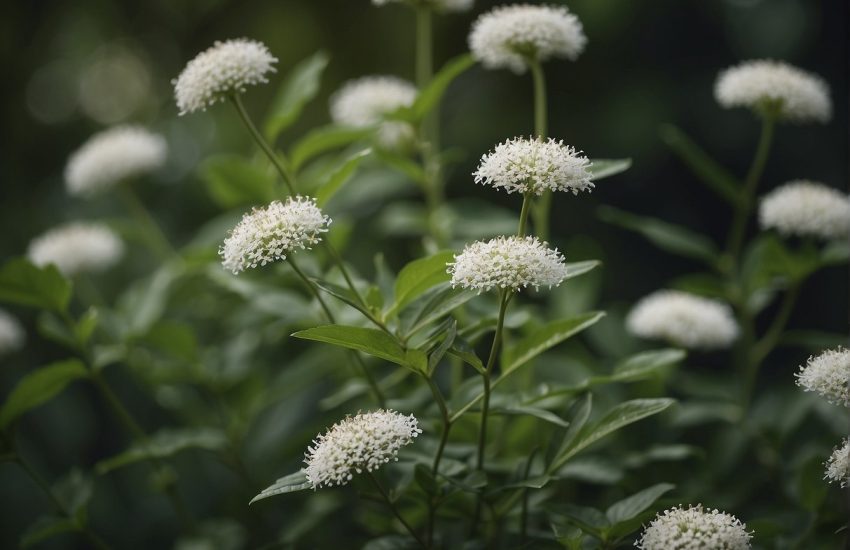
While the typical form has bright yellow flowers, natural color variations exist in wild populations, including cream, pale yellow, and occasionally white-flowered forms. Some of these have been selected and propagated as cultivars. Environmental stress, age, or genetic variation can also cause flowers to appear paler than usual.
Will Shrubby Cinquefoil spread or self-seed in the garden?
Shrubby Cinquefoil is a well-behaved shrub that stays where planted and doesn’t spread by suckers or runners. While it can self-seed under ideal conditions, this is rarely problematic in garden situations. Any volunteer seedlings are typically easy to identify and remove if unwanted, though many gardeners appreciate having a few additional plants.

Looking for a nursery that carries Shrubby Cinquefoil?
Browse our native plant nursery directory: North Dakota · South Dakota · Minnesota

Good info here.
Glad you found it useful, Tammy! Best of luck this season. -Plant Native Team