Soft Rush (Juncus effusus)
Juncus effusus, known as Soft Rush or Common Rush, is one of the most widespread and ecologically important native wetland plants in the world, occurring naturally across North America, Europe, Asia, Australia, and Hawaii. A member of the Juncaceae (rush) family, Soft Rush is the quintessential rush plant — a dense, clump-forming perennial with smooth, bright green, cylindrical stems reaching 2 to 4 feet in height and bearing loose clusters of tiny brownish flowers that appear to emerge from the side of the stem. Its graceful form, ecological versatility, and outstanding wildlife value make it one of the most commonly planted native plants in rain gardens, bioswales, pond edges, and wetland restoration projects throughout North America and Hawaii.
Soft Rush has been used by humans for thousands of years — its stems were woven into mats, baskets, chair seats, and lamp wicks across cultures in North America, Europe, and Asia. The Japanese art of tatami mat weaving uses Juncus effusus (called “igusa” in Japanese) as its traditional raw material, and tatami mats woven from Soft Rush stems have been a central element of Japanese domestic architecture for over a thousand years. In the contemporary landscape, Soft Rush is prized for its easy culture, rapid establishment, and ability to simultaneously provide wildlife habitat, control erosion, and improve water quality wherever it grows.
In Hawaii, Soft Rush is a native component of freshwater wetland habitats, where it grows alongside other native aquatic and wetland plants in stream margins, marshes, and the edges of lo’i kalo (traditional taro paddies). Hawaiian freshwater wetlands, though covering a tiny fraction of the islands’ land area, support critically endangered native waterbirds including the Hawaiian stilt (‘Ae’o), Hawaiian coot (‘Alae ke’oke’o), Hawaiian moorhen (‘Alae ‘ula), and Hawaiian duck (Koloa maoli). Native rush plantings directly benefit these endangered species by providing nesting cover, foraging habitat, and the structural complexity these birds require. Soft Rush also provides food and nesting material for birds and other wildlife in wetland habitats across its vast global range.
Identification
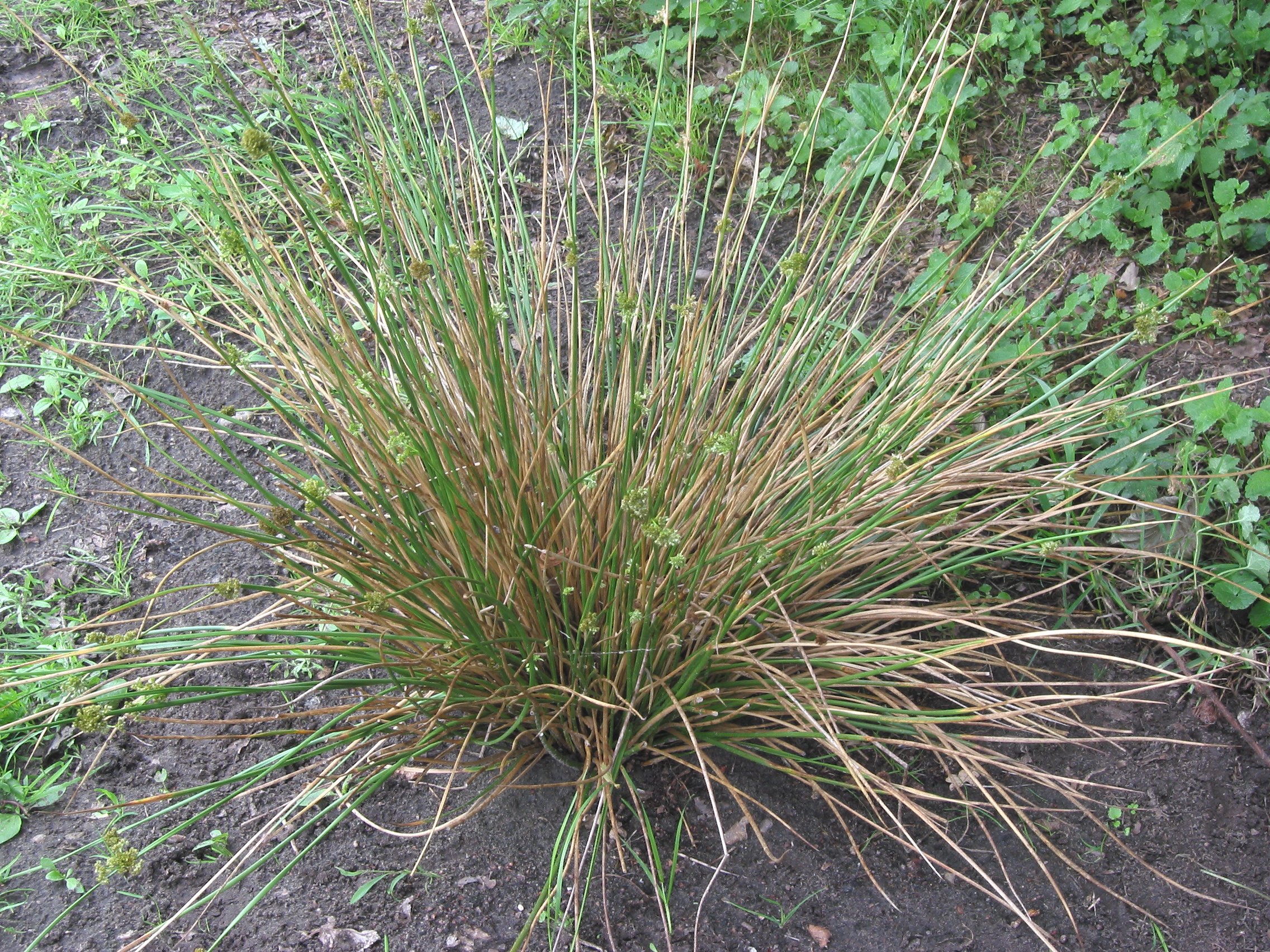
Soft Rush grows as a dense, erect clump of smooth, cylindrical, grass-green stems reaching 2 to 4 feet (60–120 cm) in height. The stems are the most immediately recognizable feature — they are perfectly smooth, medium green, and cylindrical from base to tip, with a spongy interior filled with white pith. No true leaves are visible (though basal sheaths are present at the base of each stem), giving the plant a clean, minimalist appearance. The plant spreads by rhizome to form expanding colonies that can reach several feet in diameter over time.
Stems
The stems of Soft Rush are its defining identification character: perfectly smooth (lacking the ridges found on some other rush species), medium to dark green, and cylindrical from base to tip. When cut transversely, the stem reveals a continuous, spongy white pith — this pith is the source material for rush wicks used in traditional candle-making and lamp-making. The stems are flexible enough to bend substantially without breaking, and they remain green and photosynthetically active throughout the growing season, providing energy for the plant even after the flower clusters have set seed. Crush a stem slightly and it will spring back — the “softness” of the common name refers to this flexible, pithy texture.
Flowers & Seed Heads
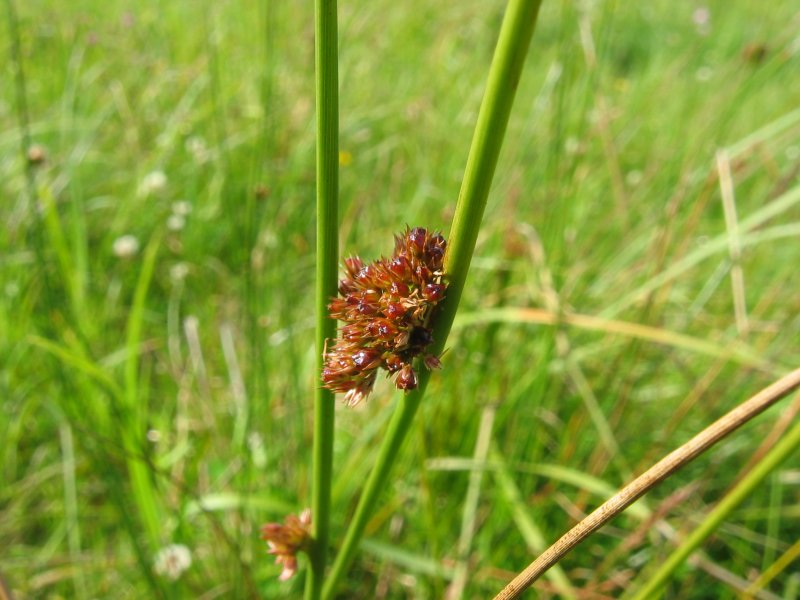
The inflorescence of Soft Rush is a loose, open, somewhat drooping cluster of small brownish flowers that appears to emerge from the side of the stem, approximately one-third to one-quarter of the way down from the tip. This lateral appearance is actually an optical illusion — the bract below the flower cluster continues beyond it and looks like an extension of the stem. Individual flowers are tiny, with six brownish tepals, and are wind-pollinated. After flowering, the plant produces small, ovoid seed capsules that are blunt or slightly notched at the tip (a key difference from Canada Rush, which has pointed capsules). The seed clusters turn from green to brown as they ripen through late summer and fall, persisting on the plant into winter and providing food for seed-eating birds.
Quick Facts
| Scientific Name | Juncus effusus |
| Family | Juncaceae (Rush) |
| Plant Type | Perennial Rush / Wetland Grass-like Plant |
| Mature Height | 2–4 ft |
| Sun Exposure | Full Sun to Part Shade |
| Water Needs | Moderate to High |
| Bloom Time | June – August |
| Flower Color | Brownish-green (inconspicuous) |
| USDA Hardiness Zones | 4–9 |
Native Range
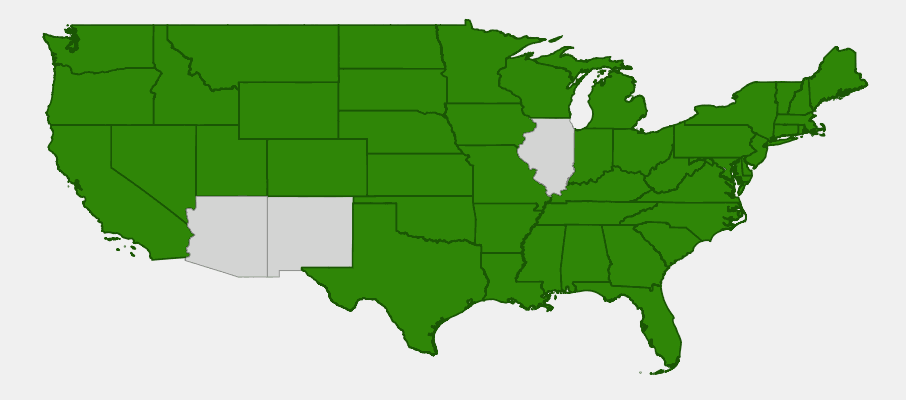
Soft Rush has one of the broadest native distributions of any wetland plant in the world, occurring naturally on every continent except Antarctica. In North America, it is native throughout the United States (including Hawaii and Alaska) and most of Canada, growing in freshwater wetlands from sea level to moderate mountain elevations. In Hawaii, it occurs in freshwater wetland habitats on multiple islands, growing in stream margins, lo’i kalo irrigation systems, marshes, and wet meadows. Its global range spans Europe, temperate Asia, South and East Asia, Australia, New Zealand, South America, and parts of Africa.
The ecological amplitude of Soft Rush is remarkable — it grows in an extraordinary range of wetland types, from acidic sphagnum bogs to nutrient-rich agricultural drainage ditches, from sea-level coastal marshes to mountain meadows above 9,000 feet elevation. This tolerance of both acidic and alkaline conditions, oligotrophic (nutrient-poor) and eutrophic (nutrient-rich) waters, and a wide range of temperatures has made Soft Rush one of the most successful and widespread wetland plants in the temperate and subtropical world. In Hawaii, it occupies the freshwater wetland niche across islands and elevations with characteristic success, growing wherever permanent or seasonal fresh water is available.
Soft Rush is considered native throughout its North American range, including Hawaii, though it has also become naturalized in additional areas where it was not historically present. Several varieties of Juncus effusus are recognized, varying in stem diameter, compactness of the inflorescence, and overall plant size. When planting for native habitat restoration, source plants from local or regional provenance to maintain genetic diversity appropriate for your location.
📋 Regional plant lists featuring Soft Rush: Hawaii
Growing & Care Guide
Soft Rush is one of the easiest native wetland plants to establish and maintain, making it an ideal choice for beginning native plant gardeners as well as experienced restoration practitioners. Its single most important requirement — consistently moist to wet soil — guides all other planting decisions.
Light
Soft Rush performs best in full sun, where it grows most vigorously and produces the most robust clumps. It tolerates partial shade well — a valuable trait for planting under riparian willows, alders, or other streamside trees — and will grow acceptably with as little as 3 to 4 hours of direct sun daily. In deep shade, growth becomes sparse and weak. For Hawaiian freshwater wetland gardens, most settings provide adequate natural light.
Soil & Water
Consistently moist to wet soil is the key requirement. Soft Rush naturally grows with its roots in saturated or even flooded soil and performs best in rain gardens, pond margins, constructed wetlands, and any area that stays consistently moist. It tolerates standing water of up to 6 inches and periodic flooding. In conventional garden beds that dry out, it will decline quickly — water stress causes the stems to yellow and the clumps to thin out. In persistently wet Hawaiian settings such as lo’i margins and stream banks, no supplemental irrigation is needed after establishment. Soil type is not critical — sand, clay, loam, or even muck are all acceptable as long as they remain moist.
Planting Tips
Plant Soft Rush in spring or fall. Container plants establish rapidly in moist conditions, often showing vigorous new growth within weeks of planting. Space plants 18 to 24 inches apart for wetland restoration plantings — they will spread by rhizome to fill gaps within 2 to 3 years. For pond-edge plantings, position the crown at or just below the water surface in the shallow (0–6 inch depth) margin zone. No special soil preparation is needed — simply plant at the same depth as the container, water thoroughly, and keep the soil saturated throughout establishment.
Pruning & Maintenance
Cut clumps back to 3 to 4 inches in late winter or early spring before new growth emerges. This clears accumulated dead stems, allows the new season’s growth to emerge cleanly, and prevents the center of the clump from dying out. Divide overgrown clumps every 3 to 5 years in spring or fall to rejuvenate growth and propagate new plants. Soft Rush is essentially free of serious pests and diseases in appropriate growing conditions.
Landscape Uses
- Rain gardens and bioswales — ideal for the consistently wet zones of stormwater management features
- Pond and stream margins — creates naturalistic, wildlife-rich wetland edges
- Lo’i kalo margins and Hawaiian freshwater restoration
- Constructed wetland water treatment systems
- Wildlife habitat gardens — seeds, shelter, and invertebrate habitat for birds
- Erosion control along streambanks and pond edges
- Ornamental water garden accent with year-round green stem interest
Wildlife & Ecological Value
Soft Rush is among the most wildlife-productive native wetland plants available in the nursery trade, supporting an extraordinary diversity of wetland birds, mammals, invertebrates, and amphibians.
For Birds
The seeds of Soft Rush are consumed by numerous wetland and seed-eating birds including dabbling ducks (Mallard, Teal, Widgeon), rails (Sora, Virginia Rail), snipe, and sparrows. In Hawaii, native waterbirds including the Hawaiian coot and Hawaiian stilt forage in and around Soft Rush clumps for seeds and invertebrates. The dense stem clumps provide critical nesting and roosting cover — Red-winged Blackbirds, Common Yellowthroats, and Marsh Wrens in mainland areas use Soft Rush stems to anchor nests, and Hawaiian waterbirds use dense rush stands for concealment and protection. The stems also serve as territorial perches for birds during the breeding season.
For Mammals
Muskrats harvest Soft Rush stems and rhizomes for food and den construction, creating open water channels through dense stands that actually increase habitat diversity. Beavers use the stems in dam and lodge construction. Small mammals including meadow voles, shrews, and water shrews use dense rush clumps as thermal cover and refuge from predators. The American Bittern and other stalking herons use Soft Rush stems as visual screens when hunting fish and frogs in wetland margins.
For Pollinators and Invertebrates
Soft Rush stems provide critical emerging substrate for dragonflies and damselflies — the nymphs of many species crawl up rush stems from the water to emerge as winged adults. Maintaining Soft Rush stands near water dramatically increases local odonate (dragonfly and damselfly) populations. These beneficial insects are important predators of mosquitoes, gnats, and other pest insects. Various aquatic insects also use the submerged portions of rush stems as attachment and egg-laying sites, contributing to the invertebrate communities that support fish and waterbird food webs.
Ecosystem Role
Soft Rush is a primary wetland ecosystem engineer. Its extensive rhizome network stabilizes soft wetland sediments and prevents bank erosion. The standing stems slow water flow through wetlands, causing suspended sediment to settle out and improving water clarity. The roots and rhizomes absorb significant quantities of nitrogen and phosphorus from agricultural and urban runoff, functioning as a biological water quality filter. In constructed wetland water treatment systems — engineered “living machines” used to process wastewater biologically — Soft Rush and its relatives are among the most commonly planted macrophytes.
Cultural & Historical Uses
Soft Rush has one of the longest and most diverse histories of human use of any rush species, spanning cultures from Japan to Hawaii to Europe to the Americas. In Japan, the species known as “igusa” (which includes Juncus effusus) has been cultivated for centuries as the raw material for tatami mats — the traditional woven floor covering of Japanese homes, temples, and teahouses. Tatami mat weaving is a sophisticated craft tradition, and the cultivation and processing of igusa rush remains a significant agricultural practice in parts of Kumamoto Prefecture, Japan.
In Native North America, various tribes used Soft Rush for basket weaving, mat making, and cordage throughout its range. The long, flexible stems were split, dried, and woven into a variety of household items. In the Pacific Northwest, Coast Salish peoples wove rush mats for floor coverings, bedding, and wall coverings in longhouses. In the Eastern United States, Algonquian and Iroquoian peoples used rushes in similar ways, and rush mats were common trade items between inland and coastal communities. In Hawaii, native rush species were incorporated into traditional wetland management systems and woven into everyday household objects.
In European folk tradition, the dried pith of Soft Rush stems was used as a wick for “rush lights” — a simple form of candle made by soaking the dried pith in animal fat. Rush lights were the primary form of artificial lighting for ordinary households in Europe before the widespread adoption of tallow candles, and remained in use in rural areas well into the 19th century. The naturalist Gilbert White described rush light production in his 1789 “Natural History of Selborne” as a common cottage industry in rural England. Today, the primary value of Soft Rush is ecological — as a workhorse native wetland plant for restoration and water quality improvement — but its rich cultural legacy makes it a plant with deep human connections across the Northern Hemisphere.
Frequently Asked Questions
How is Soft Rush different from Canada Rush?
These two common rush species look quite similar. The key differences: Soft Rush (Juncus effusus) has smooth stems without visible ridges, while Canada Rush (Juncus canadensis) may have finely ridged stems. More reliably, Soft Rush has blunt-tipped seed capsules that are the same length or shorter than the surrounding tepals, while Canada Rush has distinctly pointed capsules that are longer than the tepals. The inflorescence of Soft Rush is also typically more open and spreading than the compact, rounded clusters of Canada Rush.
Can Soft Rush be planted in a regular garden bed?
Soft Rush is a wetland plant and will not thrive in a conventional well-drained garden bed. It requires consistently moist to wet conditions — rain gardens, pond edges, bog gardens, or areas that naturally stay wet are appropriate placements. In a regular garden bed, it will decline within a season or two unless you irrigate very frequently. If you want the aesthetic of rush stems in a drier garden, consider ornamental grasses instead.
Is Soft Rush the same as bulrush?
No — “bulrush” is a common name that is sometimes applied to large rush-like plants (including cattails and sedges), but true bulrushes are typically members of the genus Schoenoplectus (or Scirpus). Soft Rush (Juncus effusus) is technically a true rush, with a distinctly different stem structure. However, these plants are often used interchangeably in wetland planting and serve similar ecological functions.
How do I propagate Soft Rush?
The easiest method is division — dig up a clump in spring or fall, separate it into sections with several rhizome portions and stems each, and replant immediately in moist to wet conditions. Seeds can also be sown on the surface of wet potting medium — they need light and moisture to germinate, and germination takes 2 to 4 weeks. Division is faster and produces garden-sized plants more quickly than seed starting.
Will Soft Rush grow in standing water?
Yes — Soft Rush tolerates standing water of up to 6 inches (15 cm) over the crown, making it suitable for planting at the edges of ponds and in the wet zones of rain gardens that periodically flood. It cannot tolerate deep water planting (it is not an aquatic plant), but shallow standing water is well-handled. In Hawaiian lo’i kalo restoration, Soft Rush is often planted at the margins of the kalo paddies where water levels fluctuate seasonally.

Looking for a nursery that carries Soft Rush?
Browse our native plant nursery directory: Hawaii