Indian Ricegrass (Achnatherum hymenoides)
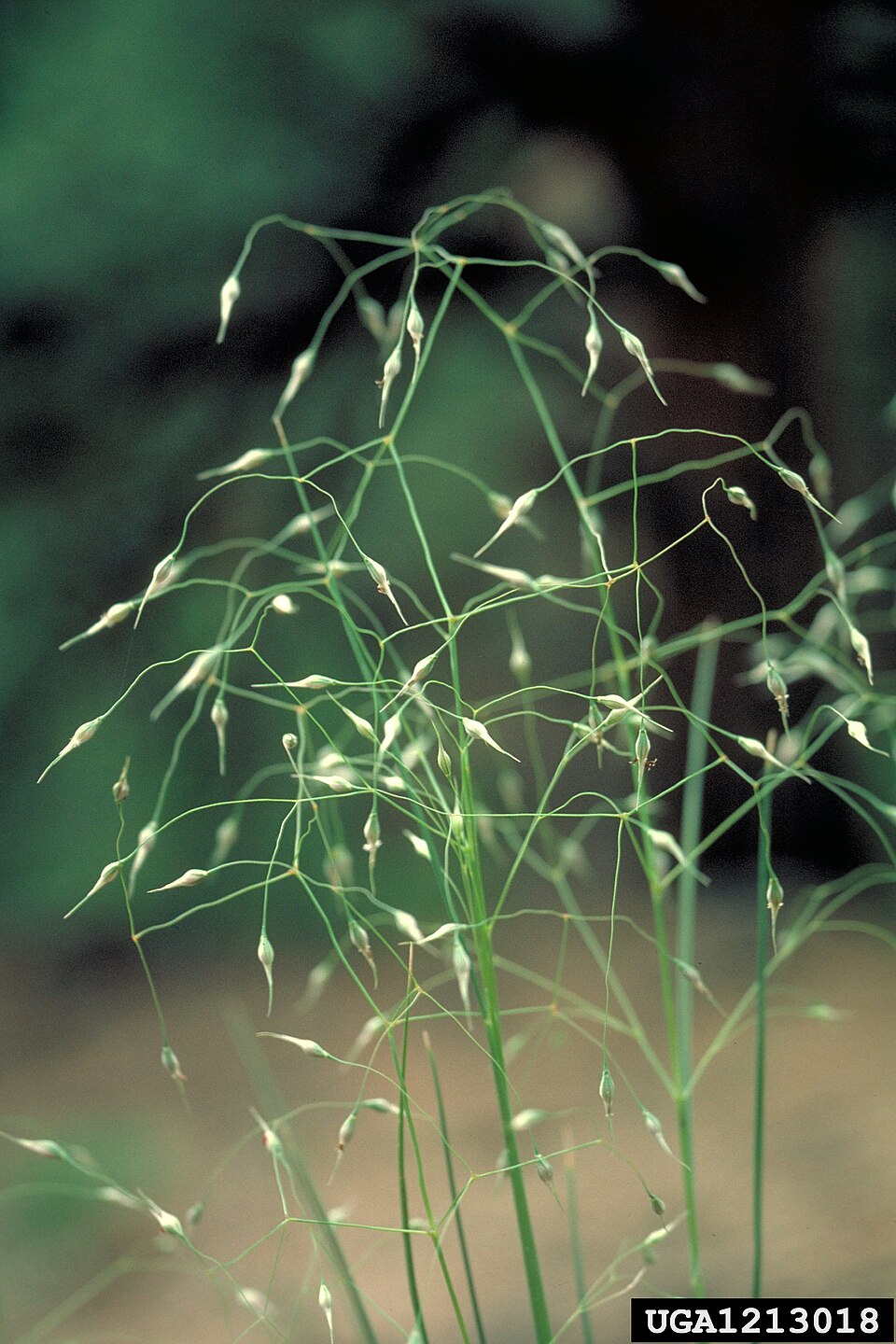
Achnatherum hymenoides (formerly Oryzopsis hymenoides), commonly known as Indian Ricegrass, is one of the most important native grasses of the western United States and a cornerstone species of arid and semi-arid landscapes from the Great Plains to the Pacific coast. This slender, delicate-looking bunchgrass belies its remarkable toughness — it thrives in some of the harshest, driest environments in North America, including the shadeless expanses of the Great Basin, the wind-scoured plains of eastern Montana and Wyoming, and the rocky desert slopes of the Colorado Plateau.
The species earned its common name from the long and significant history of its large, nutritious seeds being harvested by Indigenous peoples throughout the West. The seeds, which resemble small grains of rice, were a critical food source for dozens of Native American nations, ground into flour, cooked as porridge, or parched and eaten dry. Today, Indian Ricegrass is equally celebrated by wildlife managers, rangeland ecologists, and native plant gardeners for its exceptional value to birds and small mammals, its ability to stabilize sandy and disturbed soils, and its graceful, airy appearance in the landscape.
Despite its delicate appearance — with thread-fine stems, hair-like leaves, and a lacy, open seed head — Indian Ricegrass is extraordinarily persistent. It is among the first grasses to recolonize after drought, fire, or other disturbance, and established plants can survive conditions that would kill most other vegetation. Its deep root system — which can extend more than six feet into the soil — allows it to access moisture long after surface soils have dried completely, making it a critical anchor plant in erosion-prone arid landscapes.
Identification
Indian Ricegrass grows as a compact, erect bunchgrass, typically forming tight tufts 1 to 2 feet tall with very slender, somewhat arching culms (stems). The overall texture is light and airy, with an open, diffuse seed head that catches light beautifully. The plant is deciduous in the driest conditions and semi-evergreen where moisture is more available.
Leaves
The leaves are extremely narrow — nearly thread-like — typically less than 1 mm wide, with tightly rolled or inrolled margins that help minimize water loss in arid conditions. They are blue-green to gray-green in color with a somewhat stiff texture. Leaf blades are 4 to 12 inches long, and the leaf sheaths have fine hairs. The combination of narrow, rolled leaves and their grayish-green color gives the plant a distinctive fine-textured, silvery appearance, especially in full sun or strong wind.
Flowers & Seeds
The flowering stems emerge in late spring and bear a large, open, much-branched panicle that may be 4 to 8 inches long. Each branch ends in a single floret, giving the inflorescence a distinctly sparse, wispy appearance — completely different from the dense heads of many other grasses. The spikelets are small, with a single floret bearing a stout, bent and twisted awn 1 to 1.5 inches long that helps with seed dispersal.
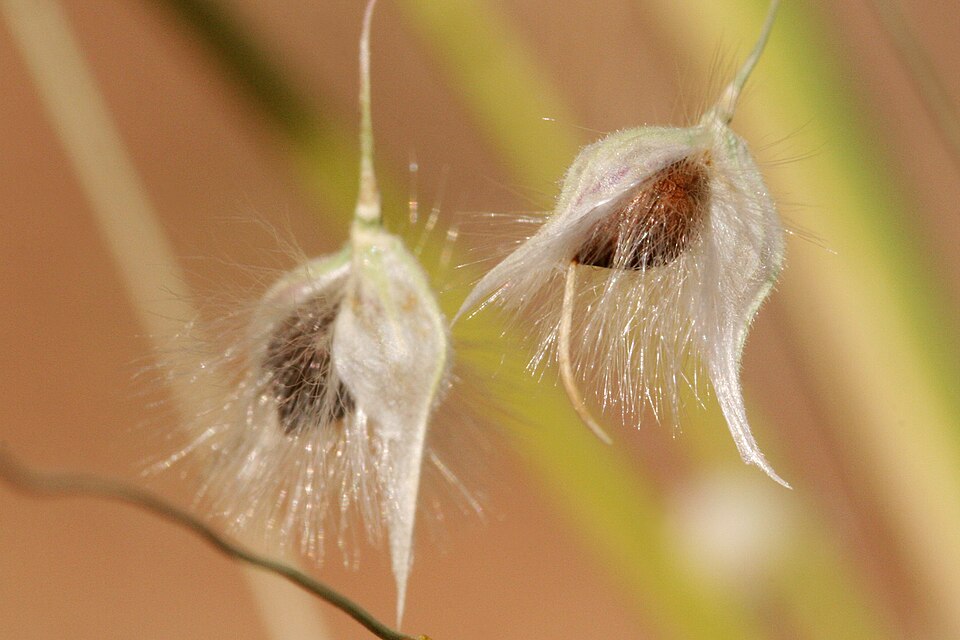
The seeds are the plant’s most striking feature. Each seed is round and plump, nearly 3 mm in diameter — enormous for a grass — enclosed in a hard, shiny black or brown husk covered in fine white hairs. These seeds, often described as resembling tiny rice grains, are highly nutritious and were the primary food value for which Indigenous peoples harvested the plant in large quantities. Birds and mammals also consume the seeds voraciously, and the seeds remain viable in the soil for many years, contributing to the plant’s remarkable ability to reestablish after disturbance.
Quick Facts
| Scientific Name | Achnatherum hymenoides (syn. Oryzopsis hymenoides) |
| Family | Poaceae (Grass) |
| Plant Type | Native Perennial Bunchgrass |
| Mature Height | 1–2 ft |
| Sun Exposure | Full Sun |
| Water Needs | Low (Drought Tolerant) |
| Bloom Time | April – June |
| Flower Color | Greenish (inconspicuous); seeds black/brown |
| Soil Type | Sandy, gravelly, or rocky; well-drained; infertile soils tolerated |
| Growth Habit | Clump-forming (bunchgrass); not rhizomatous |
| USDA Hardiness Zones | 3–9 |
Native Range
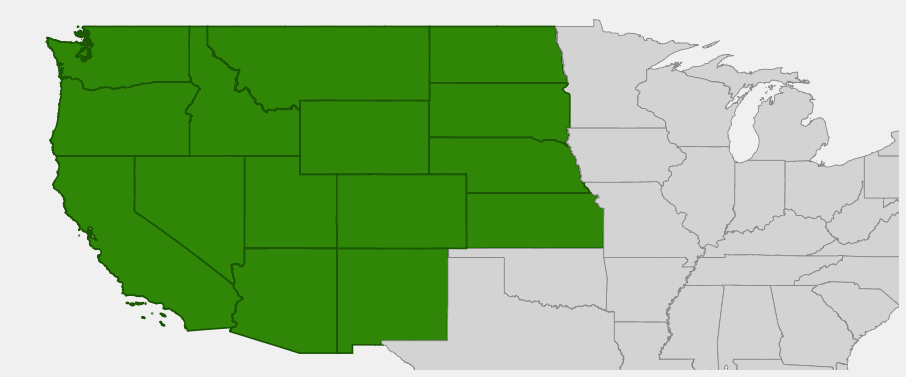
Indian Ricegrass is one of the most widely distributed native grasses of western North America, occurring from the Great Plains west to the Pacific Coast and from southern Canada south into northern Mexico. In the United States, it is found in nearly every western state, with particularly dense populations in the Great Basin, the Colorado Plateau, and the sagebrush steppe of the Intermountain West. In Montana and Wyoming, it is a signature species of dry, sandy plains and foothills, often dominant on sandy knolls, rocky slopes, and open sagebrush communities.
The species is closely associated with sandy and loose-textured soils, and it is often one of the few grasses able to establish and thrive on windblown sand deposits, stabilized dunes, and coarse alluvial fans where organic matter is nearly absent. In the Great Plains, Indian Ricegrass is found primarily in areas with sandy soils — along riverbanks, on sand hills, and in dry, open areas where soil disturbance has created bare mineral substrate. Elevations range from near sea level in the Great Basin to over 8,000 feet in the Rocky Mountains.
In its preferred habitats, Indian Ricegrass frequently grows with big sagebrush (Artemisia tridentata), shadscale (Atriplex confertifolia), blue grama (Bouteloua gracilis), needle-and-thread grass (Hesperostipa comata), and galleta grass (Pleuraphis jamesii). It tolerates extremely low soil nitrogen and phosphorus, making it well-adapted to the nutrient-poor soils of arid and semi-arid ecosystems.
📋 Regional plant lists featuring Indian Ricegrass: Montana & Wyoming
Growing & Care Guide
Indian Ricegrass is an excellent choice for dry, sunny native landscapes and naturalized areas in the western United States. Once established, it is extremely drought-tolerant and requires virtually no supplemental care. The key to success is matching its fundamental need for excellent drainage and full sun.
Light
Indian Ricegrass requires full sun and performs poorly in shade. It is adapted to open, exposed habitats — plains, slopes, and rocky outcrops where sunlight is intense and air circulation is good. Plant it in the sunniest spot in your garden for best results. It will not thrive under trees or in areas shaded for even part of the day.
Soil & Water
This grass is specifically adapted to infertile, sandy, or gravelly soils with excellent drainage. It performs poorly in rich, loamy, or clay soils — too much fertility and moisture encourages competing vegetation that will outcompete the ricegrass. Amend clay soils heavily with coarse sand or fine gravel before planting. Once established (typically one to two growing seasons), Indian Ricegrass is highly drought-tolerant and rarely needs supplemental water except during extreme drought. It is best to avoid summer irrigation entirely after establishment.
Planting Tips
Plant from seed or container stock in early spring or fall. Seed directly into prepared sandy soil in fall for best germination results — the seeds require cold stratification (natural winter cold exposure) to break dormancy. Space plants 18 to 24 inches apart for a naturalistic bunchgrass planting. Avoid fertilizing — Indian Ricegrass is adapted to lean soils and excessive nutrients can actually harm it by promoting competitive weeds.
Pruning & Maintenance
Maintenance requirements are minimal. Cut back the dead foliage in late winter or early spring before new growth emerges, reducing clumps to 3 to 4 inches. Avoid cutting during active growth. Indian Ricegrass is naturally short-lived (10–20 years) but will self-seed in appropriate conditions, gradually naturalizing the planting area. Dividing older clumps every 5–7 years can rejuvenate plant vigor.
Landscape Uses
- Dry meadow or prairie plantings — combines beautifully with wildflowers like blanket flower, prairie coneflower, and penstemon
- Erosion control on sandy banks and disturbed areas
- Rock gardens — pairs well with drought-tolerant succulents and shrubs
- Wildlife gardens — seeds attract many bird and mammal species
- Revegetation of disturbed or degraded arid lands
- Container gardening — does well in large containers with fast-draining mix
Fire Ecology
Indian Ricegrass is well-adapted to fire regimes. It is typically top-killed by fire but resprouts vigorously from the base and is one of the first species to reestablish from seed after fire. Its persistent seed bank in the soil makes it a critical early colonizer of post-fire landscapes. However, overgrazing or repeated disturbance without adequate recovery time can eliminate local populations.
Wildlife & Ecological Value
Indian Ricegrass is one of the most ecologically valuable native grasses of the arid West, providing critical food and habitat resources for a wide range of species across seasons.
For Birds
The large, nutritious seeds are consumed by numerous granivorous (seed-eating) bird species, including Horned Larks, Vesper Sparrows, Sage Sparrows, Western Meadowlarks, Lark Buntings, Dark-eyed Juncos, and various finches. The dense bunchgrass tufts provide ground-level cover and nesting habitat for ground-nesting birds including Sage Grouse, which use the clumps as hiding cover for chicks. The seeds persist through winter, providing an important food source when other options are scarce.
For Mammals
The seeds are important food for kangaroo rats, deer mice, ground squirrels, and other small mammals that cache them for winter. Pronghorn antelope and mule deer browse the foliage lightly in late winter and early spring when other forage is unavailable. Jackrabbits use the dense clumps for cover. The plant is considered a highly palatable forage grass for livestock and wildlife early in the season, though it becomes less nutritious as it matures.
For Pollinators
While wind-pollinated and not providing nectar rewards, Indian Ricegrass provides important structural habitat — the bunchgrass clumps shelter ground-nesting native bees, solitary wasps, and other beneficial insects that are critical pollinators of surrounding wildflowers.
Ecosystem Role
Indian Ricegrass plays a fundamental ecological role in arid and semi-arid landscapes. Its deep root system — capable of extending 6 feet or more into the soil — stabilizes sandy and fragile soils against wind and water erosion. The dense crown of leaves and stems accumulates organic matter and protects soil from crusting. In degraded rangelands, Indian Ricegrass is one of the most important species for revegetation programs, and its seed is commercially harvested for restoration projects throughout the West.
Cultural & Historical Uses
Indian Ricegrass has one of the longest and most significant ethnobotanical records of any native grass in North America. Archaeological evidence of its use dates back thousands of years, with ricegrass seeds recovered from numerous prehistoric sites across the Great Basin and Southwest. The Paiute, Shoshone, Navajo, Hopi, Zuni, and many other nations harvested the large, nutritious seeds in quantity each summer and fall, using seed-beating baskets to knock the ripe seeds into collecting baskets.
The seeds were eaten in multiple ways: ground on stone metates into flour for flatbreads and porridges, parched in coals and eaten dry as a trail food, or mixed with other seeds and animal fat into high-energy cakes for travel. The seeds have a mild, nutty flavor and high nutritional value — they contain approximately 14% protein, 7% fat, and 60% carbohydrates, making them an exceptionally rich food source by wild plant standards. Some nations traded ricegrass seeds with neighboring tribes as a valuable commodity.
Beyond food, the long, flexible stems of Indian Ricegrass were used by some Indigenous groups for basketry, and the bundled plants were used as thatching and insulation material. The grass also held spiritual significance in some traditions, appearing in ceremonies associated with harvest and renewal. In the 20th century, rangeland scientists identified Indian Ricegrass as an important soil stabilizer and forage grass, leading to widespread use in federal revegetation programs on disturbed western lands. Today, the species is still commercially harvested for seeds used in restoration projects, and is increasingly available from native plant nurseries for landscape use.
Frequently Asked Questions
Is Indian Ricegrass the same as Oryzopsis hymenoides?
Yes. The species was previously classified as Oryzopsis hymenoides (and sometimes as Stipa hymenoides), but molecular studies led to its reclassification into the genus Achnatherum. All three names refer to the same plant — you may see any of them used in older references or nursery catalogs.
Can Indian Ricegrass grow in heavy clay soil?
Indian Ricegrass strongly prefers well-drained, sandy, or gravelly soils and generally performs poorly in heavy clay. If you have clay soil, amend it significantly with coarse builder’s sand and fine gravel to improve drainage, or grow the plant in raised beds or containers with a fast-draining mix. Poor drainage, especially combined with summer irrigation, is the most common cause of failure in cultivation.
How do you grow Indian Ricegrass from seed?
Ricegrass seeds have a hard seed coat that requires cold stratification (exposure to cold, moist conditions) to germinate reliably. The easiest approach is to direct-seed in fall, allowing natural winter conditions to stratify the seed. If starting indoors, mix seeds with moist sand and refrigerate for 60–90 days before planting. Germination can be slow and erratic — expect 30–60% germination rates at best.
Is Indian Ricegrass invasive?
No — Indian Ricegrass is a native species and is not invasive. It is actually a species of conservation concern in some areas where it has declined due to overgrazing, invasive annual grasses (particularly cheatgrass), and drought. Planting Indian Ricegrass in appropriate western habitats is encouraged as a conservation action.
What wildlife eats Indian Ricegrass seeds?
A wide range of birds and small mammals consume the seeds. Key species include Horned Larks, Vesper Sparrows, Sage Grouse, kangaroo rats, deer mice, pocket mice, ground squirrels, and various chipmunk species. The seeds are also historically significant as a staple food of numerous Indigenous peoples of the American West.