Arrow-leaved Aster (Aster sagittifolius)
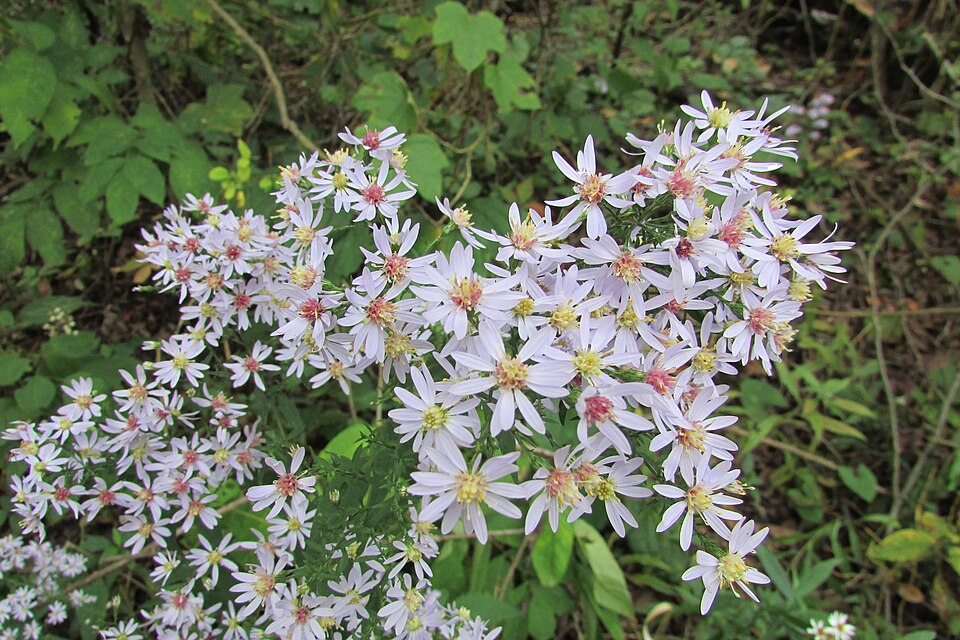
Aster sagittifolius (syn. Symphyotrichum sagittifolium), commonly known as Arrow-leaved Aster or Arrow-leaf Aster, is a graceful native wildflower of eastern and central North America that brings vibrant color to the late-season landscape just when most other wildflowers have faded. A member of the vast Asteraceae (daisy) family, this herbaceous perennial is named for its distinctive arrow-shaped or heart-shaped basal leaves, which taper to a slender, winged petiole — a botanical feature that helps distinguish it from the dozens of similar asters that populate eastern woodlands and prairies.
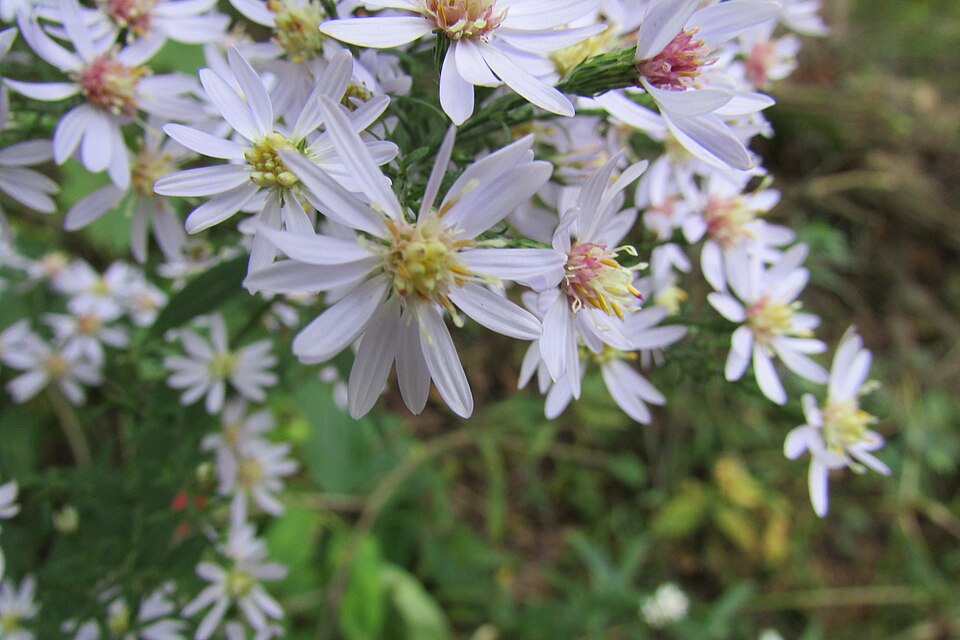
Blooming from late August through October, Arrow-leaved Aster produces an abundant display of small daisy-like flowers whose ray petals range from pale blue to soft lavender to nearly white, surrounding a yellow central disc that ages to a warm purple. The flower color variation is notable even within single populations, creating a shimmering mosaic of cool tones across the fall landscape. Growing 3 to 5 feet tall, its branching stems bear an impressive quantity of blooms, making it one of the showier native asters for garden use. It thrives in woodland edges, open woods, and disturbed areas, tolerating both sun and part shade, and adapts well to moderate to dry soil conditions once established.
For gardeners in Michigan, Minnesota, and Wisconsin, Arrow-leaved Aster is an exceptional choice for naturalizing shaded or partly shaded areas, adding pollinator-supporting bloom at the very end of the growing season when native bees and migrating monarchs desperately need late-season nectar. It spreads by rhizomes and self-seeding to form attractive colonies, and pairs beautifully with native goldenrods, Joe-Pye weed, and woodland grasses in a layered native planting scheme.
Identification
Arrow-leaved Aster is a moderately tall, branching herbaceous perennial that emerges from a rhizomatous root system in spring and grows steadily to its mature height through summer before blooming in fall. Its overall silhouette is loose and airy, with slender stems that branch repeatedly in the upper third to create a profusion of small flower heads.
Leaves
The most distinctive identifying feature of Arrow-leaved Aster is the shape of its leaves. The basal and lower stem leaves are heart-shaped to arrow-shaped (sagittate), with a narrow base that clasps or wraps the stem slightly, and a long-tapering, winged petiole — a characteristic that gives the species its common name. Upper stem leaves are progressively smaller and more lance-shaped, with shorter or absent petioles. Leaves are alternate, rough-textured on the upper surface, and toothed along the margins. They range from 2 to 5 inches long and are medium to dark green, turning little before autumn senescence.
Flowers
The flower heads are 0.5 to 1 inch across, with 12 to 20 ray florets that range from pale blue to lavender to nearly white. The central disc is yellow when fresh, aging to a warm reddish-purple as it matures — a common pattern in asters. Flower heads are borne on slender spreading branchlets, often in large numbers across the upper portion of the plant. Blooming begins in late August or September and continues through October, with peak display in mid-autumn.
Stems & Roots
Stems are slender, slightly zigzagged, and may be finely hairy or smooth, growing from a spreading rhizomatous root system. The plant forms loose colonies over time as rhizomes spread slowly outward. After frost, the stems remain standing through winter, providing minimal structural interest and a small amount of seed for birds.
Quick Facts
| Scientific Name | Aster sagittifolius (syn. Symphyotrichum sagittifolium) |
| Family | Asteraceae (Daisy / Aster) |
| Plant Type | Herbaceous Perennial Wildflower |
| Mature Height | 3–5 ft |
| Sun Exposure | Full Sun to Part Shade |
| Water Needs | Moderate to Low (Drought Tolerant once established) |
| Bloom Time | August – October (fall) |
| Flower Color | Pale blue, lavender, or white with yellow disc |
| USDA Hardiness Zones | 3–8 |
Native Range
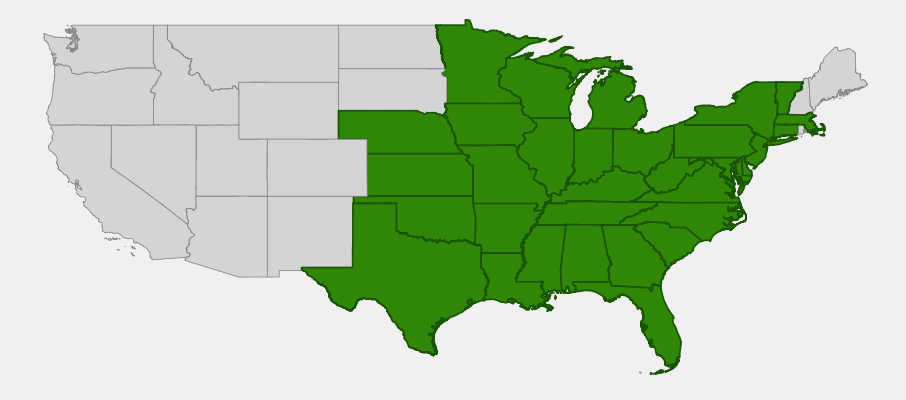
Arrow-leaved Aster is native to a broad swath of eastern and central North America, extending from the Atlantic Coast westward through the Midwest and into the Great Plains, and from southern Canada south to the Gulf Coast states. It is one of the more widely distributed native asters, occurring across virtually all of the eastern deciduous forest biome and extending into the transition zone with tallgrass prairie.
Within the Upper Midwest, Arrow-leaved Aster is found throughout Michigan, Wisconsin, and Minnesota, where it grows at forest margins, along roadsides and trails, in old fields, and in disturbed woodland areas. It is typically found at low to mid elevations, growing in a wide variety of soil types from loamy upland soils to drier sandy or rocky conditions. Its drought tolerance makes it well suited to woodland edges that dry out during summer.
In its natural habitat, Arrow-leaved Aster is commonly associated with other fall-blooming wildflowers, native grasses, and shrubs at the interface between forest and open land. Its ability to colonize disturbed areas and persist in degraded landscapes makes it an important component of native plant communities undergoing succession or restoration.
📋 Regional plant lists featuring Arrow-leaved Aster: Michigan, Minnesota & Wisconsin
Growing & Care Guide
Arrow-leaved Aster is an adaptable and easy-to-grow native wildflower that rewards gardeners with a spectacular late-season display. Once established, it requires very little maintenance and will naturalize readily into woodland edge settings or sunny borders.
Light
Arrow-leaved Aster performs well in full sun to part shade. In full sun it develops the most compact form and the heaviest bloom; in part shade (2–4 hours of direct sun or bright dappled light) it grows a bit taller and somewhat more open, but still blooms prolifically. It is one of the few fall-blooming native asters that adapts to the shadier conditions of woodland gardens. Avoid deep shade, which suppresses flowering significantly.
Soil & Water
This aster is notably drought tolerant once established, thriving in moderately dry to average soils. It grows best in well-drained loam or sandy loam but tolerates rocky, gravelly, and clay soils. Consistent moisture during the first growing season aids establishment, after which irrigation is rarely needed in most of its native range. Avoid overly wet or poorly drained sites, which can cause root rot. Soil pH from slightly acidic to neutral (pH 5.5–7.0) suits it best.
Planting Tips
Plant Arrow-leaved Aster in spring or fall, spacing plants 18–24 inches apart for a naturalized effect. It establishes quickly from container stock and from divisions of existing colonies. For woodland edge plantings, combine it with other fall-blooming natives like New England Aster and Showy Goldenrod for a season-ending crescendo of color. It also performs beautifully at the back of sunny border plantings where its height and airy texture create a fine backdrop for shorter species.
Pruning & Maintenance
Arrow-leaved Aster requires minimal maintenance. For a more compact, bushy form with more flowers, pinch growing tips back by one-third in early June — this delays bloom by a week or two but dramatically increases flower number. Without cutting back, plants grow tall and may lean slightly; plant near stiffer species or use inconspicuous stakes if needed. After frost, leave stems standing through winter for wildlife benefit; cut back to ground level in early spring before new growth begins. Dividing clumps every 3–4 years keeps them vigorous.
Landscape Uses
Arrow-leaved Aster shines in a variety of native landscape settings:
- Woodland edge plantings — thrives in the dappled light of forest margins
- Native wildflower meadows — adds fall color to grass-dominated plantings
- Pollinator gardens — a critical late-season nectar source for bees and monarchs
- Rain gardens and naturalized areas — adapts to drier upland soils
- Back-of-border plantings — height and airy texture add structure
- Restoration plantings — colonizes disturbed areas and quickly establishes
Wildlife & Ecological Value
Arrow-leaved Aster is an ecological powerhouse in the fall landscape, supporting a remarkable diversity of insects, birds, and small mammals during the critical late-season period when natural food sources are rapidly diminishing.
For Pollinators
The flowers of Arrow-leaved Aster are a vital late-season nectar source, blooming at a time when most other wildflowers have already finished. They attract a wide diversity of native bees — including specialist aster bees in the genera Andrena, Halictus, and Lasioglossum — as well as bumble bees, small carpenter bees, and a host of beneficial wasps, flies, and beetles. Migrating Monarch butterflies frequently visit aster blooms in fall as they fuel up for their long journey south. Several moth species use asters as larval host plants.
For Birds
The small, fluffy seed heads that develop after blooming are eagerly consumed by small seed-eating birds, including American Goldfinch, House Finch, and various sparrows. The dense upright stems provide perching habitat and minimal shelter for small birds during autumn and early winter foraging expeditions. Leaving stems standing through winter maximizes this benefit.
For Mammals
White-tailed deer occasionally browse Arrow-leaved Aster foliage, particularly in early spring when other browse is scarce. The plant regrows readily after deer browsing. Small mammals may consume seeds. The rhizomatous root system provides minimal food value but contributes to the structural complexity of the soil ecosystem.
Ecosystem Role
As a fall-blooming native wildflower, Arrow-leaved Aster fills a critical ecological niche by extending the availability of nectar and pollen into autumn, bridging the gap between the summer bloom peak and the onset of winter. Its ability to colonize and stabilize disturbed ground, combined with its production of wind-dispersed seeds, makes it a valuable pioneer species in forest succession and habitat restoration contexts. It contributes to soil health through its annual cycle of growth and decomposition.
Cultural & Historical Uses
Native American peoples across eastern North America used various asters medicinally, and Arrow-leaved Aster was among the species employed by Indigenous communities throughout its range. The Iroquois people used asters in traditional medicine, with the leaves and roots of various aster species applied as poultices for skin conditions and prepared as teas for treating fevers, sore throats, and respiratory ailments. The specific ethnobotanical uses of Arrow-leaved Aster by Indigenous communities in the Great Lakes region are documented in early ethnobotanical surveys conducted in the late 19th and early 20th centuries, reflecting a deep and sophisticated knowledge of native plant medicine that developed over thousands of years of careful observation.
Asters as a group held significant symbolic meaning for many eastern tribes. The Ojibwe people associated asters with the spirit world and used them in ceremonial contexts. The flowers’ tendency to bloom at the end of the growing season — just as the natural world was preparing for winter dormancy — gave them a special connection to themes of transition, completion, and the cyclical nature of life in many Indigenous cosmologies. Asters were also used as dye plants by some groups, producing soft blue-gray and gold tones depending on the mordant used and part of the plant employed.
In the broader tradition of American folk herbalism, asters were used to treat a variety of ailments. Early American settlers learned many plant uses from Indigenous peoples, and aster preparations were recorded in 19th-century herbals and medical texts as treatments for fevers, skin inflammation, and respiratory infections. Today, Arrow-leaved Aster is valued primarily as an ornamental native wildflower and ecological restoration plant. It has received increasing attention from native plant enthusiasts and ecological gardeners in recent decades as part of a broader movement to restore native plant communities in residential and urban landscapes.
Frequently Asked Questions
Is Arrow-leaved Aster the same as Symphyotrichum sagittifolium?
Yes. Modern botanical taxonomy reclassified most North American asters from the genus Aster to Symphyotrichum and related genera. Arrow-leaved Aster is now formally known as Symphyotrichum sagittifolium, though it is still widely sold and listed under the older name Aster sagittifolius in nurseries and plant databases.
How do I tell Arrow-leaved Aster apart from similar native asters?
The key identifying features are the arrow-shaped or heart-shaped lower leaves with a long, winged petiole (leaf stalk) that wraps or clasps the stem slightly, and the variable pale blue to lavender to white ray flowers that bloom in fall. Other similar asters include Heart-leaved Aster (S. cordifolium), which has rounder basal leaves, and Smooth Aster (S. laeve), which has very smooth, clasping upper leaves.
Will Arrow-leaved Aster spread and become invasive?
Arrow-leaved Aster does spread by rhizomes and self-seeding, forming loose colonies over time. However, it is a well-behaved native plant, not invasive. It can be easily controlled by pulling or digging unwanted seedlings. In a naturalized setting, its spreading habit is a feature, not a problem — it fills space attractively while providing maximum ecological benefit.
Does Arrow-leaved Aster need to be divided?
Division every 3–4 years is beneficial to maintain vigor and prevent the center of mature clumps from dying out. Divide in spring when new growth is just beginning. Divisions root and establish quickly and can be transplanted to expand plantings or shared with other gardeners.
Can Arrow-leaved Aster grow in deep shade?
While Arrow-leaved Aster tolerates part shade well, deep shade (less than 2 hours of direct sun per day) results in poor flowering and weak, sprawling stems. For best results in shaded sites, ensure at least 2–3 hours of direct sunlight or equivalently bright dappled light.