Cliffrose (Purshia mexicana)
Purshia mexicana, commonly known as Cliffrose or Mexican Cliffrose, is one of the most distinctive and ecologically important native shrubs of the Colorado Plateau and the Great Basin Desert. This member of the Rosaceae (rose) family is an evergreen to semi-evergreen shrub that clings tenaciously to rocky cliffs, canyon walls, and dry mesas at elevations from 3,500 to 8,000 feet across Utah, Colorado, Arizona, New Mexico, and Nevada. Its scientific name honors Frederick Pursh, the early American botanist who first described many western plants, while mexicana reflects the species’ range extending into northern Mexico.
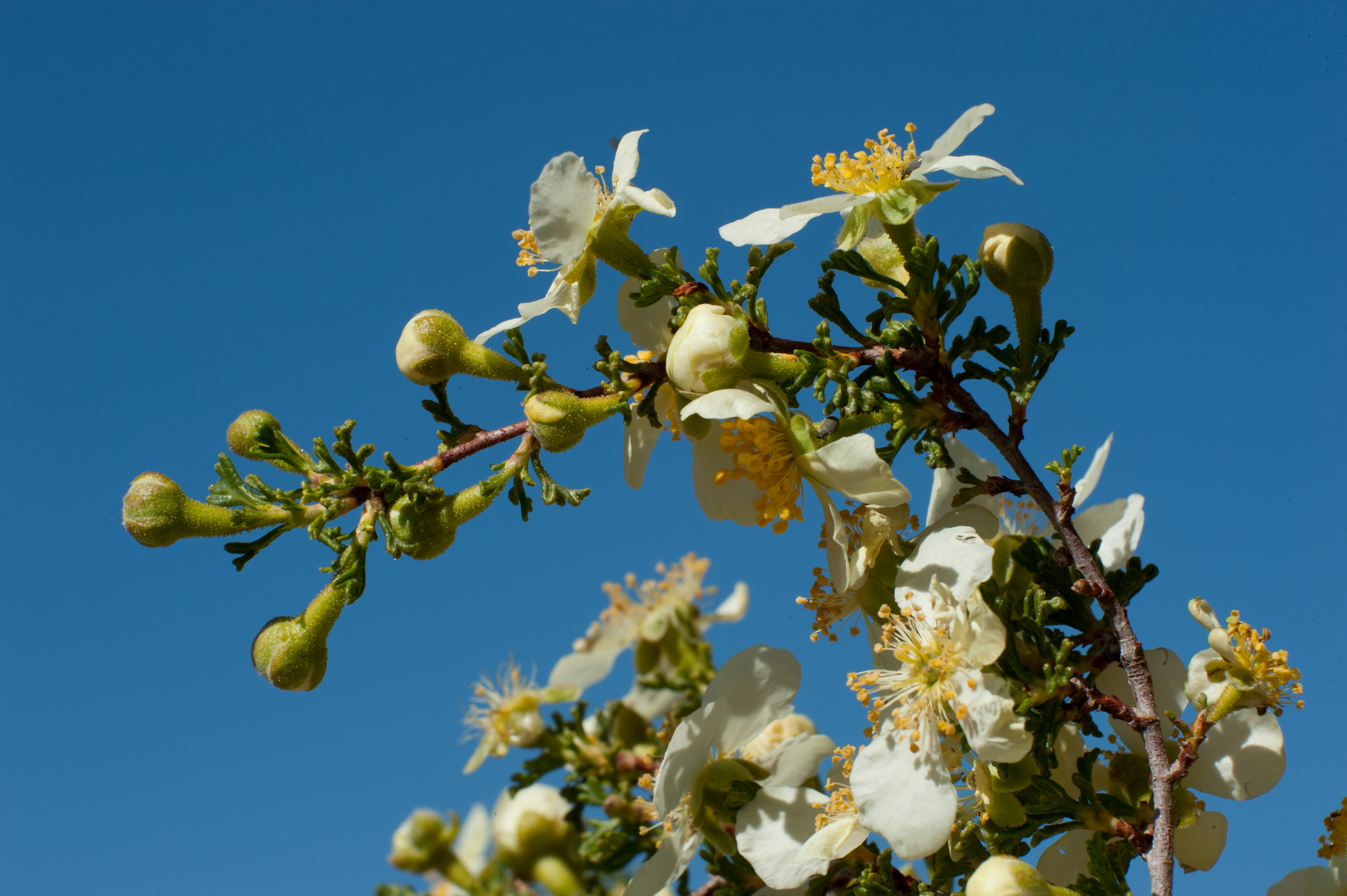
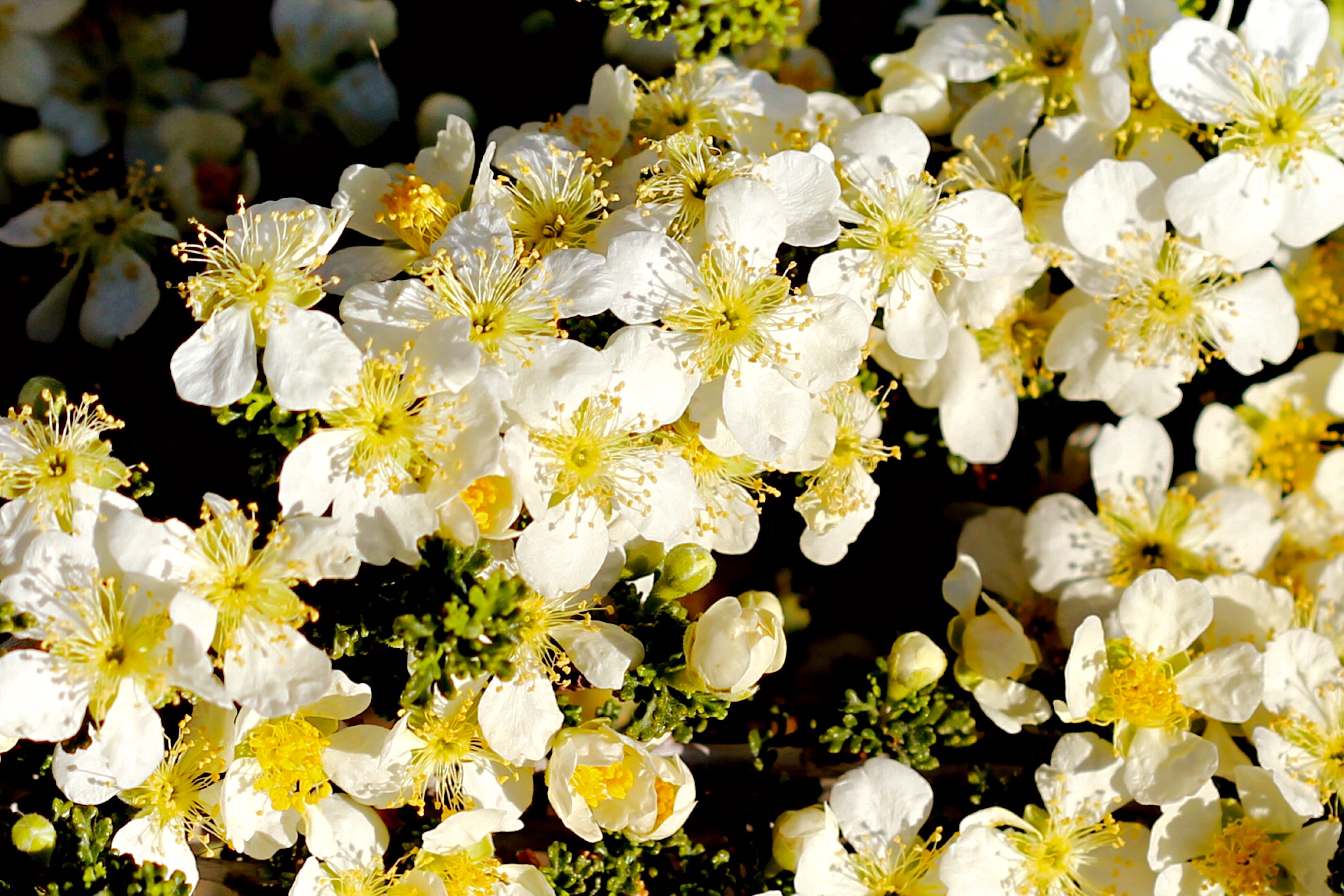
Few plants capture the rugged beauty of the Colorado Plateau as well as Cliffrose. In late spring and early summer, this tough, resinous shrub erupts in a profusion of small, fragrant, cream to pale yellow, five-petaled flowers that perfume the dry air of canyon country. The flowers are followed by equally spectacular feathery seed plumes — each seed trailing a long, silky, spiraling tail that catches the wind and glitters in the sunlight like spun gold. These plumes give the plant its romantic common name, and the spectacle of a cliff face draped in blooming, plumed Cliffrose is one of the Southwest’s most memorable botanical sights.
Beyond its visual appeal, Cliffrose is a cornerstone species of Utah’s pinyon-juniper woodland and desert scrub ecosystems. It provides critical winter browse for mule deer, pronghorn antelope, and desert bighorn sheep — so important that it is sometimes called “deer brush” or “buck brush” in ranching communities. Its dense, thorny growth offers nesting cover for songbirds, and its flowers attract native bees and butterflies during the sparse desert bloom season. For native plant gardeners in the Intermountain West, Cliffrose is an outstanding choice: drought tolerant, fire resistant, wildlife friendly, and absolutely beautiful in bloom.
Identification
Cliffrose grows as a multi-stemmed, highly branched evergreen shrub, typically reaching 3 to 8 feet tall (and occasionally to 20 feet in ideal conditions). The form is often irregular and sprawling when growing from cliff faces or rocky outcrops. The bark on older stems is gray-brown, shreddy, and fibrous — an adaptation that helps the plant resist fire by protecting the cambium layer. Young twigs are sticky with resin and densely clothed in short, glandular hairs.
Leaves
The leaves are small, leathery, deeply 3- to 5-lobed, and typically ¼ to ¾ inch (6–20 mm) long. The upper surface is dark green and glandular-sticky; the underside is covered in dense white woolly hairs (tomentose). The leaf margins are rolled under (revolute) — a common adaptation in drought-adapted plants that reduces water loss. The resinous coating gives the foliage a pleasant, spicy fragrance when crushed, similar to turpentine or pine resin. Leaves are persistent through winter in most of the plant’s range, giving it value as evergreen shelter for wildlife during cold months.
Flowers
The flowers are small, about ½ to ¾ inch (12–18 mm) across, with five rounded petals arranged like a miniature wild rose. Color ranges from bright white to cream to pale yellow. They appear in clusters at the ends of short lateral branchlets from late April through July, peaking in May and June at most Utah elevations. The flowers are notably fragrant — sweet, honey-like, with a slight spice that carries on the warm desert air. Individual flowers are short-lived but the plant produces them in such profusion that blooming persists for several weeks. Numerous stamens give the center of each flower a golden appearance.
Fruits & Seeds
After pollination, Cliffrose produces its most spectacular feature: feathery achenes (dry fruits), each with a long, twisted, plumose (feathery) style attached. These persistent tails can be 1.5 to 3 inches (4–8 cm) long, silky-soft, and cream to golden in color. Clusters of these plumed seeds create a dramatic, shimmering display on the plant in late summer and early fall, resembling miniature Old Man’s Beard or Clematis seed heads. The plumes aid in wind dispersal, carrying seeds across canyon walls and rocky slopes.
Quick Facts
| Scientific Name | Purshia mexicana |
| Family | Rosaceae (Rose Family) |
| Plant Type | Evergreen Shrub |
| Mature Height | 6 ft |
| Sun Exposure | Full Sun |
| Water Needs | Low (Drought Tolerant) |
| Bloom Time | April – July (fragrant) |
| Flower Color | Cream to pale yellow |
| Soil Type | Rocky, sandy, or gravelly; well-drained; alkaline to neutral |
| Wildlife Value | High — essential browse for deer, pronghorn, bighorn sheep |
| USDA Hardiness Zones | 5–9 |
Native Range
Cliffrose is native to the canyon country and desert mountain ranges of the Colorado Plateau and the Great Basin, ranging from southern Utah and western Colorado south through Arizona and New Mexico, and west to Nevada and southern California. In Utah, it is one of the characteristic shrubs of the pinyon-juniper woodland zone, commonly found on rocky slopes, mesa rims, and canyon walls from about 3,500 to 8,000 feet elevation. The species extends south into the Mexican states of Chihuahua and Sonora, reflecting its adaptation to the continental dry-land flora of the North American desert Southwest.
Cliffrose favors well-drained, rocky, often alkaline soils — the kinds of substrate that other plants find inhospitable. It is most abundant on calcareous (limestone-derived) soils and is a reliable indicator species for rocky canyon habitats. It grows in association with Gambel Oak (Quercus gambelii), Singleleaf Pinyon (Pinus monophylla), Utah Juniper (Juniperus osteosperma), Mountain Mahogany (Cercocarpus spp.), and Big Sagebrush (Artemisia tridentata) in the mid-elevation shrub-woodland zone.
The plant shows considerable adaptability within its range: growing low and sprawling on wind-exposed cliff faces, reaching taller forms in canyon bottoms with slightly better soil moisture, and sometimes forming nearly impenetrable thickets on disturbed slopes. It is notably resistant to drought, low soil fertility, and temperature extremes — qualities that have made it a survivor in some of the harshest environments in the American West.
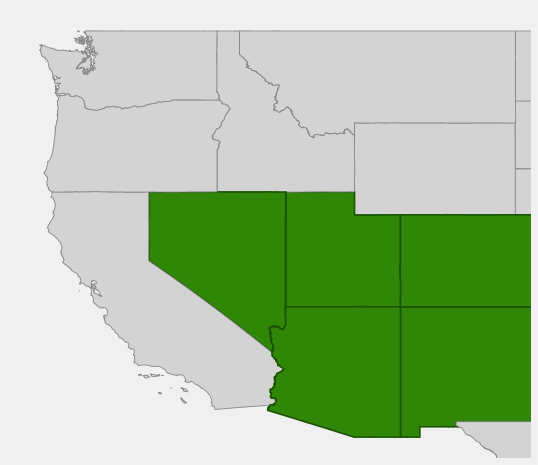
📋 Regional plant lists featuring Cliffrose: Utah
Growing & Care Guide
Cliffrose is one of the most rewarding native shrubs for gardeners in the Intermountain West and Colorado Plateau region. Once established, it requires virtually no care and rewards neglect with spectacular annual blooms and year-round wildlife value. The key to success is matching the plant to the right site from the outset.
Light
Cliffrose demands full sun and performs poorly in shaded conditions. It has evolved for exposed, sun-baked canyon walls and ridgelines where it receives intense solar radiation. In the garden, choose the sunniest, hottest, most exposed location you have — south or west-facing slopes are ideal. Avoid planting where it will be shaded by buildings, fences, or larger plants.
Soil & Water
Well-drained, rocky, sandy, or gravelly soil is essential. Cliffrose cannot tolerate wet feet or heavy clay soils — in poorly drained sites it will decline rapidly. The plant thrives in calcareous (limestone-based) alkaline soils and is well adapted to low-fertility native soils. Do not amend the planting hole with compost or fertilizer, as this can stimulate excessive leafy growth at the expense of flowering and root development. Once established (typically 1–2 growing seasons), Cliffrose requires no supplemental irrigation in most of its native range. During establishment, water deeply every 1–2 weeks, then reduce to monthly deep watering in summer heat. Mature plants survive on rainfall alone in areas receiving 10 inches or more annually.
Planting Tips
Plant in spring after the last frost, or in early fall, to allow the root system to establish during cooler temperatures. Container-grown plants transplant well, but avoid disturbing the roots excessively. Choose a site with excellent drainage — a hillside, raised bed, or gravel garden is ideal. Space plants 5–8 feet apart to allow for their natural spreading form. Avoid high-traffic areas, as the plant’s resinous stems can be sticky. In regions at the cooler edge of its range (Zone 5), plant near a south-facing wall for extra warmth.
Pruning & Maintenance
Cliffrose requires minimal pruning. Remove any dead wood in early spring before new growth begins. If the plant becomes leggy or overgrown, it can be selectively pruned back by up to one-third to encourage dense, compact growth. Avoid heavy pruning, as the plant can be slow to recover from severe cuts. The plant is naturally drought-stressed deciduous in severe drought conditions; if it drops leaves during summer heat, this is normal and it will releaf when temperatures moderate. No fertilization is required or recommended. Cliffrose is highly resistant to most pests and diseases.
Landscape Uses
Cliffrose is outstanding in multiple landscape situations in the desert Southwest and Intermountain West:
- Dry, rocky slopes — excellent for erosion control on steep, rocky terrain
- Desert or xeriscape gardens — pairs beautifully with sagebrush, bunchgrasses, and cacti
- Wildlife habitat plantings — provides browse, shelter, and pollinator forage
- Canyon-style gardens — mimics natural cliffside plantings
- Evergreen screen or windbreak — provides year-round structure and privacy
- Naturalistic hedgerow — low maintenance once established
- Fire-wise landscaping — moderate fire resistance with proper spacing
Fire Ecology
Cliffrose is moderately fire-adapted. Its shreddy bark can act as a fire ladder under some conditions, but the plant resproutes vigorously from the root crown after fire, and also establishes readily from wind-dispersed seed in post-fire environments. In the pinyon-juniper woodland where Cliffrose is most common, fire return intervals historically ranged from 30 to 150+ years. Maintaining proper spacing between Cliffrose plants in the landscape (5–8 feet or more) reduces fire spread risk.
Wildlife & Ecological Value
Cliffrose is one of the most important wildlife plants in the canyon country of the Colorado Plateau. Its value extends across all seasons and to a remarkable diversity of wildlife species, making it a keystone species in its native ecosystem.
For Deer & Large Mammals
Mule deer are the primary consumers of Cliffrose browse, which provides critical protein and nutrition during winter when other food sources are scarce. Studies in Utah and Arizona have documented that Cliffrose can compose up to 40–60% of winter mule deer diet in canyon areas where it is abundant. Pronghorn antelope and desert bighorn sheep also rely on Cliffrose during winter. The plant’s year-round retention of leaves (in most conditions) makes it an especially valuable winter food source. In severe winters, heavy deer browse can significantly damage Cliffrose plants; this is a natural part of the ecological relationship.
For Birds
The dense, thorny growth of Cliffrose provides excellent nesting habitat for a variety of desert songbirds, including Black-throated Sparrows, Blue-gray Gnatcatchers, Bushtits, and Rock Wrens. The flowers attract hummingbirds (particularly Black-chinned Hummingbirds during spring migration) along with native bees and insects that in turn feed insectivorous birds. The seeds, while not directly eaten by most birds, provide habitat structure essential for birds that build cup nests in shrubby desert vegetation.
For Pollinators
The fragrant, nectar-rich flowers of Cliffrose are highly attractive to native pollinators, including many specialist bees of the genus Andrena and Osmia that are particularly active in desert spring environments. Bumblebees, sweat bees, and various flower flies also visit the flowers. In the sparse desert bloom period of late spring, Cliffrose represents a major pollen and nectar source when other flowering plants are still dormant or have not yet bloomed at higher elevations.
Ecosystem Role
Beyond its direct wildlife value, Cliffrose contributes to canyon ecosystem health through its ability to colonize and stabilize rocky, unstable slopes and cliff faces where other plants cannot establish. Its deep root system helps prevent erosion in canyon country. The plant’s leaf litter, though sparse, adds organic matter to the thin, rocky soils where it grows. As a nitrogen-fixing associate (through symbiotic actinomycetes in its root zone), Cliffrose modestly improves soil fertility in the oligotrophic (nutrient-poor) soils of the Colorado Plateau.
Cultural & Historical Uses
Cliffrose has a deep history of use among Indigenous peoples of the Colorado Plateau, particularly the Navajo, Hopi, Kaibab Paiute, and other southwestern nations. The plant’s Navajo name is ts’ah or léé’, and it held both practical and ceremonial significance. The long, fibrous inner bark was among the most versatile materials in the Navajo and Paiute material culture. Strips of shreddy bark were twisted and plaited to make sandals, rope, tumplines (carrying straps), baskets, padding, and sleeping mats. The soft, feathery bark was also used as diaper material for infants and as soft absorbent padding in clothing.
Medicinally, Cliffrose had numerous applications among southwestern peoples. A tea made from the leaves and bark was used as an emetic (to induce vomiting) for purging, and as a wash for wounds and skin irritations. The Navajo used the plant in ceremonial contexts — branches of Cliffrose with their feathery seed plumes were incorporated into healing ceremonies and used as prayer sticks. The Hopi reportedly used Cliffrose branches as a ritual purification tool, and the fragrant blooms had symbolic associations with renewal and spiritual cleansing.
In more recent history, Cliffrose has been recognized as a valuable rangeland plant of the Southwest. Early settlers and ranchers quickly understood its importance as winter browse for livestock, particularly sheep, and it was deliberately preserved and encouraged on grazing allotments throughout Utah and Arizona. The USDA Natural Resources Conservation Service has extensively studied Cliffrose as a component of rangeland restoration seed mixes for the Colorado Plateau, and it is widely used in post-fire rehabilitation seedings in pinyon-juniper woodland habitats. Today, Cliffrose is increasingly recognized by landscape architects and native plant enthusiasts as a premier ornamental shrub for low-water gardens throughout the Intermountain West.
Frequently Asked Questions
Is Cliffrose the same as Bitterbrush?
No, though they are closely related. Cliffrose (Purshia mexicana) and Bitterbrush (Purshia tridentata) are both in the genus Purshia and can look similar. The key differences are that Cliffrose has deeply lobed leaves with rolled margins, fragrant cream flowers, and dramatic feathery seed plumes, while Bitterbrush has smaller, 3-lobed leaves, pale yellow flowers, and smooth (non-plumed) seeds. Cliffrose is also generally found at lower elevations and in rockier, more canyon habitats.
How fast does Cliffrose grow?
Cliffrose has a moderate growth rate, typically adding 6–12 inches per year under favorable conditions. Growth is naturally slow in very dry years. It can reach 4–5 feet tall within 5–7 years when given adequate water during the establishment period. Patience is rewarded with a long-lived, exceptionally drought-tolerant plant that may survive for decades with minimal care.
When does Cliffrose bloom in Utah?
In most of Utah, Cliffrose blooms from late April through June at lower elevations, and from May through July at higher elevations (above 6,000 ft). Blooming begins earlier in warmer, south-facing canyon locations and later on cooler, higher-elevation plateaus. The fragrant flowers usually persist for 3–5 weeks at any given site.
Can Cliffrose be grown in a container?
Cliffrose can be grown in a large container (10+ gallon) short-term, but it performs best in the ground where its extensive root system can develop. If growing in a container, use a well-drained xeric mix (sandy loam with pumice or perlite), provide excellent drainage, and do not overwater. Transplant to the ground within 2–3 years for best long-term results.
Is Cliffrose toxic to livestock or pets?
Cliffrose is not known to be toxic and is in fact a valued browse plant for deer, pronghorn, and bighorn sheep. It is generally considered non-toxic, though as with any plant, excessive consumption of any single plant species is not advisable. The resinous foliage has a strong scent that may deter some browsers but is harmless.

Looking for a nursery that carries Cliffrose?
Browse our native plant nursery directory: Utah