Fremont Cottonwood (Populus fremontii)
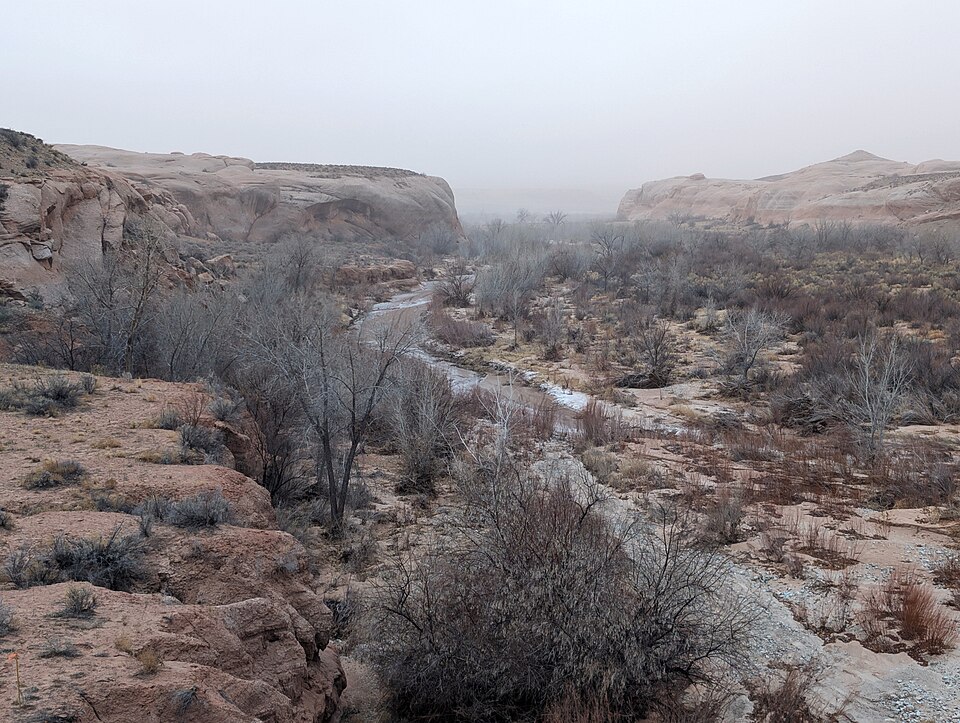
Populus fremontii, commonly known as Fremont Cottonwood, is the defining tree of riparian corridors throughout the arid and semi-arid West. Named in honor of the explorer John C. Frémont who documented it during his 19th-century expeditions, this majestic deciduous tree creates towering green ribbons of life along rivers, streams, and arroyos that wind through otherwise dry landscapes. In Utah, the cottonwood groves along the Colorado River, Virgin River, and their tributaries are among the most ecologically productive habitats in the state — and Fremont Cottonwood is the cornerstone of those ecosystems.
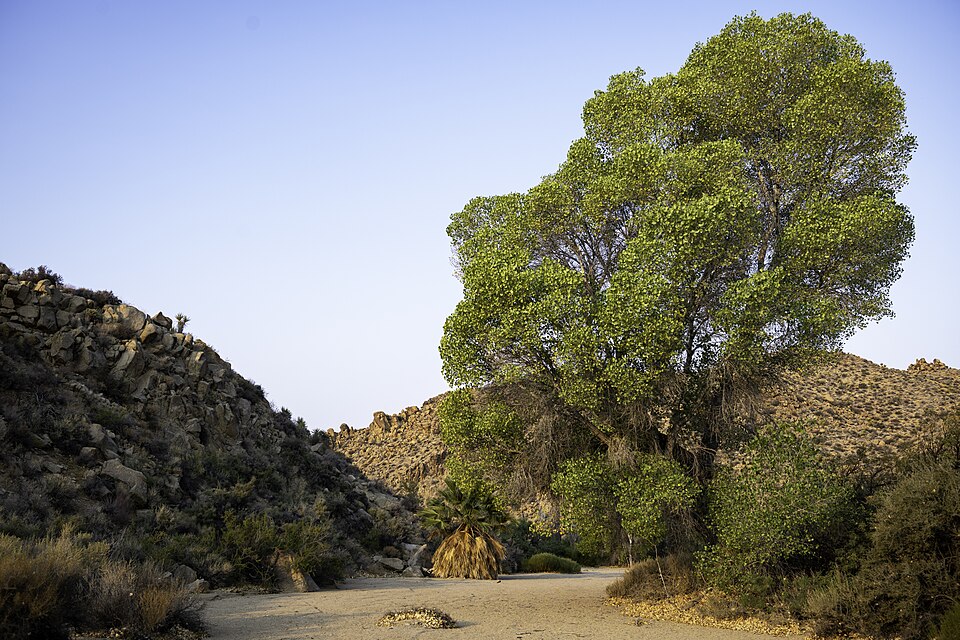
Growing to 55 feet or more in height with a broad, spreading crown, Fremont Cottonwood is the largest native tree in many parts of the Southwest. Its massive, roughly furrowed trunk, shimmering triangular leaves that flutter and “shimmer” in even the gentlest breeze, and brilliant golden-yellow fall color make it one of the most visually spectacular trees of the region. The female trees produce the distinctive cottony white seeds in early summer that give cottonwoods their name — great clouds of white fluff that drift through riparian corridors and settle in every corner of the landscape.
Ecologically, Fremont Cottonwood stands are among the most biodiverse habitats in western North America. A single large cottonwood tree can support hundreds of species of insects, birds, and mammals. The soft, easily excavated wood of dead or dying cottonwoods provides critical nest cavities for cavity-nesting birds including woodpeckers, owls, and other species. For wildlife gardeners and restoration practitioners in Utah, Fremont Cottonwood is an irreplaceable native tree for any site with access to water.
Identification
Fremont Cottonwood is a fast-growing deciduous tree reaching 40 to 55+ feet (12–17 m) in height with a massive trunk up to 5 feet (1.5 m) in diameter and a broad, irregular crown. The overall form is majestic — with a thick, deeply furrowed gray trunk supporting heavy, spreading branches. It is one of the fastest-growing native trees in the West, capable of adding several feet of height per year under ideal riparian conditions.
Bark
Young bark is smooth and light yellowish-gray to whitish. With age, the bark becomes deeply furrowed into thick, corky ridges and is gray to gray-brown in color. The deeply ridged, rough-textured bark of mature trees is one of the most distinctive features and creates excellent habitat for bark-gleaning insects and the birds that feed on them. The exposed wood of old, dying trees becomes soft and excavatable over time, producing the highly sought cavity habitat.
Leaves
The leaves are large, broadly triangular (deltoid) to slightly heart-shaped with a flat or slightly notched base, 2.5 to 4 inches (6–10 cm) long, and roughly as wide as long. The margins are coarsely toothed with large, curved teeth. The petioles (leaf stalks) are flattened laterally — a characteristic of cottonwoods and aspens that allows the leaves to tremble and flutter in even the slightest breeze. The leaves are bright yellow-green in summer, turning brilliant golden-yellow in fall — one of the most spectacular fall color displays in the Southwest, lighting up canyon walls and river valleys.
Flowers & Fruit
Fremont Cottonwood is dioecious — male and female flowers occur on separate trees. Both sexes produce catkins in early spring before the leaves emerge. Female catkins develop into long strings of capsules containing tiny seeds attached to masses of white, cottony fiber. When ripe in late spring to early summer, the capsules burst open and release enormous quantities of cottony seeds that drift on the wind for miles. A single large female cottonwood can produce millions of seeds in a single season. The seeds must land on moist, bare mineral soil within days of release to germinate — a strategy perfectly adapted to newly deposited river sandbars.
Quick Facts
| Scientific Name | Populus fremontii |
| Family | Salicaceae (Willow Family) |
| Plant Type | Deciduous Tree |
| Mature Height | 55 ft (up to 70+ ft in ideal conditions) |
| Sun Exposure | Full Sun |
| Water Needs | Moist to Wet (Riparian) |
| Bloom Time | February – April (before leaf-out) |
| Flower Color | Greenish catkins; female produces cottony white seed masses |
| Fall Color | Brilliant golden yellow |
| USDA Hardiness Zones | 5–9 |
Native Range
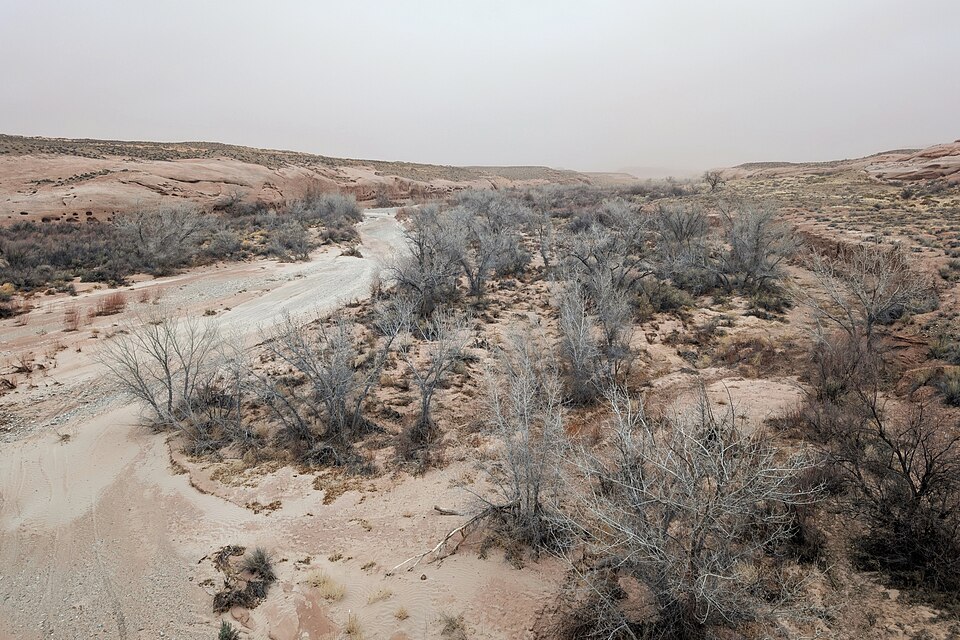
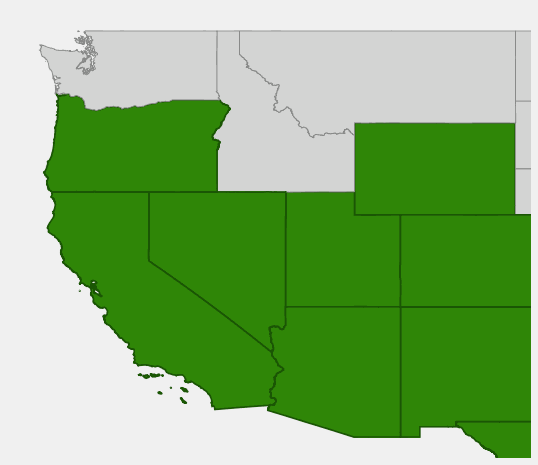
Fremont Cottonwood is native to the riparian corridors of the American West, ranging from California east to Texas and from southern Wyoming and Colorado south through Utah, Arizona, New Mexico, and into Mexico. It is the characteristic cottonwood of the Great Basin, Colorado Plateau, and Sonoran Desert ecoregions, always found where shallow groundwater or surface water provides the moisture this thirsty tree requires. In Utah, it is found along the major rivers — Colorado, Virgin, San Juan, Sevier, and their tributaries — as well as along perennial and intermittent streams throughout the Colorado Plateau and Great Basin.
Fremont Cottonwood forms the dominant tree in the cottonwood-willow riparian woodland community (recognized as a distinct plant association by ecologists), which is among the most important wildlife habitat types in the entire western United States. These riparian woodlands occur as narrow, linear forests along watercourses, and support disproportionately high biodiversity relative to their small geographic footprint. Over 40% of all Neotropical migratory bird species that nest in the western U.S. depend on cottonwood-willow habitat during some part of their life cycle.
Unfortunately, Fremont Cottonwood riparian woodlands have been severely reduced and degraded throughout the West by river channelization, dam construction (which eliminates the flood pulses cottonwood needs to regenerate), groundwater pumping, livestock overgrazing, and invasion by Tamarisk (Tamarix ramosissima). Conservation and restoration of cottonwood riparian corridors is considered one of the highest-priority conservation actions in Utah and across the arid West.
📋 Regional plant lists featuring Fremont Cottonwood: Utah
Growing & Care Guide
Fremont Cottonwood is one of the fastest-growing native trees in the West, capable of putting on several feet of height per year when given adequate water. It thrives in full sun and riparian conditions — ideal for planting along streams, ponds, irrigation canals, and in low areas where water collects. It is not suited to dry upland conditions without regular irrigation.
Light
Full sun is essential for healthy growth. Fremont Cottonwood is a sun-demanding species that does not tolerate shade from other trees. Plant in the most open, sunny location available with at least 6–8 hours of direct sunlight daily.
Soil & Water
Fremont Cottonwood grows best in moist to wet, deep alluvial soils — silty or sandy loams with good water-holding capacity. It is highly adaptable to soil types but demands consistent moisture. Along natural watercourses, its roots reach the water table; in landscaping, it needs regular deep watering during dry periods, particularly in the first few years. Once established near a water source, it largely sustains itself. Avoid planting near septic systems, water lines, or foundations — the aggressive roots will seek out and potentially damage these structures.
Planting Tips
Plant in fall or early spring near a reliable water source. Young trees establish rapidly when given plenty of water. Stakes are often needed during the first two years to support the fast-growing, top-heavy young tree in windy conditions. Space trees 20–30 feet apart if planting multiple trees. Cottonwood is easily propagated from cuttings — large branches pushed into moist soil will often root successfully.
Pruning & Maintenance
Cottonwood branches are relatively brittle and break easily in wind and ice storms — regular inspection and removal of dead, damaged, or crossing branches is recommended. Prune in late winter while dormant. The cottony seed release from female trees in late spring can be a nuisance near buildings — if this is a concern, plant male trees (available from some nurseries) or plan landscaping to allow the cotton to disperse naturally. Leaf litter is abundant and beneficial to soil.
Landscape Uses
- Riparian restoration — the cornerstone tree for streambank planting
- Large shade tree for parks, large properties, and rural landscapes
- Wildlife habitat — nesting cavities, insect community, bird magnet
- Windbreak in agricultural and rural settings near water
- Erosion control on streambanks and floodplains
- Ornamental — spectacular golden fall color in desert settings
Wildlife & Ecological Value
Fremont Cottonwood riparian groves are wildlife magnets — among the most productive wildlife habitats in the entire western United States despite covering only a tiny fraction of the landscape.
For Birds
Cottonwood-willow riparian woodland is irreplaceable habitat for dozens of bird species. Dead and dying cottonwoods with their soft, easily excavated wood provide critical nest cavities for Northern Flicker, Gila Woodpecker, Lewis’s Woodpecker, Western Screech-Owl, Common Merganser, and Wood Duck. Yellow Warbler, Yellow-breasted Chat, Bell’s Vireo, and Lucy’s Warbler all depend on riparian cottonwood-willow habitat for nesting. The dense canopy and abundant insect fauna attract scores of Neotropical migrants during spring and fall migration.
For Mammals
Beaver are perhaps the most significant mammal associated with cottonwood — they depend on cottonwood bark and branches as a primary food source, and their dam-building activity creates the ponds and wetlands that in turn support the full riparian ecosystem. Mule deer browse the young shoots and leaves. Ringtails, raccoons, and gray foxes hunt along cottonwood galleries. The soft wood of old cottonwood snags provides roosting cavities for several bat species.
For Pollinators
While cottonwood is wind-pollinated and does not produce nectar, the catkins provide pollen for native bees in early spring before most flowers are blooming. The leaves of cottonwood support a rich community of Lepidoptera caterpillars — over 250 moth and butterfly species use cottonwood leaves as larval food in various parts of its range, making it one of the most ecologically important trees for the insect food web.
Ecosystem Role
Cottonwood riparian forests create the structural complexity, moisture retention, and microclimate conditions that support the extraordinary biodiversity of western riparian ecosystems. The leaf litter fuels aquatic invertebrate communities in adjacent streams, and fallen logs create both in-stream structure and terrestrial coarse woody habitat. The root systems stabilize streambanks and filter agricultural runoff. No other tree in Utah’s desert regions provides ecosystem services of comparable magnitude.
Cultural & Historical Uses
Fremont Cottonwood has been deeply important to Indigenous peoples of the Southwest for thousands of years. The Navajo, Hopi, Zuni, and many other Pueblo peoples used cottonwood extensively. The lightweight, easily carved wood was used to make kachina dolls (tihu) — sacred ceremonial objects of particular importance in Hopi and Pueblo traditions. The inner bark was consumed as a food source and made into a sweet drink in times of scarcity. Cottonwood roots were used to fashion ceremonial masks and other sacred objects.
The tree provided practical materials as well. Logs were used for construction and firewood; bark was used for saddle pads, bedding, and feed for horses; and the cottony seed fiber was used as a stuffing material. Dried leaves were burned for ceremonial smoke. Many Indigenous cultures viewed the cottonwood as sacred or spiritually significant, associating it with water, life, and abundance in the desert landscape. The sound of wind through cottonwood leaves — a gentle, continuous rustling — was considered a spiritually calming presence in some traditions.
For early Euro-American settlers and explorers, cottonwood groves were essential landmarks and campsite locations — they signaled the presence of water in otherwise trackless desert terrain. The journals of John C. Frémont, Lewis and Clark, and other explorers frequently mention cottonwood groves as navigation landmarks and shelter sites. Settlers used cottonwood for fence posts, rough lumber, and fuel wood, and cottonwood-lined watercourses were among the first areas settled and farmed in the arid West.
Frequently Asked Questions
Why do Fremont Cottonwood leaves shimmer?
The leaf petioles (stems) are flattened laterally rather than cylindrically, which means even the gentlest breeze causes the leaves to rock back and forth. This “trembling” characteristic, shared by all cottonwoods and aspens (genus Populus), gives cottonwoods their distinctive shimmering quality in the wind and is the origin of the name “Quaking Aspen” for the related mountain species.
How do I tell male from female Fremont Cottonwood?
Male and female flowers occur on separate trees. The easiest way to tell them apart is in late spring: female trees release massive quantities of cottony white seeds that drift through the air; male trees produce only pollen. If the “cotton” bothers you, select a male tree. Outside of seed season, males and females are essentially identical in appearance.
Can Fremont Cottonwood damage my house foundation or water lines?
Yes. Like all cottonwoods and willows, Fremont Cottonwood has aggressive, water-seeking roots that can infiltrate cracks in pipes, septic systems, and foundations. Plant it at least 30–50 feet from any structure, buried pipe, or water/sewer line. This is a tree for large, open landscapes near natural water sources, not for small suburban yards.
How long does Fremont Cottonwood live?
Individual trees typically live 50–150 years, with some exceptional specimens reaching 200 years or more. The trees grow very fast when young and slow as they mature. Old, dying, and dead cottonwood trees are actually among the most valuable individuals ecologically — their soft, cavity-riddled wood supports an enormous diversity of cavity-nesting wildlife.
Is Fremont Cottonwood the same as Eastern Cottonwood?
No. Eastern Cottonwood (Populus deltoides) is a closely related but distinct species native to the central and eastern United States. Fremont Cottonwood (Populus fremontii) is the western species. The two hybridize where their ranges meet in the Great Plains. Narrowleaf Cottonwood (Populus angustifolia) is another related native species found at higher elevations throughout the Intermountain West, including Utah.

Looking for a nursery that carries Fremont Cottonwood?
Browse our native plant nursery directory: Utah