Canada Lily (Lilium canadensis)
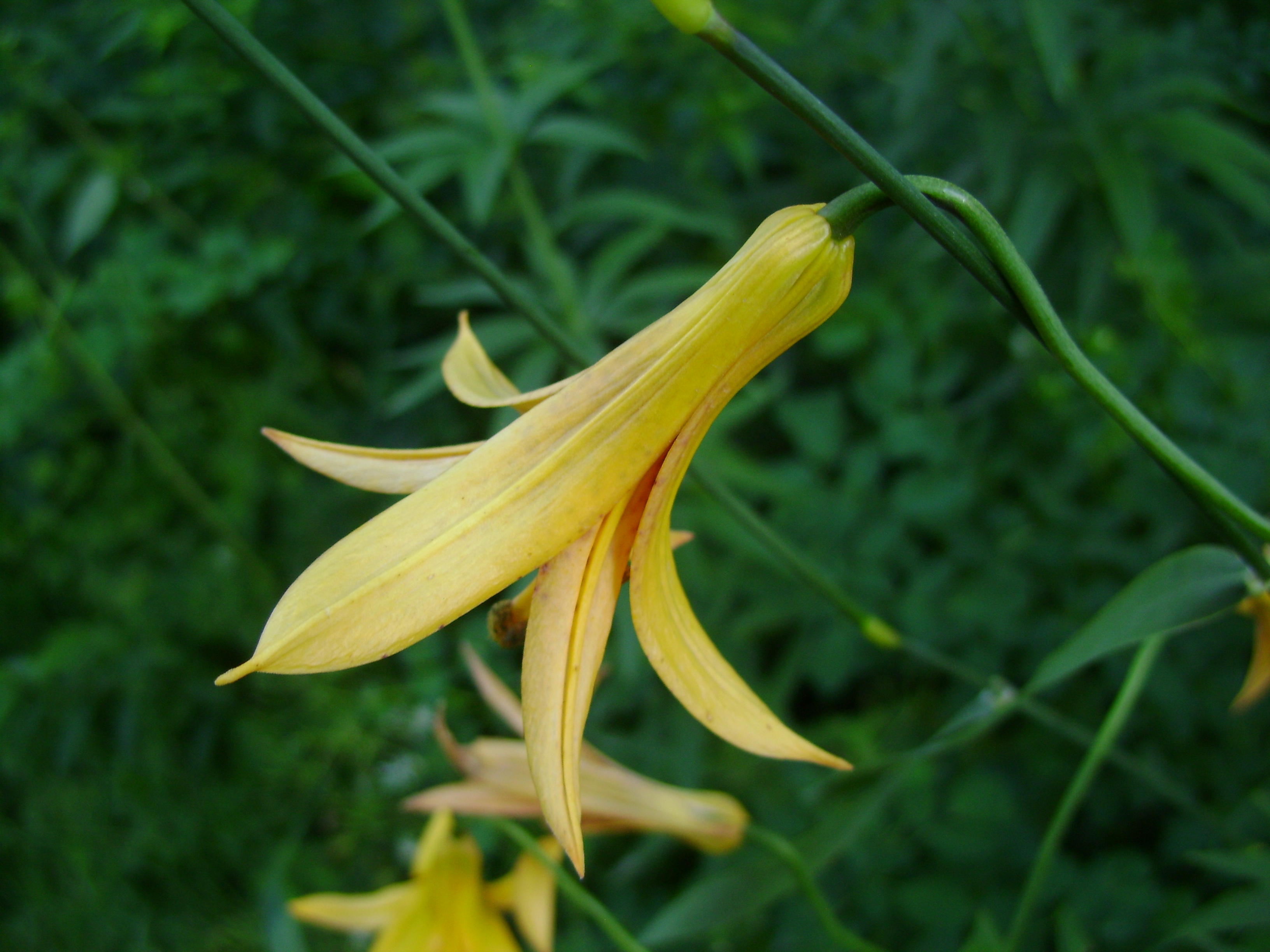
Lilium canadensis, commonly known as the Canada Lily or Wild Yellow Lily, is one of the most striking wildflowers native to eastern North America. A member of the Liliaceae (lily) family, it produces tall, elegant stems adorned with whorled leaves and pendant, bell-shaped flowers in shades ranging from pale yellow to deep orange-red, always decorated with distinctive dark maroon or brownish spots on the recurved petals. Unlike the invasive daylilies so common in suburban gardens, this is a true native lily that has graced eastern meadows, forest edges, and stream banks for millennia.
Growing from a small scaly bulb, Canada Lily sends up sturdy stems reaching 2 to 5 feet tall by midsummer, topped with a spectacular display of 3 to 10 pendant flowers. The nodding blooms are perfectly designed for ruby-throated hummingbirds, which hover beneath the dangling petals to reach the abundant nectar within. Native bees, butterflies, and hawkmoths also visit the flowers. After pollination, the plant produces upright seed capsules that split to release hundreds of flat, papery seeds dispersed by wind.
Canada Lily thrives in moist, partially shaded environments that mimic its natural habitat in woodland clearings, wet meadows, and boggy stream margins. Though it requires some patience — typically taking 3 to 4 years to bloom from seed — once established it is a long-lived, spreading perennial that rewards gardeners with its spectacular annual summer display. It is a cornerstone native plant for rain gardens, wet meadow restorations, and naturalistic woodland edge plantings throughout the northeastern and mid-Atlantic United States.
Identification
Canada Lily is an upright herbaceous perennial growing 2 to 5 feet (60–150 cm) tall from a small, scaly white bulb. The stem is smooth, occasionally slightly rough near the top, and bears the leaves in distinct whorls of 4–10 lance-shaped leaves at intervals along the stem, plus alternate leaves toward the top. The overall form is elegant and architectural in the summer landscape.
Leaves
Leaves are smooth or slightly rough on the margins, lance-shaped, 2–5 inches long, with a distinct midrib and parallel venation typical of monocots. They are arranged in whorls of 4–12 around the stem at the lower and middle portions, transitioning to alternate leaves near the top of the stem. Leaves are medium green and remain attractive throughout the growing season.
Flowers & Fruit
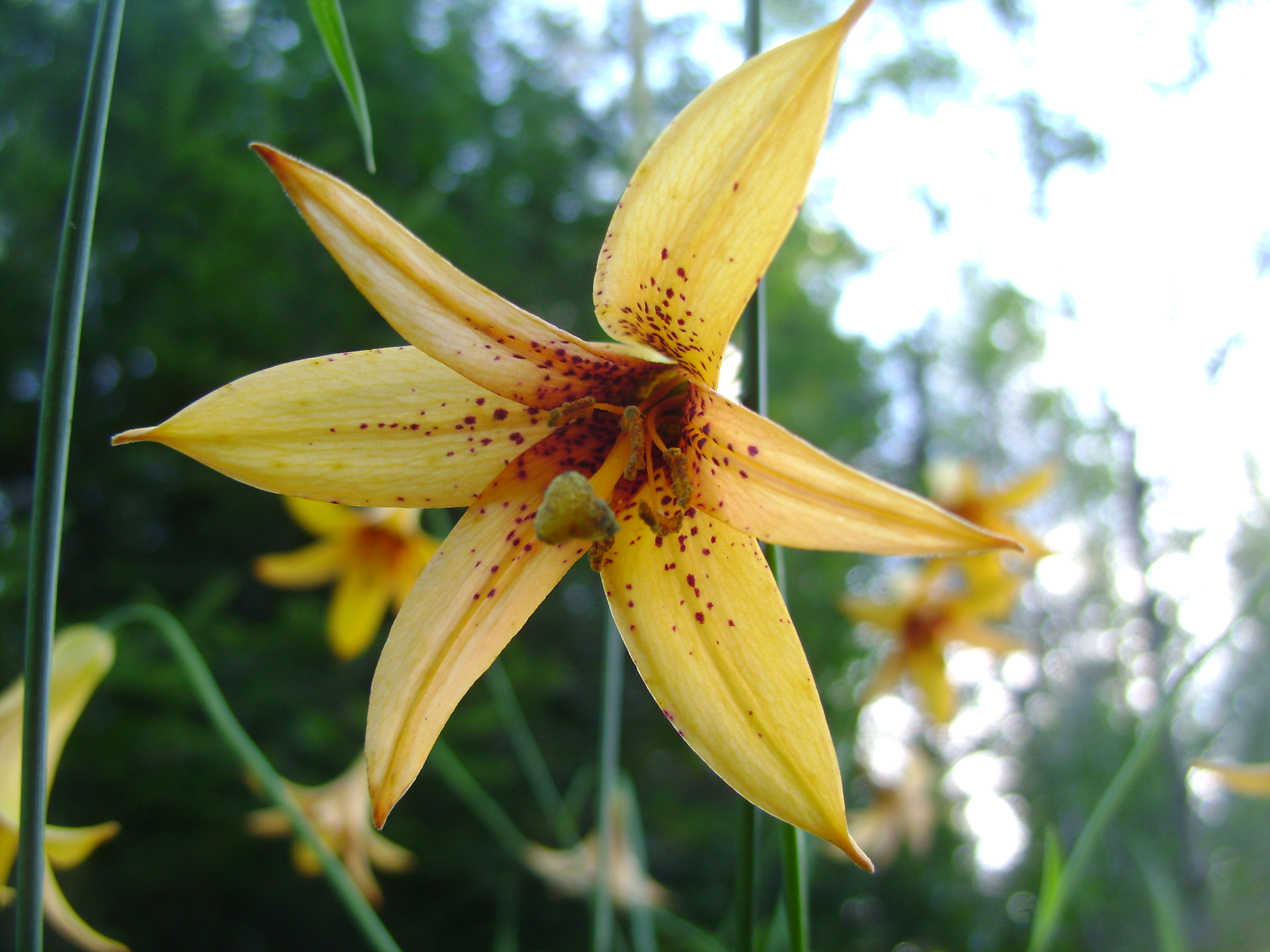
The flowers are the defining feature of Canada Lily — large, pendant, bell-shaped blooms with 6 strongly recurved tepals (petals and sepals identical) that flare backward as the flower matures. Flower color ranges from pale yellow to deep orange or orange-red, always dotted with small, dark maroon or brownish-purple spots on the inner surface. Each flower hangs from a pedicel on a spreading upper peduncle, creating a graceful, nodding presentation. Flowers measure 2–3 inches across when fully open. The blooming season runs from late June through July in most of the range.
The stamens and pistil extend well beyond the perianth, and the pollen-bearing anthers are elongated and prominent, making the flowers particularly attractive to pollinators. After fertilization, the plant produces an upright, cylindrical seed capsule 1–2 inches long that contains many flat, papery-winged seeds arranged in stacked layers. Capsules mature in late summer to early fall and split lengthwise to release the wind-dispersed seeds.
Quick Facts
| Scientific Name | Lilium canadensis |
| Family | Liliaceae (Lily Family) |
| Plant Type | Herbaceous Perennial Bulb |
| Mature Height | 2–5 ft |
| Sun Exposure | Full Sun to Part Shade |
| Water Needs | Moderate to High |
| Bloom Time | June – July |
| Flower Color | Yellow to orange-red with dark spots |
| Soil Type | Moist, humus-rich; slightly acidic |
| Deer Resistant | No (moderately susceptible) |
| USDA Hardiness Zones | 3–9 |
Native Range
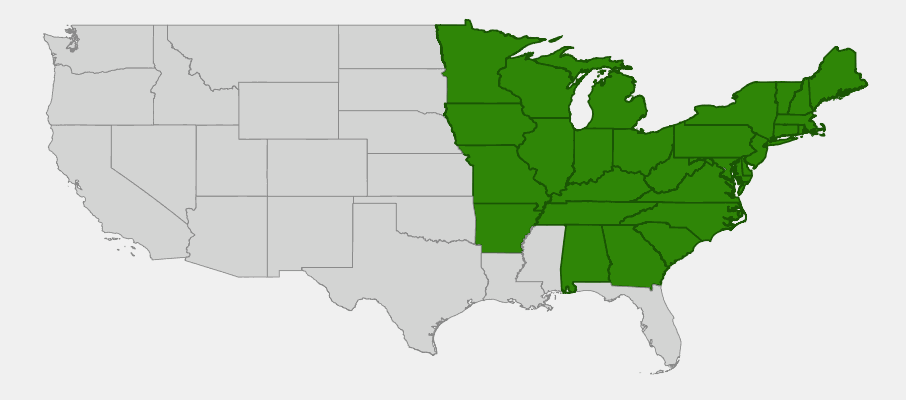
Canada Lily is native to a broad swath of eastern North America, ranging from Nova Scotia, New Brunswick, and southern Quebec westward through Ontario to Manitoba, and south through the northeastern United States into the Appalachian highlands of the Southeast. In the United States, it is found from Maine south to Georgia and Alabama, west to Minnesota, Iowa, Missouri, and Arkansas. It is most abundant in the northeastern states and the Appalachian highlands, becoming less common toward the southern and western edges of its range.
Typical habitat consists of moist, open to lightly shaded environments: wet meadows, boggy stream edges, fens, shrub swamps, forest clearings, and the edges of moist deciduous or mixed forests. Canada Lily particularly favors the ecotone between wetland margins and upland vegetation, where soil moisture is consistently high but the ground is not permanently waterlogged. It grows from near sea level in coastal New England to over 4,000 feet elevation in the Appalachian Mountains.
Natural populations have declined in many areas due to habitat loss — especially the draining and development of wet meadows and stream margins — as well as deer herbivory, which can prevent flowering and gradually eliminate colonies. Illegal collection of plants and bulbs from wild populations has also reduced numbers in accessible areas. Fortunately, Canada Lily is widely cultivated by native plant nurseries and can be successfully established in appropriate garden settings, reducing pressure on wild populations.
📋 Regional plant lists featuring Canada Lily: Southeastern U.S.
Growing & Care Guide
Canada Lily is a rewarding native perennial for gardeners willing to provide its preferred conditions. Though it demands consistent moisture, it is otherwise surprisingly adaptable and, once established, requires minimal intervention to thrive and multiply.
Light
Canada Lily grows best in full sun to partial shade. In full sun, it produces the most vigorous growth and prolific flowering but requires consistently moist soil to prevent stress. In partial shade — receiving 4 to 6 hours of direct sun — it grows well and tolerates slightly drier conditions, though flowering may be somewhat reduced. Avoid deep shade, which results in weak, spindly growth and poor flowering. Morning sun with afternoon shade is an ideal compromise in warmer parts of its range.
Soil & Water
Moist to wet, humus-rich soil is essential for Canada Lily. It thrives in slightly acidic soil (pH 5.5–6.5) with high organic matter content. In the garden, choose a site with naturally moist soil — near a pond, rain garden, or low-lying area. Consistent moisture throughout the growing season is critical; drought stress during the growing season can weaken bulbs and reduce flowering in subsequent years. Mulching with 2–4 inches of leaf litter or bark chips helps maintain soil moisture and temperature. Avoid waterlogged, standing-water conditions, which can cause bulb rot.
Planting Tips
Plant bulbs in fall, 4–6 inches deep in prepared, humus-rich soil. Space multiple plants 12–18 inches apart to allow for the spreading colony that develops over time. Container-grown plants can be installed in spring or fall. Canada Lily takes 2–4 years to bloom from seed, and 1–2 years after transplanting before producing its first full display. Patience is rewarded: established colonies produce increasingly spectacular shows each year as the colony expands via bulb offsets.
Pruning & Maintenance
Remove spent flower stalks after blooming if seed is not desired, or allow the attractive upright seed capsules to persist through fall for ornamental interest. The foliage yellows and dies back to the ground each fall — do not cut it prematurely, as the leaves continue photosynthesizing and building energy reserves in the bulb. The brown stems can be cut back after they yellow naturally. Protect bulbs from voles and deer, both of which will consume them enthusiastically.
Landscape Uses
- Rain gardens and moist low-lying areas where water collects
- Stream and pond margins for naturalistic riparian plantings
- Wet meadow restorations as a tall accent among native grasses and sedges
- Hummingbird gardens — essential nectar source for Ruby-throated Hummingbirds
- Cottage garden perennial borders with consistent irrigation
- Pollinator gardens alongside Joe-Pye Weed, Swamp Milkweed, and Cardinal Flower
Wildlife & Ecological Value
Canada Lily holds extraordinary ecological importance in eastern woodland and wetland edge communities, serving as a critical nectar and food resource for a wide range of wildlife during the summer months.
For Birds
Ruby-throated Hummingbirds are the primary avian pollinators of Canada Lily and depend on the abundant nectar produced within its pendant flowers. The downward-facing, tubular-bell shape is perfectly suited for hummingbirds that hover while feeding. The nodding blooms exclude many shorter-tongued insects, reserving the richest nectar for the birds and long-tongued bumblebees that can reach the base of the flower.
For Mammals
White-tailed deer are major consumers of Canada Lily foliage, flowers, and bulbs, and heavy deer browsing is one of the primary threats to wild populations. Groundhogs and rabbits may also browse the foliage. Meadow voles and white-footed mice sometimes dig and consume the bulbs. While these mammals benefit from the plant as a food source, their predation can significantly reduce populations in unprotected areas.
For Pollinators
Beyond hummingbirds, Canada Lily attracts an impressive array of pollinators. Large bumblebees (particularly Bombus species) can reach the nectar at the base of the flower. Sphinx moths (hawkmoths) are important nighttime pollinators. Eastern Tiger Swallowtails and other large butterflies visit for nectar. The pollen-rich anthers attract native bees seeking protein-rich pollen for their larval provisions.
Ecosystem Role
As a native perennial of wet meadows and forest edges, Canada Lily plays a structural role in these plant communities, providing vertical habitat diversity and floral resources during the peak summer period when many other plants have finished blooming. Its moist-habitat preferences make it a reliable indicator species for quality wetland edge environments. In restoration projects, it serves as a high-value accent species that both enhances biodiversity and provides critical wildlife resources.
Cultural & Historical Uses
Canada Lily has a rich history of use among Indigenous peoples of eastern North America. Various nations including the Iroquois (Haudenosaunee), Ojibwe, and Algonquian-speaking peoples utilized different parts of the plant. The small scaly bulbs were eaten raw or cooked — they have a mild, slightly starchy flavor somewhat resembling water chestnuts. Young shoots were consumed as a spring green, and the flowers and seed pods were used in various preparations.
Medicinally, the bulbs and roots were used by several Indigenous nations as a treatment for fevers, stomach ailments, and as a general tonic. The Ojibwe used an infusion of the plant for various conditions. The Iroquois reportedly used the plant in preparations related to women’s health and childbirth. As with many native plant medicines, the specific preparations and their efficacy according to modern pharmacological standards vary considerably.
European settlers quickly recognized the ornamental appeal of Canada Lily and began cultivating it as a garden plant in the 18th and early 19th centuries. It was among the first North American wildflowers exported to European gardens, where it was admired as an exotic and beautiful novelty. Unfortunately, the 19th century also saw significant wild collection for both botanical gardens and commercial sale, contributing to population declines in accessible areas near towns and roads.
Today, Canada Lily is recognized as a high-value native plant for ecological gardens and restoration projects. Certified native plant nurseries now propagate it from seed and offsets, eliminating any need to collect from wild populations. The species serves as a symbol of the wild wet meadows and stream edges that have been significantly reduced in the eastern United States — making its cultivation a meaningful act of conservation.
Frequently Asked Questions
Is Canada Lily the same as the Turk’s Cap Lily?
No — they are closely related but distinct species. Canada Lily (Lilium canadensis) has pendant flowers in which the tepals recurve only moderately, and the flowers face more downward than outward. Turk’s Cap Lily (Lilium superbum) has more strongly recurved tepals that curl all the way back to expose the pedicel, and typically grows taller with more flowers per stem. Canada Lily also tends to have yellow to orange flowers, while Turk’s Cap often shows deeper orange-red coloring with more pronounced spotting.
Why won’t my Canada Lily bloom?
Canada Lily requires 2–4 years from seed to reach blooming size. If you planted bulbs that don’t bloom, possible causes include: insufficient sunlight (needs at least 4 hours daily), consistently dry soil, deer browsing removing the developing buds, or bulbs planted too shallowly. Young plants may also skip blooming in their first year after transplanting as they establish their root system.
Can Canada Lily grow in containers?
Canada Lily can be grown in large containers (at least 15 gallons) with careful attention to moisture. Container growing is challenging because the soil dries out quickly, and this lily demands consistent moisture. Use a moisture-retentive potting mix enriched with compost, keep the pot in partial shade, and water frequently. Containers must be protected from freezing in Zones 3–5, where the bulbs can be moved to an unheated garage or cellar for winter.
Is Canada Lily invasive?
No — Canada Lily is a native species and is not invasive. In favorable conditions, it will slowly expand by producing bulb offsets, eventually forming a multi-stemmed colony, but it expands gradually and is easily managed if desired. The spreading growth habit is generally welcomed in naturalistic garden settings.
How do I protect Canada Lily from deer?
Deer protection is the greatest challenge with Canada Lily. Options include physical deer fencing around individual plants, applying deer repellent sprays to the foliage and buds (starting early in the season), planting in a deer-excluded area of the garden, or accepting some browsing and allowing the colony to grow large enough that some plants always escape deer attention. The bulbs typically regenerate after browsing if the deer pressure is not sustained throughout the season.

Looking for a nursery that carries Canada Lily?
Browse our native plant nursery directory: Virginia · North Carolina · Georgia