May Lily (Maianthemum canadense)
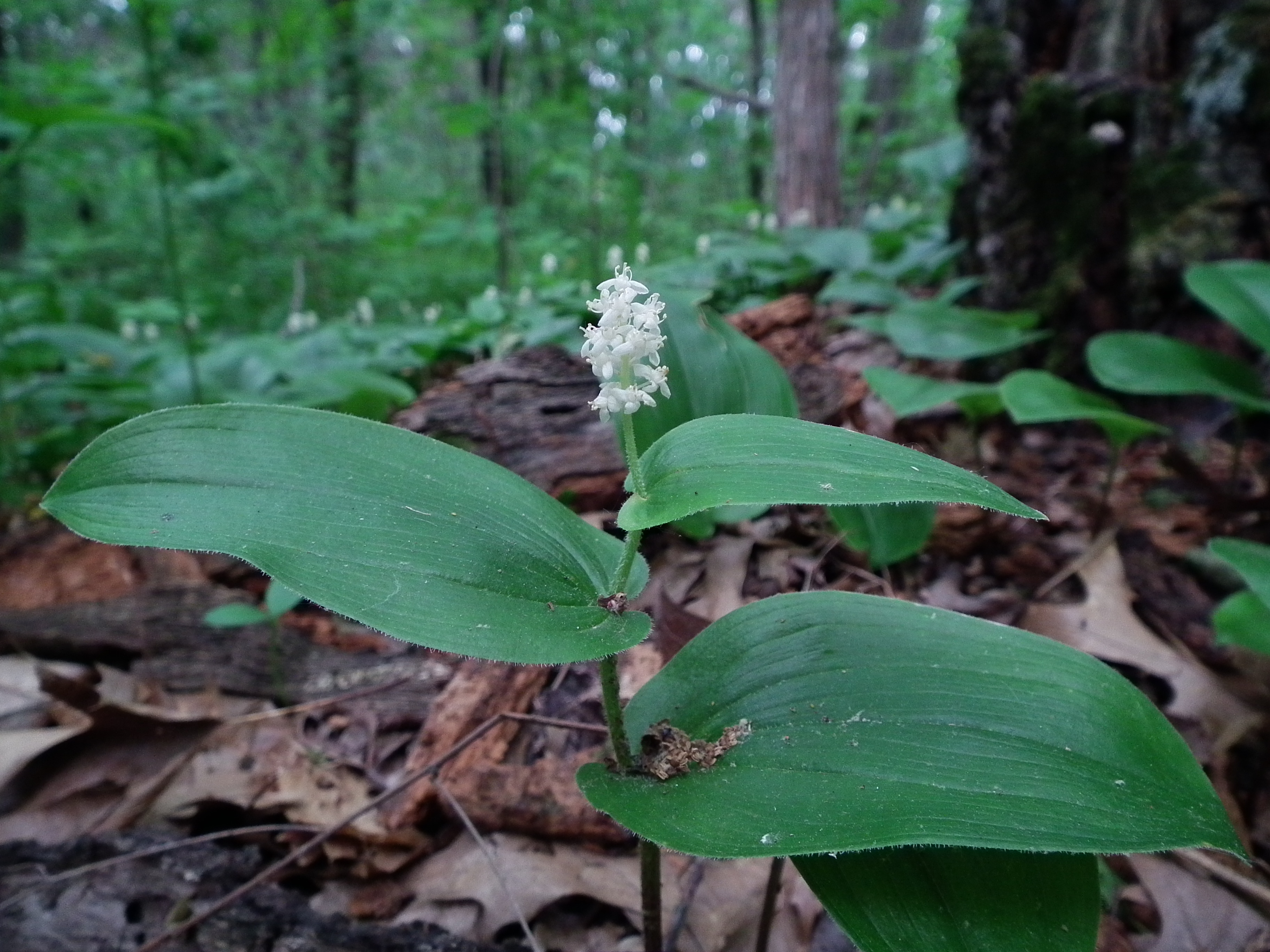
Maianthemum canadense, known as May Lily, Canada Mayflower, or False Lily of the Valley, is one of the most familiar and beloved wildflowers of the northeastern forest floor. This diminutive perennial, typically just 3 to 6 inches tall, forms extensive spreading carpets across the acidic floors of cool coniferous and mixed forests — its two or three broad, glossy leaves and small raceme of tiny white flowers creating a charming springtime display. The species belongs to the Asparagaceae family (in the Nolinoideae subfamily), making it a distant relative of asparagus, lily of the valley, and Solomon’s seal rather than a true lily despite its common name.
Canada Mayflower blooms from May through June, filling the forest with a sweet, delicate fragrance that belies the plant’s small size. The flowers give way to small, pale speckled berries that ripen to translucent red by late summer — food for thrushes, waxwings, and other forest birds. The plant spreads extensively through underground rhizomes, forming dense colonies that can cover large areas of forest floor in suitable acidic, moist conditions. These colonies are among the most stable elements of the northern forest understory, persisting for decades in undisturbed sites.
For gardeners working in acidic woodland conditions — particularly under pines, hemlocks, oaks, or birches — May Lily offers an almost unmatched groundcover solution. It requires minimal care once established, tolerates deep shade, suppresses weeds effectively through its dense spreading growth, and provides seasonal interest from its spring flowers through its fall fruit display. It is an essential companion plant for woodland gardens in the northern states, creating the authentic northern forest atmosphere that complements trilliums, bunchberries, wintergreen, and other forest floor specialists.
Identification
May Lily is easily identified by its combination of small size (3–6 inches tall), broad glossy leaves with heart-shaped bases, and small racemes of tiny white flowers. Vegetative plants produce only a single leaf; flowering plants produce two (rarely three) stem leaves. The entire plant has a glossy, almost waxy appearance that is distinctive among forest floor plants.
Leaves
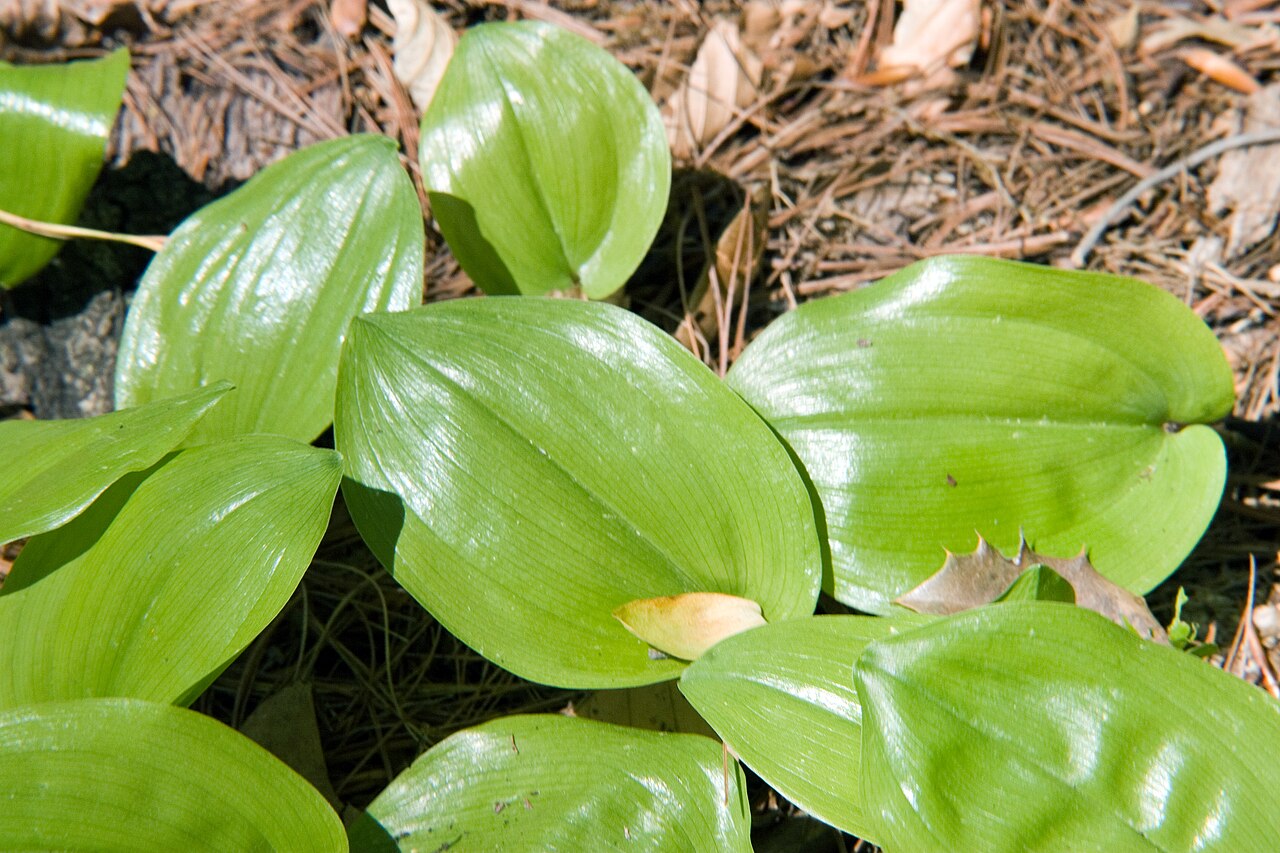
Leaves are broadly oval to heart-shaped (cordate), 1 to 3 inches long and nearly as wide, with a deeply heart-shaped base that clasps the stem. The surface is smooth and slightly glossy, medium to dark green, with parallel venation typical of monocots. The leaf margins are smooth to slightly wavy. Leaves are arranged alternately on the stem, with the lowest leaf often held nearly horizontal. The broad, glossy leaves are visually distinctive on the forest floor and remain attractive through summer.
Flowers & Fruit
Flowers are tiny — just ⅛ inch across — with 4 white petals (technically tepals) arranged in a dense, spike-like raceme 1 to 2 inches long at the top of the stem. Despite their small size, the flowers produce a sweet, pleasant fragrance. The 4-petaled structure is one feature that distinguishes May Lily from true lily-of-the-valley (Convallaria majalis), which has 6-tepaled bell-shaped flowers. Flowers bloom in May and June. The fruit is a small, round berry, ⅛ to ¼ inch in diameter, that starts pale green with reddish speckles and ripens to translucent ruby red or coral-red in late summer. Berries are attractive but technically edible only in small quantities (mild mildly toxic compounds when eaten in large amounts).
Quick Facts
| Scientific Name | Maianthemum canadense |
| Family | Asparagaceae (Asparagus Family) |
| Plant Type | Herbaceous Perennial Ground Cover |
| Mature Height | 3–6 in |
| Sun Exposure | Part Shade to Full Shade |
| Water Needs | Moderate |
| Bloom Time | May – June |
| Flower Color | White |
| Soil Type | Acidic, humus-rich woodland soil |
| Deer Resistant | Somewhat (moderately deer tolerant) |
| USDA Hardiness Zones | 2–7 |
Native Range
May Lily (Maianthemum canadense) is one of the most broadly distributed wildflowers of the boreal and northern deciduous forest regions of North America. It ranges from Newfoundland, Labrador, and Nova Scotia westward across the entire breadth of Canada to British Columbia, and south into the northern United States from New England through the Great Lakes states, Appalachians, and upper Midwest. In the eastern United States, it extends south through the mountains of Pennsylvania, West Virginia, and Virginia, and is found at higher elevations in the Appalachians to North Carolina and Tennessee.
The species is a characteristic indicator of cool, acidic forest soils. It is most abundant in coniferous and mixed forests dominated by conifers — particularly white pine, hemlock, spruce, and fir — where the soil is heavily acidified by needle litter and the forest floor is cool and shaded. It also occurs in acidic deciduous forests under oaks, beeches, and birches. Typically associated with other acid-loving forest floor plants including bunchberry (Cornus canadensis), wintergreen (Gaultheria procumbens), starflower (Trientalis borealis), and various ferns.
May Lily forms extensive, nearly pure colonies through vigorous rhizome growth, sometimes covering hundreds of square feet in a single interconnected clone. These colonies can persist for many years in undisturbed forest conditions, expanding steadily outward at the margins. The species is an excellent indicator of forest continuity and undisturbed soil conditions — its presence often signals old-growth or long-undisturbed forest floor habitats where native plant communities remain intact.
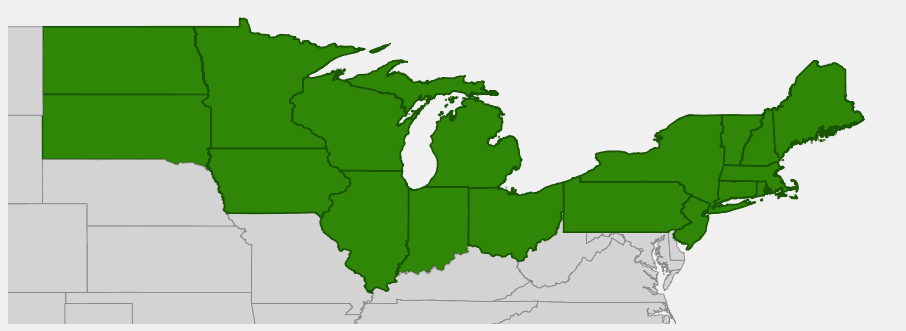
📋 Regional plant lists featuring May Lily: Southeastern U.S.
Growing & Care Guide
May Lily is a specialist plant that thrives when its specific soil requirements are met. The key to success is matching its natural acidic, humus-rich, cool woodland conditions. In the right environment, it is virtually maintenance-free and will slowly but persistently spread into a beautiful groundcover.
Light
May Lily is an obligate shade plant, requiring at minimum partial shade to thrive. It performs best in dappled to moderate shade — conditions found beneath the open canopy of pines, hemlocks, birches, or oaks. Deep shade under dense evergreens is also tolerated. Full sun quickly stresses the plant, causing leaf yellowing, wilting, and eventual decline. This shade requirement makes it ideal for north-facing slopes, dense woodland gardens, and challenging shaded areas where most ornamentals struggle.
Soil & Water
Acidic soil is non-negotiable for May Lily. It performs best in soil with a pH of 4.5 to 6.0 — the range naturally created by needle litter and organic matter decomposition in coniferous and northern mixed forests. Amend planting areas with peat moss, pine bark, or composted pine needle/oak leaf mulch to achieve appropriate acidity if soil pH is too high. The soil should be moist and well-drained — never waterlogged. Once established, May Lily has reasonable drought tolerance in cool, shaded conditions, but consistent moisture during the growing season produces the lushest growth and most prolific flowering.
Planting Tips
Plant rhizome divisions in early spring or fall. Divisions should be planted just 1–2 inches deep, as May Lily naturally grows in shallow forest soils with extensive surface rhizomes. Spacing of 6–12 inches allows a colony to fill in within 2–3 years. The plant establishes slowly from seed, which is rarely available commercially, so division of existing colonies is the standard propagation method. Pine straw or shredded oak leaf mulch provides excellent, pH-appropriate mulching that mimics natural forest floor conditions.
Pruning & Maintenance
No pruning or deadheading is needed. Allow the foliage to yellow and die back naturally in late summer to early fall. The attractive red berries provide ornamental interest and wildlife food — leave them for the birds rather than removing them. Virtually the only maintenance required is keeping the planting area free from invasive weeds and maintaining the acidic mulch layer. Do not apply lime or alkaline amendments near May Lily plantings.
Landscape Uses
- Acidic woodland groundcover under pines, hemlocks, and oaks
- Northern woodland garden companion to trilliums and bunchberry
- Rhododendron and azalea understory (compatible acid soil requirements)
- Shaded path borders in cool woodland gardens
- Slope stabilization on shaded acidic banks
- Naturalistic forest floor restoration in northeastern forests
Wildlife & Ecological Value
Despite its small size, May Lily makes a meaningful contribution to the ecology of northern forest floor communities through its role as a food source, pollinator resource, and structural element of the woodland understory.
For Birds
The small red berries of May Lily are consumed by a range of forest birds, including American Robins, Swainson’s Thrushes, Hermit Thrushes, Cedar Waxwings, and various sparrows and warblers. The berries ripen in late summer when many migratory birds are actively feeding to build fat reserves for their southward migration. While May Lily berries are not a major dietary component for most birds, they contribute to the diverse palette of small fruits that forest birds depend on during the critical pre-migration period.
For Mammals
Small mammals including chipmunks, voles, and white-footed mice consume May Lily berries and may cache them. White-tailed deer occasionally browse the foliage, though May Lily is not a preferred deer food. In areas with dense colonies, deer browsing may reduce fruit production but rarely eliminates established rhizome networks.
For Pollinators
May Lily flowers are visited by a variety of small native bees, particularly mining bees (Andrena species) and sweat bees (Halictus and Lasioglossum species). Flies and small beetles also visit for nectar and pollen. The dense carpets of flowers produced by large colonies represent a locally significant early-season nectar resource for small pollinators active in the cool northern woodland environment.
Ecosystem Role
As one of the dominant groundcover species in many northern forest ecosystems, May Lily plays an important structural role in shaping the forest floor community. Its dense colonies suppress establishment of invasive plants and reduce soil erosion under forest canopy. The rhizome network contributes to soil stability, and the annual leaf litter contributes organic matter to the soil. Ecologically, it is a keystone species of the northern forest floor community — its abundance indicates high forest quality, while its decline signals ecological degradation.
Cultural & Historical Uses
Indigenous peoples of northeastern North America used May Lily in various ways. The berries, while mildly toxic in large quantities, were consumed in small amounts by several nations, often mixed with other foods. The Ojibwe reportedly used an infusion of the plant as a throat gargle for sore throats and coughs. The Algonquin used the plant in preparations for eye conditions. The plant’s widespread occurrence and persistence in traditional territories made it a familiar element of the natural world, referenced in Indigenous stories and ecological knowledge.
European settlers observed the plant’s resemblance to the cultivated lily of the valley (Convallaria majalis) and recorded it in early botanical surveys of northeastern North America. The genus name Maianthemum derives from the Greek words for “May” and “flower,” acknowledging its characteristic spring bloom season. The species name canadense reflects the plant’s abundance in Canada, where it was first comprehensively described by European botanists.
Today, May Lily is valued primarily as an ecological plant — a component of authentic northeastern woodland gardens and restoration projects. Its cultivation is recommended for gardeners with acidic woodland conditions who want to recreate the serene, textured groundcover of the northern forest floor. It is sometimes used in forest restoration projects alongside bunchberry, wintergreen, and partridgeberry to reestablish diverse forest floor communities in areas where native plants have been lost to invasive species or disturbance.
Frequently Asked Questions
Is May Lily the same as lily of the valley?
No — they are different plants. True lily of the valley (Convallaria majalis) is a European species widely cultivated in gardens that has become invasive in parts of North America. May Lily (Maianthemum canadense) is a smaller, native North American species with 4-petaled flowers (compared to the 6-petaled bell-shaped flowers of lily of the valley). Both grow in shaded, moist woodlands, which accounts for the common name “false lily of the valley” sometimes applied to May Lily.
Are May Lily berries edible?
May Lily berries contain sapogenins (saponin-type compounds) that can cause digestive upset, particularly in large quantities. Indigenous peoples consumed them in small amounts without ill effects, but they should not be eaten in quantity. Leave the berries for the birds, which metabolize them safely.
Why won’t my May Lily spread?
If May Lily is growing but not spreading, the most likely cause is soil pH being too high (not acidic enough). May Lily requires pH 4.5–6.0. Test your soil and amend with sulfur, peat moss, or acidic mulch if pH is above 6.0. Insufficient shade or inconsistent moisture can also slow rhizome growth. Once the soil conditions are right, established plants spread steadily each year.
Can May Lily grow under black walnut trees?
No — May Lily is sensitive to juglone, the allelopathic compound produced by black walnut roots, which inhibits growth of many plants. Choose planting sites away from black walnuts; under pines, hemlocks, oaks, birches, or maples is preferable.
How do I divide May Lily for propagation?
Dig rhizome sections in early spring just as growth is beginning, or in early fall. Each division should include at least one growing point (bud or existing stem). Replant immediately at the same depth (1–2 inches) in prepared acidic soil and water well. Divisions establish quickly in suitable conditions and will begin spreading the following season.

Looking for a nursery that carries May Lily?
Browse our native plant nursery directory: Virginia · North Carolina · Georgia